
- 3 MONTHS AGO · INDUSTRYA 197-foot German shaft borer is hanging like a chandelier under an English national park, 2,966 feet down, a spinning drum milling 8-inch passes while a vacuum sucks the rock out — nobody on the floor, no explosives, 2,283 feet still to go
- 2 MONTHS AGO · INDUSTRYA 706-foot borer went down a 100-foot shaft in Washington in pieces and got bolted together inside the tunnel it was already digging, and it now has 350 feet left before it parks underground for more than two months to be rebuilt for rock
- 2 MONTHS AGO · INDUSTRYA 551-ton boring machine front end is cutting under a Melbourne suburb on a leash of cables and hoses dropped down a shaft too short to hold the whole machine, and the rest of it, more than 300 feet of trailing gear, gets bolted on inside the tunnel it has already dug
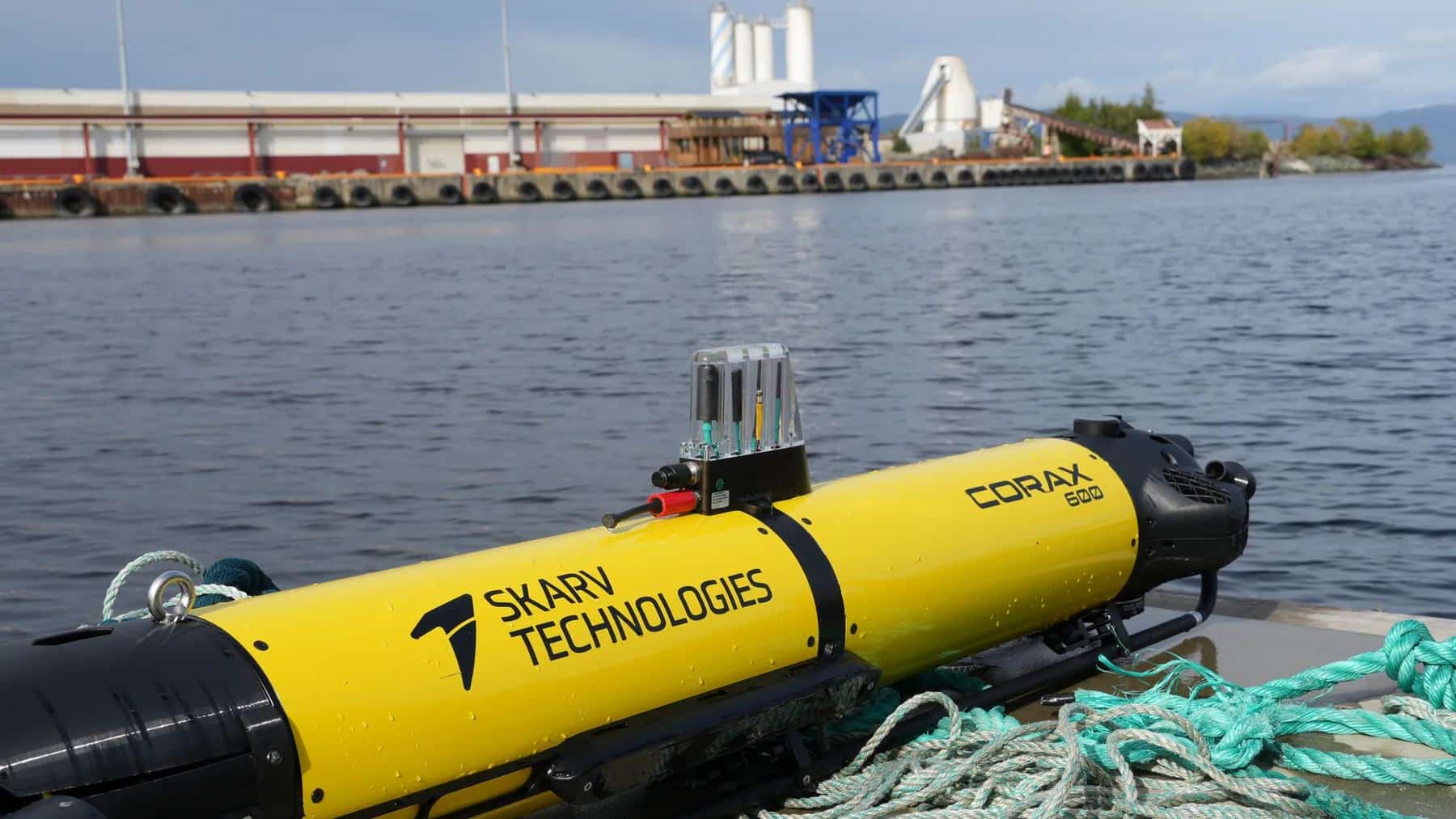
- 2 MONTHS AGO · INDUSTRYAn 18.7-foot drone boat has brought back its first seabed maps for an Italian survey crew, holding its line on two 11-kilowatt pods that swivel and sweeping a strip of bottom seven times as wide as the water is deep, 210 feet across in 30 feet of water
- TODAY · THIS ARTICLEA 3,734-foot canal tunnel dug with pickaxes and shovels has carried boats under an English hill for 250 years with no towpath inside, and engineers are now flying a drone through it and roping down its four air shafts, up to 56 feet deep, to map every crack
If you’ve spent any time around here, you’ve seen your share of tunnel boring machines. We’ve covered a 24-foot borer chewing 2.7 miles under Lake Mead, and I’d bet nobody on that crew has ever swung a pickaxe at work.
So here’s the other end of the trade. On September 2, the charity that looks after canals in England and Wales announced it was carrying out a detailed structural inspection of a tunnel where the pickaxe was pretty much the entire toolkit. Preston Brook Tunnel, near the village of Dutton in Cheshire, England, was dug entirely by hand, it’s been carrying boats for more than 250 years, and the crew now checking its brickwork brought a drone.
The tunnel runs 3,734 feet (1,138 meters) under a hill on the Trent & Mersey Canal, and it’s only wide enough for a single narrowboat, the long, skinny canal boat Britain is famous for. There’s no towpath inside, either. A towpath, if canals aren’t your thing, is the path beside the water where a horse used to walk, towing the boat on a rope. No towpath meant the horse got unhitched and led over the top of the hill while the boat went through without it. Crews back then typically handled the tunnel part by lying on the boat and walking it along with their feet pressed against the walls, a move called legging. It was a core workout before anyone called it that.
And unless you’re on a boat, you’ll never see any of this, because the only way into the tunnel is through it.
So how do you inspect a tunnel you can’t walk into?
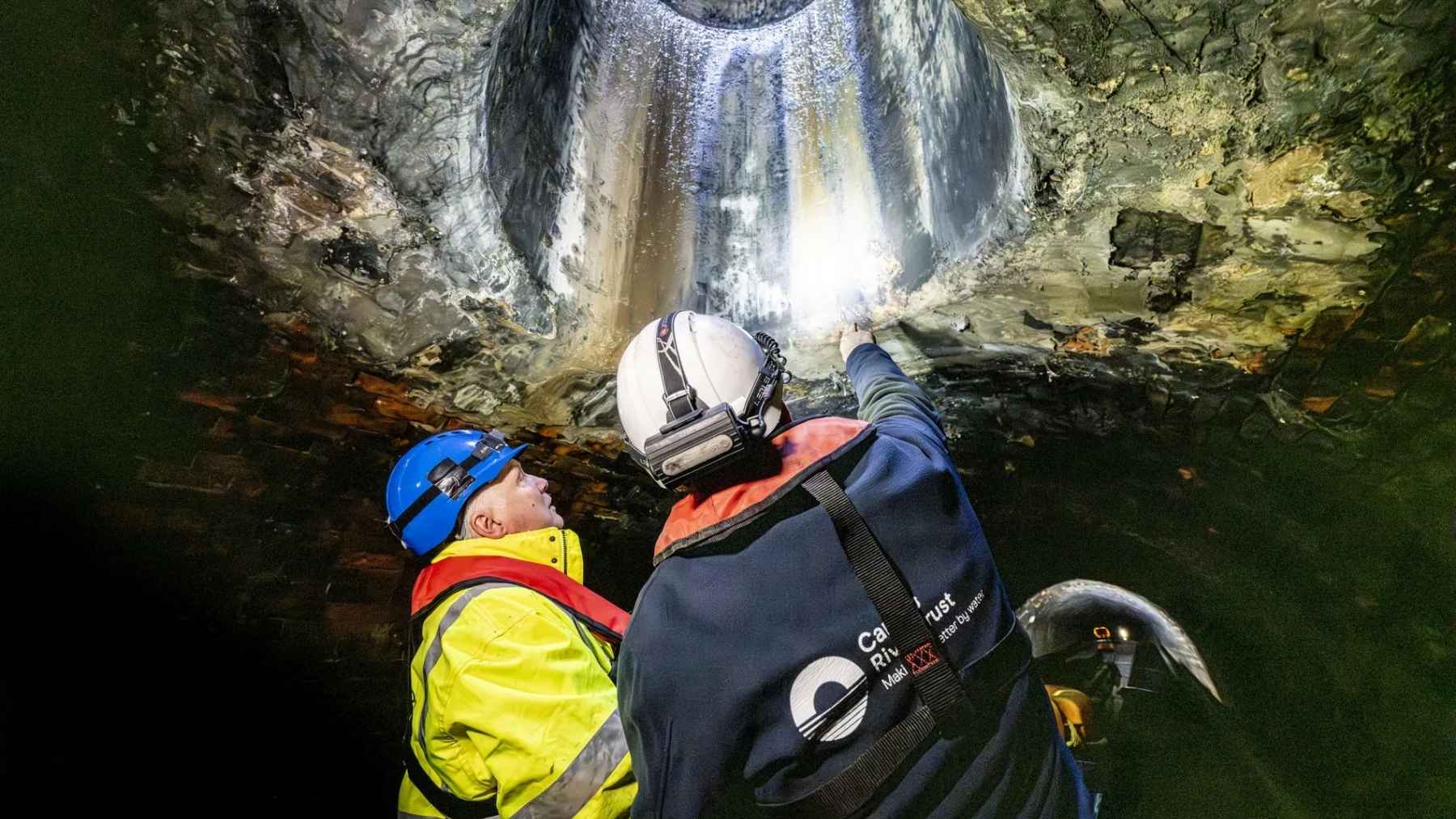
From a boat, at night. Engineers from the Canal & River Trust ride through and go over the brickwork by hand with poles, hammers and spikes, hunting for cracks and damaged bricks. That part is basically knocking on the wall and feeling for trouble, the same idea as tapping drywall to find a stud, except the drywall is 250 years old and you’re checking it from a boat.
Then there’s the modern half. The team is flying a drone through the bore for fly-through footage and building a 3D map of the whole structure. Rope-access specialists are also dropping down five vertical shafts, four dug for ventilation and one left over from construction, each running up to 56 feet (17 meters) deep. Everything gets analyzed afterward to decide whether the tunnel needs major repairs. You’d think the drone would’ve retired the hammer by now, but apparently a hammer against old brick still tells an engineer things a camera can’t.
So why the graveyard shift?
Because the Trust wants navigation open during the day, which tells you plenty about how alive this thing still is. Boats keep passing through while the sun’s up, and the survey crew takes over after dark.
What the Trust hasn’t said is how long the whole survey takes. I couldn’t find an end date anywhere in the announcement, so if you were hoping to plan a boat trip around it, the practical answer is that the tunnel stays open by day regardless.
“It’s amazing to think this tunnel was built by hand using pickaxes and shovels,” said Peter Simpson, the Trust’s principal engineer for tunnels and culverts, who describes a trip through it as stepping back in time.
It was finished a year before the Declaration of Independence
Construction started in 1766 under James Brindley, the engineer who more or less got Britain’s canal age going. Brindley died before the tunnel was done, and his student Hugh Henshall finished the job in 1775. That’s a year before the Declaration of Independence was signed. People had long dug tunnels for mining, but the Canal & River Trust says the canal-building rush of that era is where large-scale tunneling technique really got worked out, and that modern construction still leans on methods shaped back then.
The Trust ranks it with the oldest canal tunnels anywhere still doing their original job. Both portals and two of the air shafts are Grade II-listed, which puts them on Britain’s official register of protected historic structures. The south portal has held that status since 1985.
Boats still line up for it every hour
The tunnel still works for a living, too. It’s single file, so traffic through it runs on a timetable: northbound boats enter on the hour until ten past, and southbound boats get the window from half past until twenty to. Ten minutes each way, every hour. It’s essentially a traffic signal with a 250-year-old tunnel attached.
We’ve written about old tunnels finding strange second lives, like the Australian rail tunnel that now glows, and about new holes being threaded under live infrastructure. Preston Brook is a rarer thing. It’s still doing the exact job it was dug for, and frankly, a drone flying through a hole that predates the lightbulb by about a century is the good kind of ridiculous.
The Canal & River Trust, the charity that maintains 2,000 miles of waterways in England and Wales, announced the inspection on September 2, 2026, and says the survey’s findings will determine whether the tunnel needs any major repairs.
 A 990-foot ocean liner that crossed the Atlantic faster than any liner before or since has just started her last trip out of Mobile behind tugboats, headed for a spot 22 nautical miles off the Florida Panhandle where she’ll be sent down into 180 feet of water on WednesdayIndustry · 2 days ago
 A nearly 23-foot tunnel boring machine just broke through into its first station under downtown Toronto after cutting about 4,265 feet and lining the tunnel with roughly 780 concrete rings, and its twin is due to punch through right beside it in DecemberIndustry · 4 days ago
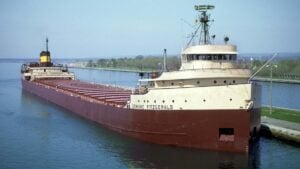 A 13,632-ton freighter lies broken in two 530 feet down in Lake Superior, 51 years after she sank in a November storm with all 29 men aboard, and federal scientists estimate up to 1,191 barrels of heavy fuel oil could still be inside a wreck with no reported leakIndustry · 6 days ago