
- 2 MONTHS AGO · INDUSTRYA 3,734-foot canal tunnel dug with pickaxes and shovels has carried boats under an English hill for 250 years with no towpath inside, and engineers are now flying a drone through it and roping down its four air shafts, up to 56 feet deep, to map every crack
- 4 WEEKS AGO · INDUSTRYA 1,000-foot freighter going in or out of Lake Superior has exactly one lock it fits through, with 2.5 feet on each side, and the Army is halfway through the last phase of building it a 1,200-foot twin, because losing the first for weeks could idle 75% of US steel output
- 3 WEEKS AGO · INDUSTRYA 245-foot earthen dam holding the fourth-largest reservoir in the US was built to pass 415,000 cubic feet of water a second, a new study says a rare flood would push 30 percent more through it, and the Army Corps moved it to the top of its risk list with the lake 25 feet low
- 1 WEEK AGO · INDUSTRYA 111-year-old lock and dam that holds back a North Carolina river for the intakes feeding Wilmington’s drinking water has a channel carved under it by the current, and the Army Corps of Engineers says more erosion could undermine the riverbed holding it up
- TODAY · THIS ARTICLEA 55-foot-deep boat lock in Seattle has been pumped dry so its 800-foot filling tunnels can be scraped clean of barnacles, a job federal law requires once a year because young salmon pulled through with the water get dragged along the walls and cut open
Barnacles have a pretty bad reputation with anyone who owns a boat. They glue themselves to the hull, they slow you down, and sooner or later someone has to haul the thing out of the water and scrape them off. The Army Corps of Engineers scrapes barnacles every year in Seattle too, but the Corps does it for the fish.
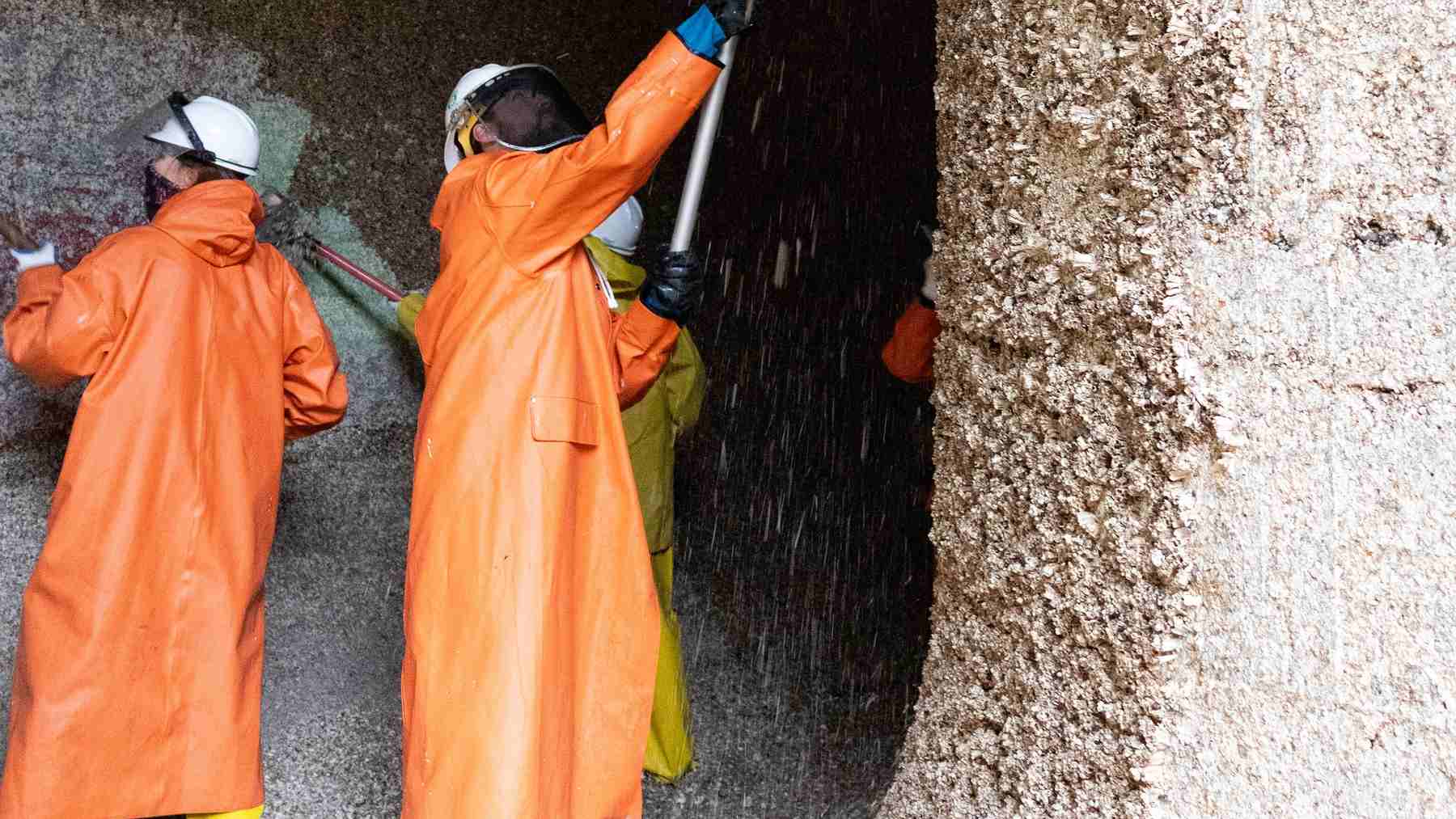
Right now the big chamber at the Hiram M. Chittenden Locks, which most locals just call the Ballard Locks, is empty. The Corps closed it on Nov. 2 and drained it for annual maintenance, and part of that work means sending people with scrapers into the two tunnels that fill the lock. Some of the young salmon heading out to Puget Sound end up in those tunnels, and the barnacles on the walls can cut them up.
Boats are still getting through, since the small lock next door stays open the whole time. You can still walk or bike across the locks, too, according to My Ballard, and the Corps posts any schedule changes on its Chittenden Locks closures page. And frankly, the view’s better than usual right now.
KOMO News reports the chamber is 55 feet high, which is a long way down once the water’s gone, and the Corps lowers heavy machinery and tractors onto the floor to do the work. KOMO says 27,000 vessels came through last year, traveling between Puget Sound and the two lakes, Lake Union and Lake Washington, and around 2 million people visit every year.
So what’s the Corps doing down there?
The barnacles aren’t the only job. My Ballard lists the rest: new anodes, repairs to the large lock’s culvert valve (including a hydraulic cylinder replacement), concrete repairs, and new instruments on the miter gates. KOMO adds inspections.
If you haven’t spent much time around locks, miter gates are the big paired doors at each end of the chamber. They close at an angle and meet in a point facing the higher water, so the pressure pushes them tighter shut. The Army’s Engineer Research and Development Center is wiring them up to study how these horizontally framed gates carry their loads.
Anodes are basically sacrificial chunks of metal. They corrode so the gates, the valves and the rest of the steel under the waterline don’t, and once they’ve been eaten away, someone has to swap in new ones. It’s about as unglamorous as maintenance gets. But on a structure with Puget Sound’s salt water on one side, I’d argue it’s one of the more important jobs on the list.
Why would a salmon be inside a tunnel?
A lock works by letting water in and out. To raise a boat, water runs from the higher side through the culverts, long tunnels running alongside the chamber, and into the lock. To lower it, the water goes the other way. Each of the two culverts at Ballard runs the entire length of the large lock, and the Corps lists them at 800 feet long, 8 feet wide and 14 feet tall. And when the lock’s filling, the water in there moves fast.
Young salmon, which biologists call smolts, swim out of the Lake Washington system toward salt water, and some of them wind up in those tunnels while the water’s moving. Katie Whitlock, a fisheries biologist with the Corps’ Seattle District, explained in a district story on DVIDS that a smolt caught in there “could be pulled along with the water and dragged against sharp barnacles.” That can injure the fish or kill it.
So you’ve got a fast current, a tunnel lined with something sharp, and a fish that weighs next to nothing. You can see how that goes.
This isn’t guesswork, either. The Corps and the Lake Washington Fisheries Co-Managers documented decades ago how much harm barnacles do to young salmon, according to the same story. Chinook and steelhead, both listed under the Endangered Species Act, use the culverts as well.
So why does it have to happen every single year?
Short answer: the Endangered Species Act. Under that law, a federal agency running a project like this has to make sure it isn’t putting listed species at risk, and it works that out with the government’s fish and wildlife agencies. Here, the Corps says the National Marine Fisheries Service and the U.S. Fish and Wildlife Service require annual scraping, and doing it is part of how the Corps keeps operating the large lock in compliance.
I kind of love that one of the busiest locks in the country has a requirement that boils down to sending people in with scrapers so baby salmon don’t get hurt. It’s low-tech in the best possible way.
Critters that glue themselves to steel and concrete cause trouble at a lot of American infrastructure, too. Last month we covered divers in California who had to scrape golden mussels off a 50-foot flood gate before it could close. And in Florida, the relationship runs the other way, with a power plant’s warm water giving manatees a canal to wait out the cold in.
Last year’s scrape took 21 volunteers nearly seven hours
I haven’t found any numbers from the Corps on this year’s scrape yet, so the latest ones I’ve got are from last November.
That time, 21 Seattle District employees volunteered to go into both culverts, and it took them nearly seven hours to scrape the walls down. Everyone was handed a freshly sharpened scraper and suited up in waterproof boots, a jacket, earplugs, and a hard hat and face shield. The earplugs aren’t for show. Scraping shell off a tunnel wall is apparently loud enough that the Corps counts the noise as a hazard, right up there with the sharp tools and the bits of barnacle flying around.
The Corps also says more than 28,000 coho and 18,000 Chinook went up the fish ladder at the locks last year. Those fish took a different route, though. The ladder’s how returning adult salmon get upstream past the locks, and it’s a separate path from the culverts the smolts get pulled through. So those counts don’t tell you how many young fish went through the tunnels.
I’d also like to know how much barnacle comes off those walls each year, by weight or by the bucket. I couldn’t find a figure from the Corps or anyone else, so I can’t give you one.
There’s always something at the bottom
Draining a lock also shows the Corps whatever has fallen in. My Ballard says crews have pulled out cell phones, a skateboard and rope cleats during past dewaterings, and they even got a lost driver’s license back to its owner. Which is a pretty good argument for holding onto your wallet when you lean over the railing.
This is actually the second time the large lock’s been drained this year. Crews emptied it in February for a shorter round of maintenance, according to My Ballard. The barnacle scrape is still a once-a-year job, though, and the Corps says it’s usually done in the fall, once the salmon run has peaked and the chamber’s already dry for maintenance.
If you want to see the chamber empty, you don’t have long. The Corps plans to reopen the large lock on Nov. 20, and until then, the small lock is moving the boat traffic.
 A 4,300-ton floating crane with a 330-foot boom and no way to move itself spent almost a year moored off West Seattle waiting on a contract, and tugboats just pulled it away from the waterfront to go lift close to 2,000 tons at a time around the Pacific NorthwestIndustry · 7 days ago
 A 990-foot ocean liner that still holds the record for the fastest Atlantic crossing took 7 hours and 19 minutes to go under 22 nautical miles off the Florida Panhandle, flooding through holes cut in her decks, and she now sits in 180 feet of waterIndustry · 14 hours ago
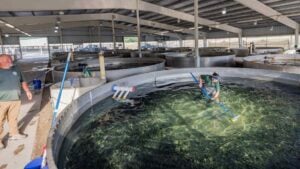 A recirculation pump at a spring-fed Virginia trout hatchery shut off overnight during a drought that had its spring at a historic low, and about 130,000 of the 249,000 trout being raised for 72 stocked waters in 11 counties died, so the survivors are now being fed extraIndustry · 16 hours ago