
- 2 MONTHS AGO · ENERGYA Connecticut city stood 1,920 solar panels on a sealed garbage hill where no steel post can go in, because a driven pile would punch through the lid keeping decades of trash away from the water, so concrete blocks hold every rack down, and the dump now pays city hall $6,000 a month
- 2 MONTHS AGO · ENERGYCurved solar mirrors stand more than 36 feet over a live railroad track in a Belgian port, on piles driven 66 feet into ground made of dredged sand, and the plant has never made a watt of electricity, because everything it catches leaves as 145-psi steam
- 3 WEEKS AGO · ENERGY131 feet of solar panels shipped already wired from Australia unfold like a paper fan across a 21-foot California irrigation canal and fold back on a rail whenever the district drags an anchor chain down the channel to rip out the weeds, then roll out over the water again
- 4 DAYS AGO · ENERGYAn 11,000-volt ship connector packed into its own container just passed factory tests with outside inspectors watching, and it’s built to reel in a high-voltage cable from an offshore wind turbine, lock it in and let a service vessel charge its batteries without heading back to port
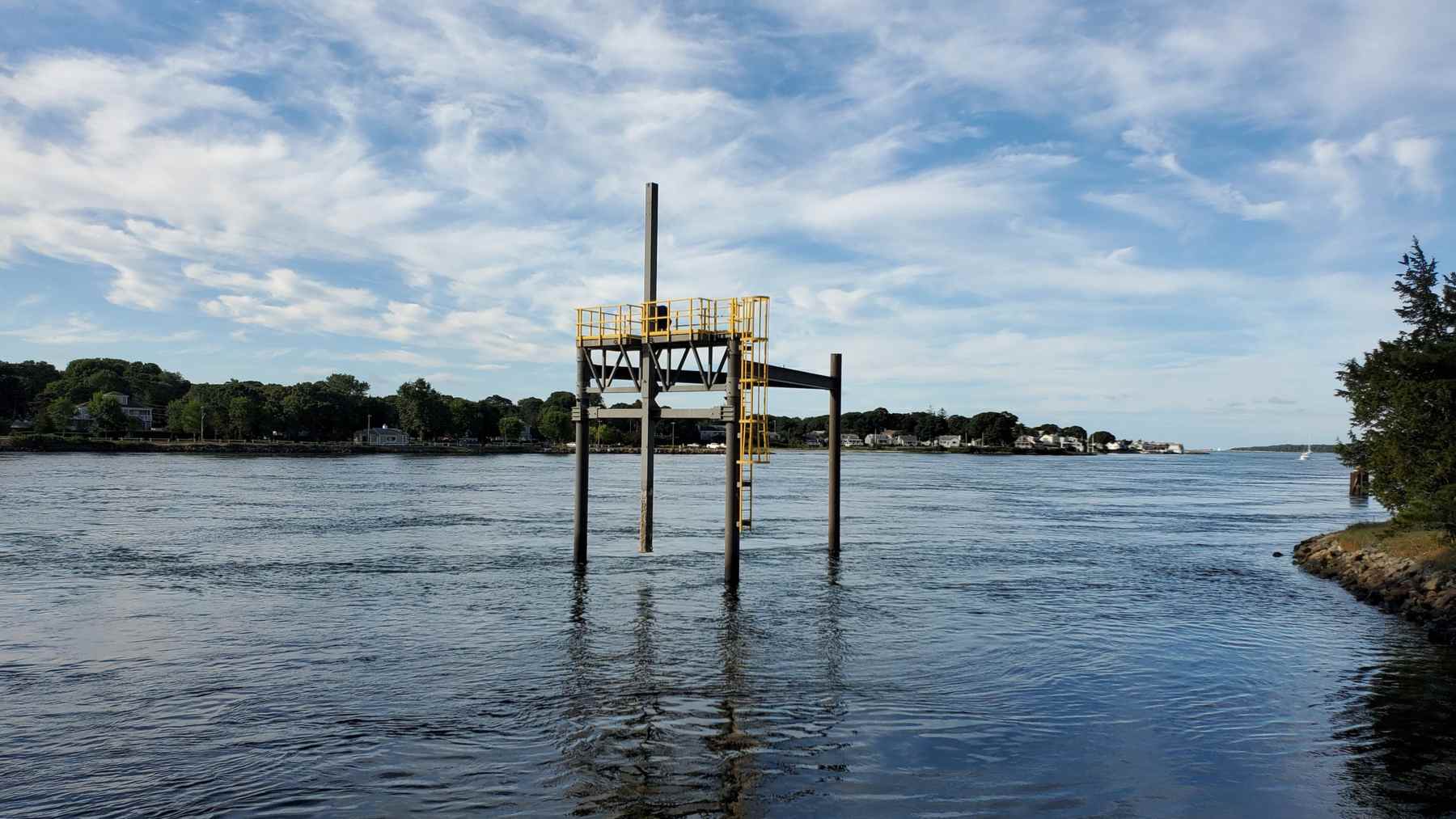
- TODAY · THIS ARTICLEA 23-foot-wide steel platform on three 90-foot piles driven 45 feet into the bed of a Massachusetts canal lowers tidal turbines up to 10 feet across into a 4-knot current on a lifting arm, then raises them back out of the water so engineers can service them dry
If you’ve ever driven onto Cape Cod, you’ve crossed the canal on one of its two big highway bridges, probably in traffic. There’s a third bridge too, a railroad lift bridge near the Buzzards Bay end. Not many people look at what’s standing in the water next to it.
It’s a steel test stand for tidal turbines, and it’s been pinned to the canal bed for about nine years. A nonprofit called the Marine Renewable Energy Collaborative of New England (MRECo) runs it, and it’s lined up a new tenant. In late July, an Alaska company called Sitkana said it plans to test a prototype turbine there, while MRECo works through upgrades meant to let turbines on the stand send power to the grid.
If tidal power isn’t something you think about much, a tidal turbine is basically an underwater wind turbine. The tide shoves water through the 7.4-mile canal one way, then turns around and shoves it back, and a turbine sitting in that flow spins either way. Getting one to survive months in salt water takes a lot of testing, and that’s what this stand is for.
So what’s standing in the canal?
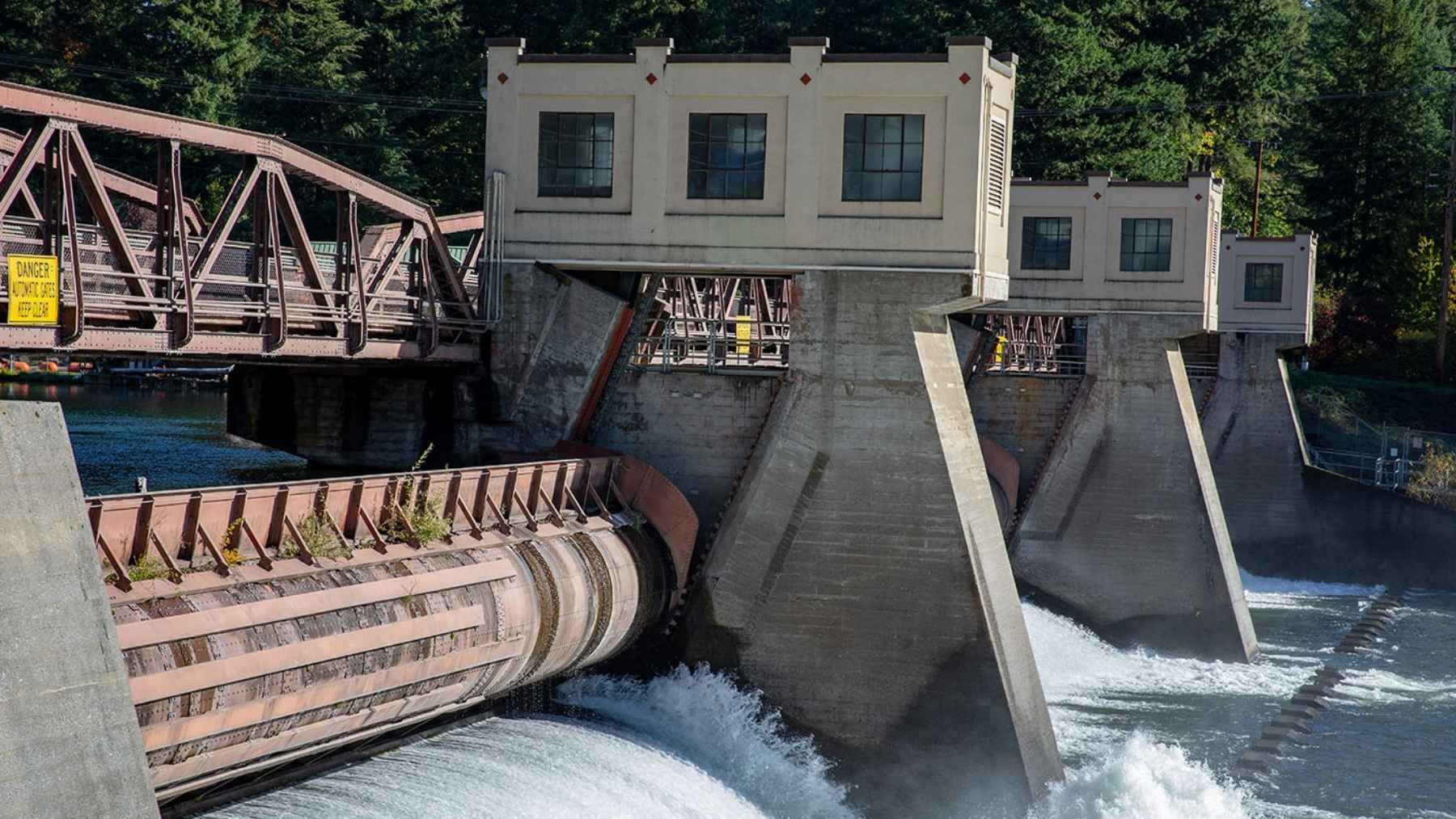
Physically, it’s a modest thing. A steel frame stands on three piles about 100 feet from shore, right beside the railroad bridge, in roughly 23 feet of water. The federal license puts the steel structure at 23 feet wide and 56.2 feet tall.
The piles do most of the work. Each one is 90 feet long, and 45 feet of it is driven into the canal bed, according to Engineering News-Record’s account of the build.
In the middle of the frame there’s a lifting arm. It lowers a turbine into the current, holds it there while the tide does its thing, and raises it back out so engineers can work on it in the open air. The license calls it a vertical mounting pole with an electric lift, which is a fairly dry way to describe the most useful bit of hardware on the platform.
So why not just hang a turbine off a boat?
You could. But a barge or a seawall tends to block some of the water flowing around a turbine, which skews the measurements, and MRECo says the stand’s test opening is wide enough to avoid that. A frame pinned to the bottom also stays put. It doesn’t drift, swing on an anchor line or bob around in the chop, so a reading from one week can be compared with one taken a month later. MRECo director John Miller told ENR the site is “the only place in the world where turbines can be tested” under steady conditions you can repeat, from a fixed stand, in actual seawater. That’s a pretty specific claim, and it’s his.
A tank maker built it, and a boulder got in the way
Oddly enough, the structure came out of a tank shop. MassTank, a steel tank fabricator in Middleboro, Massachusetts, built the frame, and AGM Marine drove the piles from a Triton three-spud barge. A spud barge drops big steel legs to the bottom so it can stand still in moving water. That’s pretty handy when you’re hammering a pile into one exact spot.
It didn’t all go to plan. According to ENR, the installation took about eight days in November, and one of the piles ran into a boulder on the way down and had to be shifted about 6 feet. That cost two days and pushed the job over budget. The stand came in at roughly $300,000, paid for by the Massachusetts Seaport Economic Council.
The design had already changed by then. The original bid called for a fixed turbine mount on just two piles, until engineering firm GZA GeoEnvironmental pitched an arm that could lift turbines out for maintenance. By the time the steel went in, it had the arm and three piles. Frankly, that’s probably the smartest change anyone made to the project.
So how big are the turbines?
Small, by tidal standards. MRECo says the stand takes turbines about 10 feet across (TEAMER, the Department of Energy’s marine testing program, lists the exact limit as 9.8 feet), while full-size tidal turbines run around 40 feet. I went through the Federal Energy Regulatory Commission’s pilot license, and on paper it allows a turbine up to about 13 feet across, a bit more than the arm is set up for. The same license caps output at 50 kilowatts and lets only one turbine sit on the stand at a time.
That’s deliberate. A partial-size turbine in real ocean water fills the gap between a university test tank and a full commercial machine on the seabed, and the idea is to catch problems while they’re still cheap to fix. MRECo says a developer can get a test done there for $30,000 at the low end, against several million dollars at a full-scale site. That seems like a pretty good deal for a startup. The Bourne stand is basically the tidal cousin of the wave-energy flap off a Hawaii pier we covered recently.
From the looks of things, the stand hasn’t exactly been crowded. Two turbine tests lined up early on got canceled over COVID logistics, so the first turbine to go on the stand was a concept design from Littoral Power Systems of New Bedford, as MRECo announced at the time.
Grid power is still a work in progress
MRECo holds an eight-year pilot license from FERC, and it says it’s the only US tidal test site licensed to let turbines push power onto the grid. The license lays out a 775-foot overhead line at 13.2 kilovolts running to shore, with the power sold to Eversource.
But permission and a working cable are two different things. In October of last year, the Massachusetts Clean Energy Center announced $1,885,870 to upgrade MRECo’s test sites, covering new data systems, safety and sensor work at Bourne, and grid access for tidal turbines. When Sitkana’s plans came out in July, the reports still described grid-connected testing as something MRECo was preparing for. I can’t find anything from MRECo saying the hookup’s finished. That same week, we looked at a British tidal turbine already feeding Japan’s grid.
So what’s Sitkana bringing?
Sitkana builds its system from small modular units that link together into bigger arrays, so you can scale up without heavy installation gear. Founder Lance McMullan wants power that’s simpler to put in and look after in far-off places, and he called the canal site “one of the few places” where Sitkana can check its whole system in one go. That seems like a sensible pitch for coastal towns that can’t easily get a crane barge on site. Alaska’s no stranger to this stuff, either. We’ve covered a river turbine that’s sat on an Alaskan riverbed for years.
Unfortunately, Sitkana hasn’t published the prototype’s size or power rating, and neither the company nor MRECo has put out a date for it going in the water. So I can’t tell you yet how it stacks up against the arm’s 10-foot limit.
Offshore Energy reported Sitkana’s plans on July 27, and under MRECo’s federal license, the stand can host up to four turbines a year, with each test expected to run one to two months.
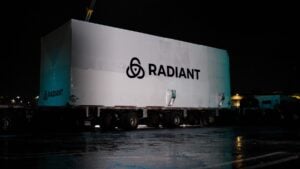 A 1-megawatt reactor that rode a flatbed more than 1,000 miles from a Los Angeles suburb to an 80-foot concrete dome in Idaho has been approved for a test no microreactor has been cleared for before, 60 days at full power with at least 150 hours untouched, and it still has not been fueledEnergy · 3 hours ago
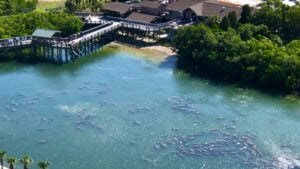 A power plant on Tampa Bay that cools itself with seawater sends it back warm into a canal where manatees gather whenever the bay drops below 68 degrees, and with 10 Florida plants doing the same, about two-thirds of the state’s manatees ride out the coldest days beside a machineEnergy · 4 hours ago
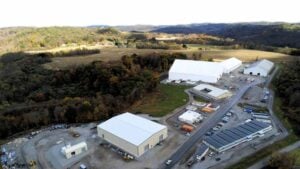 A 44-acre nuclear dump in Pennsylvania where a fuel plant buried its waste in 10 trenches has sent off its first truckloads of contaminated soil, dug a little at a time inside buildings built over the trenches, bagged into steel containers and driven 60 miles to a train bound for UtahEnergy · 6 hours ago