
Sinking a mine shaft has never been hard to explain. You lower a crew to the bottom of a hole, they drill into the rock, pack the holes with explosives, ride a bucket back to the surface, blast, then head back down to clear the rubble and start over.
Every foot of depth gets won with people standing at the bottom of an ever-deepening pit, with everything above them, loose rock included, pointed straight at their hard hats.
It is about as bad as job descriptions get in mining, and for more than a century there was no real way around it.
Herrenknecht, the German company that builds a huge share of the world’s giant tunnel boring machines, sells a way around it. The Shaft Boring Roadheader, or SBR, grinds blind shafts, the kind with no exit at the far end, using a spinning drum on a telescopic boom.
It cuts holes between 23 and 39 feet across, down to 5,249 feet, while the people who used to work at the shaft bottom run the machine from enclosed decks hanging above the drum.
And the deepest hole one of these has ever attempted is being cut right now, under a national park in northern England. Anglo American’s half-year report, published July 30, puts the service shaft at its Woodsmith mine at 2,966 feet down. That leaves 2,283 feet to go.
The cutting cycle is closer to milling than drilling
Forget the image of a giant drill bit. The SBR carries a rotating cutting drum on the end of a telescopic boom, and it works the shaft bottom the way a milling head works a block of steel: in passes.
Per Herrenknecht, the first cut goes about 8 inches deep. The drum then sweeps clockwise from the center of the shaft out to the wall, section by section, until a full layer of rock is gone. After five of those cycles the shaft is one meter, about 3.3 feet, deeper, the whole machine gets lowered by that meter, and the sequence starts again.
The loosened rock never gets shoveled. A pneumatic mucking system, essentially an industrial-grade vacuum, pulls the cuttings off the shaft bottom and into a suction tank, and from there they head up and out. No explosives, no mucking crew, no one on the floor of the pit at all.
The drum has limits. Herrenknecht rates the SBR for soft to medium-hard rock up to 120 MPa, around 17,400 psi, which covers salt, potash and sandstone but not the really angry stuff. For hard rock the company showed a sibling at Bauma 2022, the Shaft Boring Cutterhead, designed for up to 250 MPa with a full cutting wheel, a machine that starts at 450 metric tons and targets 20 to 26 feet of shaft a day, according to International Mining.
It hangs in the shaft like a 197-foot chandelier
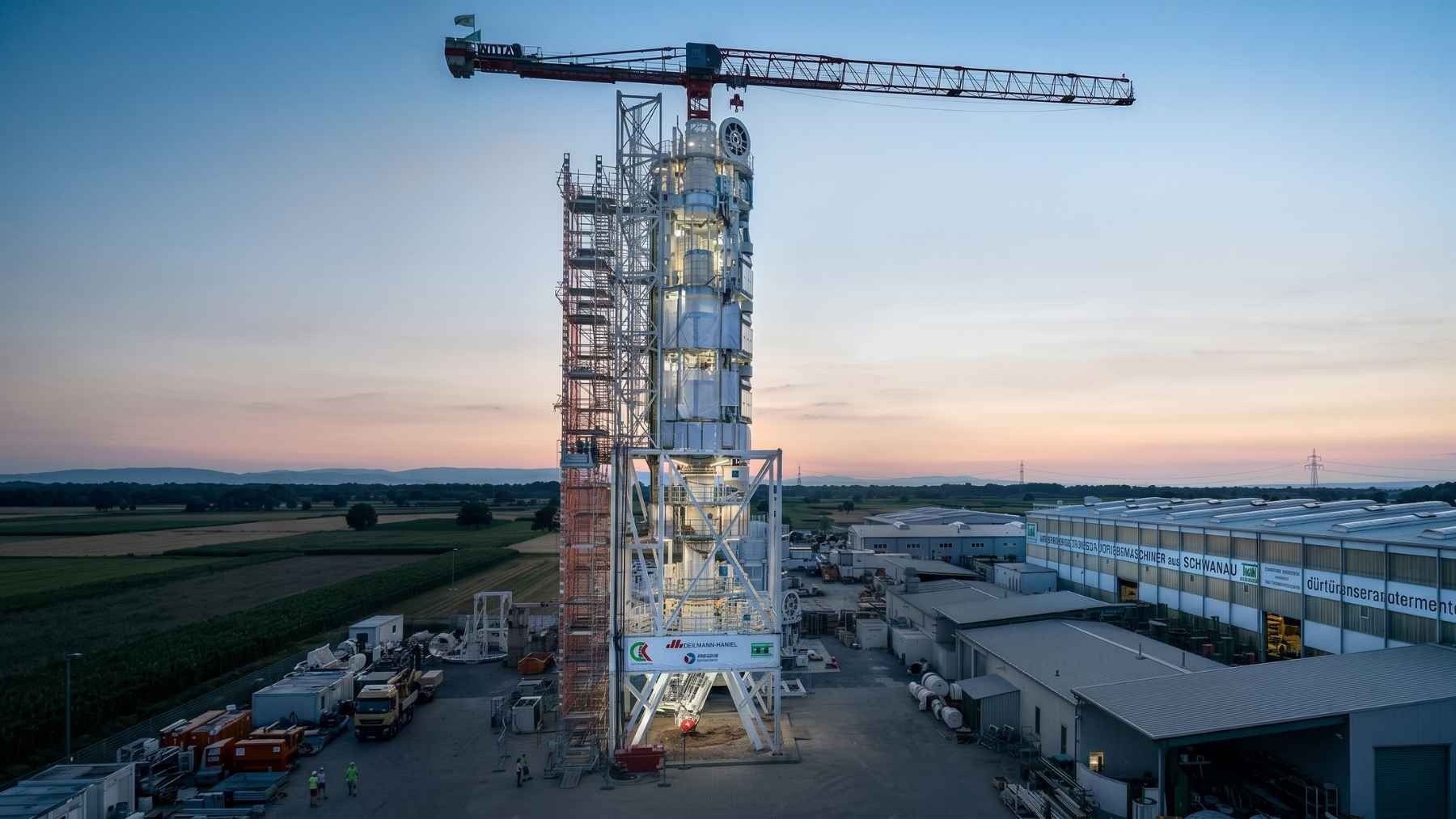
The machine itself is a tower. The SBR stands 197 feet tall, with 12 work decks and two service platforms stacked above the cutting boom, and the entire thing hangs in the shaft from steel ropes, paid out by winches on the surface as the hole deepens.
That stack of decks is the actual trick. While the drum grinds away at the bottom, crews on the platforms above are lining the freshly cut wall with shotcrete, bolts or concrete segments at the same time. Shaft sinking used to be a strictly one-thing-at-a-time business. The SBR turns it into an assembly line pointed at the center of the Earth.
The pair working at Woodsmith are third-generation machines, and the upgrades tell you exactly where the anxiety lives. Each one carries two retractable robotic probes that drill ahead of the shaft bottom to test the ground and grout it before the drum ever touches it, plus an additional control cabin on the surface for running more of the operation remotely.
Which matters here more than usual, because unlike the SBR’s first two projects, nobody is freezing the ground at Woodsmith. The machine takes the rock, and the water in it, as it comes.
The hole it is cutting right now
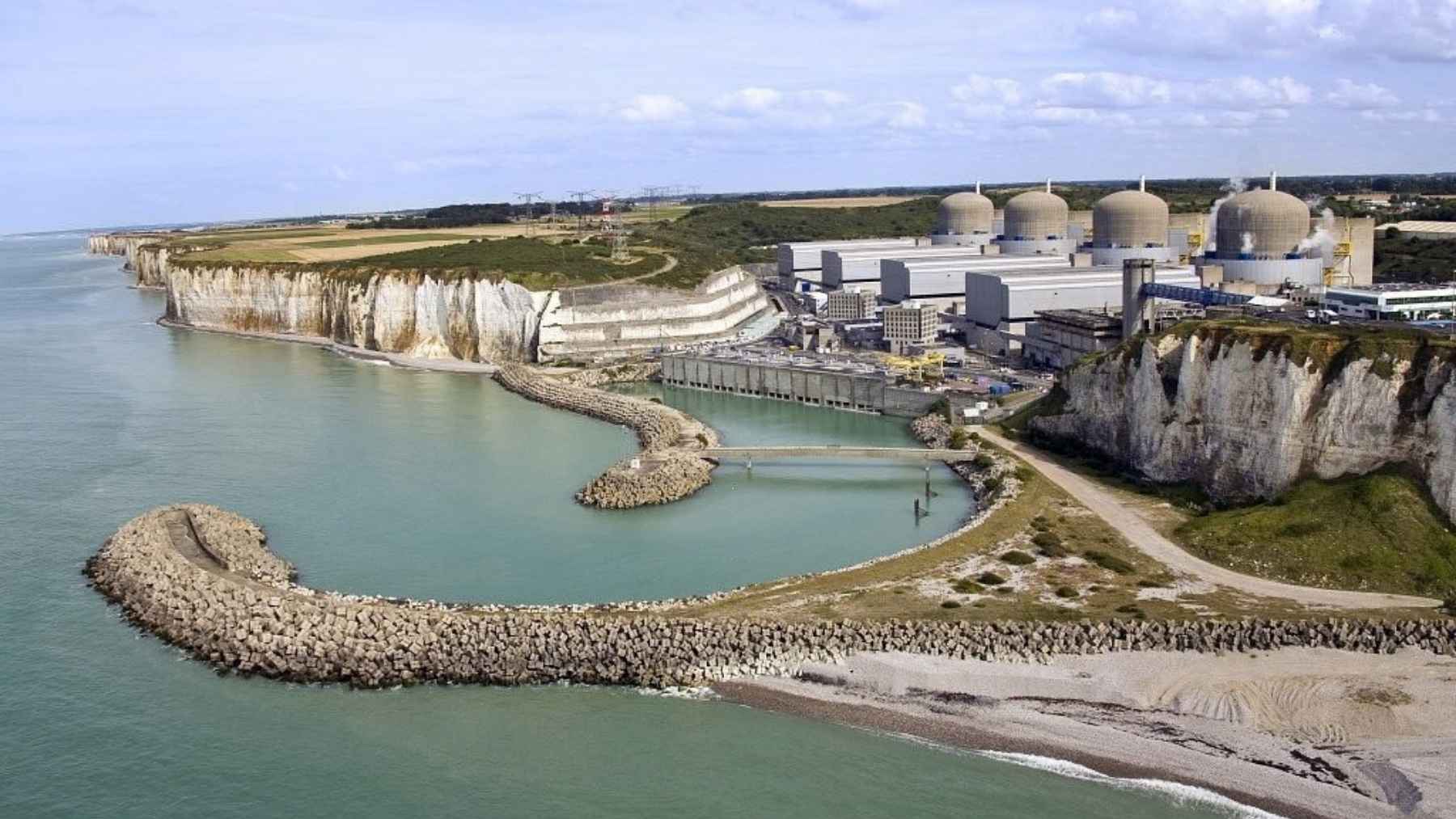
Woodsmith sits in the North York Moors National Park, just south of Whitby on England’s northeast coast, on top of the world’s largest known deposit of polyhalite, a natural mineral fertilizer. Anglo American’s plan is to pull the ore up through two shafts roughly a mile deep, then send it 23 miles underground on a conveyor to Teesside, so the national park above barely notices.
The service shaft is where the action is. As of the July 30 report it sits at 904 meters, those 2,966 feet, out of a planned 1,600, and the SBR is currently grinding through the Sherwood Sandstone, a hypersaline, water-bearing layer of hard rock. Anglo says the rate of progress through that stretch is helping determine the overall project schedule, which will feed the final investment decision the company is preparing for from 2028.
So the timeline of a multibillion-dollar mine is currently being set by how fast one drum can chew wet, salty sandstone.
The second machine is having a quieter decade. Sinking on the production shaft was paused in June 2024 at 712 meters, 2,336 feet, when Anglo slowed the whole project down to shore up its balance sheet, and that SBR has been hanging there ever since. The 23-mile tunnel, meanwhile, has crept to 18.9 miles.
The project is not exactly gathering dust, though. In February 2026, Mitsubishi signed an investment agreement to support Woodsmith’s development, and Anglo says the Japanese trading house could end up with a stake of around 25 percent when that final investment decision comes.
Two holes under the Canadian prairie proved it works
None of this was a sure thing when the first SBR went to work. The concept got proven at BHP’s Jansen potash mine in Saskatchewan, where a pair of SBRs cut two 24-foot-diameter shafts to 3,297 and 3,199 feet by 2018, which Herrenknecht bills as the first mine shafts anywhere sunk by mechanical excavation alone.
The second generation went to Belarus, sinking two frozen shafts at the Nezhinsky potash project to 2,461 and 2,287 feet and setting shaft-sinking speed records along the way, run by Redpath Deilmann, the same contractor now driving the machines at Woodsmith.
And the idea has admirers. China recently started sinking a kilometer-deep vertical shaft with its own 500-ton machine it calls an “underground aircraft carrier,” aimed at harder rock than the SBR will touch. When your rivals start building their own version of your weird machine, the weird machine is probably onto something.
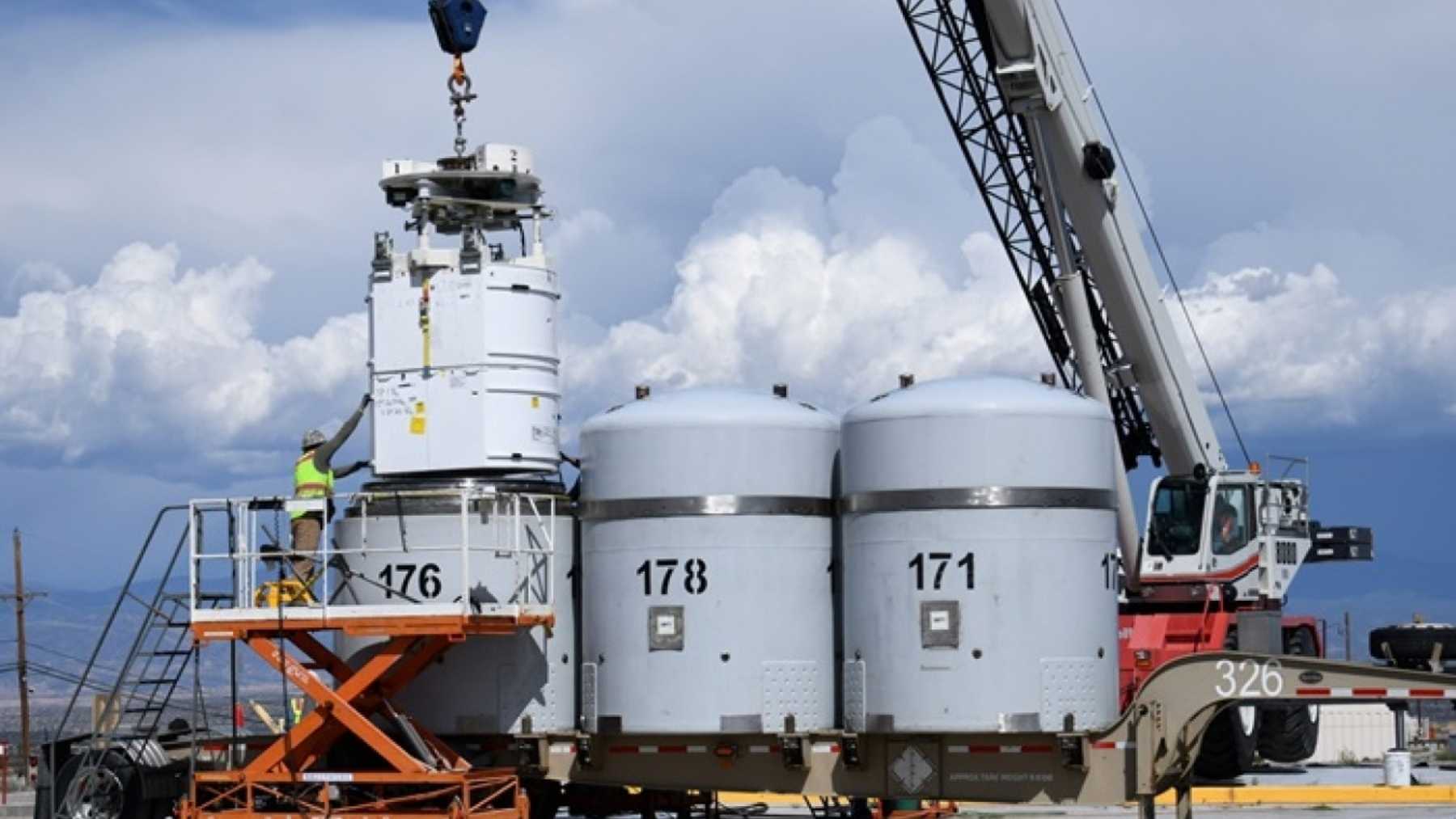
There is a reason everyone wants this solved. Shafts are the bottleneck of everything underground: Germany has a remote-controlled excavator built to rescue 126,000 drums of nuclear waste from a collapsing salt mine, and it is parked on the surface until 2039 because the shaft wide enough to lower it down does not exist yet.
Wet sandstone gets to decide the schedule
The next couple of thousand feet at Woodsmith are the real exam. If the SBR holds a good pace through the Sherwood Sandstone, Anglo gets the numbers it needs for a 2028 investment decision, the paused twin at 2,336 feet gets switched back on, and the deepest mechanically sunk shafts ever built get finished by machines nobody has to stand under.
If the sandstone wins, the schedule slips, and the old way of sinking a shaft gets to keep its reputation a little longer. The drum, for its part, has no opinion. It just needs somebody upstairs to keep it turning.