
- 1 MONTH AGO · ENERGYA nuclear plant’s reactor building left Vermont as 28,000 cubic yards of radioactive concrete bound for a Texas disposal site, and the hole gets filled with 28,000 cubic yards of clean crushed rock from a local quarry, 45 years ahead of the original schedule
- 1 MONTH AGO · ENERGY365 trains hauled 364,000 tons of clean stone into Britain’s oldest nuclear waste site over a year and a half, so its earliest trenches can be sealed under a clay cover that swells shut when rain hits it, and the waste itself never has to move at all
- 3 WEEKS AGO · ENERGYThe Navy is putting a 70-ton reactor that ships in a 35-foot container and runs five years on one load of fuel on an Indiana weapons base, its first power reactor on land since Antarctica, and the only one built is still inside an Idaho test dome
- 2 WEEKS AGO · ENERGYA 75-year-old nuclear lab in South Carolina caught fire in one room and put a 310-square-mile federal site under emergency for more than four hours, with trains, barges and planes held off the area, and the Energy Department said the next day that nothing radioactive got out
- TODAY · THIS ARTICLEA 44-acre nuclear dump in Pennsylvania where a fuel plant buried its waste in 10 trenches has sent off its first truckloads of contaminated soil, dug a little at a time inside buildings built over the trenches, bagged into steel containers and driven 60 miles to a train bound for Utah
Hauling dirt off a job site is about as dull as heavy work gets. Someone digs it up, it goes in a truck, the truck leaves, and no one on the street gives it a second look.
So it’s a little unusual for the U.S. Army Corps of Engineers to put out a press release about one truck. On October 27, the first load of contaminated soil left the Shallow Land Disposal Area in Parks Township, Pennsylvania, headed for a licensed disposal site out of state. The Corps announced it the next day.
That truck’s been a long time coming. Congress told the Corps to clean this place up more than two decades ago, and the dirt it’s carrying has been in the ground since the 1960s.
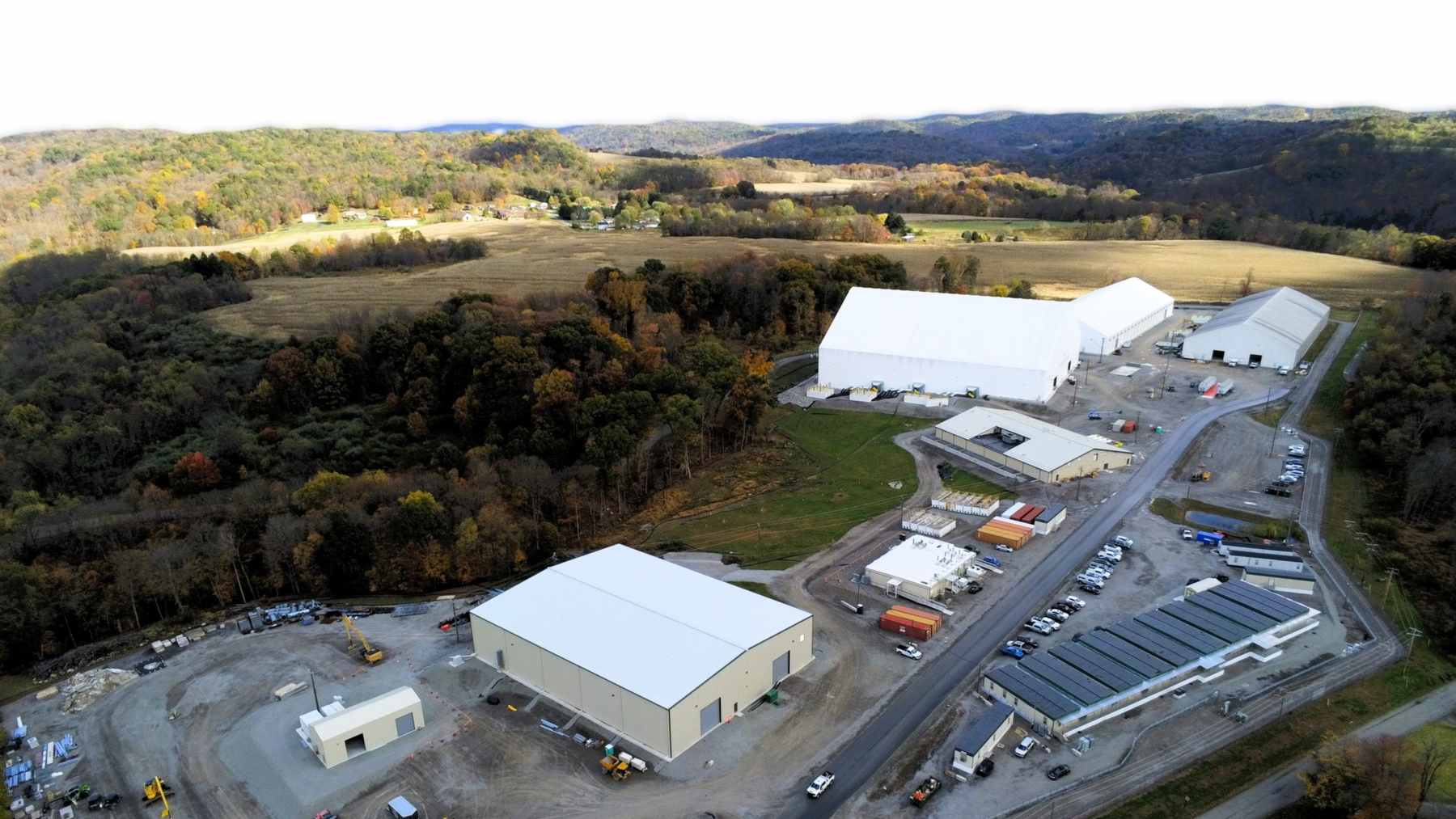
The site covers 44 acres along the Kiskiminetas River, near Apollo and Vandergrift, about 23 miles outside Pittsburgh to the east-northeast. Between 1960 and 1970, the Nuclear Materials and Equipment Corporation (usually just called NUMEC) buried low-level radioactive waste there in 10 trenches. According to the Corps, that waste came out of work done under Atomic Energy Commission contracts, mostly turning out fuel for the Navy’s nuclear submarines and for power plants. BWX Technologies still owns the land.
The cleanup runs through something called FUSRAP, the Formerly Utilized Sites Remedial Action Program. Basically, it’s the federal program for places that got contaminated during the early days of America’s atomic energy work, and the Corps is the agency that shows up with the excavators. Parks Township got on that list through Section 8143 of Public Law 107-117, which Congress passed in 2002, and it’s been a FUSRAP site ever since.
This is the Corps’ second try
The Corps has actually been here before. It started digging in 2011 and stopped that same year after finding safety violations by the contractor it had on site at the time. Trenches 2 and 3 got partway done, down to about 8 feet, and the other eight trenches stayed as they were found.
The second attempt hasn’t been quick either. Over the years, the start date slid from 2023 to 2024, then to spring 2025, then summer, then fall, then winter, which is about as many times as I’ve promised to clean out my garage. Digging finally started on April 7, beginning with the topsoil over Trench 8.
In fairness, this isn’t a garage. Col. Nicholas Melin, then commander of the Corps’ Pittsburgh District, called it “one of the most complex and specialized construction projects” in the Corps’ whole portfolio in a Corps news story last fall, and I’m inclined to cut them a bit of slack on the schedule.
Old mines are why it’s coming out
So why not just leave it buried?
It’s a fair question when the waste’s been sitting there for decades. According to the Tribune-Review, Corps officials have pointed to old mines under the site, which could cave in and let the waste shift. “It was determined it was an unacceptable risk to leave it long-term,” project manager Steve Vriesen told residents at a public meeting last year.
You’ll notice the Corps has put a lot of effort into keeping the neighbors in the loop. It says a serious accident on site is unlikely, and it’s held tabletop exercises with local first responders and run a joint drill with them too. Pennsylvania’s Department of Environmental Protection was also set to run its own air monitors around the site, so the Corps isn’t the only one checking its homework. That’s a pretty sensible setup, if you ask me.
So how do you move radioactive dirt?
Slowly, and in small bites. Crews remove material in batches of roughly half a cubic yard, according to the Tribune-Review, and trenches under a roof sit inside buildings with their own air filtration. Trench 8 is in one of those buildings, which covers trenches 4 through 8. A second building covers Trench 1, while the Corps plans to dig trenches 2, 3 and 9 in the open, since it expects to get through them in one season. Trench 10 comes last.
Every scoop goes into a soil bag, and every bag goes through an X-ray machine. Depending on what the X-ray shows, a bag can get more scans, sampling and lab tests, and the Corps keeps going until it knows exactly what’s in there. Then the sealed bags get packed into what the Corps calls intermodal shipping containers. If you haven’t heard the term, an intermodal container is a shipping box built to move between trucks and trains without being unpacked, and these are heavy-duty steel. Trucks haul them about 60 miles northwest to Wampum, Pennsylvania, where they go onto rail cars bound for Utah, and the Tribune-Review has reported the final stop as a disposal site in Clive.
“The waste is transported in accordance with the Department of Transportation regulations,” Vriesen said in the Corps’ announcement, adding that there are safety checkpoints at every step. It’s arguably the least exciting way anyone could move this stuff, and frankly, that’s the idea.
We’ve seen old nuclear material come out of storage before, like the uranium-233 canisters being cut apart inside a glovebox, and it’s rarely fast. And if you caught our piece on the Moab cleanup train, you’ve already seen radioactive leftovers riding the rails in Utah.
It’s a long way from done
The Corps hasn’t said how much went out on that first truck. Its release doesn’t give a weight or a container count for the shipment, which is a bit of a shame if you like your milestones with a number attached. It does give a running total, though. Since April 7, the contractor’s dug out close to 1,560 cubic yards of waste, plus 115 drums of the 55-gallon kind.
For scale, the Tribune-Review has put the total buried in the 10 trenches at about 33,000 cubic yards, and the Corps’ project page says roughly 30,000 tons of material has to be dug up and processed. By July, the Corps’ own progress chart had Trench 8 at 57% complete, with 728 cubic yards excavated and nothing disposed of yet.
When the Corps first laid out the trucking plan, the Tribune-Review reported it as up to 12 shipments a week, with three trucks running two days a week. The Corps estimated last November that the whole job would run about six years at a cost of roughly $500 million, and it’s said the timeline depends on how long the trickier material takes to remove. I’d expect that six-year figure to move at least once more.
If you live nearby and want to ask how much was on that first truck yourself, the Corps has scheduled its next public information session for December 2.
 A 726-foot dam on the Colorado River will test whether its 12 older turbines can run below the water level that’s supposed to wreck them, a first in the dam’s history, on limited hours and with frequent inspections, while its lake sits 4.9 feet above that line after the floodsEnergy · 3 hours ago
 A 5,100-foot well in the woods of northern Minnesota flows gas that is 8 percent helium, more than 25 times the grade the industry calls worth producing, with no water and no pumping, and it sits in a state where no gas has ever been producedEnergy · 4 hours ago
 A reactor built from 664 two-inch uranium cubes hung on wires in heavy water under a German castle was Heisenberg’s last shot at a chain reaction, and two of the surviving cubes now show it needed about twice the uranium and heavy water it held, more of both than Nazi Germany hadEnergy · 17 hours ago