
- 5 MONTHS AGO · ENERGYCalifornia’s grid batteries just shoved 12,000 megawatts onto the system at once, as much power as 12 nuclear plants or six Hoover Dams, covering 44% of the whole state at the exact hour it usually strains
- 5 MONTHS AGO · ENERGYAmerica just finished its largest clean-energy build ever, a 3,650-megawatt wind farm in New Mexico wired to Phoenix through a 550-mile line as long as New York to Columbus, except the Hoover Dam went up in five years and this one took eighteen
- 2 MONTHS AGO · INDUSTRYA 660-ton excavator moved 22.2 million cubic yards out of an Australian coal mine in a year, four times what it took to dig Hoover Dam, in 6,840 hours of work
- 1 MONTH AGO · ENERGYA 24-foot tunnel borer chewed 2.7 miles under Lake Mead against water pressure of up to 218 psi, with a car tire carrying 33, to plant a drinking straw near the lake bottom, and the lake just hit its lowest level since Hoover Dam first filled it
- TODAY · THIS ARTICLEA 726-foot dam on the Colorado River will test whether its 12 older turbines can run below the water level that’s supposed to wreck them, a first in the dam’s history, on limited hours and with frequent inspections, while its lake sits 4.9 feet above that line after the floods
Most drivers have a rough idea of how far they can go once the gas light comes on. The owner’s manual might give you a number, but you don’t really know where your car gives up until it actually does, and most of us would rather not find out on the shoulder of an interstate.
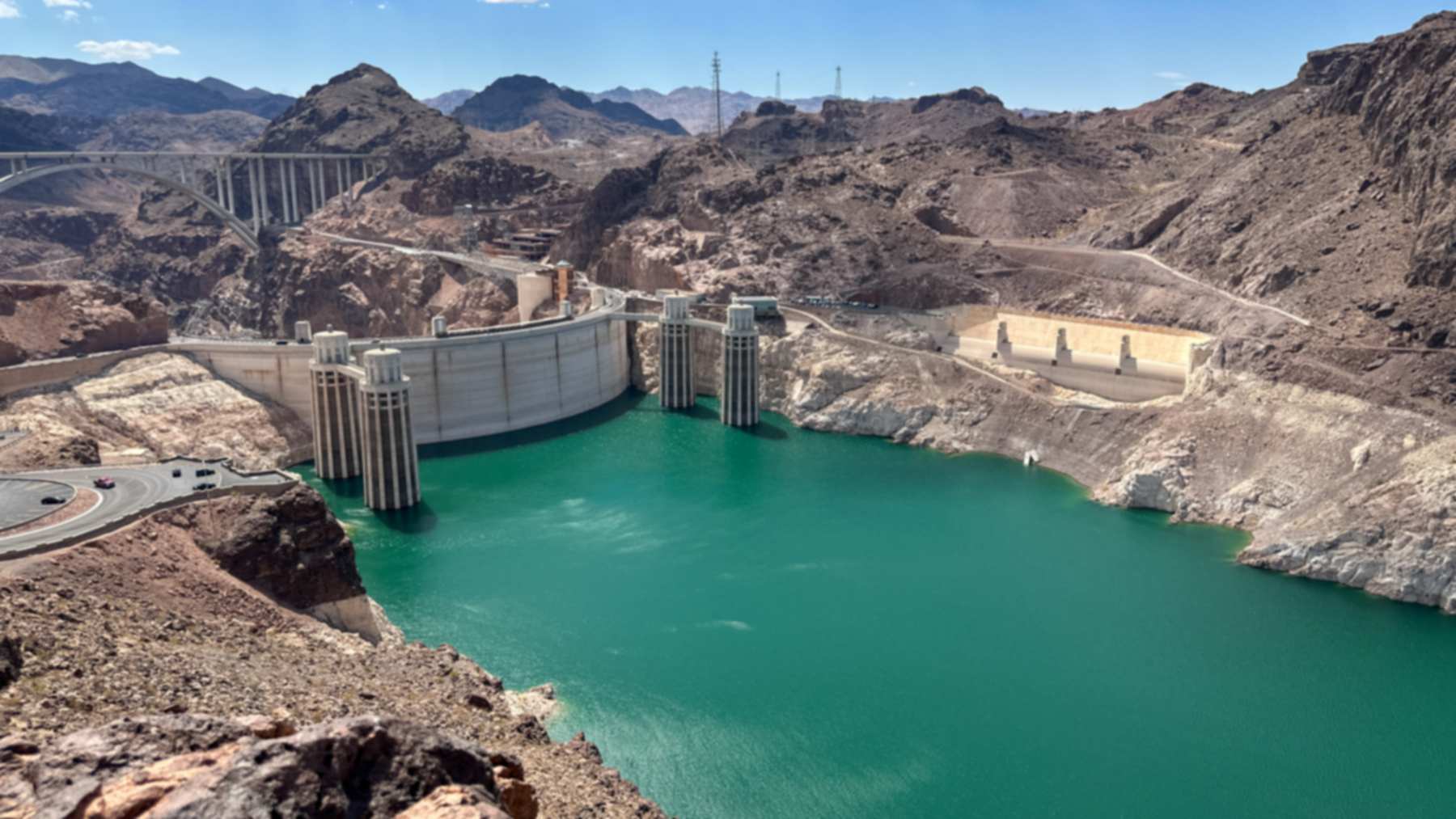
The Bureau of Reclamation is about to do its own version of that at Hoover Dam. The agency plans to test whether the dam’s older turbines can keep running once Lake Mead drops below 1,035 feet, the elevation where Reclamation’s been saying for months that those machines start to get hurt. Reclamation spokesman Peter Soeth told the Las Vegas Review-Journal it’s the first time a test like this has been tried in the dam’s history, and it’ll run on tightly capped hours, with the units monitored and inspected often.
Hoover has 17 turbines. Five of them are wide-head units built for low water, and the other 12 are the older design. Soeth said the results will “clarify the shutdown elevation,” which tells you Reclamation would like a firmer number than the one it’s been planning around.
If you missed our earlier look at the 1,035-foot line, here’s the short version. As the lake drops, there’s less water pushing down on the turbines, and the flow through the older blades gets rough enough that tiny vapor bubbles form and pop against the steel, pitting it a little at a time. That’s cavitation, and Reclamation said in May that the older units are expected to take severe cavitation damage below 1,035 feet, with the dam’s capacity possibly sliding to 382 megawatts, down from the 1,302 megawatts it had estimated before.
So why would anyone run a turbine where it’s supposed to get hurt?
Because if those 12 machines can safely run below the line, even for a few hours at a time, that’s power utilities don’t have to go out and buy somewhere else. As far as I can tell, 1,035 feet is the elevation Reclamation plans around, and Soeth’s comment suggests the real cutoff for the older units hasn’t been pinned down yet. A careful test, with somebody watching the steel, is a pretty sensible way to find out.
Not everyone loved the idea at first. Eric Witkoski, executive director of the Colorado River Commission of Nevada, told the Review-Journal he was very concerned when he first heard about it. His worry, basically, was that Reclamation would just run a unit down, pull it out and check whether it had wrecked it. Which, frankly, is the question I’d have asked too.
He says he came away reassured. According to Witkoski, Reclamation can measure damage as it happens, keep an eye on it and take a unit offline.
Witkoski’s commission manages Nevada’s share of Hoover’s hydropower, and towns like Boulder City, Overton and communities in Lincoln County have leaned on that power for decades. He told the paper utilities have been getting ready to fill the gap on the wholesale energy market, where prices can swing a lot. He also called the stretch between 1,025 and 1,035 feet a gray zone, since nobody can say yet how much power utilities will be able to buy while the tests are running.
What Reclamation hasn’t said is when the tests start, which of the 12 older units go first or how far below 1,035 feet they’ll be allowed to go. I couldn’t find any of that in the Review-Journal’s reporting or in anything Reclamation has published so far. And there’s an obvious catch. A test below 1,035 feet needs a lake below 1,035 feet, and Lake Mead isn’t there right now.
One of the five low-water turbines is out of action
Hoover’s drought insurance is already short a unit. Turbine A8, the eighth unit on the Arizona side of the powerhouse, is one of the five wide-heads, and it’s been out of service waiting on repairs for months. A Review-Journal photographer was inside the dam on November 5 and caught A8’s rotor being worked on, with the idle unit sitting on wooden planking laid over the powerhouse’s original terrazzo floor.
That leaves four.
Now seems like a good time to explain what “wide-head” means. Head is just the height of the water above a turbine, and it’s what gives that water its push. A wide-head turbine is built to work across a much bigger range of that height, so it keeps generating when the lake falls a long way. Reclamation says the wide-heads can keep going to somewhere near 950 feet without taking excessive damage. That’s about 85 feet below the line where the older turbines get into trouble.
So A8 is arguably the worst kind of turbine to have out of service right now, since the wide-heads are the only units Reclamation trusts to keep working below 1,035 feet.
More wide-heads are coming, slowly. The Review-Journal reports Reclamation is still working to use funding from the federal Help Hoover Dam Act to swap at least two older turbines for wide-head ones. Reclamation’s own release in May talked about replacing up to three, restoring at least 160 megawatts of capacity.
The floods have bought Lake Mead a little time
A big reason the lake isn’t below the line yet is rain, and a lot of it. Record flooding across the Colorado River Basin, driven by the weather pattern scientists have dubbed a Super El Niño, has pushed real water into the big reservoirs. Earlier Reclamation projections had the lake slipping under 1,035 feet before October was out.
It didn’t.
Reclamation’s daily Lake Mead readings have the lake at 1,038.93 feet on November 1 and 1,039.86 feet on November 9, a gain of 0.93 feet in just over a week. In our October 30 piece, the lake was 3.4 feet above the line. Now it’s 4.86 feet above it. Upstream, the Review-Journal says Lake Powell has climbed about 20 feet since its record low in September.
Still, you shouldn’t read too much into a good month. Reclamation won’t decide how much water to send down from Lake Powell until April 2027, and according to the Review-Journal, Mead could keep dropping through the next year even with the extra water. I suspect the test date will have a lot more to do with how fast that cushion disappears than with anything on a calendar.
Soeth told the Review-Journal he expects the first new wide-head turbine paid for by the Help Hoover Dam Act to be installed in 2028.
 A 24-foot tunnel borer chewed 2.7 miles under Lake Mead against water pressure of up to 218 psi, with a car tire carrying 33, to plant a drinking straw near the lake bottom, and the lake just hit its lowest level since Hoover Dam first filled itEnergy · 1 month ago
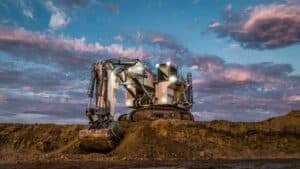 A 660-ton excavator moved 22.2 million cubic yards out of an Australian coal mine in a year, four times what it took to dig Hoover Dam, in 6,840 hours of workIndustry · 2 months ago
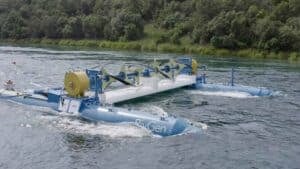 A turbine the size of half a basketball court has sat invisible on an Alaskan riverbed since 2019, powering a village of 70 where diesel lands 2,000 gallons at a time on old DC-4 planes, and Congress just moved to stop licensing it like Hoover DamEnergy · 4 months ago