
- 3 MONTHS AGO · ENERGYA drill core sat in a northern Ontario storage rack for a year and came out wearing a white crust, because the rock pulls carbon dioxide out of the air and turns it into stone, and a mine approved last month plans to grind 120,000 tons of it a day
- 2 MONTHS AGO · ENERGYA well 19,448 feet long, drilled straight down into Utah and then turned sideways for 7,500 feet of it, is pushing water into rock at 460 degrees and taking it back out at more than 400, on rigs and pumping spreads that came out of the oil patch. There is no oil under it
- 4 WEEKS AGO · ENERGYA 4,800-ton platform was installed off England and Wales to send carbon dioxide down into three emptied gas fields through a pipeline that carried natural gas the other way, and its first phase can store nearly 5 million tons a year, what close to a million gas cars put out
- 2 WEEKS AGO · ENERGYA 7-inch well nearly 3,000 feet deep on an Australian farming peninsula pumped 14,000 barrels of water a day, seven times its two narrower sister wells, and the helium in that water was purified and bottled beside the rig, the first helium bottled in Australia in three years
- TODAY · THIS ARTICLEA 5,100-foot well in the woods of northern Minnesota flows gas that is 8 percent helium, more than 25 times the grade the industry calls worth producing, with no water and no pumping, and it sits in a state where no gas has ever been produced
You probably only think about helium when a birthday balloon is drooping off the ceiling a day after the party. But if you’ve ever had an MRI, helium was cooling the magnets. Chipmakers can’t really do without it either, and on October 23 the Department of Energy added it to its list of critical materials, pointing to its role in semiconductor manufacturing.
Most of the helium you’ve ever bought came out of a natural gas well, where it rides along as a small fraction of the stream. So a well in the woods east of Babbitt, Minnesota, where helium is the main event, is getting a fair bit of attention. So is a Lake Superior town that just agreed to sell 62 acres for $1 to the company behind it.
So what’s coming out of this well?
The well is called Jetstream #1, and it belongs to Pulsar Helium, which Twin Cities Business says is headquartered in Portugal. It’s in Lake County, about 65 miles north of Duluth, and it was drilled to 5,100 feet. During flow testing, the gas averaged 8.1% helium, according to Pulsar’s project page. A second well nearby, Jetstream #2, averaged 5.6%.
Pulsar says the industry generally treats 0.3% helium as the level where a find starts to look economic. Jetstream #1’s 8.1% is 27 times that. If the grades hold up across more wells, I’d say Minnesota has a pretty serious helium field on its hands.
Then there’s how the gas comes out. Left alone, Jetstream #1 flowed at a peak of about 501,000 cubic feet a day. Nobody had to pump it. With a compressor on the wellhead pulling the pressure down, it peaked at about 1.3 million cubic feet a day. That’s a peak with help, so I wouldn’t read it as what the well does every day.
The gas also came up dry. Formation water is the salty water that lives in the rock alongside gas, and plenty of wells bring up lots of it. Jetstream #1 didn’t bring up any during testing, which Pulsar says should mean simpler processing. Compare that with the Australian well we covered last month, which had to pump around 14,000 barrels of water a day to get its helium out.
Where does helium even come from?
Most of the helium on Earth comes from radioactive decay. Uranium and thorium in old rock break down very slowly, and each decay throws off a helium nucleus that can build up for ages if the rock above it is tight enough to hold it in.
Pulsar says Minnesota’s helium comes from the Giants Range Batholith, a mass of granite about 2.7 billion years old. Around 1.1 billion years ago, North America started to tear apart along what geologists call the Mid-Continent Rift, and molten rock pushed up to form the Duluth Complex. One chunk of it, the Bald Eagle Intrusion, now works as both the reservoir and the lid on the gas, according to the company. The rift failed, which is basically why the middle of the country is still in one piece.
And nobody went looking for the helium. In 2011, a mineral exploration company drilling for nickel hit a pocket of pressurized gas instead. The Ely Echo reported that the hole roared like a jet engine, which is apparently where the Jetstream name comes from. Pulsar drilled its first well right next to that old hole.
As for the helium-3, it’s a rare, lighter form of helium, and it’s used in the ultracold refrigerators that quantum computers run inside. Gas from Jetstream #1 carried 11.2 to 11.9 parts per billion of it, and the USGS Noble Gas Laboratory in Denver and Lawrence Livermore National Laboratory each verified that independently. Pulsar says few gas reservoirs on land have ever been reported with more.
I’d argue the federal labs matter more than the number here, since pretty much everything else we know about this well comes from Pulsar’s own releases.
Minnesota has never produced gas
Here’s where it gets complicated. According to KAXE, Minnesota has never had any gas extraction, so it never needed rules for it. State law requires a permit to extract gas, and the Legislature put a moratorium on issuing those permits until rules are in place. The Department of Natural Resources has been working on them for the past couple of years.
In May, Gov. Tim Walz signed a law setting helium-specific permitting guidelines for Cook, Lake and St. Louis counties, according to Pulsar. It bans oil wells and fracking, and it lets companies sell the carbon dioxide that comes up with the helium. Frankly, that’s a fairly smart piece of drafting, because a well that flows on its own doesn’t need fracking anyway. The DNR’s permanent rules are still going through public comment, and Pulsar’s Cliff Cain told KAXE he expects them to pass in the next legislative session.
Why does the carbon dioxide matter so much?
Because helium isn’t most of this gas. In Pulsar’s early samples, KAXE reports, the gas was up to 71% carbon dioxide and 24% nitrogen, with less than 5% hydrocarbons.
Two Harbors is selling 62 acres for $1
On October 12, the Two Harbors City Council approved a purchase and development agreement with Pulsar’s Minnesota subsidiary. The city would sell 62 acres in its industrial district, appraised at $143,200, for $1. It would also put up to $1 million toward a rail spur, with Pulsar paying anything beyond that, and offer a 15-year property tax abatement whose value hasn’t been set yet.
In a statement quoted by KAXE, Mayor Lew Conner said, “This is an important step forward.” Admittedly, it’s only a step. The agreement doesn’t commit Pulsar to building anything, and the company still has to sort out financing, utilities, an environmental review and more approvals. If it does formally commit, it’ll have three years to get the plant running. You could argue the town isn’t risking much, since the land only changes hands if Pulsar commits.
The plant would chill the helium into a liquid and capture the carbon dioxide to sell. Liquid is pretty much the standard way to move helium long distances. You cool it to a few degrees above absolute zero, it takes up a tiny fraction of the space it did as a gas, and you can haul it in insulated containers.
On October 1, Pulsar accepted a binding $85.5 million proposal from Chart Energy & Chemicals, a Baker Hughes subsidiary, for the plant’s equipment. Pulsar says that covers equipment only, not the full build. Running flat out at its rated capacity, the helium side would turn out almost 2 million gallons of liquid helium a year, and Twin Cities Business reports the plant would capture 100,000 tons of carbon dioxide a year.
Keep in mind that all of this rests on test results. None of the gas has been sold, and Pulsar’s October 12 update says it’ll name a target date for first commercial production once permitting, financing and construction schedules are better defined. It’s a similar bet to the natural hydrogen well we covered in Saskatchewan.
Pulsar’s 365-day due diligence window with Two Harbors opened on October 14, which gives the company until mid-October 2027 to tell the city whether it’s actually going to build.
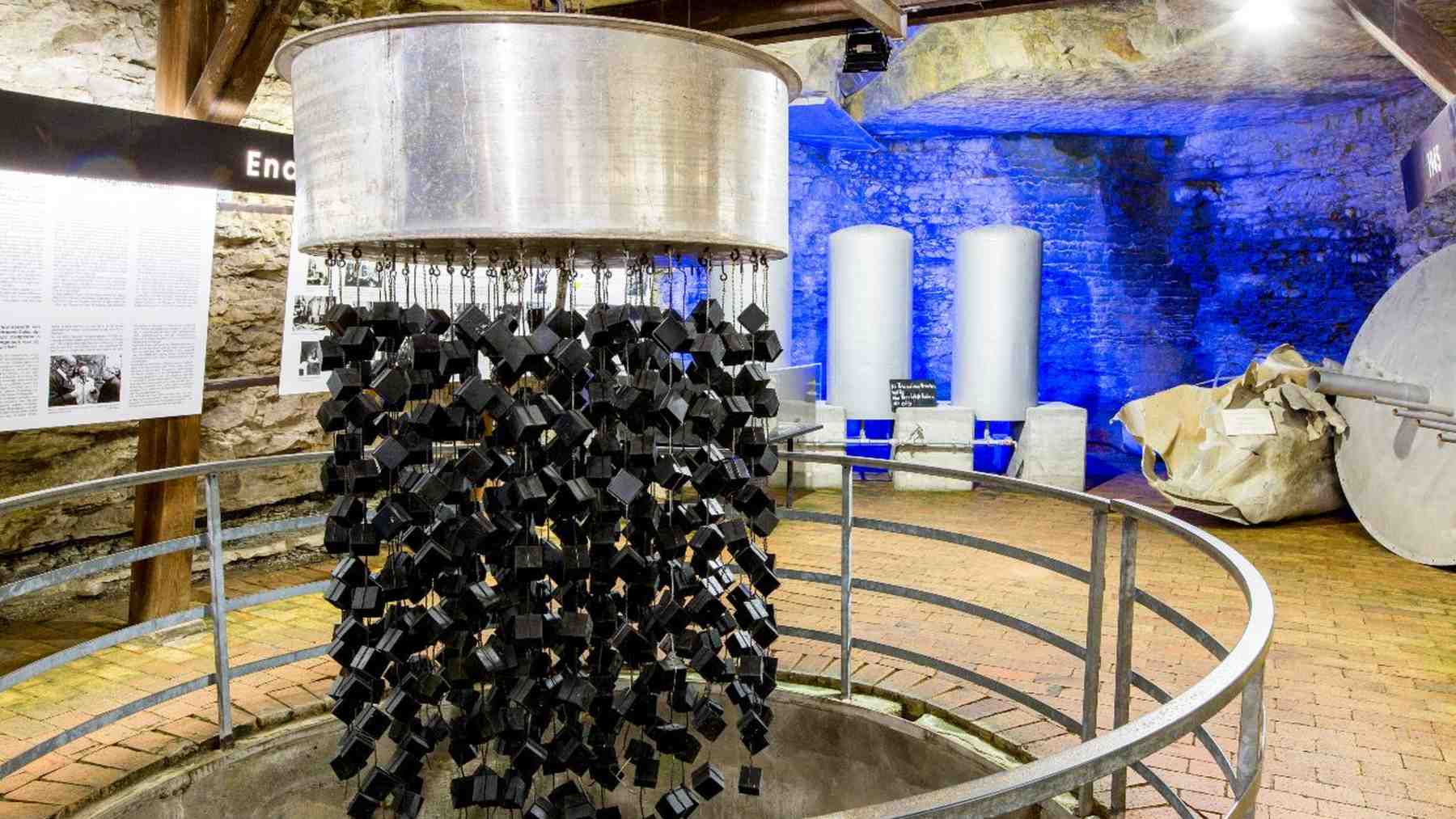
 A reactor built from 664 two-inch uranium cubes hung on wires in heavy water under a German castle was Heisenberg’s last shot at a chain reaction, and two of the surviving cubes now show it needed about twice the uranium and heavy water it held, more of both than Nazi Germany hadEnergy · 13 hours ago
 A 66-foot-deep gravel pit in Finland just started taking in about 100 million gallons of tap water, and once a nine-acre lid goes on top, it’s meant to hold enough summer heat at up to 194°F to cover as much as nearly a quarter of the town’s yearly heat demandEnergy · 15 hours ago
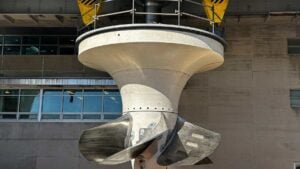 A 375,000-pound turbine now spins inside a Tennessee dam in place of one that ran for more than 80 years, and a federal watchdog just found that 196 of the 240 welds on the ring guiding water out of it failed on a job where some welders weren’t qualifiedEnergy · 18 hours ago