
- 2 MONTHS AGO · ENERGYA drone fleet is being built to pull sunlight back onto solar panels by breaking up the cloud deck overhead, and the engineer selling it spent his master’s degree doing the opposite, spraying seawater to make clouds more reflective and cool the planet down
- 1 MONTH AGO · ENERGYAn 88-ton tunnel boring machine punched out of the seabed off England after five months of being shoved along by hydraulic jacks on shore, finishing a 2,034-foot tunnel with one job, carrying the fish a nuclear power plant pulls in with its cooling seawater back out to sea
- 1 MONTH AGO · ENERGYTwo Florida reactors pull the Atlantic in through three pipes that open 1,500 feet offshore, and sea turtles ride them into a cooling canal nearly a mile long, where biologists have netted or hand-caught them 19,987 times in 47 years
- 3 WEEKS AGO · ENERGYA 930-megawatt reactor on the South African coast was cut to half power when dead sardines packed its seawater intake and a cooling pump shut itself off, the only nuclear plant in Africa was already down to one machine with its twin in refueling, and on Friday that one tripped too
- TODAY · THIS ARTICLEA power plant on Tampa Bay that cools itself with seawater sends it back warm into a canal where manatees gather whenever the bay drops below 68 degrees, and with 10 Florida plants doing the same, about two-thirds of the state’s manatees ride out the coldest days beside a machine
Most power plants in America would rather you didn’t stop and look. You get a fence, a gate, a guard booth and, if you’re lucky, a sign politely telling you to keep driving.
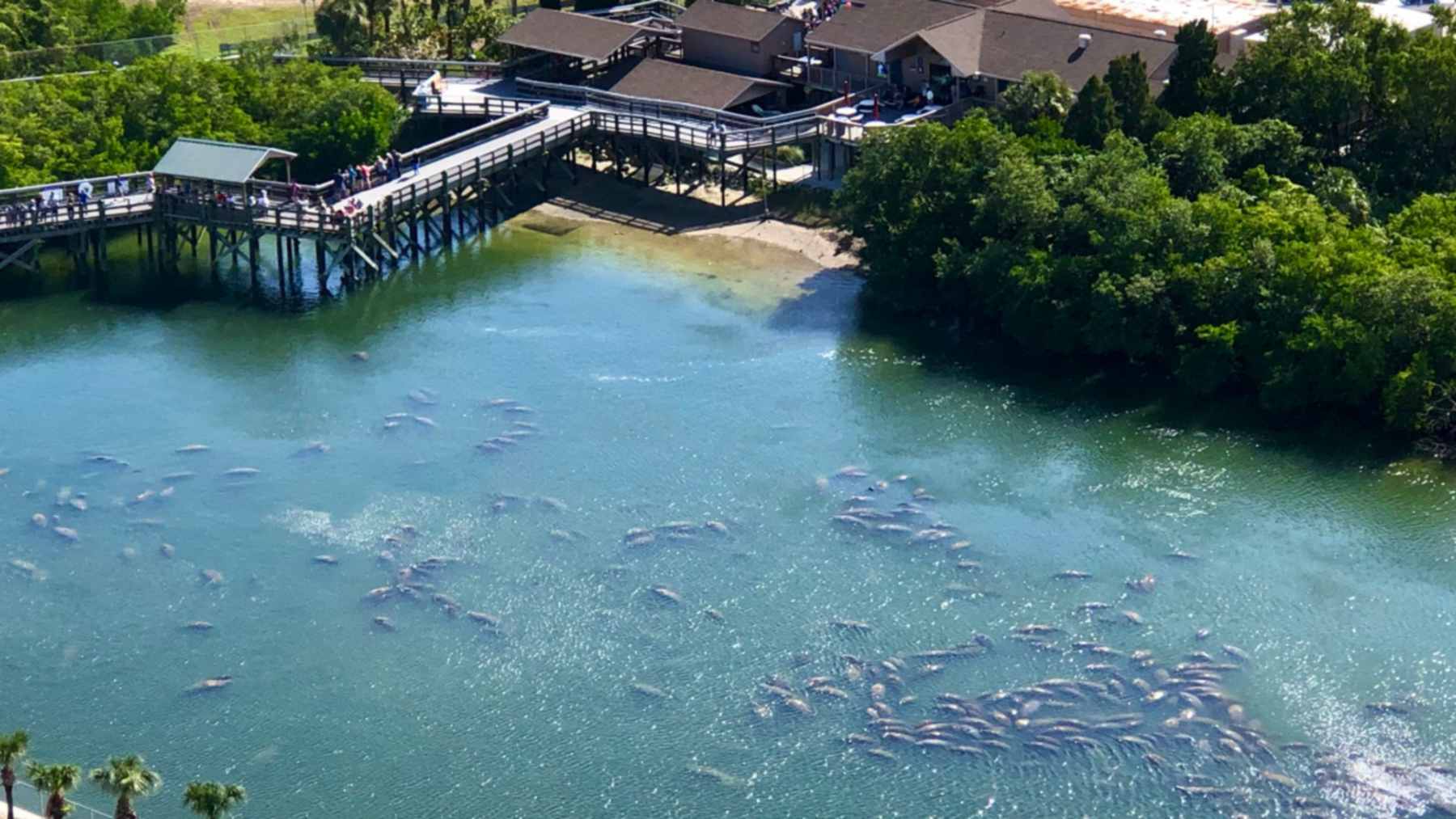
Big Bend Power Station in Apollo Beach, on the east shore of Tampa Bay, has all of that. But it also has a 900-foot boardwalk, a 50-foot observation tower and free parking, and from November to mid-April people crowd the railings to stare at its discharge canal.
That’s because the canal fills up with manatees.
Tampa Electric reopened its Manatee Viewing Center on Nov. 1, and it’s open daily from 10 a.m. to 5 p.m. through April 15. Admission is free, and the company is marking the center’s 40th anniversary this season.
So why would a manatee hang out next to a power plant?
It comes down to plumbing. Most big power plants make electricity by boiling water into steam, and that steam has to be cooled back down before the plant can use it again. Big Bend does its cooling with Tampa Bay.
According to Tampa Electric, the plant circulates bay water through its cooling system and sends it back out clean and warm. So the water that comes out is basically the same water that went in, just warmer. And in winter, warmer is the one thing a manatee is shopping for.
The number that matters is 68 degrees Fahrenheit. When the bay drops below that, Tampa Electric says you’re likely to see a lot of manatees in the canal. The Florida Fish and Wildlife Conservation Commission (FWC) says that once the water gets that cold, manatees all over the state head for natural springs, the outflow from power plants and anywhere else the water stays warm.
“Manatees rely on warm water sites to survive the winter,” Ashley LaVere, the FWC’s manatee management program coordinator, said in the agency’s Manatee Awareness Month notice.
If 68 degrees sounds like a perfectly nice beach day to you, you’re not wrong. But adult manatees weigh about 1,000 pounds, according to the FWC, and they still can’t take cold water for long. The Marine Mammal Commission says extended time in water below 65 degrees can kill them, which is frankly a pretty fragile setup for an animal that size.
How many manatees actually show up?
It depends on the weather. I couldn’t find a dated headcount for this season yet, and Tampa Electric’s manatee page doesn’t publish daily numbers.
The best official figure I’ve got comes from the FWC, which has described the Manatee Viewing Center as a warm-water sanctuary that can hold up to 1,100 manatees. That number is the site’s capacity, so a mild afternoon will usually show you a lot fewer.
Tampa Electric keeps track of its regulars, too. In its reopening announcement last fall, the company said it has records of about 190 individual manatees returning over a span of more than 20 years, and one of them has come back for 42. That’s an impressive level of loyalty for a utility customer who’s never paid a bill.
The canal is a sanctuary, legally speaking
You can’t paddle out for a closer look, either. Federal rules list the Tampa Electric Company Big Bend Manatee Sanctuary at just under 30 acres and ban all waterborne activities inside it from Nov. 15 to March 31 every year, according to the Code of Federal Regulations. Florida’s own rules make the inner end of the discharge canal a no-entry zone for the same stretch of the year and add an idle-speed zone in the waters just south of it.
Basically, from mid-November to the end of March the canal belongs to the manatees, and you watch from the boardwalk like everyone else.
Big Bend isn’t the only plant doing this
Florida has a lot of these spots. Michelle Pasawicz, who leads the FWC’s manatee management program, told National Geographic that manatees use 67 warm-water sites around the state.
A thermal basin, if you’re wondering, is basically a deep, sheltered patch of water that hangs onto heat from the sun or from groundwater seeping in. It stays warmer than the water around it for a while, but it doesn’t have a pump behind it the way a power plant does.
The power plants are doing most of the heavy lifting, though. The Marine Mammal Commission says that on the coldest winter days, two-thirds of Florida’s manatees depend on warm water coming out of power plants. Pasawicz put the share at more than 60 percent in cold weather. The FWC’s latest statewide survey estimated somewhere between 8,350 and 11,730 manatees in Florida. So on a really cold morning, we’re talking about several thousand animals parked next to industrial equipment.
(If you see Tampa Electric’s figure of about 6,000 manatees in Florida, that’s an older estimate.)
It’s a pretty strange arrangement when you think about it. An animal that’s federally listed as threatened has arguably made itself a dependent of the power grid. The FWC’s own habitat page concedes as much, while acknowledging that power plants aren’t exactly natural habitat.
We’ve covered this kind of overlap before, with sea turtles getting carried into the cooling canal of two Florida reactors and jellyfish swarming a French plant until operators shut a reactor down by hand. Big Bend is the friendlier version, since Tampa Electric seems pretty happy to have its visitors and built them a boardwalk.
So what happens when a plant goes offline?
Southwest Florida got a grim answer to that this February. Lee County runs Manatee Park near Fort Myers, across the road from a Florida Power & Light plant whose warm water feeds the park’s canal. Between Feb. 13 and Feb. 18, about 25 manatee deaths were reported in Lee County, most of them around the park’s canal and the Orange River just downstream. The FWC said its carcass response pointed to cold stress after a cold snap. At first, the agency also said it wasn’t yet known how much the nearby FPL plant’s recent unplanned shutdown had affected the death toll.
The FWC later said the FPL Fort Myers plant had complied with its license and its manatee protection plan during that cold spell, and that it isn’t investigating the utility. So no one’s been found at fault. Still, it’s a pretty clear look at what’s at stake when a crowd of cold manatees is counting on a single outfall.
A manatee protection plan, by the way, is something the state requires from power plants it considers critical manatee habitat. It’s essentially the utility’s rulebook for what happens to the warm water when something changes at the plant.
And things will change. The Marine Mammal Commission says the projected operating lives of the power plants manatees use today don’t run past 35 to 40 years. The commission doesn’t give a date for each plant, so I can’t tell you when Big Bend’s turn comes.
If you want to see it for yourself, the timing’s on your side. Big Bend’s no-entry window starts on Nov. 15, Tampa Electric keeps the boardwalk open daily until April 15, and all you need is for Tampa Bay to dip below 68 degrees.
 A 44-acre nuclear dump in Pennsylvania where a fuel plant buried its waste in 10 trenches has sent off its first truckloads of contaminated soil, dug a little at a time inside buildings built over the trenches, bagged into steel containers and driven 60 miles to a train bound for UtahEnergy · 1 hour ago
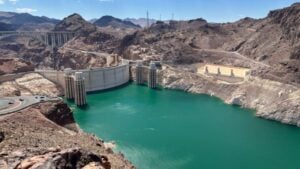 A 726-foot dam on the Colorado River will test whether its 12 older turbines can run below the water level that’s supposed to wreck them, a first in the dam’s history, on limited hours and with frequent inspections, while its lake sits 4.9 feet above that line after the floodsEnergy · 4 hours ago
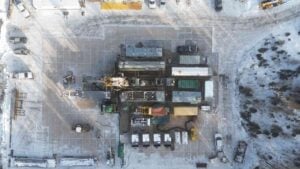 A 5,100-foot well in the woods of northern Minnesota flows gas that is 8 percent helium, more than 25 times the grade the industry calls worth producing, with no water and no pumping, and it sits in a state where no gas has ever been producedEnergy · 6 hours ago