
Navy press releases aren’t written to be read. They’re written to be filed, and the good stuff tends to sit well below the fold, after the stuff about which admiral visited which ship. The one the Pacific submarine force put out on August 13 is a decent example. The headline is about a rear admiral touring an aircraft carrier at the end of a big multinational exercise off Hawaii. Keep scrolling and you hit the sentence that actually matters.
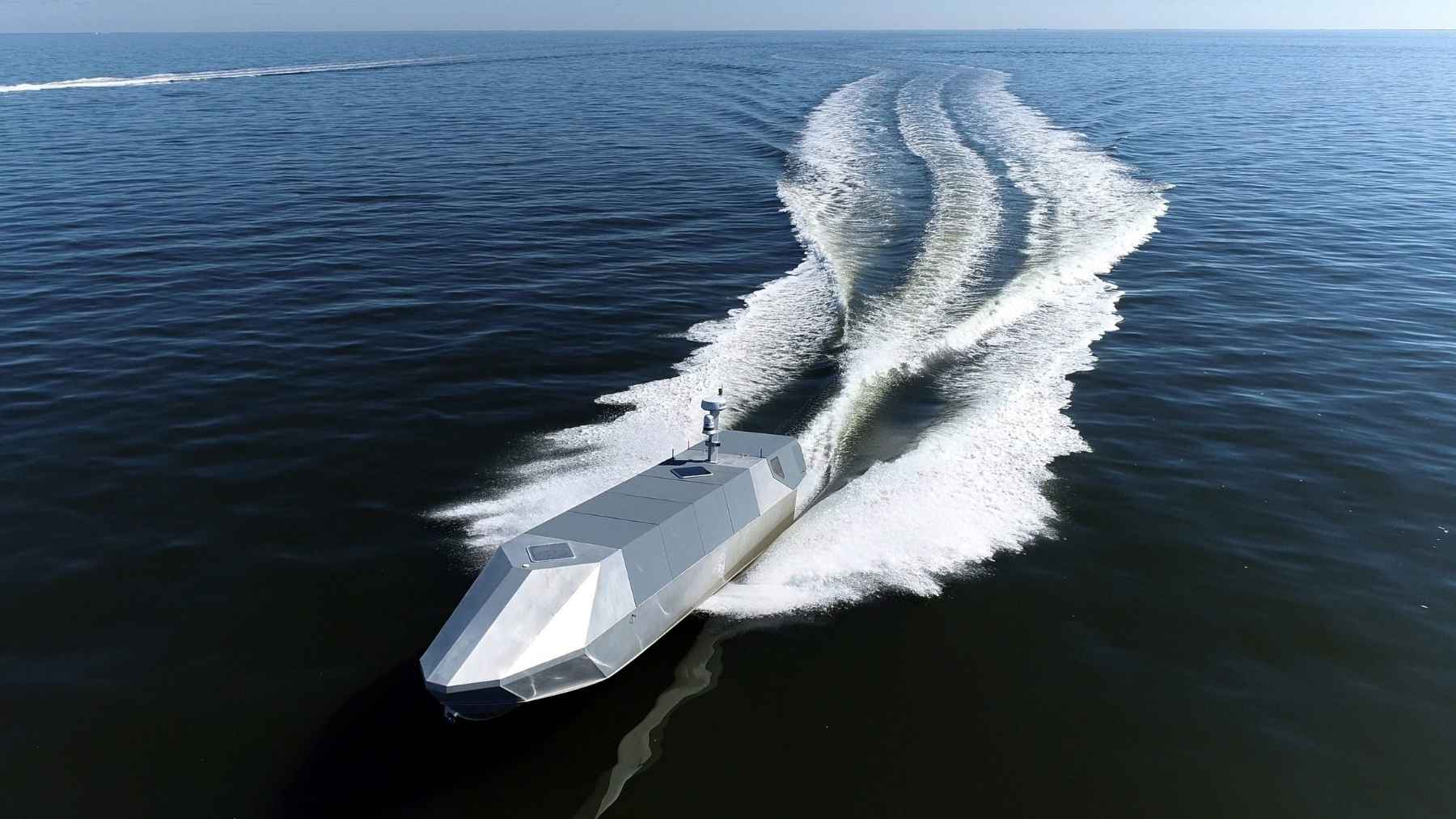
In July, an Orca extra-large drone submarine drove itself more than 1,000 nautical miles across the Pacific. Nobody was on board, because there’s nowhere to be on board. According to the Navy’s statement, it’s the first time one of these vehicles has made a transit that long, and Naval News reports the run took place in the eastern Pacific.
That’s about the driving distance from Los Angeles to Seattle, done underwater by an 80-ton machine with no crew compartment. Pretty impressive, frankly, for a program that spent most of the last few years as a punchline about Pentagon schedules.
So how long did it take? The Navy hasn’t said. It also hasn’t published a start date, a start point, or a route, so I can’t tell you whether the Orca went in a straight line or spent two weeks drawing circles. What I can tell you is that the submerged cruising speed usually reported for it is about 3 knots on batteries, and at that pace 1,000 nautical miles is roughly two weeks of nonstop driving. If it ran faster on the surface for stretches, it was quicker than that. Either way, this wasn’t an afternoon out.
So what exactly is an Orca?
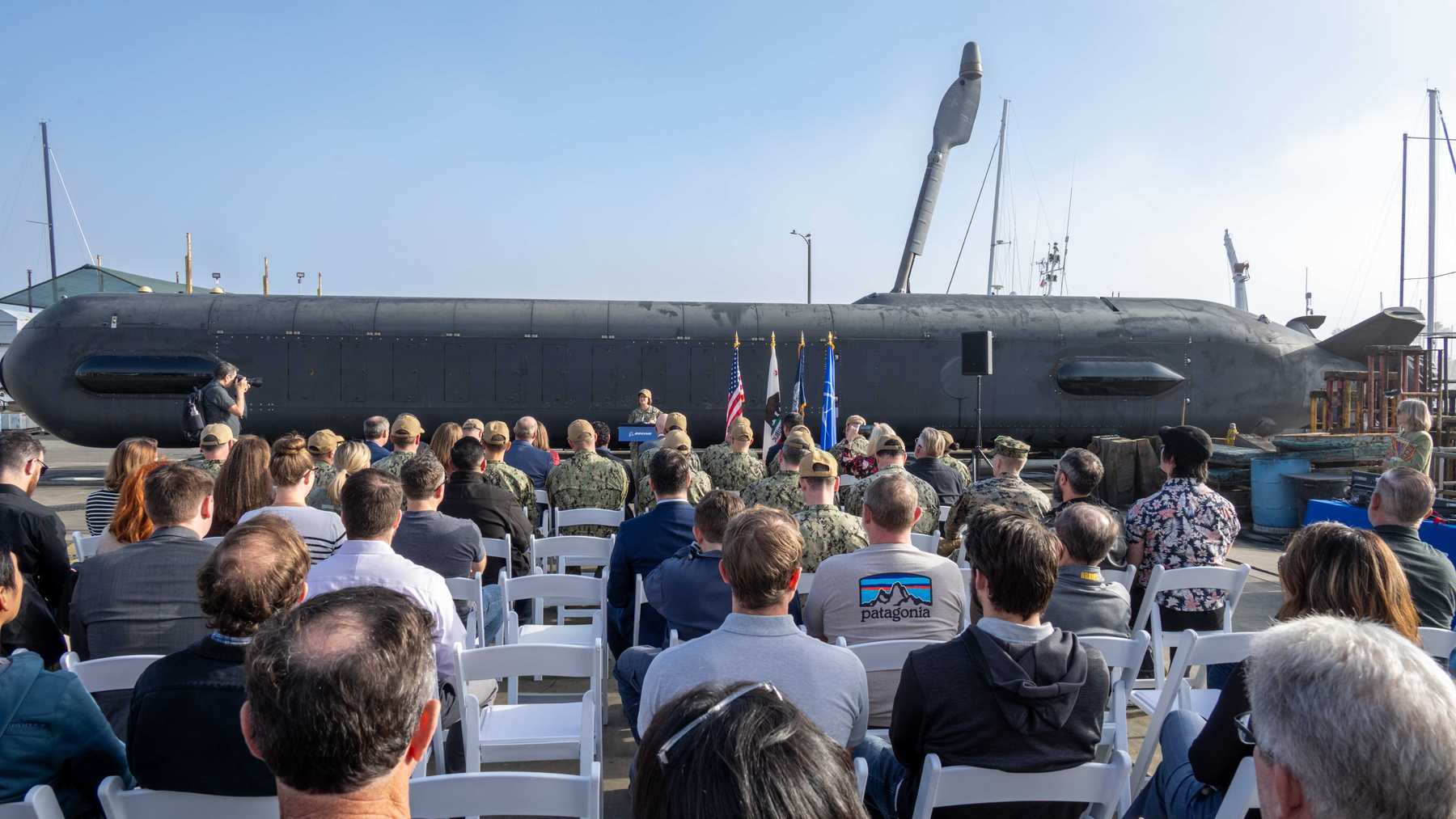
You may have seen it described as both a 51-foot submarine and an 85-foot one, and both are right. Boeing’s spec sheet puts the base vehicle at 51 feet, and then there’s a removable 34-foot (10.4-meter) payload section that bolts in behind the nose. With that fitted, you get the full 85 feet, a bit longer than two city buses parked nose to tail.
The weight figure is the Navy’s. Seapower Magazine put the Orca at 80 tons when it covered a briefing by Capt. Scot Searles, the Navy’s program manager for unmanned maritime systems at the time, and that’s the number everybody has used since. It’s also why the Orca launches from a pier. It’s too heavy to hang off a ship’s crane and far too big to fit in a submarine.
The powertrain’s a hybrid, and it works more or less like a plug-in hybrid car that has to come up for air. Submerged, the Orca runs on lithium-ion batteries, quietly and slowly. When the batteries get low, it surfaces and fires up marine diesel generators to recharge, then goes back down. Boeing says that setup is good for up to 6,500 nautical miles on one load of fuel, and the company builds the things at its site in Huntington Beach, California, alongside shipbuilder HII.
Navigation’s what I find most interesting here, because GPS doesn’t work underwater. The Orca steers by dead reckoning, using an inertial navigation unit backed by Doppler velocity logs that bounce sound off the seabed to measure how fast the vehicle is actually moving over the ground. Over 1,000 miles, small errors in that math add up, so the fact that it got where it was going is arguably a bigger deal than the distance itself.
The 34-foot bay is for mines
Boeing rates that payload section at 8 tons dry, which the company translates as nine medium 21-inch underwater drones or 48 of the small 12.8-inch ones. You could put sensors in there, or decoys, or other robots. But the job the Navy has talked about from the start is mine laying. The Navy said as much in that same briefing: mines first, everything else later.
Which brings us to the hatches. When the Navy released the first photos of an Orca with its payload module fitted, naval analyst H.I. Sutton pointed out in Naval News that the module has large hatches in the top and probably the bottom too, which is the layout you’d expect if the plan is to drop things out of it onto the seabed. Mines don’t need to be launched like a torpedo. They just need to leave the vehicle and sink.
The mechanism that does the dropping comes out of a DARPA project called Hunter. DARPA’s own description is short on specifics, but the gist is a payload delivery device built to fit inside a government-supplied module, with Northrop Grumman designing the mechanism and Boeing integrating it into the hull. Naval News reports the Orca will eventually deploy with Hunter for mine laying, and that the formal acquisition plan for it isn’t due until late 2027 or early 2028. The same outlet mentions a heavyweight torpedo deployment system in the works for the vehicle, which I’d treat as a rumor with a good source until somebody in uniform says it out loud.
I’ll admit I find the mine-laying mission a slightly underwhelming use of an 85-foot robot. But the logic holds up. A crewed attack submarine costs north of $4 billion and carries somewhere around 135 people. Sending it into a contested strait to drop mines is a terrible trade if something goes wrong. Sending an uncrewed truck that costs a fraction of that, with nobody in it, is a much easier call for whoever has to sign the order.
Why 1,000 miles is the number everybody keeps using
The distance isn’t random. When the Pentagon’s Defense Innovation Unit put out its request for a next-generation extra-large drone sub, the one we went through when an American team started cutting steel on a hydrogen-powered competitor, the transit requirement was more than 1,000 nautical miles. Britain’s Excalibur drone sub was drawn up to a 1,000-mile range as well.
So in July the Orca did the number that the competition is still being designed to hit. That’s partly a technical milestone and, if you ask me, partly a flex. Boeing’s vehicle isn’t competing in the DIU program. It doesn’t have to. The Navy already committed to buying it.
That commitment came in May, in the shipbuilding plan that moved the Orca out of prototype limbo and into a planned buy of 16 vehicles through fiscal 2031, two of them funded in fiscal 2027. We covered how close the program came to dying first. The short version is that government auditors found it 64 percent over its original cost estimate and about three years late, and the Navy bought a fleet anyway.
Boeing christened its newest hull, a vehicle called XLE2, in March. The Navy’s statement doesn’t say which Orca made the July run.
What the admiral actually wants them for
The mine-laying story’s the official one. The more interesting hint is in the same press release.
On July 30, Rear Adm. Chris Cavanaugh, the commander of the Pacific submarine force, went aboard the carrier USS Theodore Roosevelt to meet Rear Adm. Marcos Jasso, who runs Carrier Strike Group 9. The carrier had just wrapped up as the lead U.S. ship in RIMPAC, a 30-nation exercise that ran around Hawaii from June 24 to July 31. According to the Navy, the two of them spent part of the visit talking about using underwater drones to move spare parts and components between submarines and aircraft carriers, so a submarine could resupply without surfacing.
Think about that for a second. A submarine on patrol breaks something, and instead of coming up or going home, an Orca swims out from the carrier group with the spare in its cargo bay and hands it over underwater. Nobody’s demonstrated that yet, as far as I can tell. But it’s a frankly better use of a 34-foot bay than a rack of mines, and it would explain why the admiral in charge of Pacific submarines is the one announcing a cargo drone’s road trip.
Cavanaugh’s own line in the release was that his force is “heavily investing in unmanned capabilities to augment our manned submarines,” which is Navy for: expect more of this.
The next two Orcas are in the fiscal 2027 budget at $135.8 million for the pair, and per Naval News the Hunter mine payload won’t have a formal acquisition plan until late 2027 or early 2028. The Navy’s statement confirming the 1,000-nautical-mile transit went out on August 13.