
- 3 MONTHS AGO · INDUSTRYA 2,000-pound American drone named after a fish swims into the mines Iran laid in the Strait of Hormuz for 16 hours at a time, comes up nose-first so nobody has to go in the water after it, and hands over a map of what is buried down there
- 3 MONTHS AGO · INDUSTRYA 1,000-foot tunnel borer longer than the Titanic entered a Lesotho mountain backward, crawled 1.484 kilometers down an access tunnel, turned around in the dark and started cutting toward a second machine — a 24-mile water tunnel under the Maluti that will move water by gravity alone, with no pumps
- 3 WEEKS AGO · INDUSTRYAn 8-ton German tunnel borer gripped the rock so its own cutting wheel couldn’t roll it over, cut three 51-inch water intakes under a Georgia reservoir and came out through the lakebed three times for divers to recover, on a dam being raised 35 feet to more than triple its storage
- 1 WEEK AGO · INDUSTRYA 1,780-foot-deep copper pit in Montana went seven months without its pumps after part of its wall started to move, the acid lake inside climbed 3 feet, and the water in a flooded mine nearby now sits less than 26 feet below the line regulators say it can’t cross
- TODAY · THIS ARTICLEA recirculation pump at a spring-fed Virginia trout hatchery shut off overnight during a drought that had its spring at a historic low, and about 130,000 of the 249,000 trout being raised for 72 stocked waters in 11 counties died, so the survivors are now being fed extra
If you fish stocked trout water in Bath, Augusta, Rockbridge or eight other Virginia counties, there’s a decent chance the rainbow you pulled out last spring grew up in a tank at Coursey Springs. It’s a state hatchery tucked into a valley south of Williamsville, about 2 miles out of town, and it doesn’t actually hatch anything. Fingerlings come in from the state’s Wytheville, Marion and Paint Bank hatcheries, and Coursey Springs grows them out until they’re big enough to stock.
This fall, that system took a pretty serious hit. The Virginia Department of Wildlife Resources (DWR) said on October 23 that Coursey Springs had lost about 130,000 trout after a recirculation pump stopped running overnight. DWR doesn’t know why the pump stopped. It hasn’t said which night it happened, either.
The hatchery was raising 249,000 trout this season, or about 113,000 pounds of fish, according to figures DWR spokesperson Shelby Crouch gave Cardinal News. So more than half of them are gone. Cardinal reports the dead fish included some that were nearly ready to stock and some smaller ones being raised for spring.
So why would one pump matter at a spring-fed hatchery?
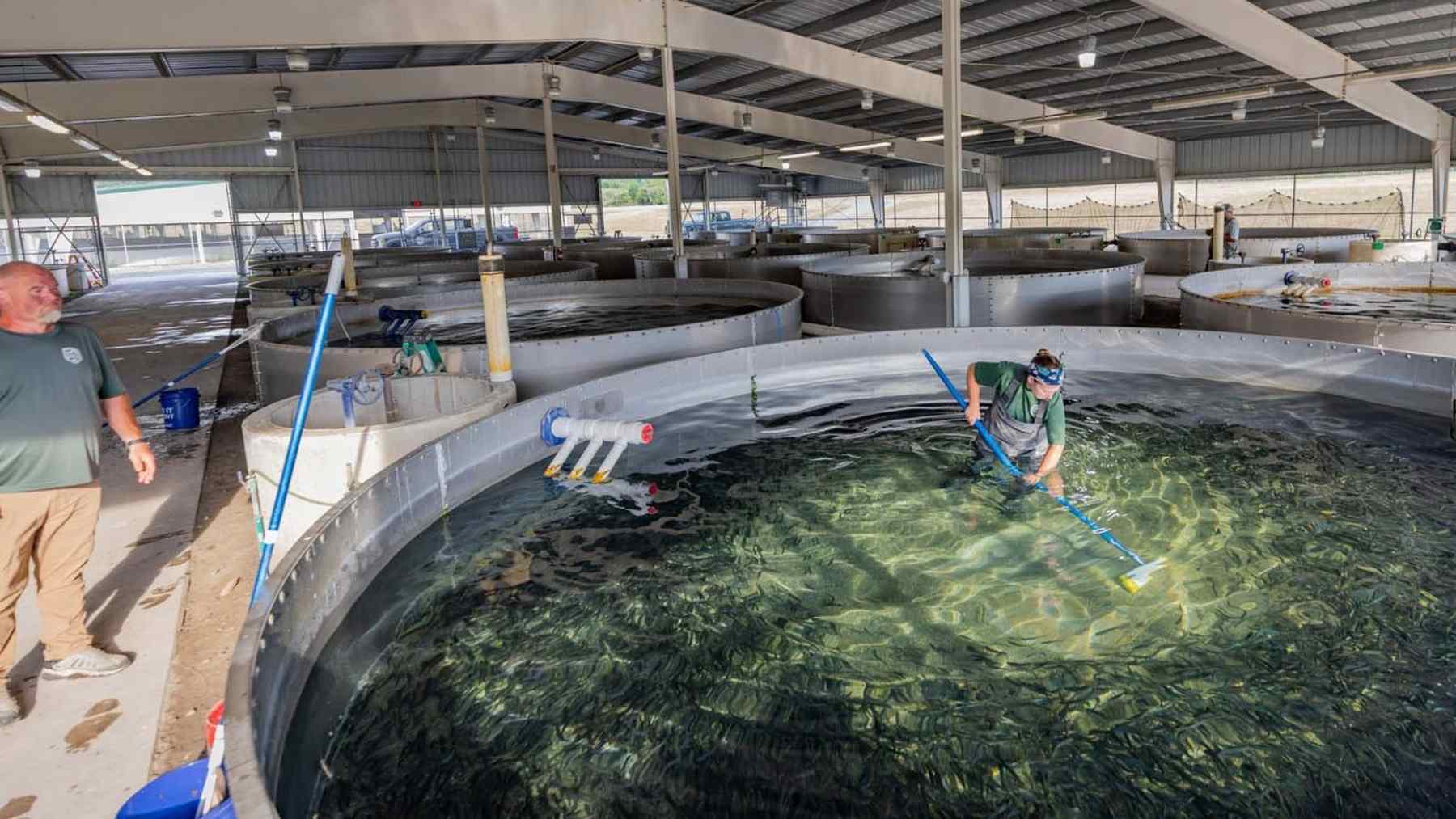
Coursey Springs draws its water from Coursey Spring, which DWR’s hatchery page ranks as Virginia’s third-largest spring. That water runs through a big oxygenation unit and then flows by gravity into 40 circular stainless steel tanks. Basically, the whole setup leans on the spring.
A recirculation pump does what the name suggests. It takes water that’s already been through the tanks and sends it back around, so the fish keep getting flow even when less fresh water is coming out of the ground. DWR says that pump is crucial whenever the natural spring runs low, and lately it’s been running very low.
So when the pump quit overnight, flow through the tanks dropped, and so did the oxygen. Trout are cold-water fish that need plenty of dissolved oxygen, which makes a stalled tank pretty much the worst place for one to be.
How dry has it been? Gov. Abigail Spanberger declared a state of emergency in September because the drought had left Virginia’s livestock farmers short on hay. John Roberts, a Rockbridge County fly-fishing guide whose charters run about 45 minutes from the hatchery, told Cardinal News he’s never seen droughts like the recent ones. And DWR itself describes the hatchery’s water supply as historically low. I’d argue Virginia’s third-largest spring coming up short is about as clear a drought marker as you’re going to get.
Bacteria and parasites were already in the water
The pump didn’t kill those fish on its own, at least by DWR’s account. The department says the low flow and low oxygen stressed the trout and left them more vulnerable to seasonal pathogens that come in with the spring water.
Cardinal News names some of them, including Aeromonas bacteria and Ichthyophthirius. If you’ve ever kept a home aquarium, you might know that second one as “ich.” It’s a tiny parasite that digs into a fish’s skin and gills and shows up as white spots. Aeromonas is a group of bacteria that lives in pretty much any fresh water and tends to go after fish that are already in rough shape. Healthy trout in well-oxygenated water can usually shrug off a lot of that. Stressed ones often can’t.
So was it the pump or the drought?
From the way DWR describes it, it’s kind of both. The pump is the thing that failed, and the drought is why one pump suddenly mattered so much. Crouch told Cardinal News a mass die-off from equipment failure like this one is very rare. Brendan Delbos, the state hatchery superintendent, told the outlet his staff are “crushed over this incident,” and the dead fish were buried on site. DWR hasn’t said whether the hatchery had a backup pump or an alarm on the pump that failed, and I couldn’t find anything in its public material that answers it either way.
Water has come up before as this hatchery’s soft spot, too. Virginia’s stocked trout management plan says the state’s cold-water hatcheries average about 65 years old, and Coursey Springs is the only one that’s had a major renovation in roughly six decades. That same plan lists water flow among Coursey Springs’ challenges, along with a lack of filtration. In fairness, a line in a planning document isn’t the same thing as a warning about one pump.
So will your creek still get trout?
Yes, but fewer of them. DWR says it’ll stock fewer fish overall, but “no scheduled stockings will be canceled.” The affected counties are Alleghany, Augusta, Bath, Fauquier, Frederick, Highland, Page, Rockbridge, Rockingham, Shenandoah and Warren. Cardinal News reports the cuts will run through the end of spring, and the rest of Virginia isn’t affected.
Staff at Coursey Springs are feeding the surviving trout more to make them bigger and heavier, and they’re testing and treating them for pathogens and parasites. DWR will also send spare trout from its other cold-water hatcheries. Just don’t expect a flood of them. Crouch told Cardinal News the department doesn’t expect much surplus, and Cardinal reports DWR was already cutting statewide trout production by 35% for budget reasons. For a sense of scale, DWR’s page says Coursey Springs can turn out up to 400,000 catchable-size trout a year, while this season’s batch was 249,000.
If you’re the kind of angler who follows the stocking truck around, I’d guess you’ll feel this most in spring, since some of the dead fish were the smaller ones meant for spring stockings.
It’s also the second time in about a month we’ve written about a hatchery getting a scare from one piece of hardware. In Idaho, a cracked oil cooler on a turbine at Dworshak Dam put bearing oil in the river a couple of miles upstream of a steelhead hatchery’s water supply. Virginia’s version didn’t involve oil at all. It just needed a dry year and a quiet night.
As far as I can tell, DWR’s October 23 notice is still its latest public word on Coursey Springs. Until that changes, the plan for all 72 waters is the one it laid out then: every scheduled stocking goes ahead, just with fewer trout on the truck.
 A 990-foot ocean liner that crossed the Atlantic faster than any liner before or since has just started her last trip out of Mobile behind tugboats, headed for a spot 22 nautical miles off the Florida Panhandle where she’ll be sent down into 180 feet of water on WednesdayIndustry · 22 hours ago
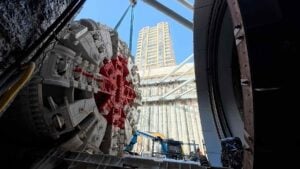 A nearly 23-foot tunnel boring machine just broke through into its first station under downtown Toronto after cutting about 4,265 feet and lining the tunnel with roughly 780 concrete rings, and its twin is due to punch through right beside it in DecemberIndustry · 3 days ago
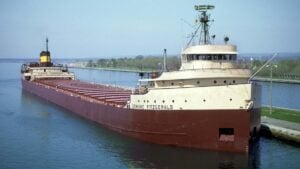 A 13,632-ton freighter lies broken in two 530 feet down in Lake Superior, 51 years after she sank in a November storm with all 29 men aboard, and federal scientists estimate up to 1,191 barrels of heavy fuel oil could still be inside a wreck with no reported leakIndustry · 5 days ago