
- 2 MONTHS AGO · MILITARYA 39-pound tube shaped the way American sonobuoys have been shaped since 1942 pinged at underwater drones this summer, gave away its own position doing it, and sank, while a 21-inch reel unspooled nearby into a listening array and never made a sound
- 2 MONTHS AGO · MILITARYA 38-foot drone boat that once spent 192 hours alone at sea came up behind a float towed by a Navy ship off Virginia, pushed a fuel probe into it, took on 400 gallons over dozens of hookups and let go each time, and somebody was steering the probe on every one
- 2 MONTHS AGO · MILITARYA 19-foot American drone submarine rated for 19,700 feet sat dead in the water for more than a day at the mouth of the Strait of Hormuz, where the bottom runs 200 to 330 feet, until Iranian naval forces hauled it in, and the man who built it posted “rest in peace, little buddy”
- 2 MONTHS AGO · MILITARYWhile Britain introduced its first drone submarine as a demonstrator that would not perform operational duties, the 39-foot boat fired a heavyweight torpedo in UK waters 16 months later, the first launched from an uncrewed submarine by Britain or the US
- TODAY · THIS ARTICLENineteen 154-pound underwater drone gliders with no propellers flew at once off Portugal in NATO’s biggest uncrewed naval exercise, hunting submarines by listening, and a bigger 377-pound glider dragged a line of hydrophones through the water behind it
When you picture a navy hunting submarines, you probably picture the expensive version. A destroyer pinging away with its bow sonar, a helicopter dipping another one out of the sky, and a room full of stressed people watching waterfall displays. All of that still exists. But NATO just spent a month off the coast of Portugal working part of the job with 154-pound robots that don’t even have a propeller.
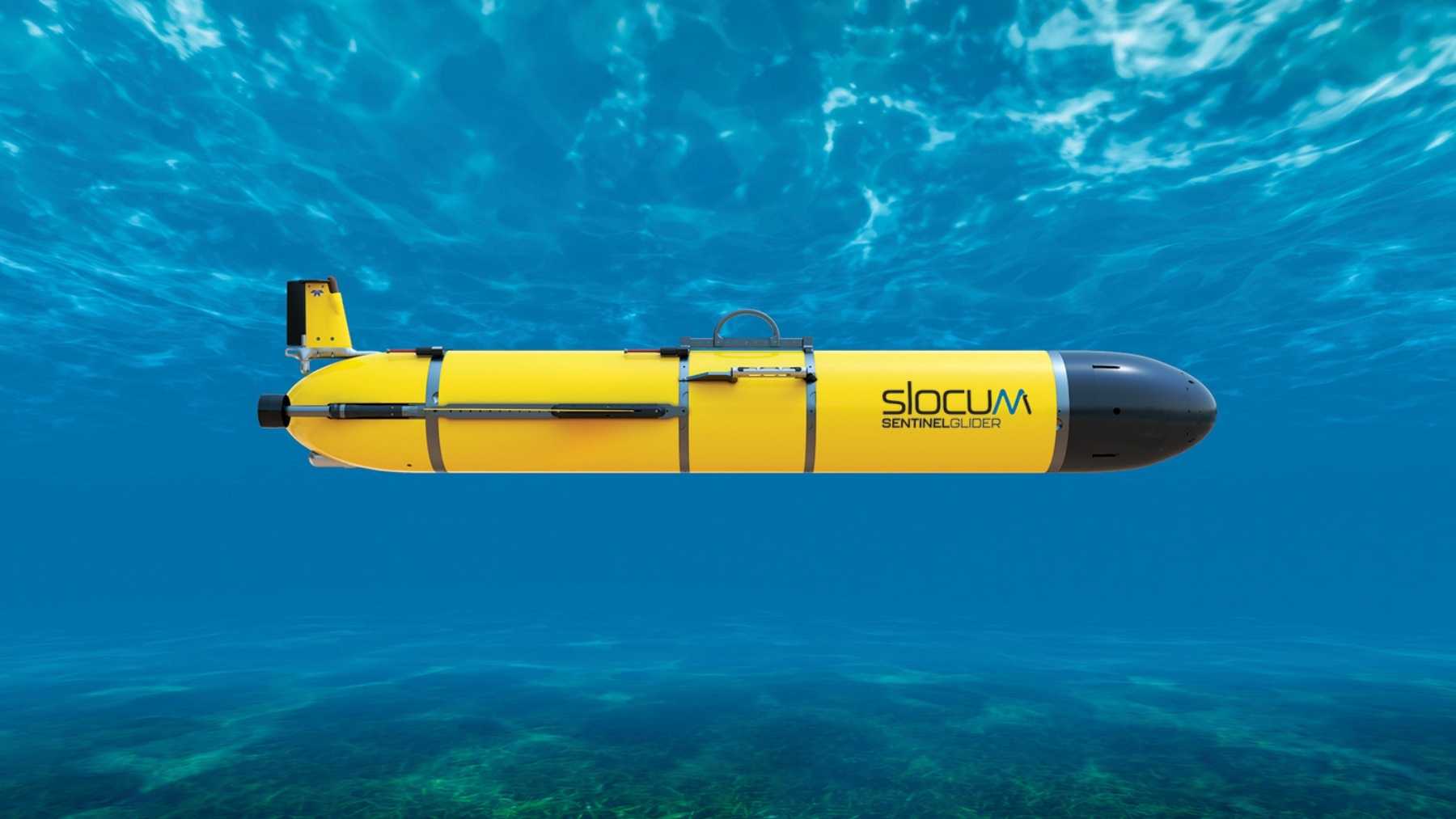
Teledyne Marine, the Massachusetts company that builds the Slocum glider, said in an announcement carried by Marine Technology News on September 17 that it had 19 Slocum gliders operating at the same time during REPMUS26, NATO’s big annual exercise for uncrewed naval systems. Two larger Slocum Sentinel gliders went out with them, and one of those dragged a towed array, which is essentially a long line of hydrophones on a cable. Stringing your microphones out behind you gives you a much bigger ear than anything you could fit inside the hull.
So what’s a glider actually doing in a submarine hunt?
Mostly listening, and measuring. According to Teledyne, the fleet supported anti-submarine warfare, undersea surveillance, rapid environmental assessment and the protection of seabed infrastructure, meaning the pipelines and data cables navies suddenly care about a great deal. Rapid environmental assessment is the unglamorous job in that list. It means profiling things like temperature and salinity through the water column, because sound bends as it crosses layers of different water, and if you don’t know where the layers sit, your fancy sonar is basically guessing.
So how does a glider with no propeller get anywhere?
By being clever about buoyancy. A pump in the nose changes how much water the vehicle displaces, which makes it slightly heavier or slightly lighter than the sea around it. Point the nose down as it sinks and a pair of stubby wings turns the fall into a forward glide. Pump the other way at the bottom and it glides back up toward the surface. Repeat that sawtooth for weeks and it covers serious distance while barely touching the batteries, since the engine only really works at the turnaround points. Every so often the glider surfaces, calls home over satellite, hands off its data and picks up new orders, and you can fly a whole fleet of them from a web browser.
It’s also slow. On buoyancy alone a Slocum tops out around 0.8 mph, so you could outpace one on foot without breaking stride. If you’re wondering why anyone wants a robot that slow, the answer is endurance. Deployments run from a couple of weeks to as long as 18 months depending on batteries and sensors, and one of these machines, modified by Rutgers University, crossed the entire Atlantic in 2009. The trip took 221 days. Nobody was in a hurry.
Teledyne’s announcement just says “Slocum gliders” without naming the model. The standard one it sells today is the G3, which comes in at just under five feet and about 154 pounds and is rated to 3,281 feet (1,000 meters), so I’m working off that spec sheet here. Navies are buying the same hardware in bulk, and the Royal Navy signed for 12 to 15 more G3s plus a Sentinel of its own this spring, as FW-MAG reported. We covered that Sentinel order when it surfaced in July.
So why send 19 at once?
Because listening is a numbers game, and gliders are about the cheapest number a navy can buy. Teledyne has claimed its gliders deliver ocean data at roughly 1% of the cost of running a survey ship, and while I’d treat any vendor’s own math with a raised eyebrow, the general direction is hard to argue with. Spread 19 quiet listeners across a patch of ocean and they’ll hold that picket line for months at a time.
The two Sentinels bring the muscle. Per Teledyne’s own datasheet the Sentinel runs 8.4 feet and 377 pounds, which is what it takes to haul hydrophones on a cable through open water. A glider is already close to silent, since there’s no motor churning away inside, so hanging a listening array off one strikes me as a frankly rude thing to do to a submarine crew.
The rest of the lineup fills out the picture. A Gavia, one of Teledyne’s conventional propeller-driven underwater drones, ran navigation experiments using Benthos transponders parked in deep water. GPS doesn’t reach below the surface, so the transponders act like acoustic lighthouses the Gavia can fix its position against. And some launches came from OCEANUS17, an uncrewed surface boat from the British firm ZeroUSV, which means a drone boat was putting underwater drones into the sea while every human involved stood somewhere dry.
REPMUS itself is a monster
The exercise ran from August 31 through September 25 around the Tróia Peninsula south of Lisbon, led by the Portuguese Navy with NATO and the European Defence Agency alongside. According to the Portuguese Navy, this year’s edition drew more than 1,500 people from 36 navies, over 300 unmanned systems and 14 ships supporting them. Underwater gliders keep turning up in this beat, too. We’ve already covered a 130-pound drone glider with no wings that practiced against dummy mines at the same depths.
Teledyne hasn’t published results. The announcement lists what went into the water, not what any of it heard or found, and I can’t find detection numbers from anyone else involved either. That’s standard for this kind of exercise, where half the value is classified and the rest gets briefed behind closed doors.
If you wanted a preview of the next decade of naval shopping, a Portuguese beach in September was apparently the place to get one. NATO’s Allied Command Transformation says REPMUS26 wrapped up on September 25, and that the command-and-control system tested there, a project called Task Force X-Arctic, heads back to Arctic conditions later this year.
 A 1,123-foot aircraft carrier with eight defueled reactors is under tow from Newport News to Mobile, where a scrapyard will cut the hulk apart around those reactors over the next four years while a 100-yard safety zone moves with herMilitary · 3 days ago
 A 13-foot-wide US Navy nuclear mini-sub rolled across the seabed off Scotland on wheels, found an F-14 upside down in fishing nets nearly 1,900 feet down and brought its secret Phoenix missile up with a Soviet spy trawler watching, after a month of sonar ships had come up emptyMilitary · 3 days ago
 Drone boats that ride almost awash like a drug smuggler’s semi-submersible just went to three American companies to prototype, and the Pentagon’s spec asks each one to haul 18,000 pounds of Marine supplies up to 2,000 nautical miles alone and sink itself on commandMilitary · 3 days ago