
Cleveland has a reputation for a river that once caught fire, and its sewer district has spent the better part of 15 years and is on the hook for about $3 billion making sure nothing like that happens again. Most of that money is going into holes. Seven of them, to be specific, each a sewer tunnel wide enough to park a semi in, buried a hundred feet or more under the city so storm water and sewage have somewhere to sit until the treatment plants can catch up.
The sixth of those holes is being dug right now by an 800-ton machine named Avery, and as of early October she’s more than halfway through it. So far, so routine. But the project manager running the job told a trade magazine something I found a lot more interesting than the mileage: the ground she’s cutting through is soft enough that he compared it to toothpaste, and if the machine sits still too long, it starts to close in around her. Which raises a pretty basic question.
How do you keep an 800-ton machine moving for a year and a half straight?
So what exactly is Avery?
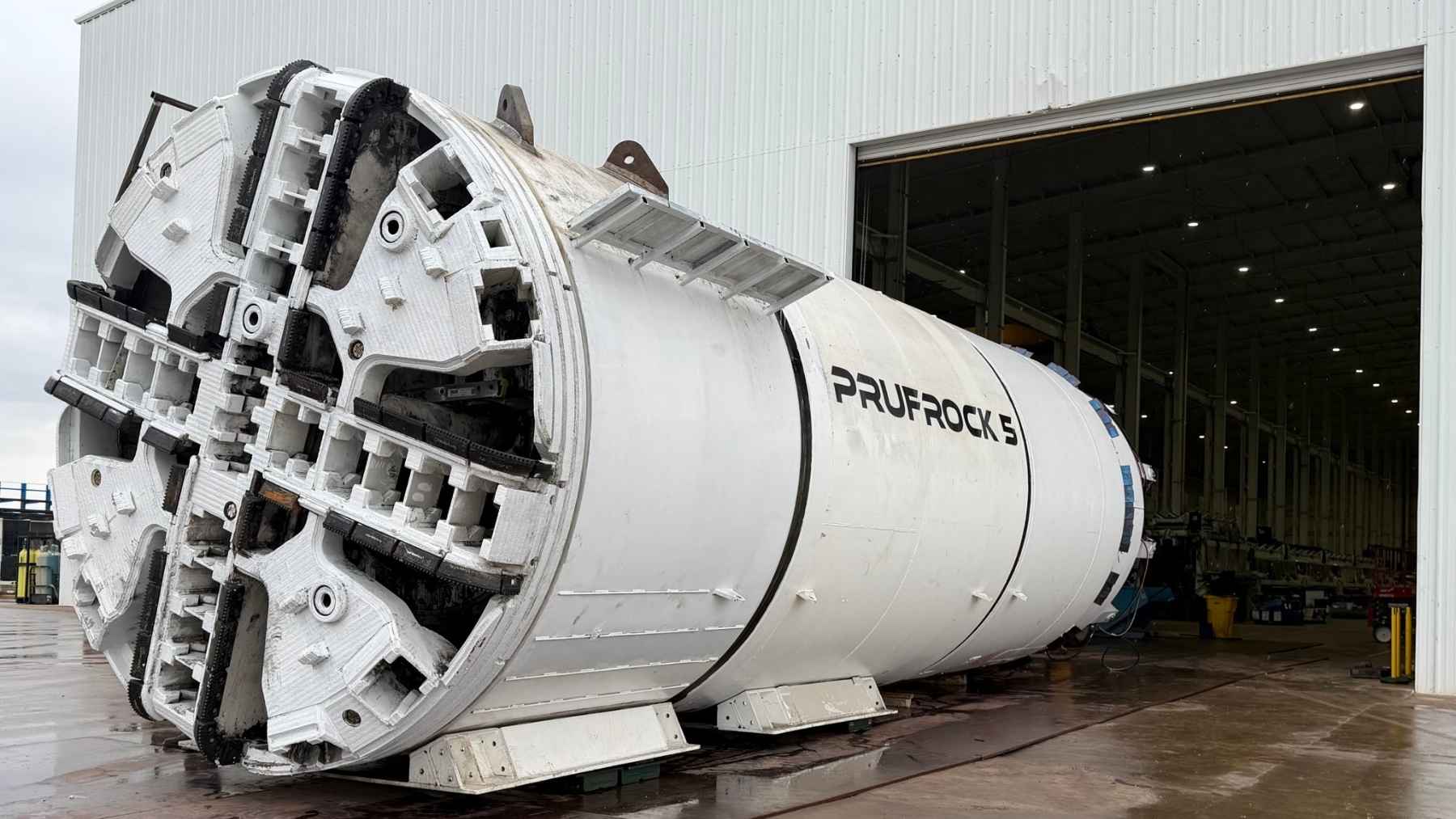
Avery is an earth pressure balance tunnel boring machine built by Herrenknecht, the German outfit that builds a lot of the big ones. Her cutting head is 7,910 millimeters across, which works out to just under 26 feet, and her drive puts out 1,920 kilowatts, or roughly 2,575 horsepower, to turn it. The machine itself runs about 300 feet long, and behind that there’s more than 300 feet of trailing gear carrying the grease, grout, ventilation and survey equipment that keeps her moving and lines the tunnel as she goes.
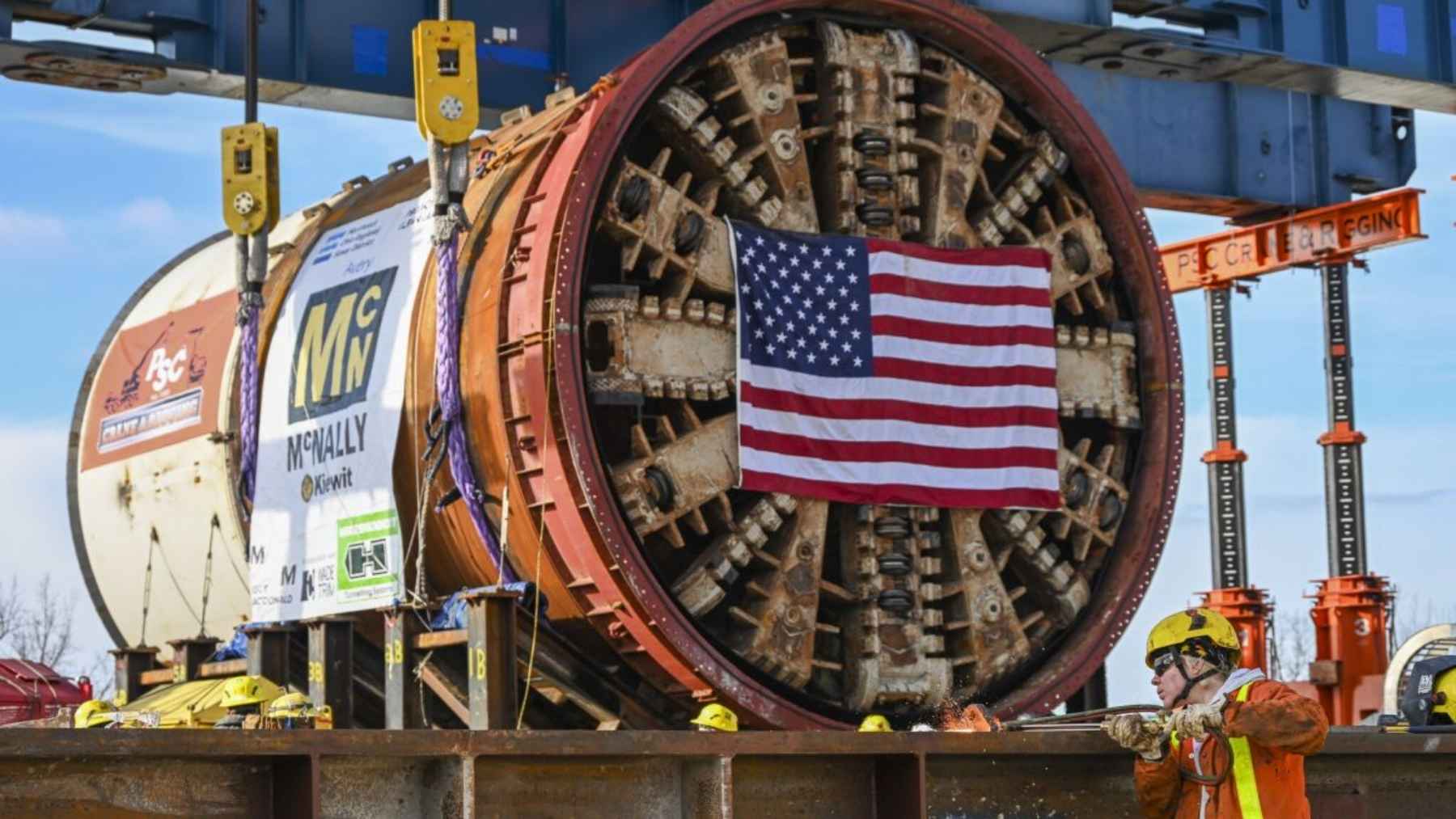
She isn’t new. Avery cut Cleveland’s Shoreline Storage Tunnel first, about 2.7 miles of it along Lake Erie, before McNally Tunneling, the Ohio contractor that’s part of Kiewit, pulled her out, rebuilt her and dropped her into a second shaft south of downtown. The sewer district’s project manager, Doug Lopata, told Construction Equipment Guide the contractor upgraded the system during the rebuild, and that the cutter teeth aren’t showing much wear at the halfway mark, despite swallowing some small boulders along the way.
The 800-ton figure comes from the Northeast Ohio Regional Sewer District itself, which also called her a million-pound machine, and Kiewit put it at 1.6 million pounds, which is the same number in a different hat. The engineers who wrote up the lift describe it as the fully assembled machine with her eye seal frame already attached, so as far as I can tell that’s the shield section and what was bolted to it, not the 300-plus feet of trailing gear, which Lopata lists separately.
So what’s different about the ground this time?
What caught me off guard is that Avery is the odd one out in her own program. Cleveland’s other big tunnels were cut through shale, which is hard, predictable and, frankly, the kind of ground a tunneling crew likes. The Southerly Tunnel runs through the clay and silt that an old glacial lake left behind, and that stuff behaves very differently when you push a 26-foot cutter through it.
An earth pressure balance machine deals with soft ground by not leaving a gap. The chamber behind the cutter fills with the muck it just cut, and the machine squeezes that muck to a pressure that matches what the ground is pushing back with. Get it right and the surface above doesn’t move. Get it wrong in one direction and you get a sinkhole; get it wrong in the other and you blow mud up through somebody’s basement. On the Shoreline drive, the same machine was running a face pressure of around 3.5 bar, which is about 51 psi, according to Tunnel Business Magazine.
That covers the machine while it’s moving. Stopping is where it gets tricky. Lopata’s exact words were that the challenge is “to not let the TBM remain stationary for the ground to squeeze around it.” Plastic clay under more than 100 feet of overburden creeps. Give it long enough against a stationary steel shield and it starts to grip, and then you’ve got a very expensive machine stuck in the mud with a neighborhood on top of it. Lopata didn’t say Avery has ever gotten stuck, and I can’t find any suggestion that she has. He said it’s what they work to avoid.
So the answer to my question is pretty mundane. You keep the machine moving by running three shifts, keeping the pressure in the chamber where it needs to be, and hauling away the toothpaste fast enough that nothing backs up. Lopata said the soft ground is also harder to handle at the surface than rock, because you can’t just stack it. There’s no trick to any of this, just a schedule and a lot of dump trucks.
What getting her into the hole took
Before any of that, somebody had to lower 800 tons of machine down a shaft. That happened on March 25, 2025, and the sewer district’s own account says it took nearly 12 hours to move her 193 feet down. Lopata, a year and a half later, remembered it as 180 feet and about a day, which I’d chalk up to the difference between a press release and a guy recalling a long shift. Either way, it isn’t a job you do twice.
The contractor did one thing that I think deserves more credit than it’s gotten. Normally a machine goes down the shaft and then the crew builds the seal around the tunnel eye, the ring that keeps groundwater from pouring into the shaft once the cutter breaks through the wall, after she’s in position. McNally bolted that seal frame onto Avery above ground and lowered the whole thing together on a set of synchronized strand jacks, which are basically hydraulic winches that pull on bundles of steel cable in lockstep so 800 tons comes down level. The engineers who wrote it up for a tunneling conference this June say it improved alignment and cut out extra work at the bottom of a cramped urban shaft. They don’t put a number on the time saved in the summary, and the full paper sits behind a download I couldn’t get through, so I’ll leave it at “faster.”
Avery was due to start cutting that summer. By early October 2026 she’d passed the midpoint of an 18,100-foot tunnel, which is a shade under 3.5 miles, and the finished bore will be 23 feet across once the concrete segments are in. An engineering paper on both of her Cleveland drives, published by CRC Press in June, reports that surface settlement generally stayed under 25 millimeters, which is less than an inch. For a 26-foot hole bored through what is essentially packed mud under a neighborhood, that’s a pretty good number.
Why a sewer district bothers with any of this
If you don’t live near the Great Lakes, the reason for a $328 million tunnel might not be obvious. Cleveland, like a lot of older American cities, has a combined sewer system, which means the pipes that carry what you flush and the pipes that carry rain off the street are the same pipes. On a dry day that’s fine. During a big storm the treatment plant can’t take the volume, and the overflow goes straight into the Cuyahoga River and Lake Erie, untreated.
The tunnels fix that by being enormous. The Southerly Tunnel will hold 63 million gallons during a storm, and over an average year the tunnel, its pump station and a new consolidation sewer will capture and treat about 760 million gallons that used to go into the river. Lopata said the whole program, now more than three-quarters done, is ahead of schedule and under budget, and that northeast Ohio ratepayers are footing the entire bill. I’ll admit I didn’t expect the phrase “under budget” to show up in a story about a 25-year public works program, but here we are.
Avery isn’t the only machine digging an overflow tunnel for an old American sewer system right now, either. Washington, D.C. has a 1,200-ton German machine named Mary working under the Potomac for the same reason, and Seattle has a 7-foot machine with nobody inside it getting shoved along under Ballard. Cleveland’s sits in between on size and is the only one of the three on its second tunnel, and from the looks of things it’s doing fine.
Lopata said finishing the second half of the tunnel by early 2027 is the critical path for the project, with the tunnel portion due to wrap up in early 2028 and the pump station that actually switches the system on out to bid now at $71 million. The Northeast Ohio Regional Sewer District expects the whole Southerly system to be working in 2030.