
- 2 MONTHS AGO · ENERGYA 375-foot concrete tank in South Carolina, wrapped in 341 miles of cable like a wine barrel, is cleared to take 33 million gallons of nuclear grout that pushes outward as a liquid until it sets into a plug nobody moves. The sign-off came 26 months after the last pour
- 2 MONTHS AGO · ENERGYWater boils at 202 degrees in Denver because there is a mile less air pressing on the pot, and a concrete building in eastern Washington takes that much further, boiling radioactive tank waste at 125. One run freed up 353,000 gallons of room underground
- 2 MONTHS AGO · ENERGYA 427-foot ship built to haul carbon dioxide as a liquid at 31 below zero docks twice a week at Europe’s largest fertilizer plant, loads almost 2 million gallons from its seven tanks, and sails it to Norway to be pumped 8,530 feet under the North Sea
- 1 WEEK AGO · ENERGYA 400-ton generator at a South Dakota dam was taken apart for the first time in 70 years, its 275-ton rotor lifted out by two cranes working as one, and the first new turbine runner just rolled into the powerhouse to take each unit up to 52 megawatts
- TODAY · THIS ARTICLEA 216-foot steel vessel 60 feet high is being assembled nearly a mile underground in South Dakota, one of two tanks that will take 2,600 beams lowered one by one down a shaft and will each hold about 17,000 tons of liquid argon at about 300 degrees below zero
If you’ve ever put together flat-pack furniture in a room that’s smaller than the box it came in, you already get the basic problem with building a physics experiment inside an old gold mine. Everything has to come in through one narrow opening, in pieces, and then someone has to put it all together at the bottom.
Back in July, we followed one of those pieces on its ride down a mine shaft into the Sanford Underground Research Facility, or SURF, in Lead, South Dakota. That was the delivery. Now the assembly has started.
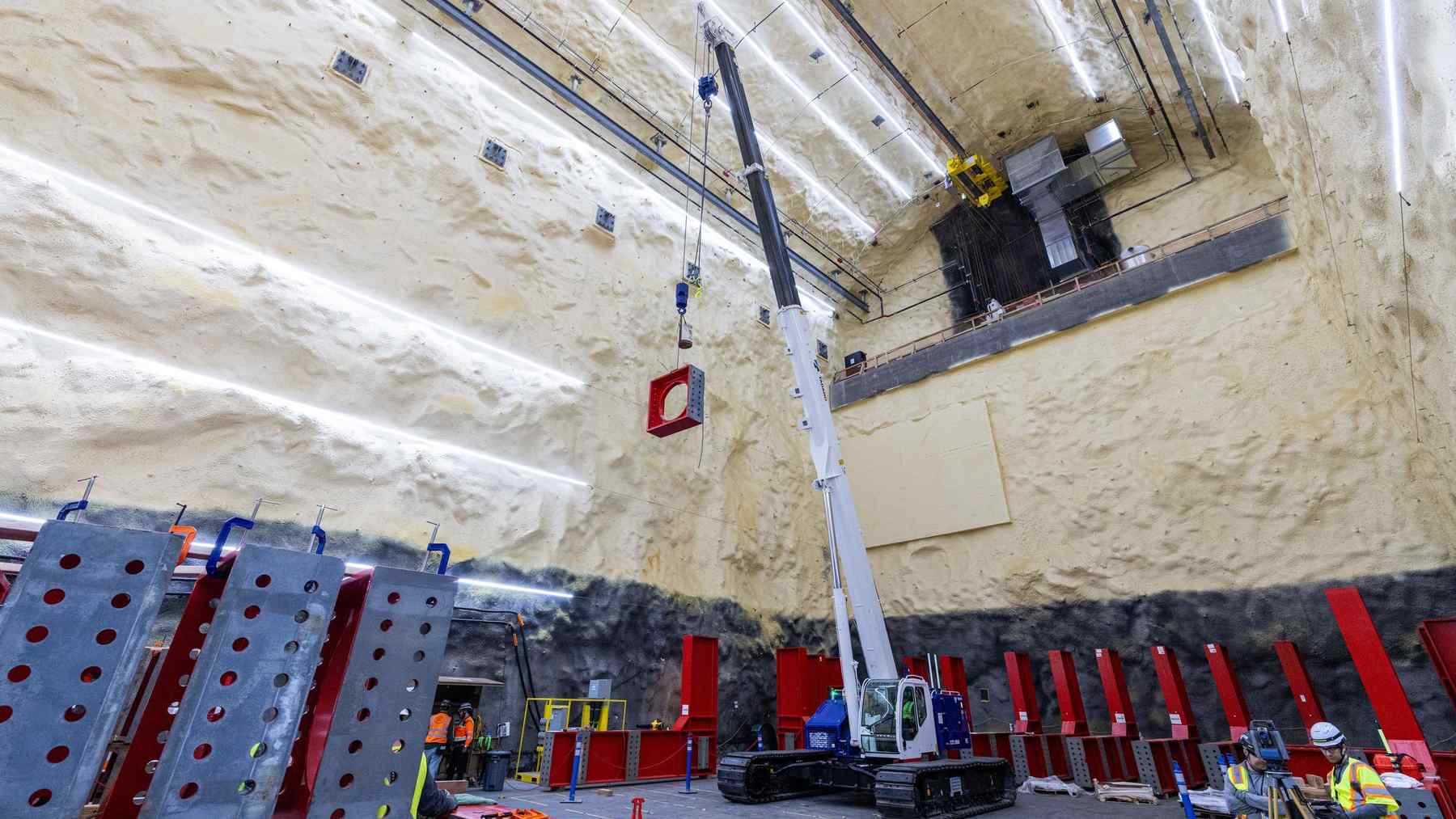
Fermilab announced on November 10 that crews from CERN, Fermilab and SURF started building the first of two enormous steel cryostats in early November. The work’s happening in the South Cavern, nearly a mile below the surface, and the tanks will eventually hold the far detector for the Deep Underground Neutrino Experiment, better known as DUNE. Each one is 216 feet long, 62 feet wide and 60 feet high, which is pretty hard to picture until you remember it all came down a hole in pieces.
So what’s a cryostat, anyway?
Basically, it’s a giant thermos. A cryostat is an insulated container that keeps whatever’s inside it extremely cold, and in this case that’s liquid argon. Fermilab says each of the two tanks will hold about 17,000 tons of it at about minus 300 degrees Fahrenheit.
Why argon? Neutrinos are tiny particles that pass through pretty much everything, you included, without stopping. Every so often one does smack into an argon atom, though, and that collision leaves a little trail of charged particles the detector’s electronics can pick up. More argon means more atoms for a neutrino to hit, so you want a lot of it.
The tank design isn’t brand new, either. According to Fermilab, GTT, the French company behind the cryostat design, also designs cryostats for ships that carry liquefied natural gas. The outer structure is a frame of red steel beams, and it goes up first, with the insulation and inner layers coming later. That frame is what’s taking shape in the South Cavern right now.
There are 2,600 beams, split between two tanks
Fermilab says a total of 2,600 red steel beams will go into DUNE’s two cryostats. That count covers both tanks, not just the one going up now. SURF says the beams made the trip from the surface one by one, and some of them are already stacked in the South Cavern, waiting to be installed.
Depth makes all of this a lot harder. SURF laboratory director Mike Headley said the lab is “proud to support this world-class research 4,850 feet” below ground. That’s a little short of a mile, and it’s a long way to haul anything one beam at a time.
So why go to all that trouble?
Mostly to hide from the sky. Cosmic rays hit the atmosphere constantly, and the particles they shower down would drown out the rare neutrino hits DUNE is trying to catch. Thousands of feet of rock soak up most of that noise, while neutrinos pass through it as if it weren’t there. Their habit of ignoring rock is also why Fermilab can send its beam about 800 miles straight through the Earth from Illinois, with a near detector at Fermilab checking the beam before it heads out.
The steel numbers don’t quite match
Here’s where I got a little stuck. In May, at an event in Lead marking the start of the steel’s trip underground, SURF and Fermilab put CERN’s contribution at 10 million pounds of steel. The November release says the cryostat modules use more than 6,200 tons of steel from CERN.
So which is it? I ran the conversion, and 10 million pounds comes out to 5,000 tons in the short tons we use in the US, or a bit over 4,500 metric tons. Neither one is 6,200. Fermilab hasn’t said whether its new number is in short tons or metric tons, and it hasn’t explained why it’s higher than the May figure. My guess is the two releases aren’t counting exactly the same steel, but that’s only a guess, and Fermilab hasn’t confirmed it.
CERN’s role, at least, isn’t in doubt. It’s supplying the steel as an in-kind contribution and leading the design and installation of the cryostats. SURF noted back in May that CERN had never invested in infrastructure for a non-European experiment until now. That’s arguably a bigger deal than the tonnage.
The second tank is already on its way down
The South Cavern isn’t the only busy spot. SURF crews have started lowering steel for the second cryostat into the North Cavern, and Fermilab expects assembly there to begin next year. So 2027 should be the year the second tank starts going up.
We don’t know how far along the first one is, though. Fermilab hasn’t given a completion date for the South Cavern cryostat, and it hasn’t said how many beams have been installed so far. I’d frankly like to know both, since a 216-foot frame built one beam at a time is exactly the kind of job you’d want a progress bar for.
So what’s DUNE for?
You might fairly ask what all this hardware is supposed to do. Fermilab says DUNE should help scientists understand how the universe developed after the Big Bang, and whether neutrinos are part of the reason there’s so much more matter than antimatter around. It’s an international collaboration of more than 1,500 researchers, hosted by Fermilab.
SURF’s May release also listed possible spin-off benefits in medical imaging, communications and national security. Physics this fundamental doesn’t usually end in a product launch, so I wouldn’t expect a DUNE-branded gadget anytime soon. Then again, no one builds a 216-foot thermos almost a mile underground just for fun.
It’s also not the only unusual way physicists have found to catch these particles. In September, we looked at a tank a quarter mile from two French reactors that caught antineutrinos from their fuel.
So when does it switch on?
Not soon. The cryostats are only the start of the far detector, and Fermilab’s schedule still has a few big steps left.
Fermilab says the underground space should be finished by 2029 and the detector apparatus by 2030. The first neutrino beam is due in 2031, using Fermilab’s PIP-II accelerator upgrade, and the lab expects DUNE to keep running into the late 2040s.
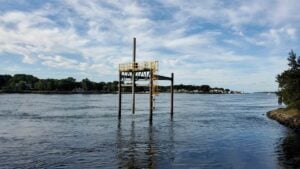 A 23-foot-wide steel platform on three 90-foot piles driven 45 feet into the bed of a Massachusetts canal lowers tidal turbines up to 10 feet across into a 4-knot current on a lifting arm, then raises them back out of the water so engineers can service them dryEnergy · 24 hours ago
 A 1-megawatt reactor that rode a flatbed more than 1,000 miles from a Los Angeles suburb to an 80-foot concrete dome in Idaho has been approved for a test no microreactor has been cleared for before, 60 days at full power with at least 150 hours untouched, and it still has not been fueledEnergy · 1 day ago
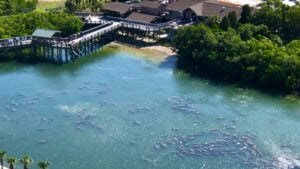 A power plant on Tampa Bay that cools itself with seawater sends it back warm into a canal where manatees gather whenever the bay drops below 68 degrees, and with 10 Florida plants doing the same, about two-thirds of the state’s manatees ride out the coldest days beside a machineEnergy · 1 day ago