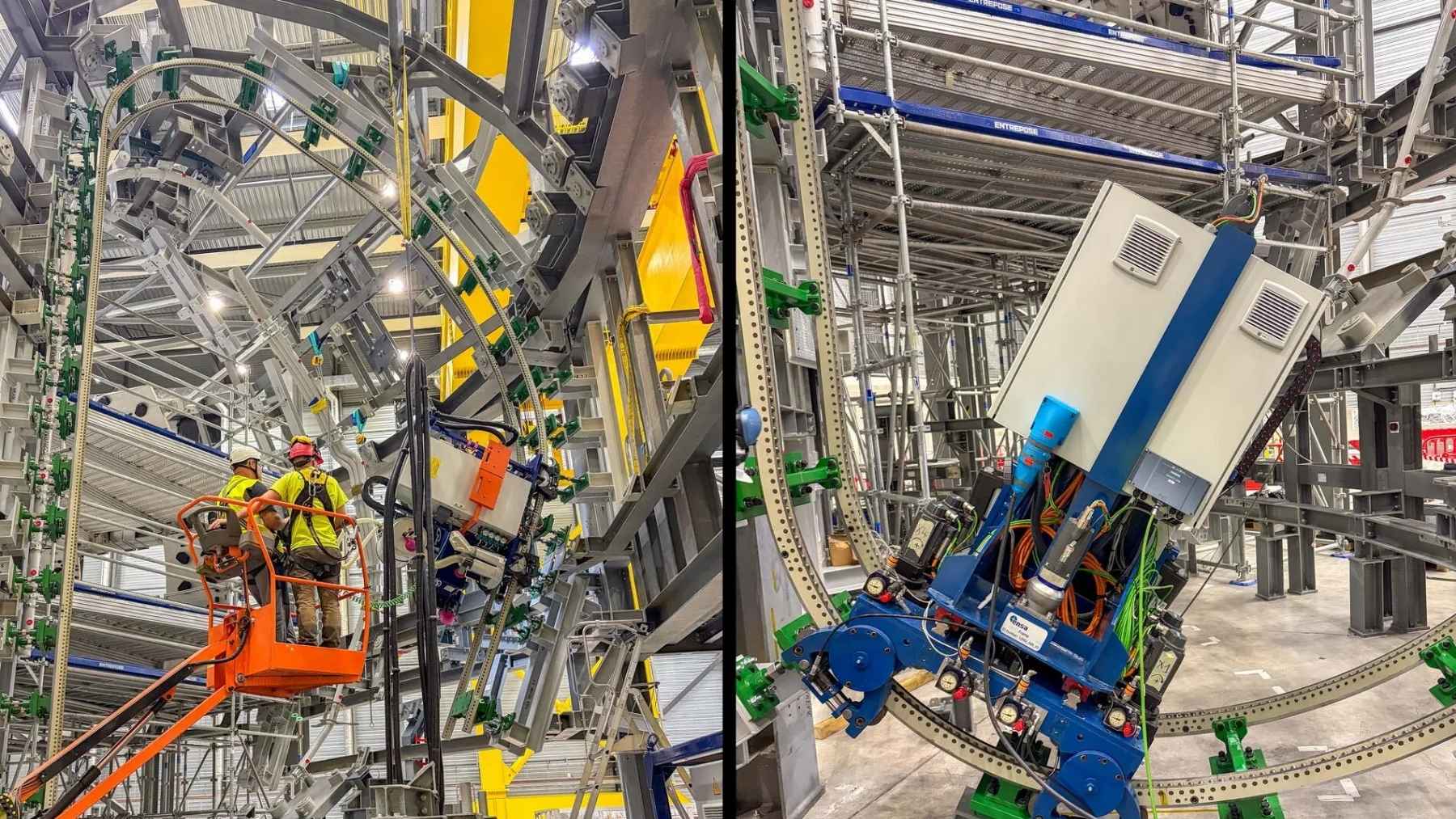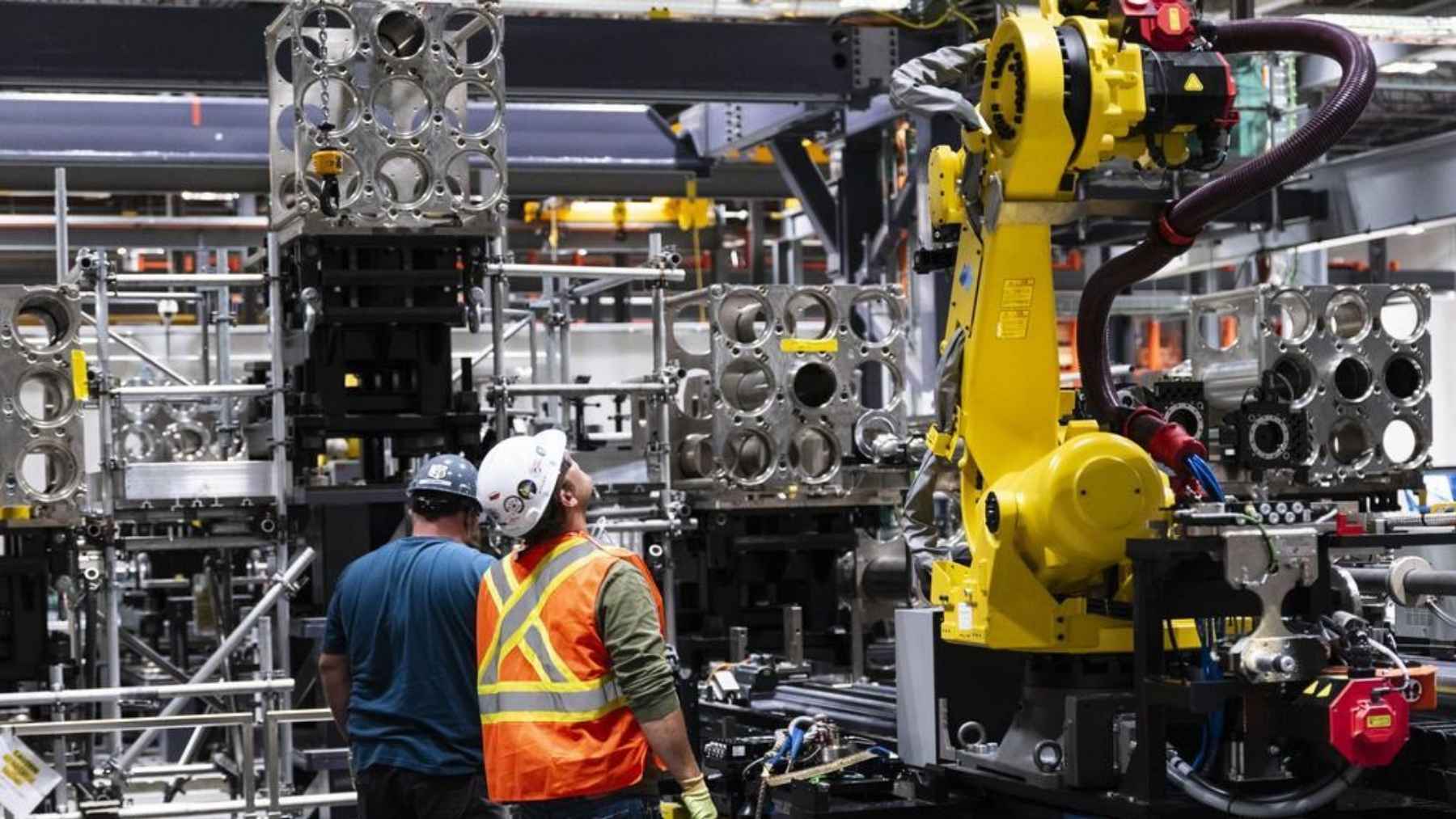

If you’ve ever watched footage from a car plant, you know the six-axis robot. It’s that orange or yellow arm that spot-welds a door frame, swings around, grabs a windshield and sets it in place while nobody’s standing within 10 feet of it. Pretty boring stuff, frankly, once you’ve seen it a few hundred times.
Now picture the same kind of arm parked in front of a nuclear reactor, feeding 20-foot zirconium tubes into a wall of 480 holes.
That’s what’s been going on at Bruce Power’s Unit 4 in Ontario, and on October 13 the utility said the robot had finished. All 480 calandria tubes are in, sealed at both ends, and the job wrapped up 25 days faster than the same milestone on Unit 3, the first reactor this robot ever worked on. Next up for Unit 4 is the fuel channel installation, and that’s the stage where the actual pressure tubes go in.
So what exactly is a calandria tube, and why does a reactor need 480 of them?
A CANDU is basically a tank with 480 pipes through it
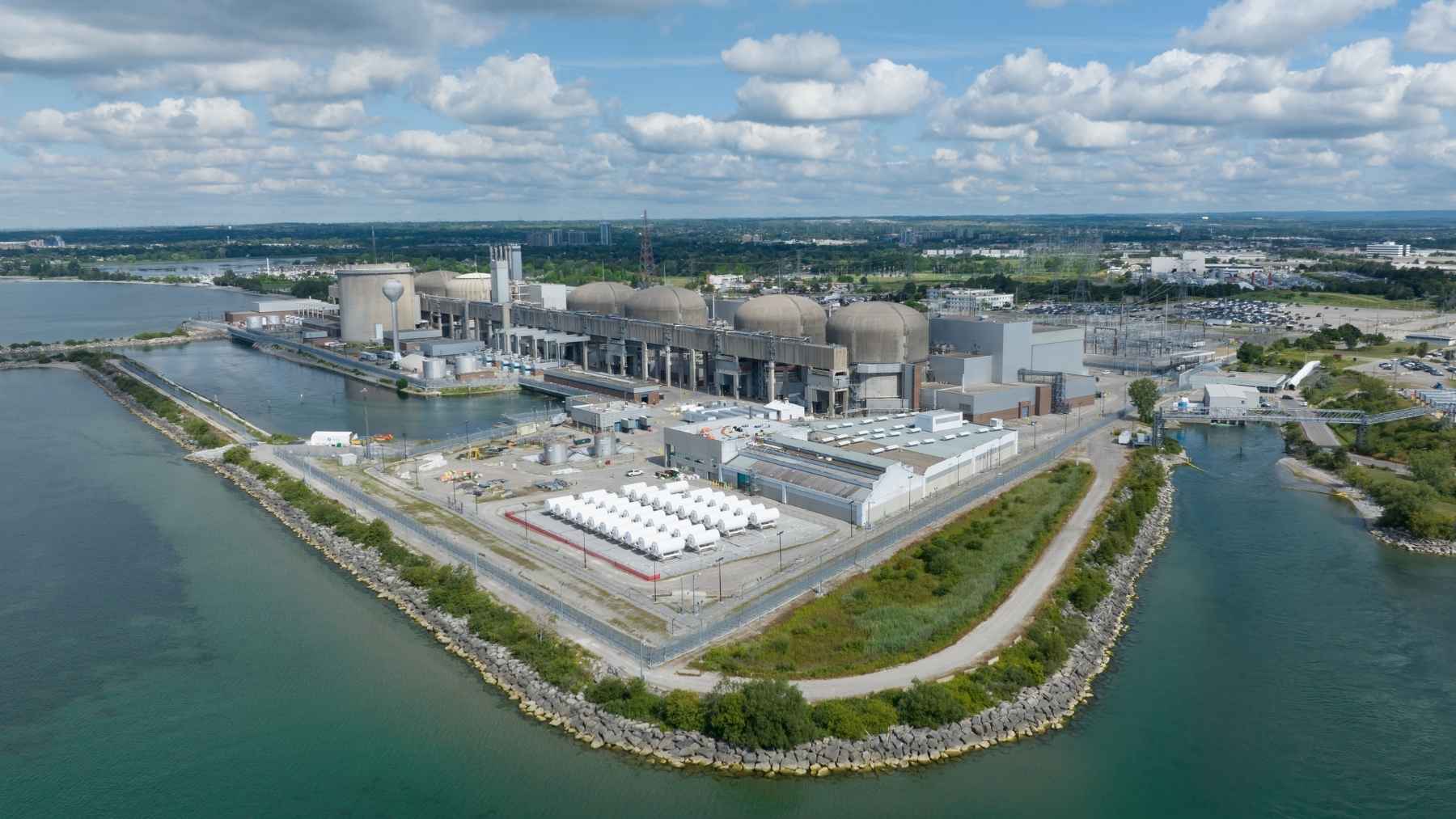
Most American reactors are big steel pressure vessels with the fuel sitting in the middle. A CANDU, the Canadian design that runs the whole Bruce site, doesn’t have one of those. Instead you get a large horizontal tank full of heavy water, called the calandria, with 480 channels running straight through it from one end to the other. Each channel is two tubes, one inside the other. The inner one is the pressure tube, which holds the fuel bundles and the hot coolant. The outer one is the calandria tube, a sleeve that keeps the cool heavy water in the tank away from the hot pressure tube.
We got into the design in more detail when a 700-megawatt version was pitched to US regulators earlier this year, but the short version is that a CANDU’s tubes are its consumable part. After roughly 30 years of neutron bombardment they’ve stretched and gone brittle, and the only fix is to pull every single one out and put new ones in. Bruce Power calls that a Major Component Replacement, and it’s what Unit 4 has been going through since it went offline in February of last year for a three-year job.
The calandria tubes themselves are made of Zircaloy-2, a zirconium alloy that doesn’t soak up neutrons. Published CANDU specs put them at about 20 feet long and 5.2 inches across, with a wall around 0.055 inches thick, roughly the thickness of a dime. I ran the numbers on that, and each tube should weigh somewhere around 50 pounds. Bruce Power hasn’t published a weight for the ones going into Unit 4, so treat that as my math rather than theirs.
So they’re not heavy. They’re long, thin, and they have to seal perfectly at both ends against the tank, 480 times over, on a reactor face that’s been radioactive for decades.
What the robot actually does
According to Bruce Power, the six-axis arm runs an automated sequence that pushes a metal insert into the end of each calandria tube, then rolls the joint out to a precise target diameter until the tube and the insert are locked together in a leak-tight seal. It does this from both faces of the reactor, meaning both ends of the tank at once, and takes microscopic measurements as it goes so every joint comes out the same.
Which is the whole point, really. A person can expand one of these joints by hand. A person can’t do 960 of them to the same tolerance without getting tired, and a person standing at a reactor face is picking up a radiation dose while they do it. Bruce Power says the tooling was built specifically to keep workers back from the face and to make the results repeatable. The arm was designed and tested in Canada by Bruce Power together with ATS Automation, Shoreline Power Group (a joint venture of Aecon and Candu Energy) and Calian Engineering, and Unit 3 was the first time anyone had used it on a live reactor face.
Unit 4 was the second time, and apparently the learning curve is steep in a good way. In August the team installed 20 calandria tubes in a single 24-hour stretch, up from a best of 16 on Unit 3. Over the whole series that added up to the 25-day gain.
There’s a lot of reactor left to rebuild
Calandria tubes are the first thing to go back in, not the last. Bruce Power’s own scope for Unit 4 lists 480 fuel channels, 960 feeder pipes and eight steam generators still to be replaced, on top of the tubes that just went in. The pressure tubes slide inside the calandria tubes the robot just sealed, and the feeders are the pipes that carry coolant in and out of each channel, two per channel.
Some of the heavy lifting is already done. During the lead-in, before any tubes came out, crews put 16 bulkheads weighing nearly nine tons apiece into the reactor ahead of schedule, and Bruce Power says Unit 4 was defueled faster than any CANDU unit in history. The company puts Unit 4’s maximum output at 855 megawatts after its last upgrade outage, so that’s the figure I’m using here.
Now, is 25 days a big deal on a three-year outage? On its own, not really. It’s about 2 percent of the schedule. But you’ve got to look at where it fits.
Ontario keeps doing this, and it keeps getting faster
Unit 4 is the third of six Bruce reactors going through this rebuild, and Bruce Power calls it the halfway point of a program that’s supposed to have all six back in service by 2033. The budget for the whole thing is $13 billion Canadian, about $9 billion US, and each rebuild is supposed to buy 30 to 35 more years of operation. Unit 6 came back in 2024. Unit 3, the one that first used this robot, came back in June, seven months ahead of schedule. Unit 5 is scheduled to go offline for its turn in November.
I’ll admit I find that a slightly strange thing to read as an American. The last new reactors we built from scratch, the two at Vogtle in Georgia, took the better part of 15 years and famously blew through their budget. A few hours north of Detroit, a utility is on its third 800-megawatt-class rebuild in a row and each one is coming in faster than the last. The two aren’t the same job, and nobody should pretend a retube is a new build. Still, the contrast is hard to miss.
It’s also not a flawless story up there. We covered what happened at Darlington, the other big Ontario station, when two freshly rebuilt reactors went dark within weeks of the ribbon-cutting over problems in the non-nuclear parts of the plant. Bruce Power, for what it’s worth, took a different approach on Unit 3 and cut a hole in the roof to swap all eight steam generators outright. Unit 4 gets the same treatment.
There are a couple of things I’d still like to know. Bruce Power hasn’t said what the target diameter for the rolled joint is, or how many people it takes to run the robot during a shift, and I couldn’t find either in the regulator’s public filings. The company’s framing is that the tooling cuts the dose to tradespeople, and that’s a pretty reasonable thing to prioritize when the alternative is a human with a hand tool at a reactor face.
Eric Chassard, Bruce Power’s president and CEO, said the company is “returning our units to service with very high quality” and keeping a stable supply of medical isotopes going at the same time. Which is the kind of thing a CEO says, sure, but the schedule is backing him up so far.
Bruce Power says fuel channel installation on Unit 4 starts now, Unit 5 begins its own rebuild in November, and the full six-unit program is due to finish in 2033.