
- 5 MONTHS AGO · INDUSTRYThis summer the U.S. Navy plans to plug the largest warship afloat into the world’s biggest naval base and run the base off the carrier’s two reactors, a 100,000-ton floating reactor on standby for the day a storm or drone swarm takes the grid down
- 3 MONTHS AGO · INDUSTRYA 23,163-ton ship built in Texas drops four legs to the seabed 27 miles off Virginia Beach, jacks its own hull out of the water and stacks a wind turbine every two days with a crane wrapped around one of its legs, and nobody has ordered a second
- 4 WEEKS AGO · INDUSTRYA 726-foot dam on the Colorado River runs 17 turbines, and 12 of them take severe cavitation damage once Lake Mead drops below 1,035 feet, a line the lake now sits 2.4 feet above and the new federal forecast crosses in November, cutting the plant from 1,191 megawatts to 317 by April
- 1 WEEK AGO · INDUSTRYA 1,780-foot-deep copper pit in Montana went seven months without its pumps after part of its wall started to move, the acid lake inside climbed 3 feet, and the water in a flooded mine nearby now sits less than 26 feet below the line regulators say it can’t cross
- TODAY · THIS ARTICLEA Texas campus that will generate its own electricity without drawing from the public grid sits in a more than $74 billion plan, after an earlier filing described about 35 turbines and roughly 748 megawatts, while a second campus would use dry cooling and no planned industrial groundwater
If you wanted to plug a big new data center into the Texas grid this year, you’d have had a rough time of it. Back in August, Gov. Greg Abbott ordered grid operators to put new data center hookup requests on hold until the facilities could be audited, according to the Texas Tribune.
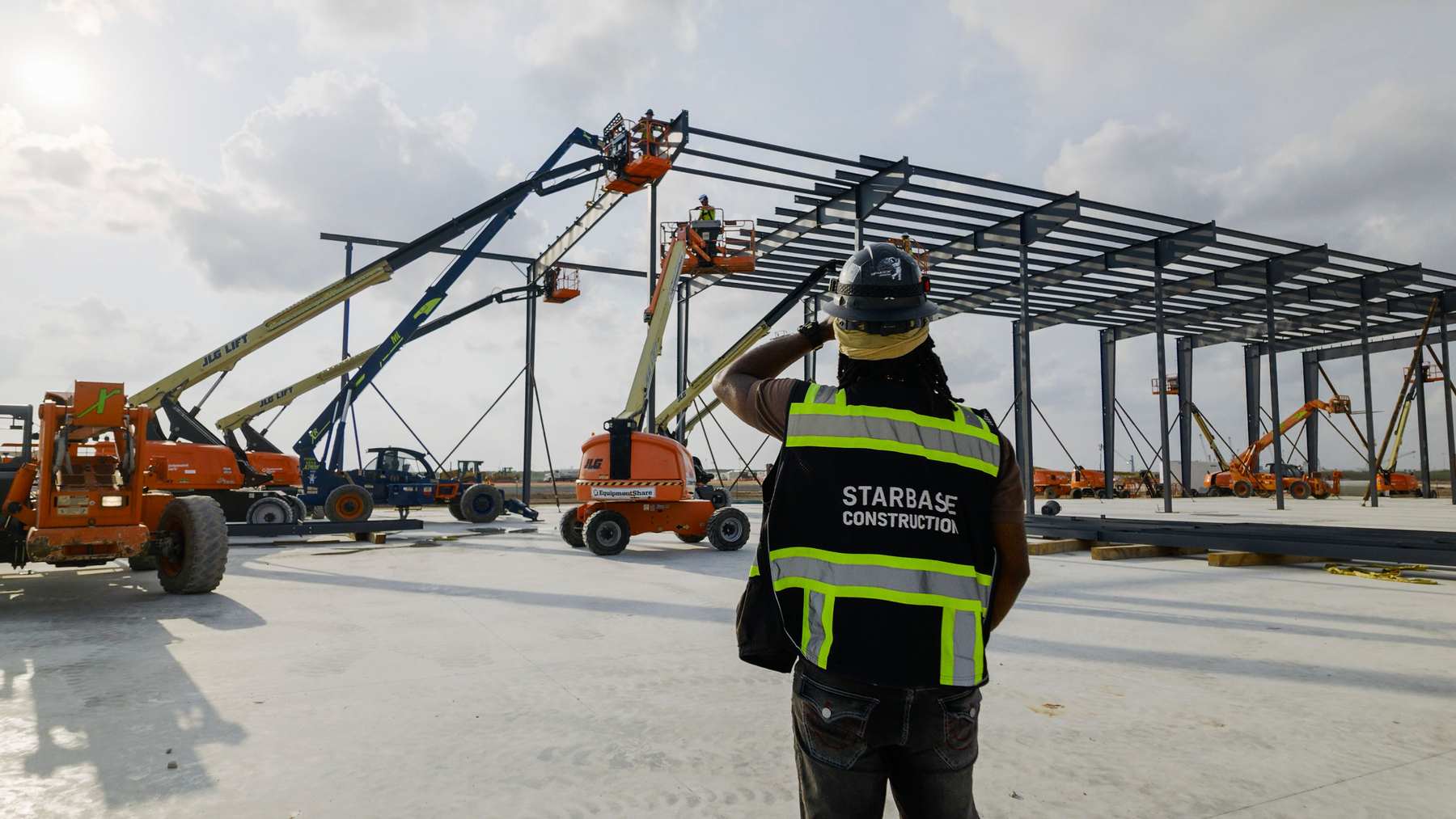
SpaceX’s Texas plan gets around that in a pretty blunt way. On November 12, the company published an update on its website laying out more than $74 billion in planned investment across two supercompute campuses, one at Starbase in Texas’ Rio Grande Valley and one in Cochise County, Arizona. The Texas campus, SpaceX says, will make its own electricity and won’t pull power from the public grid.
I keep coming back to that line.
Most big data centers buy electricity the same way your house does, just in absurd quantities, which is why utilities and regulators get twitchy when a new one shows up. A self-powered campus builds its own generation on site and feeds the buildings directly, so the grid never has to carry that load. It’s basically a power station and a server farm sharing a fence line.
SpaceX is pitching that as a favor to the neighbors. The company says running off the grid keeps the campus out of a tug-of-war with local homes and businesses over electricity, and that it won’t “shift generation costs onto existing ratepayers.” A local environmental group has already announced a protest over air quality, water use and energy bills, according to the Tribune, so that’s frankly a smart thing to lead with.
How much is Texas actually getting?
That depends on which paragraph you read. Near the top of its update, SpaceX says it plans to invest more than $24 billion in the Rio Grande Valley. A few sections down, the same update says SpaceX plans to invest up to $24 billion in this project alone. That’s a pretty flexible way to describe one number, and since “up to” is the cautious version, I’ll stick with that.
Either way, Texas is the smaller piece of the $74 billion. SpaceX says the Texas project is already behind more than 3,000 construction jobs, with more than 500 permanent ones expected once it’s running.
So where does the electricity come from?
SpaceX’s update is a bit vague on that. It mentions emissions controls designed to meet federal and state air-quality rules, but it doesn’t name a fuel.
The City of Starbase’s public hearing notice fills in the blank. It describes the project as a “gas-fired power plant and super-compute facility,” according to the Tribune, and Starbase commissioners plan to hold a public hearing in December on a possible tax break for it.
For the hardware, you have to go back to an earlier filing. The 956 Report, a local news site, says it obtained a registration SpaceX filed with the Texas Commission on Environmental Quality (TCEQ) on September 8 for its Boca Chica Facility. According to the outlet, that registration describes a temporary first phase of 35 gas turbines adding up to about 748 megawatts, and a permanent setup of eight GE Vernova 7E turbines at roughly 708 megawatts. The construction and operation dates just say “TBD.”
None of that is in SpaceX’s November 12 update, so I’d treat it as what was on paper two months ago rather than a final design.
I checked TCEQ’s air permit database, and the registration (number 185303) is still listed as pending. It’s filed under the agency’s standard permit for electric generating units, which is basically a pre-written permit. Instead of a case-by-case review, a company registers under rules that already exist, and the record shows this one was flagged for expedited permitting.
Is 748 megawatts a lot? For one site, that’s power plant territory by pretty much any definition. I can’t tell you how much of that the computers would actually use, since SpaceX hasn’t said how much power the campus will draw.
Brownsville gets the water money
Then there’s the water, which I’d argue is what Brownsville residents will feel first. SpaceX says it’s put up $220 million for new water and wastewater projects in Brownsville and Cameron County, and $40 million of that has already gone to the Brownsville Public Utilities Board.
The reason the city wants it is pretty simple. Brownsville gets roughly three-quarters of its main water supply from two Rio Grande reservoirs, and SpaceX says both have dropped to critically low levels. Three cities near Austin are building a deep intake in Lake Travis for a similar reason, so their supply doesn’t hang on floating barges during a drought.
The Southmost Regional Water Authority has lined up projects that would add about 20 million gallons a day from sources that don’t depend on the river. Eight million gallons a day would come from potable reuse, and 12 million from expanding the region’s brackish groundwater treatment. Potable reuse means taking wastewater the city already treats and cleaning it further until it’s safe to drink. Brackish groundwater is too salty to drink straight but a lot less salty than seawater, so it goes through a desalination plant first.
Don’t read that 20 million gallons as the campus’s water bill, though. It’s new capacity for the region. SpaceX says the city and the utilities board keep full ownership and that it isn’t acquiring water rights. It also says any extra water it uses will be a lot smaller than the capacity these projects add, and that SpaceX and Starbase will keep paying standard rates like everyone else.
SpaceX figures that if Brownsville had borrowed the roughly $220 million the usual way, water customers could’ve ended up paying more than $370 million over 25 years once you count interest.
The money came with a land deal. As part of the agreement, Brownsville de-annexed about 444 acres of empty land out by the port and the city landfill, and the tract went to the City of Starbase. Brownsville also put a 90-day moratorium on new data center applications in place earlier this month, but by then the tract was already outside city limits.
Arizona is getting a very different setup
The second campus is the bigger check. SpaceX wants to build a roughly $50 billion campus in Cochise County, with about 5,500 construction jobs and 1,000 permanent ones, and it’s still seeking approval.
Instead of building its own power plant, SpaceX says it’ll work with local electric cooperatives and lean on renewable investments already in place there. It also claims co-op members could see their power bills drop by as much as 20%. I’d treat that as a ceiling, since SpaceX’s own wording hedges it twice.
Arizona also gets dry cooling. A lot of data centers keep their chips cool by evaporating water, the same basic trick your body uses when you sweat. Dry cooling dumps heat through air and radiators instead, a bit like the radiator in your car. The trade-off is that it usually takes more electricity on a hot day. SpaceX says the Cochise campus won’t pump groundwater for industrial use or drill new wells under the current plan, which seems like a pretty sensible call for the desert.
If you live in Brownsville, that Starbase hearing in December is the next public stop. As of November 12, TCEQ still lists SpaceX’s Boca Chica Facility registration as pending.
 A 44-inch pipe 121 miles long climbs from a desalination plant on the Chilean coast to a copper mine more than 14,400 feet up in the Andes, through five pumping stations across one of the driest deserts on Earth, built to carry 24 million gallons of desalted seawater a dayIndustry · 47 minutes ago
 A 1,736-foot tunnel with a 13-foot steel pipe inside released about 4 million gallons from a California dam for the first time, after two 11-foot cone valves opened to 10 percent, a new outlet built to hold a reservoir at 3 percent through an El Niño winterIndustry · 2 hours ago
 A coal-era shaft that old records put at up to 180 feet deep opened under a working tram line in August, leaving the rails hanging over a void, and a roughly $2 million investigation is under way with no date given to reopen the 11 stops that are still shutIndustry · 4 hours ago