
- 5 MONTHS AGO · INDUSTRYAn American drone crawls out of the deep on tank tracks, drives across the seabed and pushes through six feet of breaking surf to climb onto the beach, hunting the mines in the one strip of coast every swimming drone has to turn around at
- 2 MONTHS AGO · INDUSTRYA 130-pound drone glider built without wings went into the water while American and German sailors spent five days dropping practice mines off Portugal, and it can dive to 3,281 feet and climb back by pumping oil in and out of a bladder, logging what bends sonar
- 2 MONTHS AGO · INDUSTRYA 250-foot earth dam that runs four miles across the Missouri was built by pumping river mud into place with a fleet of dredges, and when a failed transformer set the grass by its powerhouse burning, 3,157 Montana homes went dark for under two hours
- 3 WEEKS AGO · INDUSTRYA flooded nickel and copper mine outside Sudbury sat under water for 25 years with every building on top torn down, and a small Ontario company just approved digging a new ramp into it, pumping it dry and putting the old shaft back to work to haul out 2,400 tons of rock a day for 12 years
- TODAY · THIS ARTICLEA 44-inch pipe 121 miles long climbs from a desalination plant on the Chilean coast to a copper mine more than 14,400 feet up in the Andes, through five pumping stations across one of the driest deserts on Earth, built to carry 24 million gallons of desalted seawater a day
Copper is in pretty much everything you plug in, from your phone charger to the wiring behind your walls, and a big share of the world’s supply comes out of the mountains of northern Chile. Mining it takes a lot of water, though. That’s a bit of a problem when your mine sits on the edge of the Atacama, one of the driest deserts on Earth.
So Collahuasi, one of the biggest copper mines down there, decided to stop leaning on the desert for its water and go get it from the Pacific instead. The catch is that the ocean is at sea level and the mine isn’t. It’s more than 14,400 feet up in the Andes, which is higher than the summit of Pikes Peak, where the famous hill climb finishes.
Getting seawater up there took a 44-inch pipe, five pumping stations and about 121 miles of desert. The pipe was finished in April. Then, in May, a Chilean court pulled the environmental approval for the desalination plant that’s supposed to feed it, and that plant’s been on hold ever since.
So how do you push the ocean up a mountain?
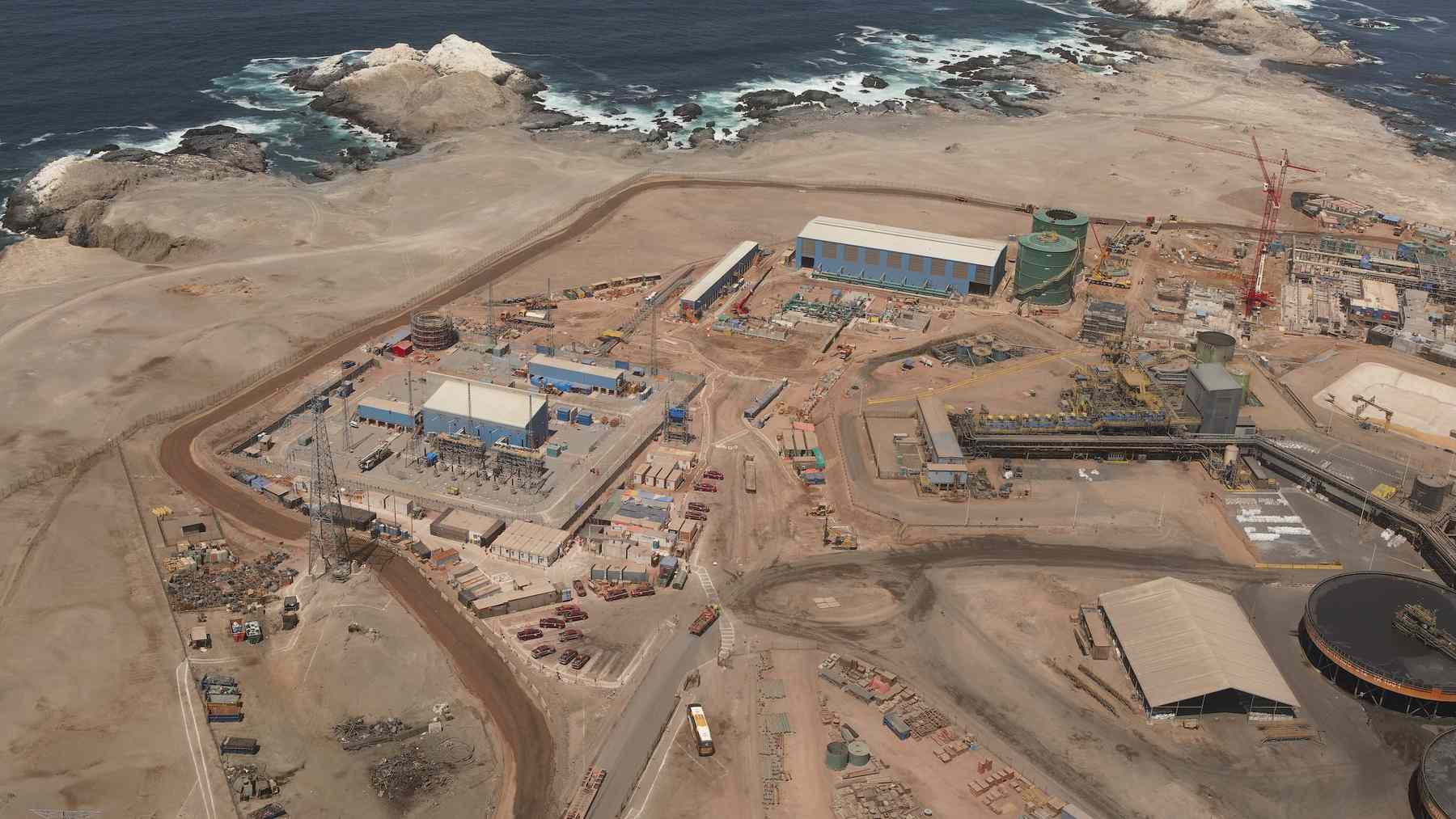
You do it in stages. The water starts at the Punta Patache desalination plant, on the coast about 40 miles from the port city of Iquique. Acciona, a Spanish company, built the plant, and it uses reverse osmosis. Basically, it forces seawater through membranes at high pressure, and the membranes let the water through while holding back the salt.
The plant’s designed to put out 1,050 liters a second, which works out to about 24 million gallons a day.
From there, a 44-inch line built by the engineering company Techint runs 194 kilometers, or about 121 miles, inland to Ujina, the Collahuasi deposit that sits above 14,400 feet. Five pumping stations along the route each give the water a shove up the next stretch. There are also six drainage stations, which, as far as I can tell, are there so crews can empty sections of the line when they need to work on it.
The high point isn’t actually the mine. According to Techint, the system tops out at a transfer station holding 49,000 cubic meters, about 13 million gallons, at more than 15,000 feet. So the water climbs a bit higher than the mine before it heads back down to it.
We’ve covered people moving water uphill before, from an old gold pit in Queensland to the Grand Coulee pumps that lift water 280 feet. This system climbs more than 14,400 feet, which is over 50 times as high. Frankly, that’s a pretty wild amount of uphill for something as heavy as water.
Techint said in April that it had finished building the system, and it’s still training Collahuasi’s staff from a control room up on the altiplano, the high plateau where the mine sits.
Water was already heading uphill in March
Collahuasi’s CEO, Jorge Gómez, gave an update at a desalination industry congress in March. He said the project was 99.5% complete and that the start-up had gone well, according to the Chilean trade magazine Minería Chilena. He also said the system was pumping roughly 800 liters a second at that point, about 18 million gallons a day, and that this would let the mine gradually cut back on what Chileans call continental water.
If you’re wondering what that is, it’s basically freshwater from inland sources, like aquifers, as opposed to water from the sea. In a desert, every gallon of it is spoken for, so swapping it out for seawater is the whole point of the project.
The mine’s owned mostly by Anglo American and Glencore, with 44% each. Glencore’s the same company that sank a new shaft under an old Ontario mine, so it’s not exactly shy about spending big on infrastructure. Collahuasi puts the whole expansion, plant and pipe included, at about $3.2 billion. Gómez cited a $3.5 billion capital spend back in March, and I’m not sure what explains the gap between the two figures.
Then a court got involved
In Chile, big projects need an environmental approval called an RCA. It’s essentially the permit that says the government has studied a project’s impacts and signed off on it. Collahuasi got its RCA in December 2021. Two indigenous associations from Caleta Chanavaya, a small fishing community on the same stretch of coast, challenged it. On May 14, Chile’s Second Environmental Tribunal sided with them in part, and it published the ruling on May 15. The court annulled the approval and sent the review back to Chile’s environmental assessment agency, known as the SEA.
The judges wanted two things looked at again. One was how the project affects the people who live and fish on that coast. The other was the ocean: how fast the plant sucks in seawater, whether its brine settles on the seabed, and a marine monitoring plan that only covered the plant’s first five years.
Brine is what’s left over after reverse osmosis pulls the fresh water out. It’s seawater with the salt concentrated, and it goes back into the ocean. As I understand it, the worry with brine is that it’s heavier than normal seawater, so it can sink and spread along the bottom near the outlet.
Collahuasi asked the court to clarify the scope of the ruling. On May 21, the company said the tribunal had limited the annulment to the desalination plant and the human impacts, and that the rest of the project’s approval still stands. It also said construction and testing of the plant had been stopped since it was notified of the ruling, with only minimal maintenance and safety work going on.
Anglo American and Glencore both said on May 18 that they didn’t expect any immediate hit to production, thanks to the other water sources the mine already had. You can read Anglo American’s statement for yourself.
So what happens now?
When Anglo American reported its third-quarter numbers on October 20, Collahuasi was still running on those other sources, and it was working with the authorities and local groups to get the plant running again, according to Minería Chilena.
Which leaves a pretty strange situation. You’ve got a finished 121-mile pipe and five pumping stations built to carry 24 million gallons a day, and the plant at the bottom of it is on hold while regulators go back over the review. I haven’t found anything showing the plant has restarted since May, or how much water, if any, is moving up the line right now. I’d guess a system this expensive won’t sit around forever, but that’s up to the SEA.
That process is moving, at least. Collahuasi filed what’s called an exceptional addendum with the SEA on October 30, which is basically an extra round of answers to the regulators’ questions, and Chile’s fisheries undersecretariat gave a favorable opinion on it on November 9, according to El Cronista, which cited the project’s environmental file.
 A 1,736-foot tunnel with a 13-foot steel pipe inside released about 4 million gallons from a California dam for the first time, after two 11-foot cone valves opened to 10 percent, a new outlet built to hold a reservoir at 3 percent through an El Niño winterIndustry · 2 hours ago
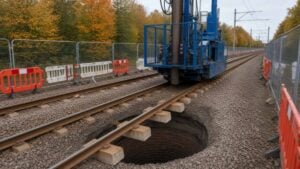 A coal-era shaft that old records put at up to 180 feet deep opened under a working tram line in August, leaving the rails hanging over a void, and a roughly $2 million investigation is under way with no date given to reopen the 11 stops that are still shutIndustry · 3 hours ago
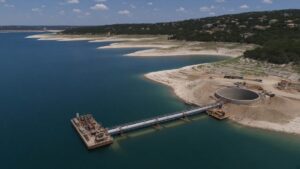 Intake pipes are already set in the floor of a Texas lake at the end of a tunnel that runs to a 300-foot shaft, a deep intake built to send 145 million gallons a day to three cities when drought strands the floating barges they depend on nowIndustry · 6 hours ago