
When a piece of American military hardware turns up on Iranian state television, the script is usually the same. Tehran calls it a trophy, Washington says as little as it can get away with, and the company that built the thing goes quiet for a week.
That’s not how this one went. Palmer Luckey, who founded the company that built it, posted about the loss on X and signed off with “Rest in peace, little buddy.”
Everyone watching Iran’s state-run TV news program probably noticed they picked up an Anduril Dive-LD, our mass-produced attritable submarine.
This particular vehicle has been swimming in CENTCOM for months, successfully operating in support of American forces for thousands of… pic.twitter.com/MlqSssSlaD
— Palmer Luckey (@PalmerLuckey) September 9, 2026
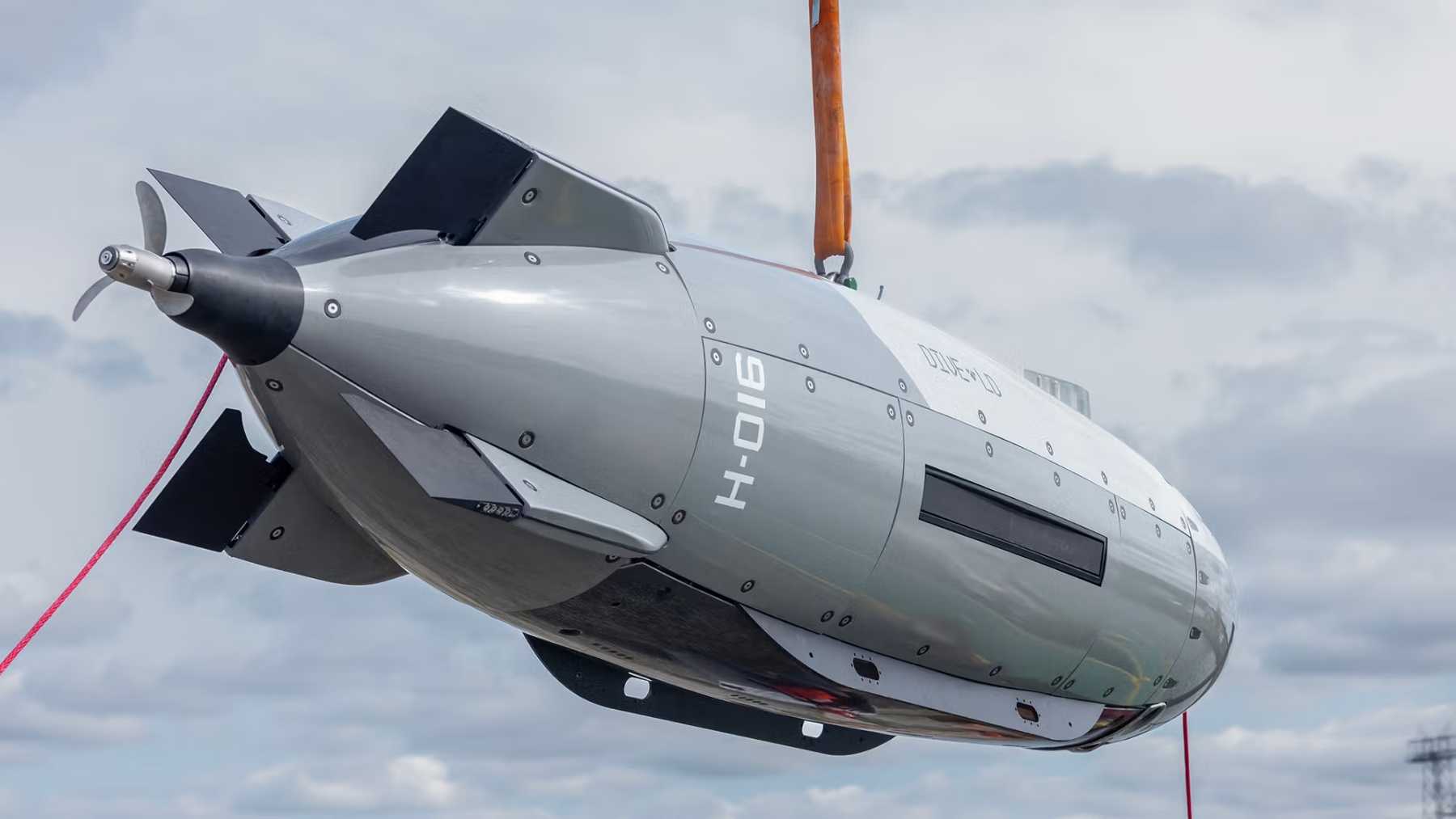
The machine is an Anduril Dive-LD, a drone submarine about 19 feet long and 4 feet across that weighs roughly three tons. Iran’s Islamic Revolutionary Guard Corps announced on Tuesday, September 8, that its naval forces had taken it at the entrance to the Strait of Hormuz, and Iranian state media ran photos and video of it. The Guard’s statement called it “one of the most modern, intelligent and unmanned submarines” the American military operates.
So Iran owns an American drone submarine now. How much that matters depends on who you ask, and the two American answers don’t line up as neatly as you’d expect.
So what is a Dive-LD?
It’s a robot that swims off on its own for days and comes back with data. Anduril builds it for mine hunting, seabed mapping, intelligence work and inspecting things like undersea cables and pipelines. The company’s own product page says it’ll run 10 days without coming home and it’s rated to 6,000 meters, which works out to 19,700 feet.
That depth rating is easier to hit than you’d think, because most of the hull floods on purpose. Only the things that can’t get wet, meaning the batteries, the computers and the navigation gear, sit inside sealed pressure housings, and the shell wrapped around them is mostly there for shape and drag. It’s a much cheaper approach than welding one big pressure hull, and it’s why Anduril can 3D print most of the body instead of building it like a submarine.
The design isn’t originally Anduril’s. It came from a company called Dive Technologies that Anduril bought in 2022. Navy sailors were photographed training with one at Keyport, Washington in December 2024, and it went into service with Unmanned Undersea Vehicle Group 1 in April 2025.
Nobody is pretending this didn’t happen
Navy Capt. Tim Hawkins, who speaks for U.S. Central Command, told DefenseScoop that the drone had broken down well before Iran said anything. “The drone was essentially dead in the water for more than a day,” he said. Hawkins added that it was an older model, that it had been surveying regional waters, and that it neither collected sensitive data nor carried classified sonar or radar gear.
Anduril didn’t argue. The company called the Dive-LD an “attritable autonomous system” in a statement to TWZ.
Attritable is one of those defense words that sounds like a dodge and isn’t. It means the thing was built from day one to be lost, the way you’d think about a drill bit rather than a car. The reported unit price is around $2.5 million, which is real money right up until you set it beside a minesweeper with 80 people aboard working the same water. If the robot goes into the suspected minefield so divers don’t have to, losing one now and then is arguably a fine trade, and Anduril has never been shy about saying so.
Washington and the builder tell slightly different stories
Read the two statements back to back and you get two different machines. CENTCOM’s version is an old unit with nothing useful aboard. Luckey’s version, posted September 9, is a vehicle that had been working the Central Command area for months and had piled up thousands of operating hours supporting American forces before it quit.
Both can be true at once. An older unit that’s been in the water constantly for months is exactly the one most likely to fail, and it’s also the one carrying the most wear to study. But “no classified sonar” is a narrow claim, and it isn’t the same as saying there’s nothing to learn from three tons of captured hardware.
I can’t tell you which reading is closer to right, and honestly nobody outside a few rooms can. CENTCOM hasn’t described what failed. Nobody’s said what payload was aboard when it stopped, and the photographs don’t settle it either.
Iran has never operated one of these
Which is the bit I’d pay attention to. Iran builds plenty of uncrewed systems and it’s been making weaponized underwater drones for years, at least two types of which showed up in arms shipments to the Houthis in Yemen. Naval analyst H I Sutton, who made the first public identification of the vehicle for Naval News, notes that the Dive-LD is a good deal more sophisticated than anything Iran has fielded itself.
Strip out every sensor and a captured vehicle still shows you how somebody else solved the hard problems. How the power system is laid out. How the thrusters are driven. How a navigation package holds a position for days underwater with no GPS. Sutton also raises the possibility that Tehran passes it to Russia or China, which is speculation, though not the wild kind.
Two details from the coverage stuck with me. Janes reported that in the Iranian photographs, the name stenciled on the vehicle’s starboard side reads DI E-LD, with the V gone. And on September 9, Iran’s embassy in Sweden posted about the capture using an official Anduril publicity shot, apparently for want of a better one.
If you want a sense of where this market is heading, we covered a 23-foot Danish drone submarine built out of fiberglass pipe that sells for pickup truck money, and the Navy spent two days in August watching small drones hunt other underwater drones in a harbor. Crowded and cheap, both at the same time.
Anduril said in June 2024 that a new plant would take production of these from 12 a year to 200. Hawkins told DefenseScoop on September 8 that U.S. operations in those waters are continuing.