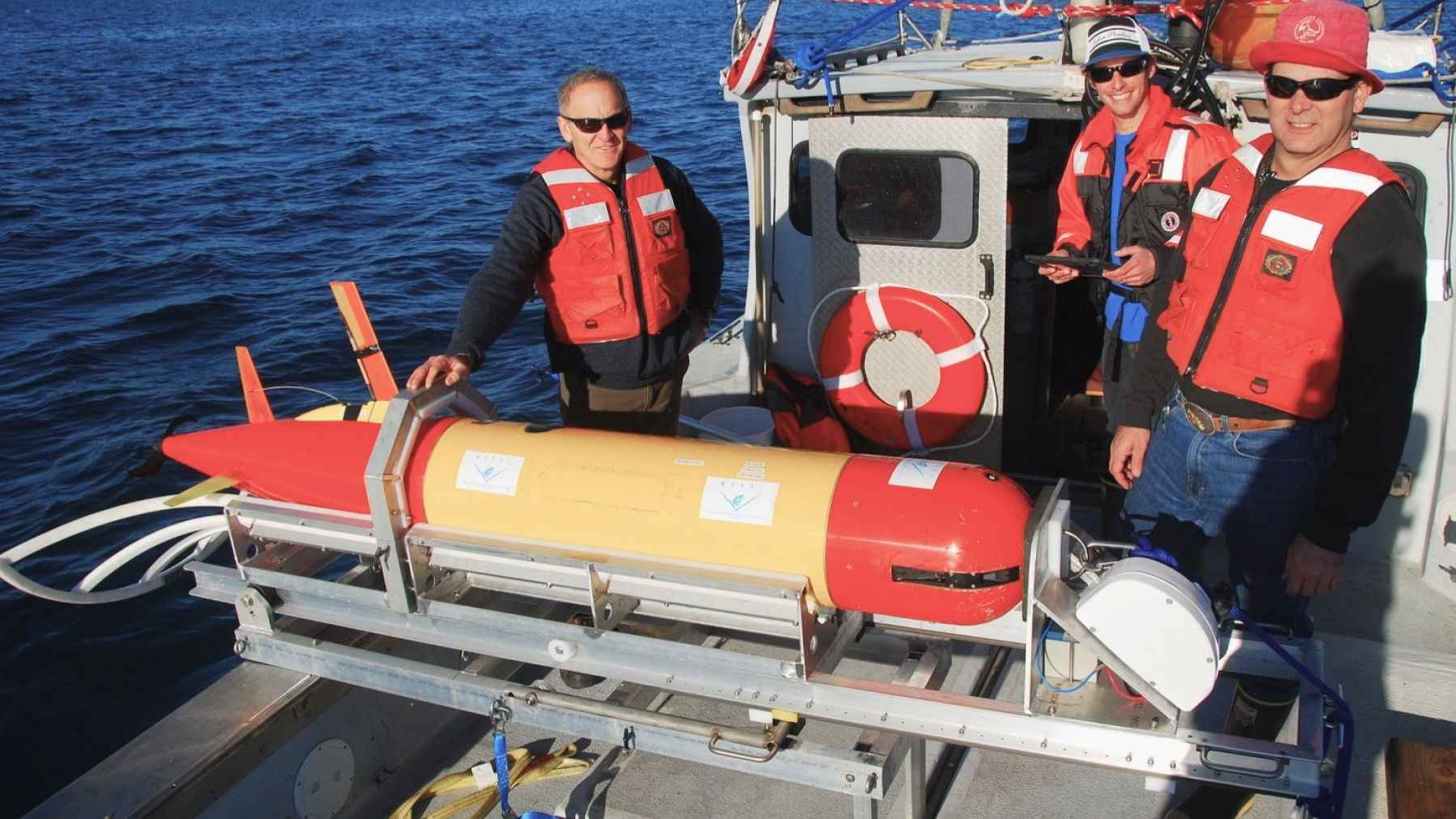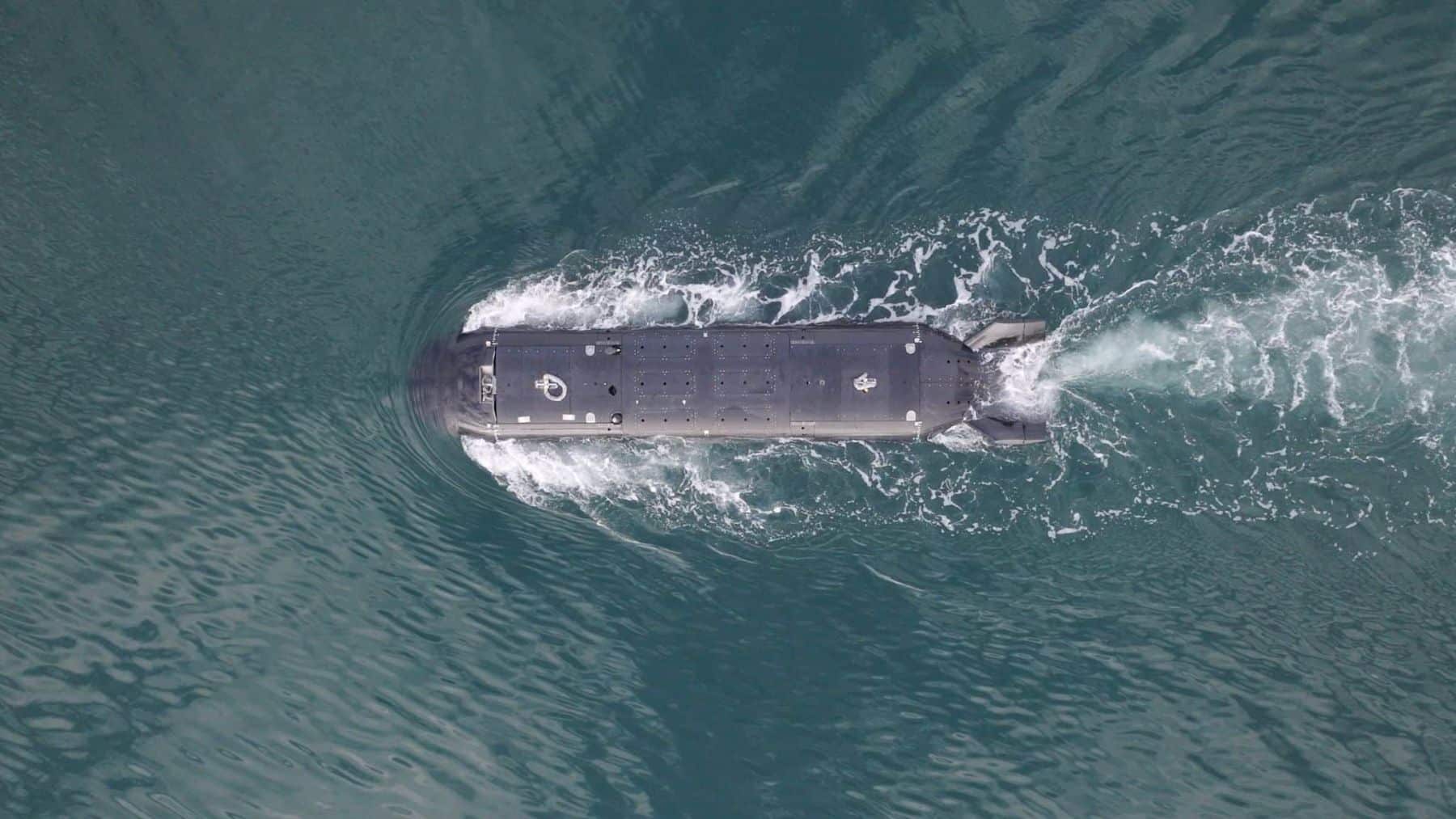

When a navy rolls out a new piece of uncrewed hardware, there’s almost always a reassuring line in the press release about how the thing is strictly for research. The Royal Navy put exactly that line in the announcement when it named XV Excalibur, its first uncrewed submarine, in May 2025: “As a demonstrator, the vessel will not perform operational duties.”
Well, about that.
Last week, somewhere in UK waters, that same 39-foot drone submarine fired a heavyweight torpedo. The British government announced the test on Monday, and according to its statement, it’s the first time Britain and the US have fired a torpedo from an uncrewed undersea vessel rather than a crewed submarine. The weapon was developed jointly by the US and Australia, so the whole thing’s basically an AUKUS group project: an American-Australian torpedo, a British drone, British waters.
The government called the launch “a major advance in the future of submarine technology” and credited it with sharpening NATO’s undersea edge, per ABC News. Governments say things like that about most tests, admittedly. This one might actually deserve it.
So did the Royal Navy go back on its word?
Honestly, not really. Firing a torpedo on a test range? That’s still testing, and testing is the entire reason this boat exists. The Submarine Delivery Agency, which built the boat with Plymouth-based MSubs, describes Excalibur as a testbed for assessing military payloads and missions, and a heavyweight torpedo is about as military as a payload gets. It was a test firing, not a patrol.
But you can see where this is going. Excalibur went into the water in February 2025 as an unarmed experiment, got its sword name that May, and was formally handed over to the Royal Navy in December as the largest uncrewed underwater vessel the service has ever put through trials. We covered the boat back in July, after the Navy drove it, submerged, from a control room in Australia more than 10,000 miles away. Nineteen months after launch, the unarmed experiment can put a submarine-grade weapon in the water.
A quick word on “heavyweight,” because that word’s doing real work here. Torpedoes come in two broad sizes. Lightweight ones are the small type helicopters and escort ships drop on submarines. Heavyweight torpedoes are the full-size weapons submarines carry to sink ships and other submarines, and they run several times heavier. So this wasn’t a scaled-down demo round. It was the class of weapon a crewed attack submarine would fire.
What nobody’s said is which torpedo it was. The announcement describes it only as jointly developed by the US and Australia, neither government has named the model, and I’m not going to guess at one here.
Why put a torpedo on a drone at all?
The appeal’s pretty simple: a submarine with no crew can loiter somewhere dangerous for weeks, and if it gets sunk, you’ve lost a machine instead of people. Sidharth Kaushal, a senior research fellow at the RUSI think tank, told AFP the test matters because a lethal payload shows these systems can handle jobs beyond watching and listening. That’s been the promise all along, frankly. Surveillance drones are useful. Armed ones change what a navy can do with the sailors it actually has.
Britain isn’t the only one headed this way, either. Anduril is building its Ghost Shark drone submarines for Australia on a production line in Sydney, BAE wants to sell its roughly 39-foot Herne drone sub off the shelf, and Germany’s Quantum Systems went the other direction and built a drone small enough to be launched from a torpedo tube. Excalibur just became the drone that does the launching.
As for where the shot happened, the government won’t go further than UK waters. Gulf News ran a photo of Excalibur tied up at Kyle of Lochalsh in northwest Scotland on September 17, which happens to sit next to BUTEC, the Ministry of Defence’s underwater test and evaluation range. You can connect those dots yourself.
There’s one detail I can’t pin down. ABC’s report mentions an operating center in Australia, more than 10,000 miles from Excalibur’s home in Plymouth, taking remote control of the vessel, but from the way it’s written I can’t tell whether that describes this test or last year’s Talisman Sabre exercise, when Australian-based operators drove the boat exactly that way. If someone in Australia fired this torpedo from the far side of the planet, that would be its own headline, and nobody’s claimed it yet.
So, for the record: the shot happened in UK waters last week, the British government announced it on Monday, September 21, and XV Excalibur fired that torpedo 16 months after the Royal Navy introduced the boat as a demonstrator that will not perform operational duties.