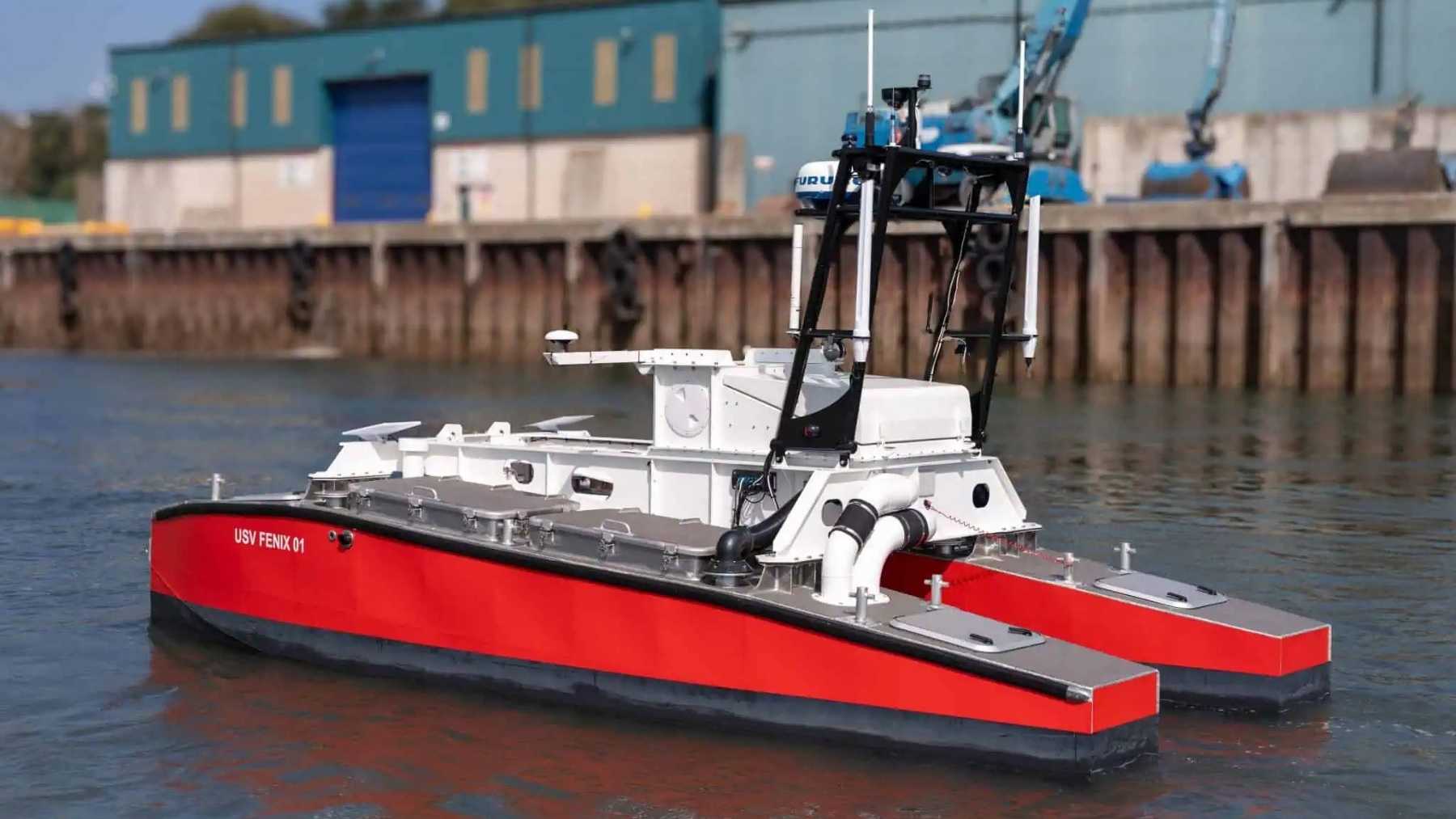

There are tons of people on board every time the Navy takes a new ship out for sea trials. Think engineers, inspectors, technicians… But a drone ship? It’s completely empty. If something quits 200 miles offshore, it quits with nobody there to put a wrench on it, which is exactly why the Navy’s test for these things looks the way it does.
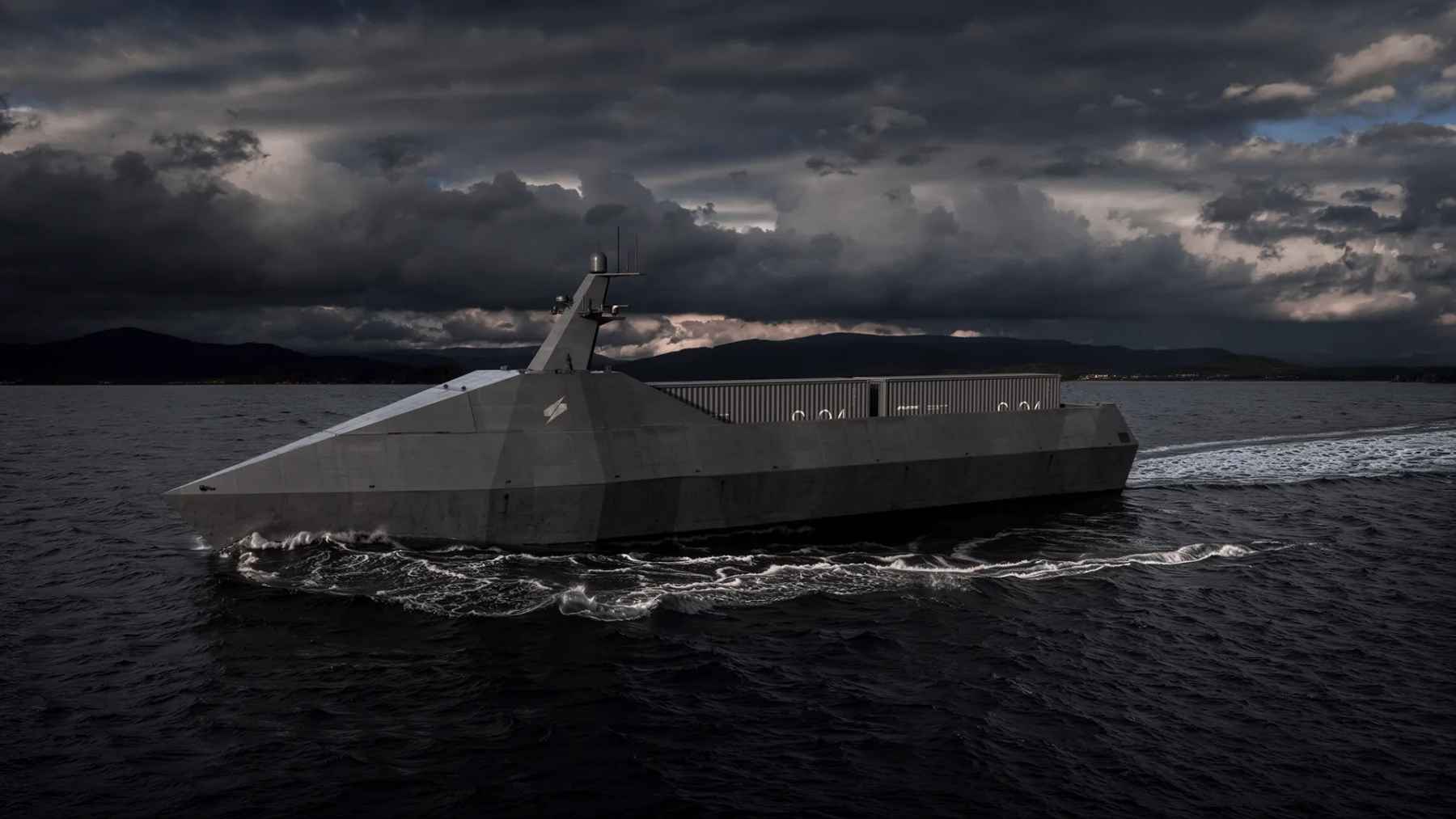
Saronic’s 180-foot Marauder just went through that test: eight days at sea, running around the clock, more than 140 scenarios back to back. Saronic says the ship cleared every one of them without a failure, and it did it on the same hull the Navy is now putting under contract, rather than on a test boat dressed up for the occasion. Guess you can’t even escape getting replaced by robots in the Navy.
The reward came on September 29th. Now, the Navy is buying 10 Marauders, plus 20 more medium drone ships from two other builders, at an average of about $40 million per ship.
Multiply that out, and you get roughly $1.2 billion for 30 uncrewed ships. The Navy calls them MUSVs, for medium unmanned surface vessels, and it wants the first ones delivered before fiscal 2027 ends. Fiscal years are the government’s version of a calendar, and 2027 closes on September 30 of next year. So the clock on this one is short.
So what does a drone ship actually get tested on?
Drone ships are tested on the same exact things as manned ships. That can be simplified to three things, according to the Navy’s announcement: whether the ship can see and understand what’s around it, whether it follows international collision rules on its own, and whether it can hold together during a long mission. A robot that can’t perform while following the rules doesn’t get to share the water with tankers and fishing boats.
The part of Marauder’s evaluation I find most interesting is the passive-perception work. Radar is the obvious way for a ship to see at sea, but this comes with a catch: a transmitting radar is one that everybody else can detect. So the Navy had Marauder find, track, and follow other vessels using only its passive sensors, the cameras and listening gear that take in the world without sending anything out. That’s considered one of the harder problems in marine autonomy, and it’s the skill you’d want in a ship built to loiter somewhere quietly.
Then there’s the endurance bar. Janes reports that every finisher had to run about 26 hours and more than 360 nautical miles, roughly 414 regular miles, on a single input from the control station. A single input means an operator presses go once, and the ship handles everything after that, traffic included.
Pressing that button is easy. It’s the 26 hours that follow that the Navy was watching closely.
So who’s building the 30?
Three companies got production agreements for 10 ships each: Saronic, HII, and Galliano Marine Services. The Navy hasn’t published a per-company price breakdown, just that $40 million average, so I can’t tell you whether a Marauder costs more or less than its rivals.
Saronic’s the Texas startup of the three, and the Marauder is its biggest boat: 180 feet, a top speed over 25 knots, a range of up to 5,400 nautical miles, and room for about 330,000 pounds of modular payload, including up to four 40-foot shipping containers, per the company’s own specifications. The ships come out of their yard in Franklin, Louisiana. CEO Dino Mavrookas says the evaluation proved the design “holds up under the Navy’s own toughest testing.” He also says the third Marauder hull has already been flipped, with more behind it on the line.
HII’s is probably the most familiar name here. It’s America’s biggest military shipbuilder, and its entry is the ROMULUS 151, a 151-foot drone ship with five hulls under construction across two Louisiana yards. We covered the first of those hulls getting flipped upright in September, back when the program was a milestone rather than an order book. Galliano Marine Services is the quietest of the three, a Louisiana operation out of the Edison Chouest offshore world, and the one I’d like to know more about.
What about the ones that passed and still lost?
Seven companies were picked for the at-sea phase back in May. Six finished it. Leidos, PacMar Technologies, and Sea Machines completed the Navy’s testing without landing a production order, and each collects the $15 million the Navy promised to any company that got through the trials. More usefully, all six finishers go onto the maritime marketplace the Navy hosts on its Drones.mil site, where they stay eligible for follow-on production orders from buyers across the Defense Department.
So, $15 million for completing the trials and you may get called back in for orders later? Win-win.
The seventh company, Birdon, doesn’t appear anywhere in the award announcement, and I haven’t found an explanation for what happened to its entry. If one surfaces, we’ll add it. (Or maybe I’ll also just forget about it.)
If you’ve followed our drone boat coverage, you may remember the Navy canceled its previous program for ships this size in March and replaced it with this marketplace, betting that the industry already had boats good enough to skip the prototype stage. Congress backed the bet with about $2.1 billion set aside for medium drone ships. On the evidence of this week, the skip worked: the marketplace went from launch to 30 production ships in about six months, which by the standards of Navy shipbuilding is pretty much a jump scare.
What comes next?
More of the same, apparently, and bigger. A week before these awards, the Navy put out the call for a Phase II round, this time asking for boats that can stay out 10 days, carry at least two 20-foot containers, and stay under 295 feet. A leap from 26 hours to 10 days? No wonder we’re all getting replaced out here…
The Navy also established a Robotic and Autonomous Systems Warfighting Development Center at Joint Expeditionary Base Little Creek in Virginia, an organization that will determine how sailors actually fight with these systems once the yards hand them over.
Chief of Naval Operations Adm. Daryl Caudle framed the whole buy as capacity that can be “placed at risk without placing Sailors at unnecessary risk,” which is the plainest case for a drone ship anyone has made yet. I’d add the quieter argument: the Navy committed to 30 hulls on the strength of one eight-day exam, and getting a shipbuilding decision made that fast may be a bigger story than the ships themselves.
Production starts now, according to the Navy’s September 29th announcement. The first of the 30 ships are due in the fleet before fiscal 2027 runs out at the end of September next year.