
Plenty of boats get built upside down. Welders like gravity on their side, and running a weld toward the floor beats running one over your head every single time, so an aluminum yard will put a hull together keel-up, plate it down-hand, and bring in cranes to roll the whole structure over once it’s done. Boatbuilders call that a hull flip. If you’ve ever held a caulk gun above your head for ten minutes, you basically get the tradition.
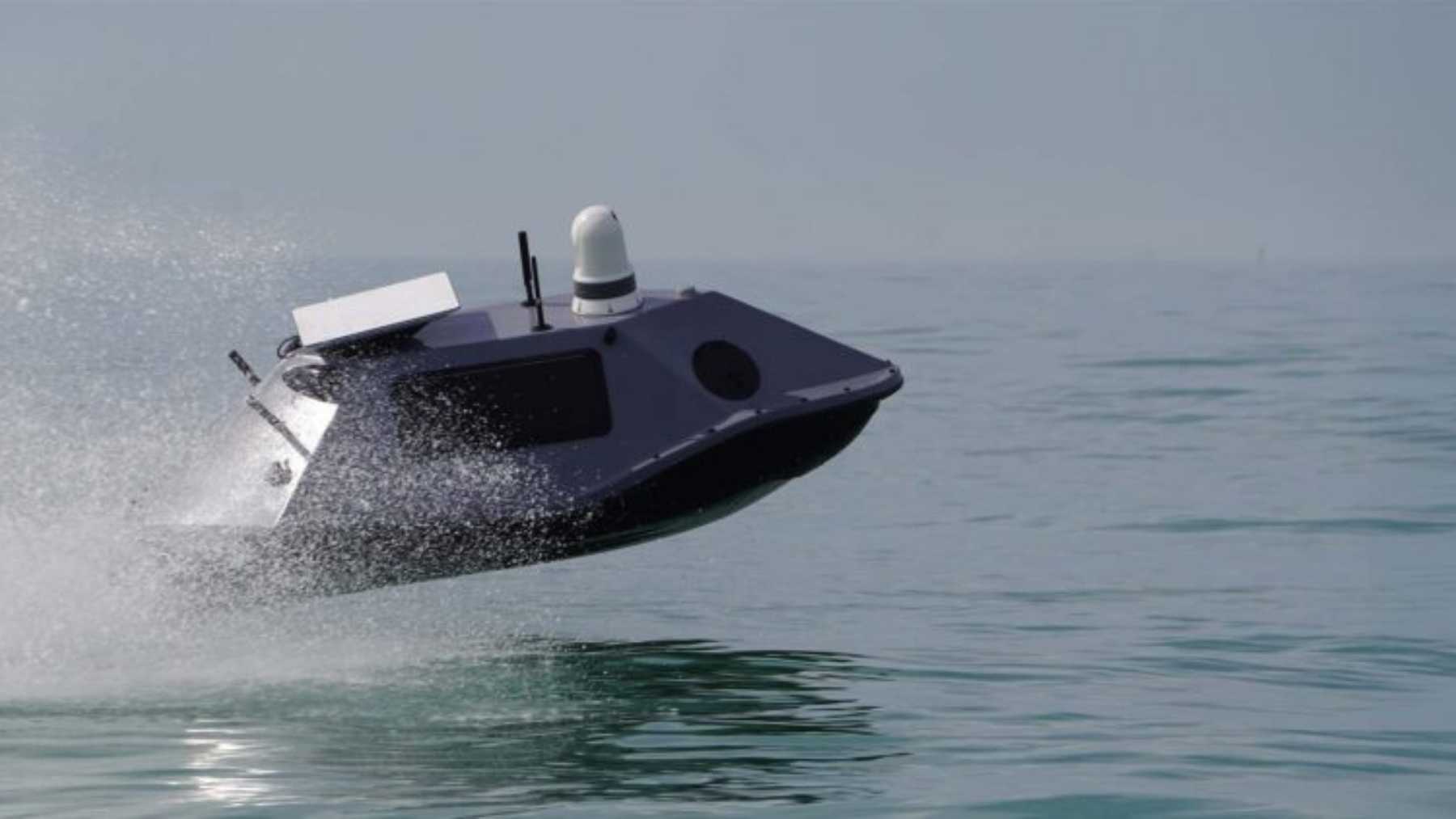
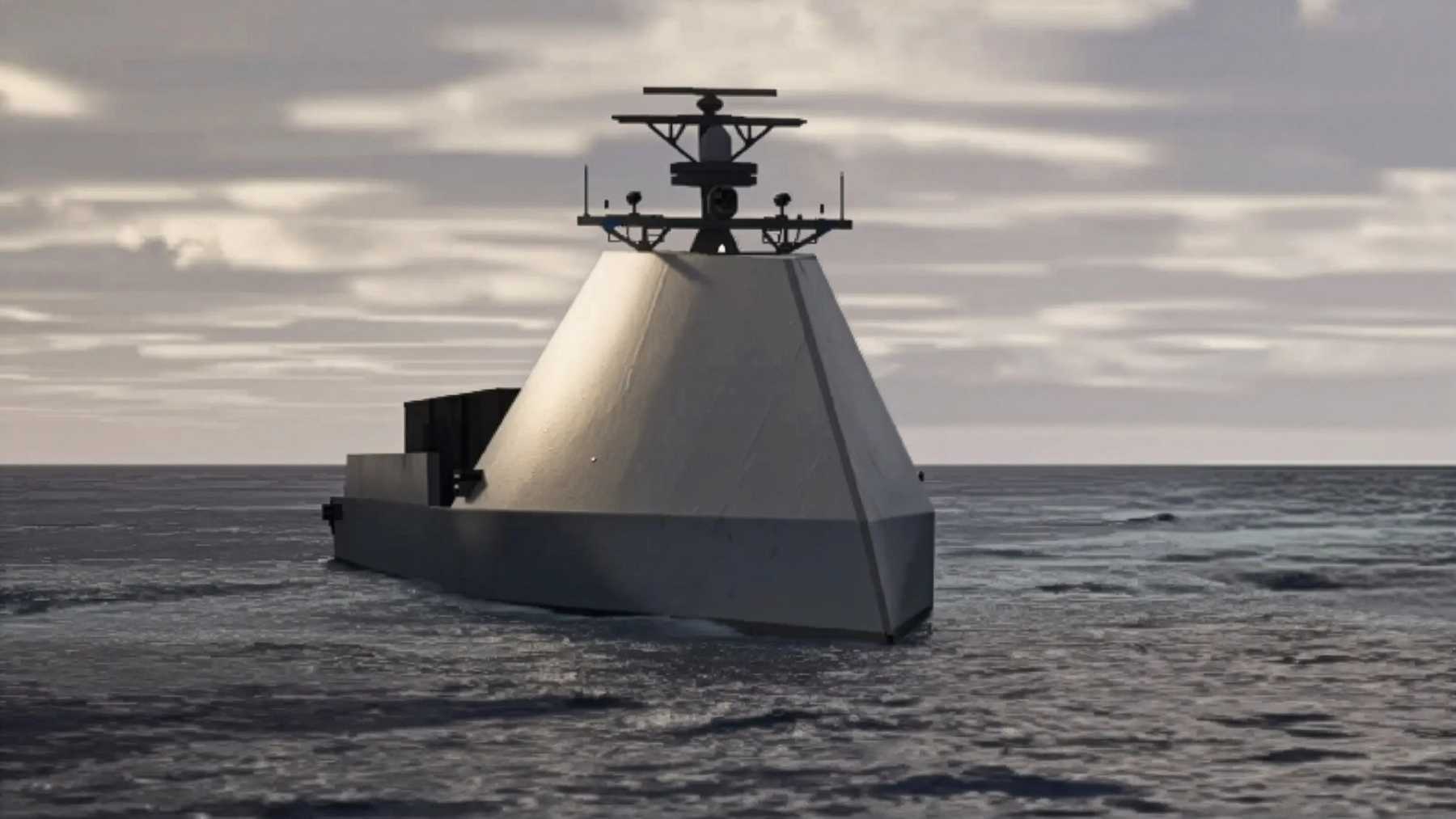
Which brings us to Louisiana. On September 8, HII announced that the first hull of its ROMULUS 151 drone ship had completed its structural build at Breaux Brothers Enterprises in New Iberia and been flipped upright, clearing the way for the deck and pilothouse to go on top. This is the same boat we covered in August, back when it was bare aluminum taking shape in a crew-boat yard. It has company now: five ROMULUS 151s are under construction right now, four at Breaux Brothers and a fifth at Halimar Shipyard in Morgan City.
A hull flip is about the least glamorous milestone a ship program can put out, and I’d argue that’s why it’s worth putting out. Defense programs announce renderings all day.
You can’t flip a rendering.
So why build a warship upside down?
Because the outside of the hull is where the welds have to be good, and nobody welds their best work overhead. Build the hull inverted and the plating sits under the welder’s hands instead of over a hard hat. The seams go down faster, they come out cleaner, and the yard saves itself months of misery. When the structure is finished, cranes lift the hull, rotate it, and set it down the way it’ll float. Then the deck and the pilothouse get built on top, because decks famously go on the up side.
Breaux Brothers does this routinely. In June, the same yard flipped the hull of a 73-foot aluminum catamaran it’s building for Port Houston, a hull that went together inverted so the crew could reach the outer plating without welding overhead. HII’s announcement doesn’t spell out the ROMULUS build sequence, but you don’t flip a hull that’s already sitting the way it’ll float, and it’s a safe bet this one spent its entire build keel-up, same as the tour boat. HII also hasn’t said when this first hull actually gets wet. I’d have liked a date. Yards mostly hand those out once the boat is already floating, though, and I can’t really blame them.
There are five of these now
The split is four hulls at Breaux Brothers and one at Halimar Shipyard, two commercial yards building the same drone ship at the same time so the program doesn’t hang on a single shop. Five hulls at once reads like a production run rather than an experiment, and as far as I can tell that’s precisely how HII wants it read. The company’s part is the autonomy and the program integration; the yards do the aluminum. By the way, a completed structural build means the frames, bulkheads and plating are done. The engines, the wiring and everything else that makes a shell a ship still have to go in, which is the work the flip unlocks.
HII’s autonomy operation had its own news this month, too. On September 22, the company cut the ribbon on a 10,000-square-foot expansion of its unmanned systems campus in Pocasset, Massachusetts, the plant that produces, among other things, the autonomy hardware installed on ROMULUS vessels. So the muscle on this program is Cajun and the brain ships down from Cape Cod, which strikes me as a very American way to build a robot.
So what is a ROMULUS 151 actually for?
HII’s mission list runs to intelligence, surveillance and reconnaissance (military for finding things and then staring at them), mine countermeasures, strike operations and counter-drone work. The job that makes the 151 interesting, at least to me, is mothership duty. A mothership is exactly what it sounds like: a bigger boat that hauls smaller drones out to the job, puts them in the water or the air, and picks them back up when they’re done.
That last job matters because of who’s building this. HII has delivered more than 750 of its REMUS underwater drones to customers in more than 30 countries, so a crewless surface ship that launches and recovers underwater drones is HII pairing its own products. The rest of the Navy’s drone fleet keeps adding skills around boats like this one, too. A 38-foot drone boat off Virginia took on 400 gallons of fuel through a towed basket this summer, the kind of unglamorous support work that keeps a crewless boat on the job.
HII announced the flip on September 8 and put the video of it on the company’s YouTube channel. With the structure complete, the deck and the pilothouse are what Breaux Brothers builds next.