
- 3 MONTHS AGO · ENERGYA copper plate bolted to the back of a solar panel catches the 80 percent of sunlight that never becomes electricity, lifts the panel’s output by 59.3 percent, sends that heat into a reactor pulling bagged fertilizer out of real human urine, and the startup is selling to slaughterhouses
- 2 MONTHS AGO · ENERGYA 6,560-foot hole in Cornish granite came up with 158-degree water carrying 100 parts per million of lithium, and a well in the same rock pulls 340. So a small British company hired a Texas oilfield crew to sink two more holes and pump for three months
- 2 MONTHS AGO · ENERGYA 10-foot-high field of 8,060 solar panels tracks the sun over two Massachusetts cranberry bogs with its rows 23 feet apart, and the growers flooded part of the bogs underneath to bring in the first crop, 325 barrels against the 400 they had counted on
- 2 WEEKS AGO · ENERGYA 5-acre solar farm in Oregon can rotate its solar panels nearly vertical so farm equipment can drive through, and researchers planted one row of blueberries inside it and one outside, spaced so a harvester that straddles the whole bush still fits between the solar panels
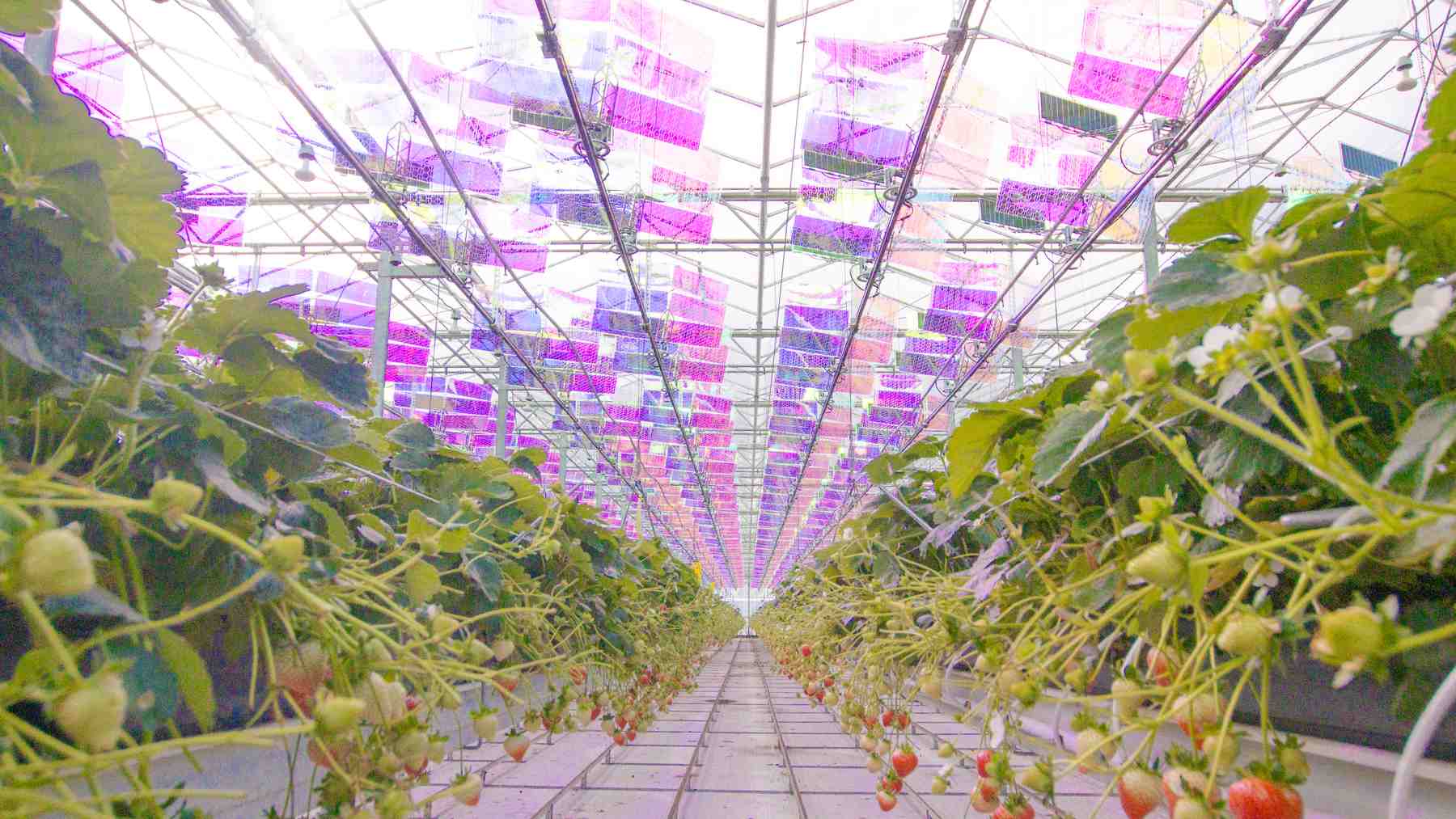
- TODAY · THIS ARTICLEA Dutch strawberry grower hung nearly 2,000 solar modules under the glass of a 2.5-acre greenhouse in four weeks without stopping the harvest, and they take only the heat-carrying part of the sunlight, because on bright days the berries overheat and come out small
A greenhouse is basically a glass box built to hang on to heat. That’s exactly what you want from it in January. But in July, with the sun beating down on the roof all day, all that trapped heat turns into a problem, and growers spend a lot of time and money venting it, shading it or just putting up with it.
A couple of you raised this in the comments on our piece about a Swiss tomato greenhouse that hung solar modules over its crop. Wouldn’t that extra infrared heat come in handy in winter? And isn’t a greenhouse supposed to stay warmer than the outside world? They’re fair questions. The same hardware is now hanging over strawberries in the Netherlands, so it seems like a good moment to dig into them.
At the end of that Swiss story, we mentioned a Dutch strawberry grower was next in line. Well, the modules are in.
According to Voltiris, the Swiss-Dutch company that makes them, nearly 2,000 of its spectral-filtering modules now hang under the glass roof of Genson Fresh Fruits’ strawberry greenhouse in Someren. They cover about 2.5 acres of growing space. Voltiris says it installed them in four weeks this summer, and Genson kept growing strawberries underneath the whole time.
Genson and its partners marked the milestone on October 8 with a site visit for more than 60 guests, from fellow growers to suppliers. Voltiris bills it as the first installation of this size over strawberries in the Netherlands, and the Netherlands Enterprise Agency (RVO) helped fund it with a grant, according to the company’s May announcement of the project.
So why would a greenhouse want less sun?
Plants don’t use all of the sunlight that lands on them. They mostly run photosynthesis on visible light, which growers call PAR (photosynthetically active radiation). A big chunk of the rest is near-infrared, and that part pretty much just warms things up.
On a bright summer day, a glass roof lets in a lot more of that heat than a strawberry plant wants, and the greenhouse can’t always get rid of it fast enough. A berry that runs too hot rushes toward ripeness before it’s had time to size up, so you end up with smaller fruit that’s all ready at once.
Voltiris says overheating under glass hurts fruit size and quality, and makes harvests harder to plan. When you’re selling berries by grade, that’s a pretty expensive headache.
Growers usually deal with it by pulling shade screens across the roof. That works, but it also blocks the light the plants actually want along with the heat they don’t.
Voltiris splits the sunlight in two
That’s where these modules come in. Each one uses small mirrors that track the sun and separate the light rather than blocking it. The visible light the plants run on goes through to the crop, and Voltiris says it passes through untouched. That’s the company’s claim, by the way, not something anyone’s measured in Someren yet.
The heat-carrying near-infrared gets redirected onto solar cells and turned into electricity. Which means one piece of hardware is cooling the crop and making power, and frankly that’s a neater trick than a shade screen has ever managed.
Voltiris says most of the electricity from its systems gets used on site instead of sold to the grid, which cuts what growers pay in energy costs, grid charges and taxes. How much power Someren actually makes, though, I can’t tell you. HortiSignal, a horticulture trade site, pointed out that the system’s rated capacity and its cost haven’t been published.
It’s a different idea from the see-through panels over an Australian sheep feedlot we covered last week, which basically let light slip through gaps between the cells. These modules are picky about which light they let through.
The berry results so far come from Belgium
So does any of this actually help the strawberries?
In a test compartment, it looks like it does. But Genson doesn’t have its own results yet, so every berry figure you’ll see attached to this project comes from somewhere else.
Harvestis, a Belgian research center formerly known as Proefcentrum Hoogstraten, ran two side-by-side greenhouse compartments of about 5,400 square feet each through a fall crop a year ago. One had 72 Voltiris modules overhead and the other didn’t.
According to Voltiris’ project page for the trial, plants under the modules ran up to 9°F cooler when the sun was out. The midpoint of the harvest arrived seven days later than in the reference compartment. Big premium berries (the Large 2A grade) went up 26%, while small fruit dropped 25%.
Harvestis researcher Peter Melis says the slower growing cycle helped the fruit develop, and that the growers saw no drop in production compared with the reference crop.
Honestly, I think the delay might be the most interesting result. Pushing the harvest back moved more of the fruit into November, when berries sell for more, according to Voltiris.
Money is where it gets a bit messy. Voltiris’ project page says turnover rose 4%. HortiDaily, reporting on a Voltiris whitepaper about the same trial, says revenue went up 9% and harvest labor fell 12%. I couldn’t find anything in either source explaining the gap between those two revenue figures.
HortiSignal also warned that the earlier trial results shouldn’t automatically be applied to a whole season of commercial production in Someren. I’d agree with that. A 5,400-square-foot test compartment is a long way from 2.5 acres of commercial greenhouse, and one fall crop isn’t a full year of growing.
Someren’s real test comes after winter
Which brings us back to those comments. In a Dutch winter, a greenhouse is short on light rather than drowning in it, and growers are usually happy to keep whatever warmth they can get. A system designed to skim heat off the sunlight will probably have a tougher time proving itself in January than in July.
The two companies seem to know it. They say it’s too soon to judge how Someren is doing, and they expect the low light of winter to put the system under the most pressure. That seems like the right test to me.
Bart Goorts, operations manager at Genson Fresh Fruits, said in the Voltiris announcement, “We are particularly interested to see how the system performs,” and I suspect he’s not the only grower watching. Voltiris says its agronomy team keeps working with growers after the install to dial in watering and shade-screen settings.
Voltiris and Genson say they’ll share the first Someren results after this winter. When they do, we’ll find out whether 2.5 acres of Dutch strawberries look anything like that Belgian test compartment.
 A British company laid three fiberglass pipes 200 feet long up a Devon hillside and filled them with a fluid dense enough to float concrete, and the government’s final report says the plant hit 500 kilowatts but can hold that output for about 15 minutes, not the four hours it was built forEnergy · 2 hours ago
 A 705-megawatt reactor on the Danube came back after 99 days dark, then dropped off the grid three days later at 6 in the evening with a fault in its turbine condenser, and only reconnected on November 13, reaching full power the next day, after its twin had already beaten it backEnergy · 3 hours ago
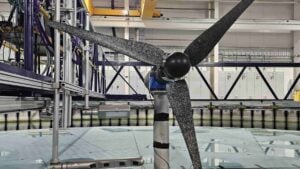 A 4-foot tidal turbine with three rubber blades developed with a French tire maker matched the output of turbines whose blades are turned by motors, and it did so because each blade flattens on its own as the water speeds up, cutting the jolts that wear turbines out by up to a thirdEnergy · 5 hours ago