
Anyone who’s ever managed a budget knows what late September looks like. The federal fiscal year closes on September 30, whatever money you didn’t spend goes away, and suddenly every office in Washington remembers things it’s been meaning to buy.
The Pentagon isn’t above any of this.
On September 24, six days before the books closed, the Navy put $123.4 million into more Lionfish underwater drones from HII, and the fine print’s honest about the calendar: roughly $1.85 million of it would have expired within the week if it hadn’t landed on a contract in time. Defence Blog picked the award out of the Pentagon’s contract announcements on September 30, and it’s the biggest single order the Lionfish program has seen. Deliveries run through December 2027.
So what exactly is a Lionfish?
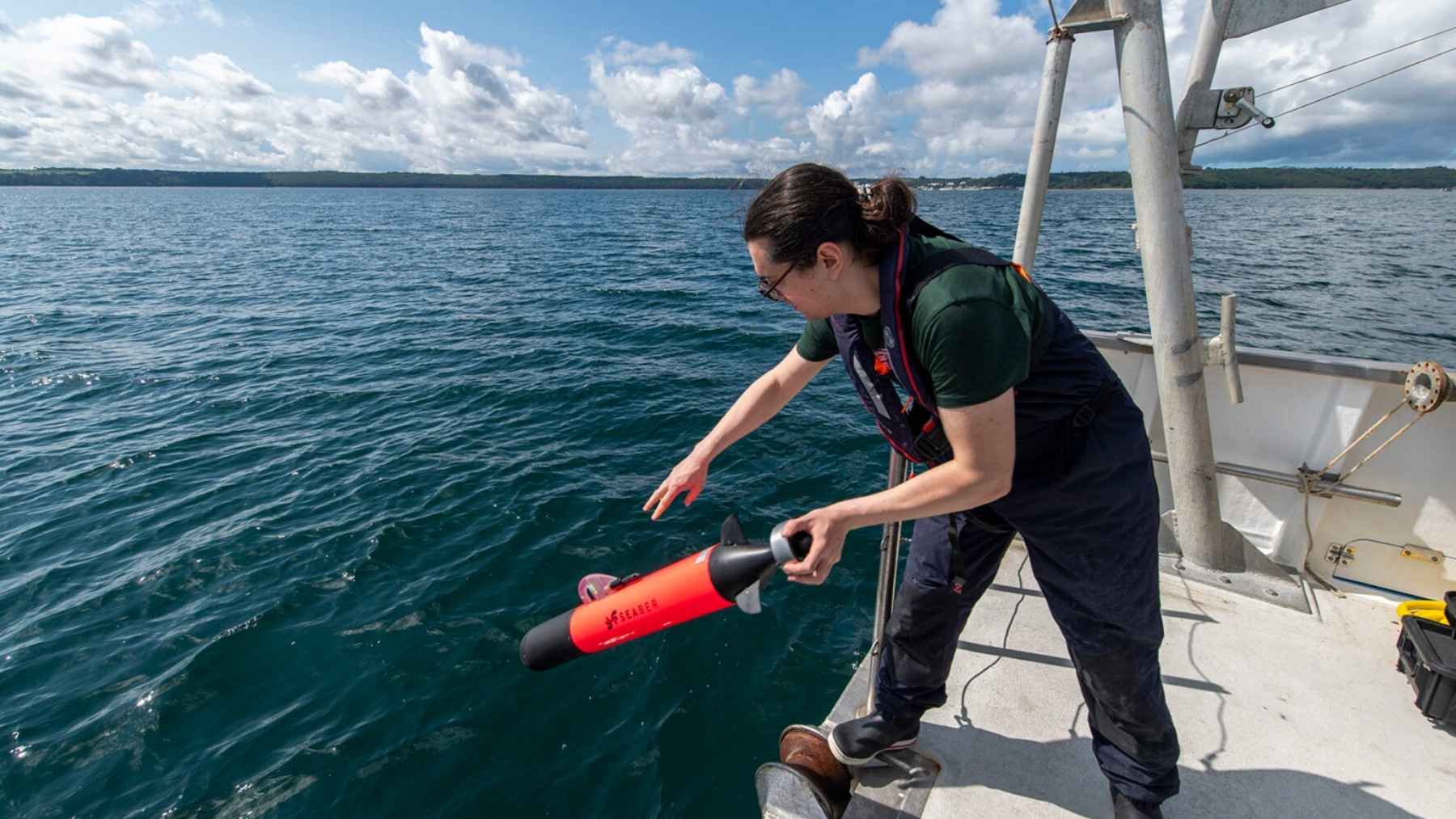
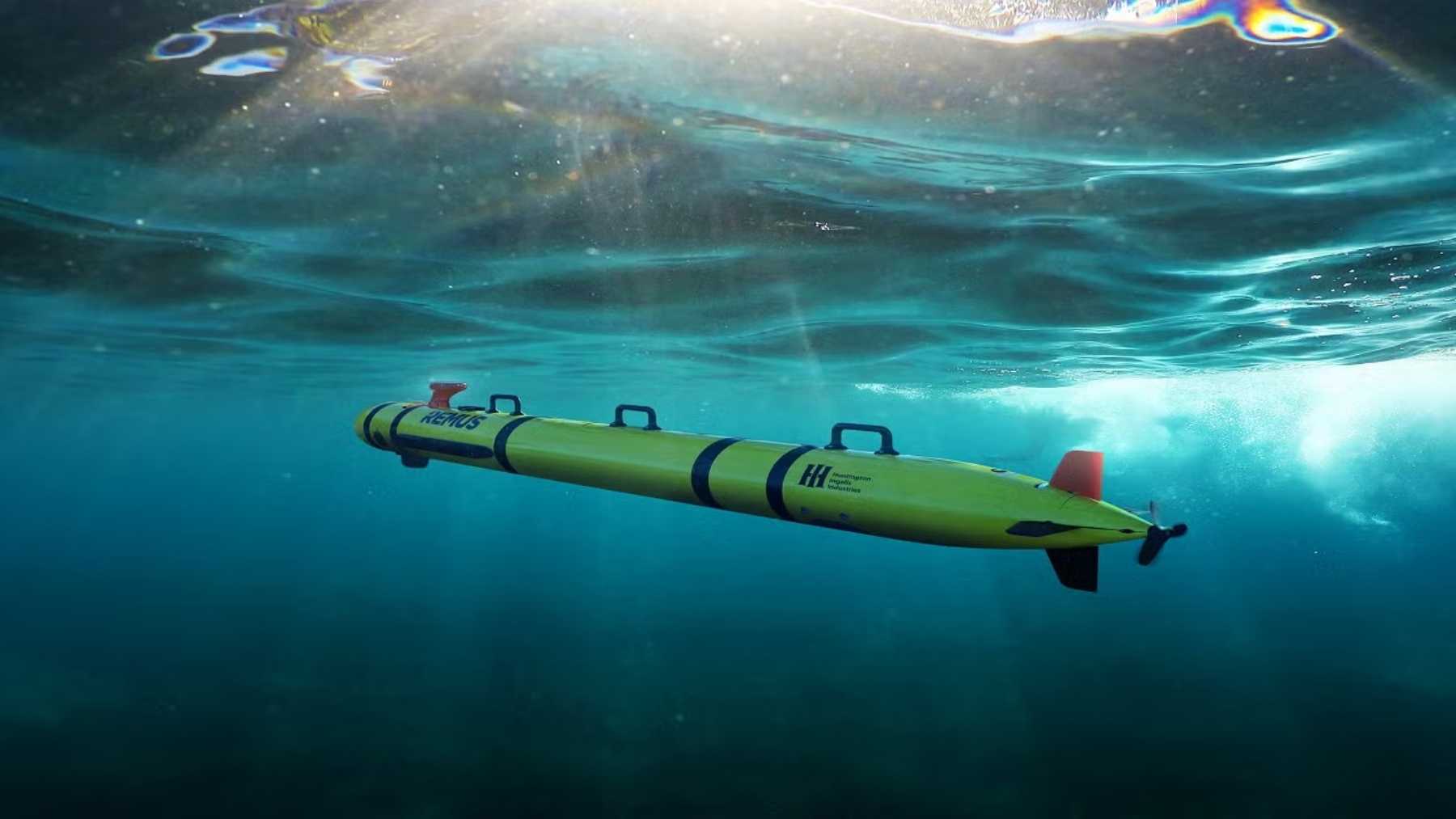
Lionfish is the Navy’s name for HII’s REMUS 300, a torpedo-shaped autonomous submarine small enough for two people to carry and launch by hand. That’s the whole pitch, really. You don’t need a crane or a specialized ship to put one in the water, you walk it to the edge and throw it in, which, I’ll admit, is a strange sentence to write about a submarine.
HII’s data sheet puts actual numbers on that. The hull is 7.5 inches across and stretches with the battery you order: the small build runs 80 inches and 107 pounds for 10 hours underwater, the standard one goes 94 inches and 129 pounds for 20 hours, and the long-range version, the one behind the headline figures, measures 104 inches and 155 pounds, with a slightly fatter 8-inch hull and 30 hours in the tank. Split between two people, that’s under 80 pounds apiece, which is how the hand launch works. Top speed is the one spec HII’s own paperwork can’t agree on, the product page says 5 knots and the data sheet says 4, so call it jogging pace either way.
Once it’s wet, the thing dives to 1,000 feet, per HII. Thirty hours underwater from something two people can carry is, frankly, an absurd ratio of endurance to size. The body’s modular, so the Navy can swap sensor payloads depending on the job, and the official job list covers mine countermeasures, intelligence gathering, anti-submarine warfare and electronic warfare. In plain English: it finds and maps sea mines so a crewed ship doesn’t have to get near them, it snoops, it listens for submarines, and it can mess with the other side’s signals. Mine hunting is the headline act. The Navy is using it to replace the Mk 18 Mod 1 Swordfish, which runs on HII’s smaller, older REMUS 100 design and has been carrying the mine-hunting load until now.
From nine vehicles to a ceiling of 200
The Navy chose the REMUS 300 for the job back in 2022, and the production contract followed in September 2023. That deal started with just nine vehicles, but it was written with options stacked on top: up to 200 vehicles over five years, with a top value north of $347 million. The options matter because the Navy doesn’t have to run a new competition every time it wants another batch. It exercises the next one, and the line keeps moving.
And the line has been moving. HII handed the Navy its first two in April 2025 and had hull number 42 finished before the year was out, which closed the base year of production. That’s 40 hulls in roughly eight months. In May of this year the Navy exercised an option worth just shy of $37 million covering more vehicles and support gear, and four and a half months later came the $123.4 million September order, more than three times that size.
What the announcement doesn’t say is how many vehicles the money buys. The Pentagon’s contract notices list dollars, places and dates, and that’s usually it. I can’t tell you how many hulls this order covers, because nobody involved has said, so the honest math stops at 42 built against a ceiling of 200.
The plant grew two days before the order landed
The work happens in Pocasset, Massachusetts, or 99% of it does, and Pocasset is a village on Cape Cod you’d otherwise associate with clam shacks and summer rentals. The remaining 1% gets done in Hampton, Virginia.
Here’s the timing that caught my eye. On September 22, HII cut the ribbon on a 10,000-square-foot addition to the Pocasset campus, taking the manufacturing space from 40,000 to 50,000 square feet, a 25% jump. Two days later, the Navy’s order arrived. Did HII see this one coming? I’d assume so, since contract options get planned well ahead of time, but the public record just hands you two dates sitting 48 hours apart. HII says the site employs about 300 people, with 50 of them added in 2026 alone, and U.S. Rep. Bill Keating came out for the ceremony, 12 years after speaking at the building’s grand opening.
There’s a wonkier milestone buried in here too. HII describes Lionfish as the Navy’s first program to graduate from Other Transaction Authority prototyping into full-scale production. OTA is the Pentagon’s fast lane for experimental work, with quicker deals and less paperwork than a standard defense contract, and plenty of prototypes are born in that lane and die in it without ever becoming a real program. This one didn’t. The company also calls Lionfish the Navy’s only cyber-compliant underwater drone in production right now, and when it announced the option year in July, Duane Fotheringham, who runs the Unmanned Systems group in HII’s Mission Technologies division, said the decision reflected “the U.S. Navy’s confidence in the platform’s operational performance, reliability and adaptability,” via Naval News.
Small drone submarines are having a moment
The REMUS family turned 25 this year, and HII’s running totals are the kind a contractor loves to recite: more than 750 vehicles delivered to over 30 countries, 14 of them NATO members, with over 90% of everything shipped in that quarter century still in service. Those are HII’s own numbers, so season to taste, but 90% of anything mechanical surviving decades in salt water? That’s a pretty decent record.
And the company has competition forming behind it. A startup is assembling 425-pound drone submarines in a former marble showroom in South Philadelphia at 75 a year, and another outfit in Rhode Island is pitching 200 drone submarines a year from its own line. Of that bunch, Lionfish is the one with a Navy production program actually in motion, with hulls delivered and options being exercised.
Deliveries under the September 24 order run through December 2027, and the Navy still holds options that can take the Lionfish fleet all the way to 200.