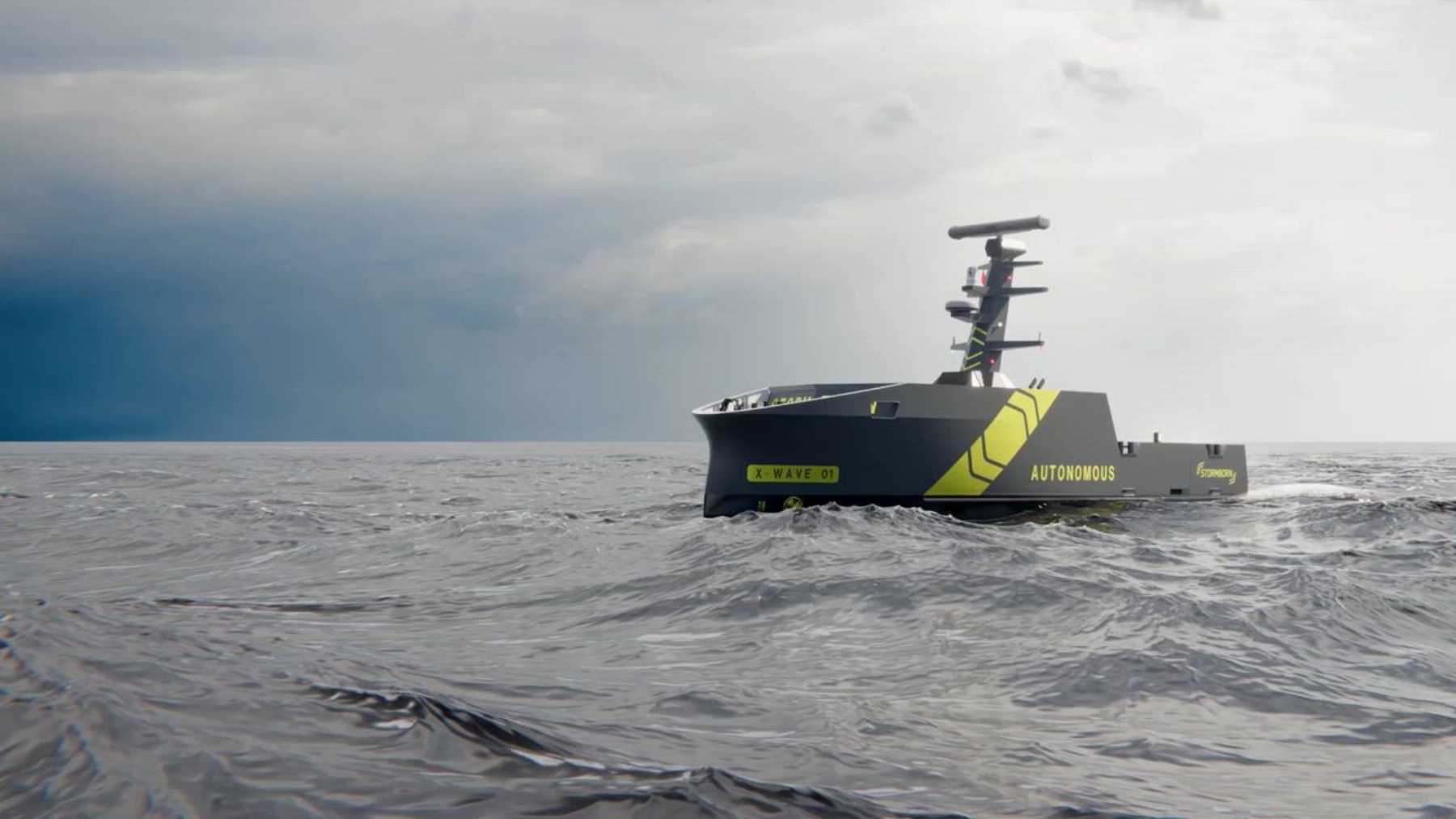

Robot submarines have been having a moment. Over the past year the U.S. Navy and its allies have rolled out uncrewed undersea vehicles that ship inside a standard cargo container, dive past a mile down, and slip out of the torpedo tube of a submerged attack boat. The machines keep getting bigger, stranger, and more cinematic, and they photograph beautifully.
The underwater drone the Navy is actually buying in volume is none of those things. It is a 10-foot tube that weighs about as much as a grown adult, it has spent years quietly mapping the seabed and hunting mines, and in May it picked up yet another order to build more.
That drone is called Lionfish, and it is built on HII’s REMUS 300 platform. In May, HII confirmed a new $36.9 million contract to produce additional Lionfish small uncrewed underwater vehicles for the Navy, with the work split between Massachusetts and Virginia and due to wrap up by May 2027, according to The Defense Post. It is not a flashy number. Next to the price of a single nuclear submarine it barely registers. And that understatement is close to the whole point of Lionfish.
The May Order Is Smaller Than the Headlines, and That’s the Whole Idea
The $36.9 million buy is not the program. It is a top-up. Lionfish runs under a five-year deal HII won in 2023 that can scale to as many as 200 vehicles and carries a ceiling north of $347 million, and the May order simply adds more hulls and support gear inside that envelope. Work on this batch runs in Massachusetts and Virginia and is scheduled to finish by May 2027.
The base-year run is already done. HII closed out the first 42 Lionfish hulls at its uncrewed-systems facility in Pocasset, Massachusetts, at the end of 2025, after delivering the first two vehicles back in April 2025. The Defense Post reported the company expects to keep building for the Navy through 2028.
So the May contract is what a healthy production program looks like from the outside: not a splashy unveiling, just another order landing on top of the last one. None of it involves a sailor going anywhere near a live sea mine, which is the part the Navy cares about most.
The Drone Itself Is a 10-Foot Tube Two People Can Lift
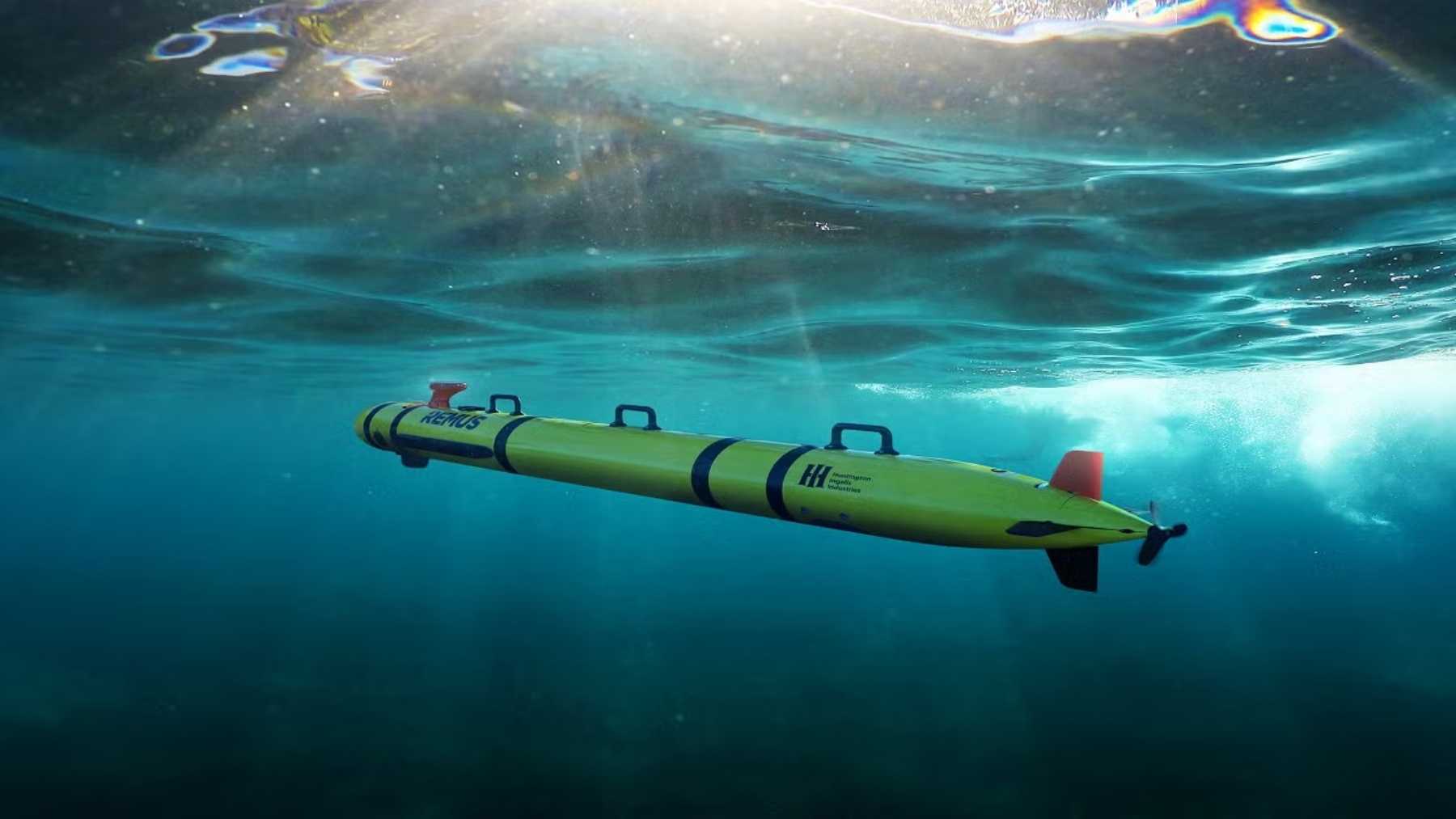
The REMUS 300 is deliberately unremarkable to look at. It measures about 10 feet (3 meters) long, weighs up to 154 pounds (70 kilograms) depending on configuration, and is portable enough for a two-person crew to handle without a crane. There is a three-blade propeller at the back, acoustic and communications gear, LED and infrared lights, and a GPS unit, and the body is built on an open, modular architecture so the Navy can swap payloads and add new sensors instead of buying a fresh drone every time the mission changes.
The performance numbers are workmanlike rather than jaw-dropping. The REMUS 300 tops out around 5 knots (about 6 miles per hour), works down to roughly 1,000 feet (305 meters), and covers up to 165 kilometers (103 miles) on a charge cycle, with a recharge time somewhere between 6 and 18 hours depending on how it is configured. That is not a machine built to win a drag race. It is a machine built to go out, quietly do a long, dull, dangerous job along the seabed, and come back.
The Job Is Hunting Mines Without Putting Divers in the Water
Lionfish exists because of sea mines. The program was set up by the Navy’s Program Executive Office for Unmanned and Small Combatants, working through its Expeditionary Missions office (PMS 408) alongside the Defense Innovation Unit and the Naval Information Warfare Center-Pacific, to replace the older Mk 18 Mod 1, the REMUS 100-based “Swordfish” drone the fleet had been leaning on for the same work. The REMUS 300 won that competition in early 2022 and became the Navy’s program of record for its next-generation small UUV.
The mission set has since widened well past mine countermeasures. HII lists Lionfish as built for intelligence, surveillance and reconnaissance, anti-submarine warfare, and electronic warfare on top of mine hunting, and the open architecture is what makes that range possible.
There is a security angle baked in, too. HII and DIU describe Lionfish as the first cyber-compliant uncrewed underwater vehicle the Navy has fielded, and Captain Jonathan Haase, the program manager for Expeditionary Missions at PMS 408, called it “the first ever cyber-secure UUV,” which matters more than it sounds when the thing is autonomous, networked, and operating on its own well out of sight.
The Quiet Milestone Is the Paperwork, Not the Drone
The genuinely unusual thing about Lionfish is not what it does in the water. It is how the Navy bought it. According to the Defense Innovation Unit, the September 2023 award (a $19 million FAR-based contract carrying that $347 million ceiling) marked the Navy’s first time taking a prototype born under an Other Transaction Authority and turning it into a standard production contract. HII has since framed Lionfish as the service’s first successful jump from an OTA prototype all the way to full-rate production.
That sounds like procurement trivia until you remember how often promising defense prototypes die in the gap between “impressive demonstration” and “thing we actually build at scale.” The competition that produced Lionfish started with more than 30 proposals back in 2019, narrowed to two prototype performers through live, sailor-judged demonstrations, and came out the other side as a real program turning out real hulls. For the Pentagon’s acquisition side, proving that path can work is arguably a bigger deal than any single drone.
REMUS Has Been Doing This Quietly for 25 Years
The reason the Navy was comfortable betting on the REMUS 300 is that the REMUS line has a 25-year head start. HII marked the family’s quarter-century in April 2026, and the platform’s roots are about as un-military as it gets. It began as an ocean-science tool funded by the Office of Naval Research and built by the Woods Hole Oceanographic Institution in Massachusetts. “REMUS has endured for 25 years because it was designed to evolve,” said Duane Fotheringham, president of the Unmanned Systems group in HII’s Mission Technologies division.
The track record is the selling point. HII says more than 750 REMUS vehicles have gone to over 30 nations, that 14 NATO navies operate them, and that better than 90% of the units delivered over that span are still in service. The family has also done the kind of work that lands on front pages on its own, from helping search for Air France Flight 447 to locating the wreck of the USS Indianapolis.
The bigger REMUS variants are the ones pulling off the torpedo-tube tricks, too. It was a REMUS 600, not the 300, that the Navy launched and recovered from a Virginia-class submarine, and HII’s REMUS-class Razorback that recently flew missions off a French attack sub shows where that submarine-launch idea is heading. HII has since signed a deal with Babcock International to push REMUS launch and recovery through allied submarine torpedo tubes, and it pairs the drones with its ROMULUS surface vessel to blend crewed and uncrewed assets.
So the eye-catching machines keep getting the coverage. The container-shipped Australian drone sub that travels by the crate, the Iver3 the Navy just ran along the Baltic seabed, the giants that look like props from a submarine movie. Meanwhile the drone the Navy keeps writing checks for is the plain 10-foot tube it already trusts. Lionfish is not built to be the most impressive thing in the water. It is built to be the one there are eventually 200 of, and the May order is one more step toward that number.
Image Credit: Huntington Ingalls Industries