
Philadelphia has built ships for the Navy for more than two centuries. The current headline act is Hanwha Philly Shipyard, which was awarded a $2 billion project in July to build two missile-tracking vessels for the U.S. military. So the heavy end of the trade is holding up fine.
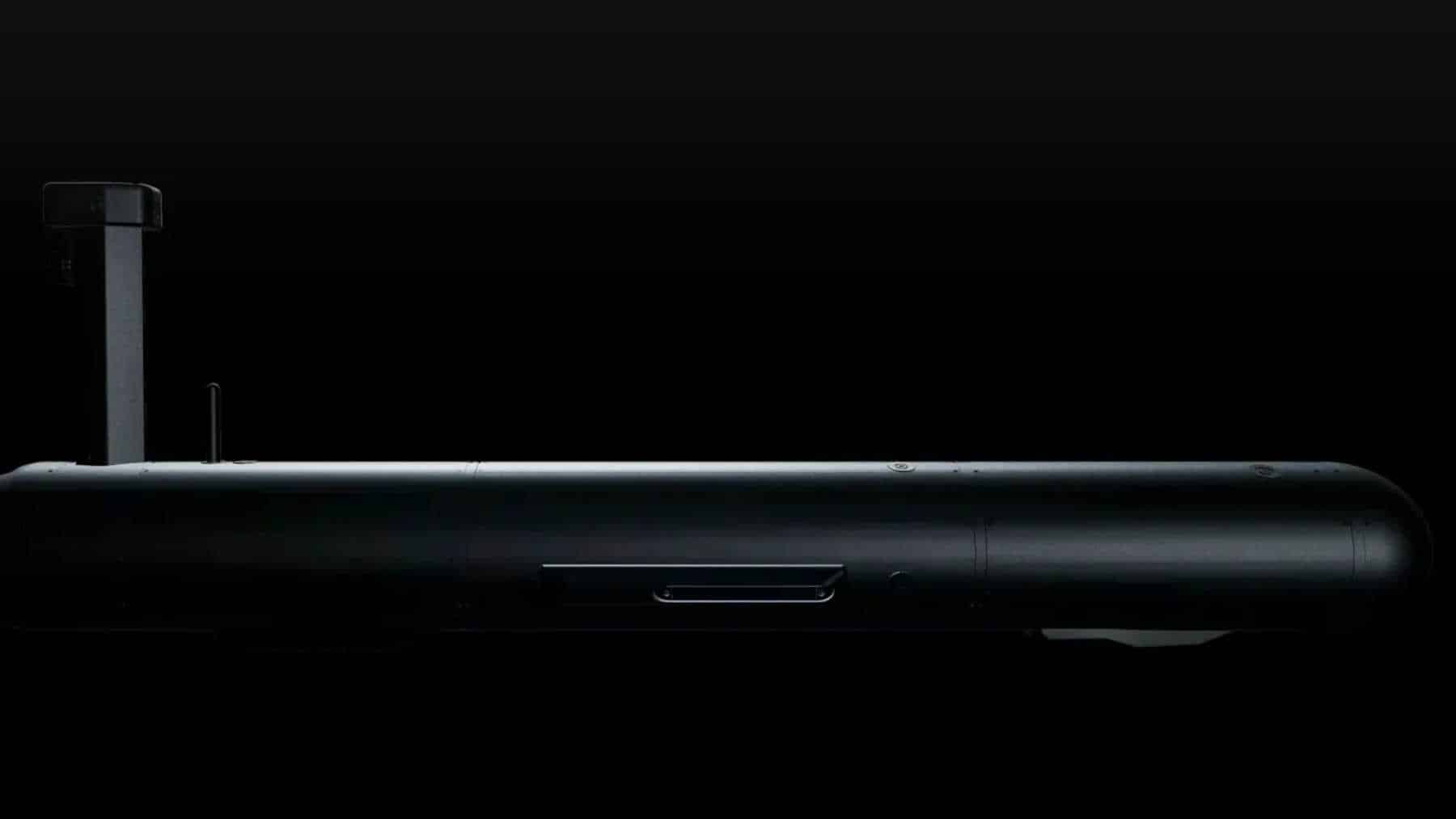
The newest naval supplier in town skipped the shipyard entirely. Albacore, a startup founded in early 2025, assembles 425-pound (193-kilogram) drone submarines inside a former marble and granite showroom on Washington Avenue in South Philadelphia, in between the grand staircases and the leftover countertop displays.
WHYY reports the company holds a contract to supply the U.S. Navy, with deliveries also headed to Taiwan and to buyers Albacore declined to name.
The Navy is buying a boat that started on a kitchen table.
Federal officials came to look for themselves. SBA Administrator Kelly Loeffler and Michael Cadenazzi, the assistant secretary of war for Industrial Base Policy, toured the plant on Aug. 25, 2026, and held it up as a template for rebuilding the American defense industrial base.
A submarine plant with grand staircases
Albacore moved into the 20,000-square-foot building this spring, four months before the tour. The previous tenant sold marble and granite, and pieces of that showroom still frame the production floor. Twenty-five full-time employees run the operation, with contractors and technicians on top.
Hiring runs from recent high school and college graduates to people out of other aerospace manufacturers, and the founders told WHYY the headcount should at least triple within a year. Andrew Wong, Albacore’s associate director of federal affairs, described the assembly work to the station: “It’s almost like building Legos — very complicated Legos, albeit.” A dozen engineering jobs sat open on the company’s site the week of the visit.
Naval hardware coming out of buildings meant for something else is quietly becoming a pattern. A Louisiana crew-boat yard is building a drone ship on the same logic: use the industrial space you already have.
An 8-foot hull that swims 1,000 nautical miles
A fully assembled Ghostfin runs about 8 feet (2.4 meters) long and weighs 425 pounds, per the specs Albacore gave WHYY. Eight feet is the length of a long-bed pickup box, so the whole vehicle fits where a sheet of plywood usually rides.
The company says one can stay in the water for 30 days and cover 1,000 nautical miles, which converts to roughly 1,150 statute miles. A 250-pound (113-kilogram) weapons payload rides inside, built to knock out military vessels. Albacore credits a battery design of its own for the reach, and says it goes far beyond what older undersea batteries could deliver.
Dante Vaisbort, one of the two cofounders, told WHYY the underlying technology is what World War II submarines ran on, shrunk down and repackaged as a mass-producible autonomous vehicle.
Ukraine pushed the market the rest of the way. Cofounder John Huddleston said the war showed buyers that uncrewed systems are where naval combat is headed, and that nobody had built the underwater equivalent of the cheap quadcopter.
The Pentagon has wanted undersea weapons cheap and in bulk for a while now, down to torpedoes designed for flat-pack assembly. An 8-foot hull built like very complicated Legos fits that shopping list.
From a Rittenhouse kitchen table to the Schuylkill River
Albacore started when Vaisbort moved east from Los Angeles and teamed up with Huddleston, then a Wharton MBA student living near Rittenhouse Square. Prototyping ate the apartment. Huddleston told WHYY the couch went out the door to clear space for a wall of 3D printers and parts, and the first unit came together on his kitchen table. Wharton lost the student soon after. Huddleston dropped out to run the company.
Early trials ran in the Schuylkill River, the water that flows past the Philadelphia Museum of Art. Florida came later.
Y Combinator backed the company in 2025, and Outlander VC led a $6.5 million seed round that October, first reported by Tectonic Defense, with U.S., European and Ukraine-focused funds behind it. Albacore now puts its total funding above $10 million. Tectonic’s October report had first sales starting after an initial production run in mid-2026, and the deliveries WHYY reported as close in late August land right on that schedule.
Tectonic also passed along the company’s claim that its lead engineer can bench-press the vehicle. Albacore pitches the Ghostfin as launchable from almost anywhere by two people, so the party trick doubles as a product spec.
Washington Avenue gets a visit from Washington
Loeffler used the Aug. 25 stop to talk numbers. Small businesses make up 70% of the U.S. defense industrial base, she said, and about half a million manufacturing jobs sit open nationwide. She also walked through the tax changes aimed at shops this size: immediate expensing for research and development, 100% expensing for capital investment and a deduction for overtime pay.
Production starts at 75 vehicles a year, with several thousand annually as the stated long-term goal, while a Rhode Island startup is already pitching 200 drone submarines a year from its own line.
Huddleston’s argument for building at that scale is coastal defense: seed a waterway around an island like Taiwan with enough Ghostfins, he told WHYY, and an amphibious invasion stops being a workable plan. Each one, per Huddleston, can seriously damage a warship.
The same hull takes tamer work. Huddleston listed commercial surveys of oil and gas areas, seafloor mineral mapping and data collection for ocean research as the civilian applications.
Albacore had 25 people on staff, a dozen open engineering listings and more than $10 million raised when the government came through the door. Loeffler and Cadenazzi made that visit on Aug. 25, 2026, and the first production Ghostfins are now headed to the U.S. Navy and Taiwan.