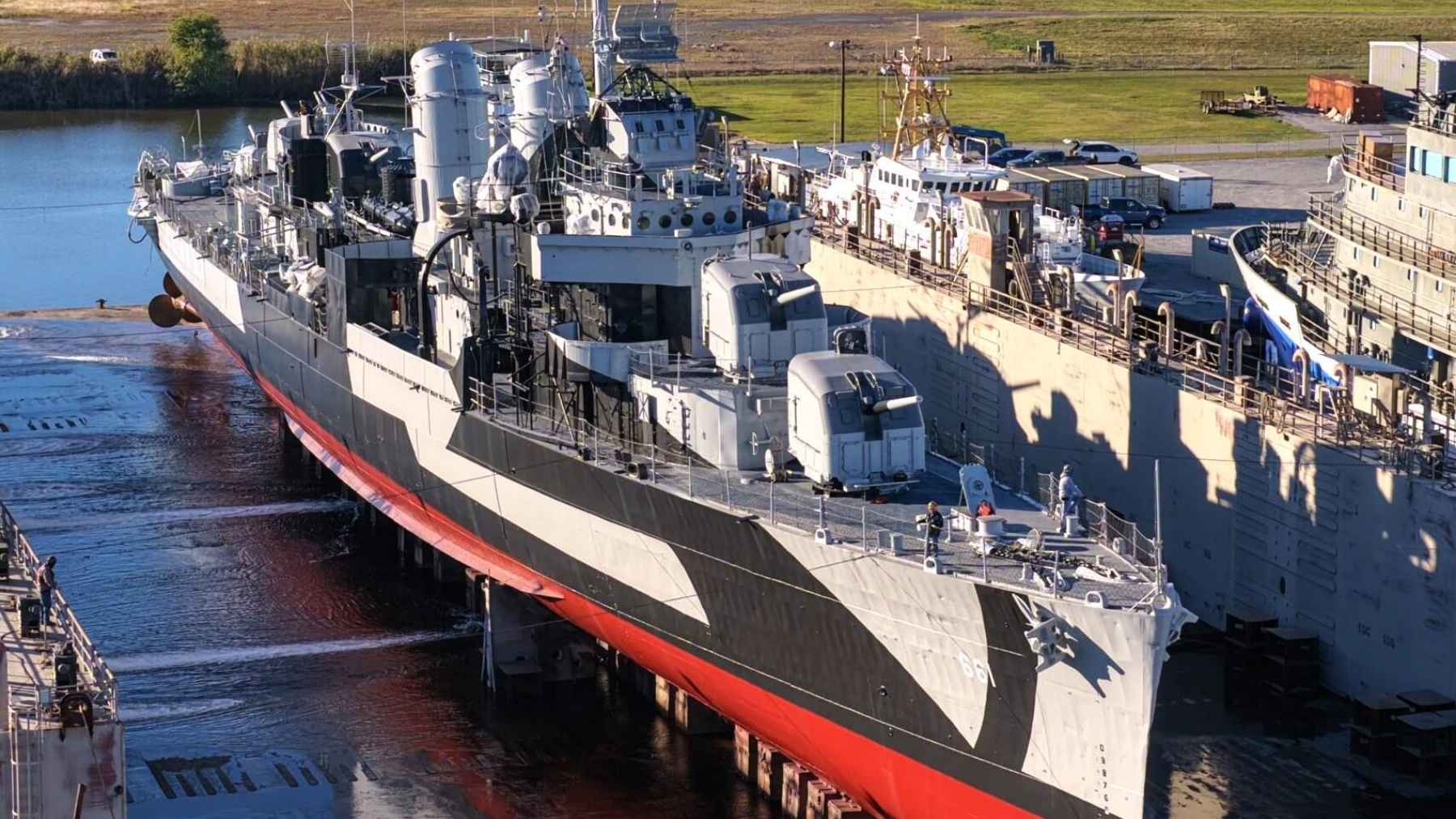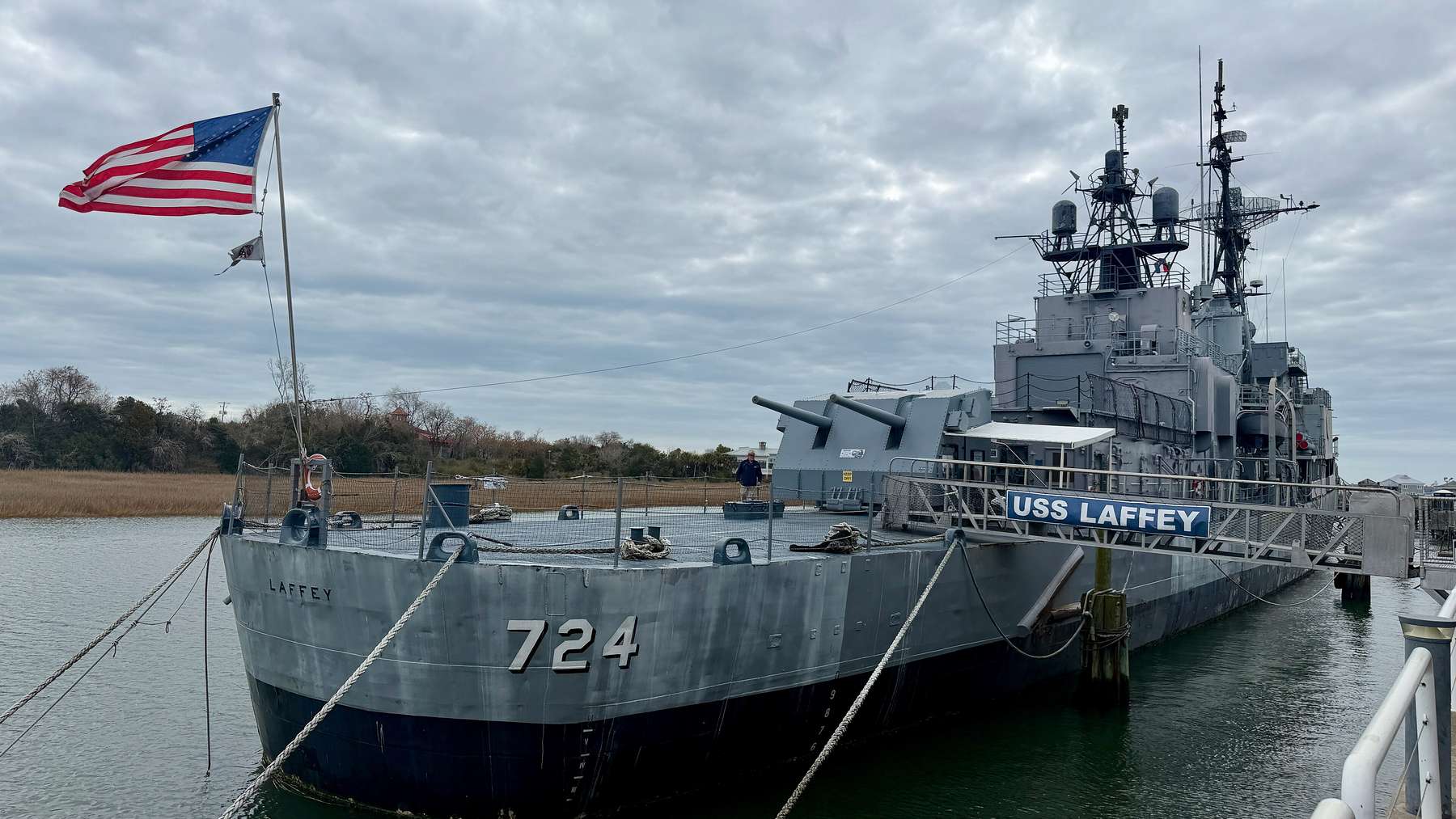

The Laffey’s nickname is “The Ship That Would Not Die,” and she didn’t get it for sitting quietly at a pier. On April 16, 1945, off Okinawa, the destroyer was hit by five kamikaze planes and four bombs in a single attack, according to the Navy’s official history of the ship. Thirty-two of her crew were killed and 71 were wounded. She stayed afloat anyway.
These days, though, the thing giving her the most grief is her parking spot.
The Patriots Point Development Authority, the state agency that runs the naval museum in Mount Pleasant, South Carolina, has approved a plan to move the Laffey to the other side of the main pier, the one visitors walk down to get to the aircraft carrier Yorktown. The Post and Courier reported the decision on October 27. It’s a short trip. The reason for it, however, is a pretty good lesson in how a museum ends up paying a small fortune just to get its own ship out of the driveway.
If you’re not a Navy history person, here’s what we’re dealing with. The Laffey is an Allen M. Sumner-class destroyer that measures 376 feet 6 inches and displaces 2,200 tons, and her 60,000 shaft horsepower turned two propellers for a top speed of 34 knots, according to Patriots Point’s page on the ship. She was commissioned at Bath Iron Works in Maine in February 1944, supported the landings at Utah Beach on D-Day, and later served in Korea and the Cold War. The museum calls her the most decorated World War II-era destroyer still in existence.
The Laffey’s berth was built for a submarine
The slip she sits in now was built in the 1980s for the submarine Clamagore, and it was never really a good fit for a ship this size. Patriots Point maintenance director David Coates walked the authority’s board through the problem on October 16 and called the berth the “bane of our existence.”
Here’s why. Every time the Laffey needs to leave, Patriots Point has to temporarily remove about 60 feet of roadway from the pier to free her. It’s basically the boat version of knocking out part of your garage wall every time the car’s due for an oil change.
And it isn’t just a jackhammer job. Utility lines run beneath that stretch of roadway, and they serve the museum and part of the Charleston Harbor Resort and Marina. So each opening means lining up contractors, bringing in temporary generators and disconnecting services, Coates said. He told Live 5 News it takes about a week to open the pier and another week to put it back together and get everything hooked up again.
Patriots Point puts the bill at about $250,000 each time the pier is opened and closed. That figure doesn’t include the money the museum loses while it’s shut, and it does have to shut. The whole place, Yorktown included, closes for those two weeks.
So why not just fix up the old berth and live with it?
That was actually the previous plan, and it’s where the math gets ugly. Upgrading the current berth and sending the Laffey to dry dock could have meant opening the pier four to six times, according to the museum. The new plan builds a fresh mooring first, opens the pier once to move her over, and that’s it.
By my math, at $250,000 a pop, skipping three to five of those openings saves somewhere between $750,000 and $1.25 million in pier work. That’s before you count a single lost ticket. Coates had a shorter way of putting it when he talked to Live 5: “By putting her in a new location, we never have to open our roadbed again.” Honestly, it’s hard to argue with that.
Figures: Patriots Point Naval & Maritime Museum, Post and Courier, Live 5 News, Naval History and Heritage Command.
Moving a museum ship is always a bigger production than it looks from the parking lot. Nauticus, in Norfolk, needed about a year of planning just to push the battleship Wisconsin four feet off her pier so crews could swap two rubber fenders.
Charleston Harbor keeps trying to bury her
The pier isn’t the only thing wrong with the old spot. The berth routinely fills with sediment from Charleston Harbor, and Coates told the board that broken and aging pilings need to be dealt with and that the mooring system needs an upgrade so it can stand up to a hurricane and give people safer access to the ship.
You may be wondering why a little mud matters to a 2,200-ton warship. A museum ship like the Laffey is still floating, and the tide lifts her and lets her down every day. Coates told Live 5 she needs about four feet of water under her hull, because when silt piles up underneath, the tide moving her back and forth works the bottom of the ship against it like sandpaper.
Which means the museum keeps paying to dredge around her. I’d argue that’s the nastier long-term problem of the two, frankly. The pier only costs money when she has to leave. The mud never takes a day off.
The new berth sits north of the approach pier, where officials say she’ll be out of the way of the tour boats. The Laffey faces south right now, and she’ll be turned around to face north.
She’s due for a $3.8 million checkup
The order of operations matters here. Patriots Point plans to build the new mooring first, open the pier one last time and move the Laffey over. Later she’ll be towed up to Detyens Shipyards in North Charleston for her scheduled dry docking, and when that’s done she’ll come back to the new berth, not the old one. Executive director Allison Hunt said getting her out of the new spot in the future should be a lot easier and far less disruptive.
A dry dock, for anyone who hasn’t stood in one, is a basin you float a ship into and then pump empty, so she settles onto blocks with her whole hull out in the air. It’s the only practical way to get at the steel that normally lives underwater, which happens to be the steel salt water likes to eat.
This trip is the routine kind. Back in April, Hunt described it as “Laffey’s time for a shave and a haircut,” and the Post and Courier put the cost at $3.8 million, paid out of the agency’s capital reserve fund. The ship’s been closed to visitors since the spring while the museum gets her ready.
Her last shipyard visit was a lot rougher. After more than 100 leaks turned up in her hull, she was towed to the same North Charleston yard in August 2009 for emergency repairs that ended up costing $9.2 million. Coates says that job gave her a new hull from the keel up to 12 feet. She didn’t get back to Patriots Point for more than two years. Hunt says the preventive work since then, plus the ship’s generally good condition, should make this visit shorter and cheaper.
That’s pretty much the whole argument for doing these on a schedule instead of waiting for the leaks. A museum sub in Michigan, Silversides, went 72 years between docks and spent this past summer sitting on blocks in a Wisconsin dry dock while welders replaced wasted plate at both ends of the boat.
So when does she actually move?
Nobody’s put a date on it yet, and the museum’s been upfront about that. The State Fiscal Accountability Authority recently approved a separate permanent improvement project for the new mooring. Patriots Point is still working through engineering and permits, though, including dredging approvals that involve the US Army Corps of Engineers and the South Carolina Department of Environmental Services. Coates told Live 5 those approvals have to come through before anyone can set a schedule.
The other thing we don’t know is what the new mooring costs. Patriots Point hasn’t released a figure, and I couldn’t find one anywhere else, so it’s hard to say exactly how fast the move pays for itself. If it comes in under about $750,000, though, the pier openings it avoids on this one trip would cover it even at the low end of the museum’s estimate.
When the move does happen, the museum will still have to close for roughly two weeks while the pier comes apart one more time. So if you’re planning a trip to see the Yorktown, it’s probably worth checking the museum’s calendar before you book anything.
Coates laid the plan out for the Patriots Point board on October 16, and for now the Laffey is still sitting in the Clamagore’s old berth, pointing south, while the dredging permits for her new berth work their way through two agencies.