
- 4 MONTHS AGO · INDUSTRYThe hero shot is always the 650-foot German machine, and back up the tube out of frame there is a shed full of compressors pushing brine at 26 below into the dirt until the sand turns into a 6.5-foot wall of ice — and it does not get to stop until the concrete is in
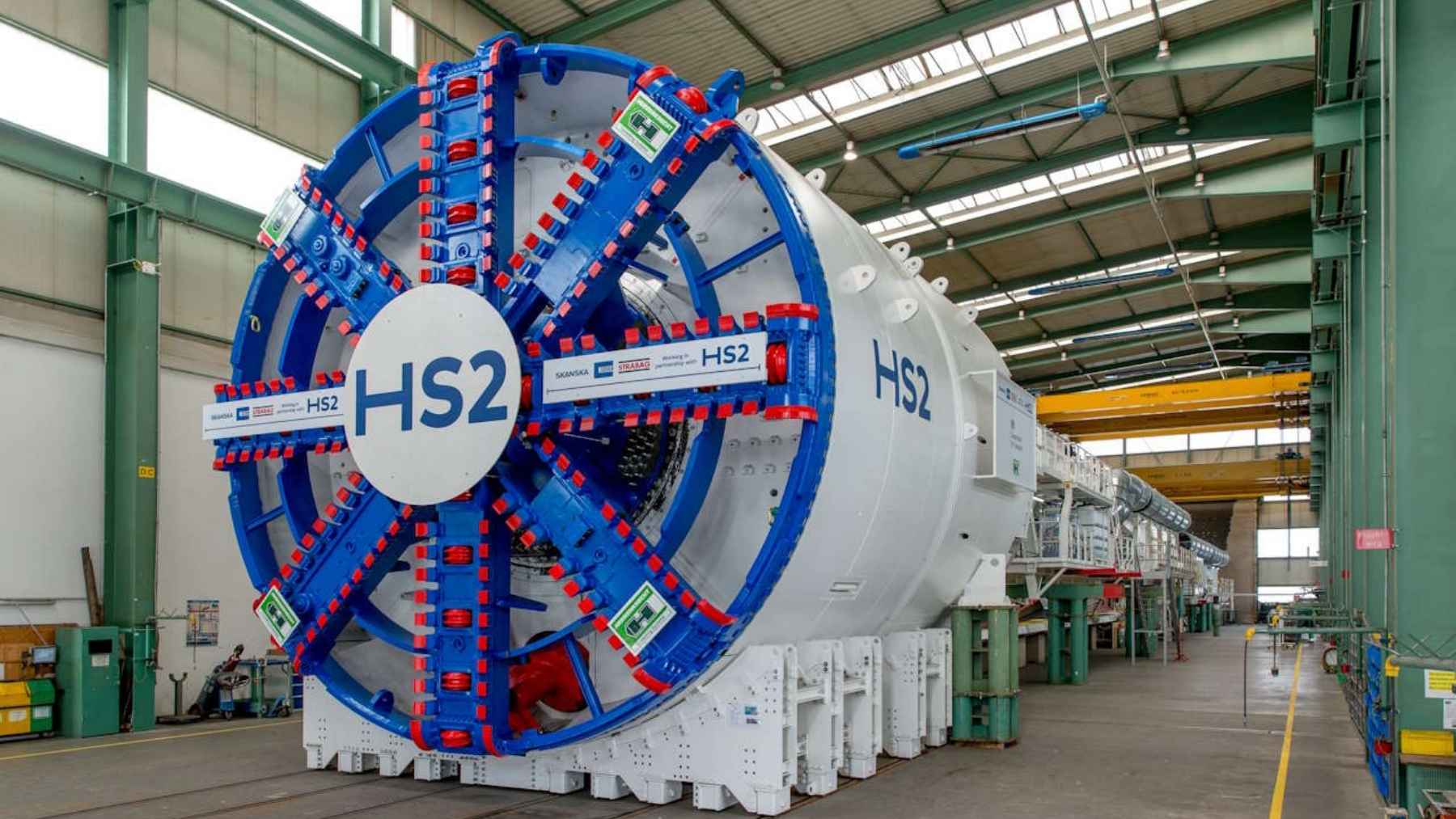
- 4 MONTHS AGO · INDUSTRYBritain just ordered the largest boring machine ever put underground in Europe, a 5,500-ton German giant with a cutting face wider than a basketball court, built to dig both Thames tunnels alone and turn around at the far end
- 2 MONTHS AGO · INDUSTRYA 254-ton steel ring rolled out of an Australian port at night on a truck 180 feet long and wider than two traffic lanes, the front shield of a tunnel-boring machine so large that no road vehicle on Earth could move it assembled in one piece
- 2 MONTHS AGO · INDUSTRYA 14.9-foot tunnel borer that grips bare granite and shoves itself forward off the rock broke through under a Canadian mountain into the tunnel half its partner finished in April, closing a single 5.5-mile bore that dips 82 feet below sea level inside the mountain
- TODAY · THIS ARTICLEA shield of 12 cast-iron frames, nearly 8 tons apiece, held 36 men one to a cell as they dug the first tunnel under the Thames, 75 feet below high tide, each man screwing his cell forward off the finished brickwork — and every tunnel boring machine on Earth still runs on that idea
In August, HS2 bolted a blue plaque to the wall of a rail tunnel about 130 feet under west London. The tunnel isn’t open yet, so you can’t go down and read it, which raises a fair question: who’s the plaque for? The answer’s a dead engineer. The spot sits directly beneath the tomb of Marc Brunel and his son Isambard Kingdom Brunel in Kensal Green Cemetery, and HS2 CEO Mark Wild went down with Brunel Museum director Katherine McAlpine to unveil it, per HS2’s August 10 announcement.
We covered the machines back in July, when HS2’s borers ground past the Brunel family grave on their way to Euston. The plaque’s the epilogue, and frankly it honors the right guy. Every tunnel boring machine on the planet, from the 46-footer that chewed a mastodon out of a Virginia harbor to the 1,624-ton pair grinding under that cemetery, still runs on an idea Marc Brunel patented in January 1818.
And the original version of that idea? A cast-iron grid of 36 cells with a man standing inside every one of them.
So what did Marc Brunel actually invent?
Start with the problem. The ground under the Thames is soft clay, sand and gravel, and it sits under a working river. Dig an open face in ground like that and the roof comes down, with the river right behind it. A crew of Cornish miners, Richard Trevithick among them, learned that in the early 1800s when their pilot tunnel between the same two banks flooded twice and got abandoned. Most engineers walked away convinced it couldn’t be done.
Brunel had watched a shipworm chew through ship timber and line its burrow behind itself, which is arguably the most productive thing a shipworm’s ever done. His patent, filed in January 1818, scaled the worm up to industrial size: keep something hard between the diggers and the ground at every moment, and build the permanent lining right behind them.
The hardware built at Henry Maudslay’s works in Lambeth was 12 cast-iron frames standing shoulder to shoulder, each weighing nearly 8 tons. The Illustrated London News said they sat “like as many volumes on the shelf of a book-case.” Each frame stood three stories tall and held three cells. One man to a cell, 36 across the face.
Here’s how your shift went. Your cell faced a wall of boards pressed flat against the dirt. You pulled one board down, dug out the ground behind it to a set depth, then put the board back against the fresh face and propped it. Work through the whole stack and the cell had cleared its next step forward. Then you turned two heavy screws, one at your head and one at your feet, both braced against the finished brickwork behind you, and the whole cell slid ahead into the ground you’d just cleared. Bricklayers sealed the tunnel at your back as fast as you exposed it.
That’s pretty much the whole job description of a modern tunnel boring machine. Hold up the ground you haven’t lined yet, build the lining behind you, then shove forward off the section you just finished. A TBM does it with a rotating cutterhead, hydraulic rams and precast concrete segments. Brunel’s men did it with shovels, screws and bricks. As far as I can tell, nobody’s changed the sequence since, only the horsepower.
The Thames didn’t cooperate
Digging started in 1825 from a shaft at Rotherhithe, and the pace settled between 1 and 8 feet a week. The river broke into the works six times between 1827 and 1840. The flood of January 1828 drowned six men and nearly added Isambard, who was pulled out unconscious. After that one the money died, the face got bricked over, and nothing moved until a £247,000 loan from the British Treasury restarted the job in December 1834. The full disaster reel, sightseers paying a shilling to watch included, is in our July piece.
One detail that piece skipped, because the machines were the story then: the shield itself didn’t survive the shutdown. Seven years parked against a wet face had rusted it out, so crews began dismantling the original in August 1835, and by March 1836 a new, heavier shield stood in its place. The first tunneling shield ever built got replaced by the second tunneling shield ever built before a single tunnel was finished. I find that oddly reassuring.
The tunnel opened to the public on March 25, 1843, eighteen years after the first dig. The carriage ramps it was designed around never got built, so it took foot traffic only, at a penny a head, and drew around two million people a year. It’s the first tunnel anyone is known to have driven under a navigable river.
So what does an 1818 patent have to do with a 2026 railroad?
Basically everything. HS2’s borers under Kensal Green erect six-ton concrete segments behind themselves and push forward off the last section they built. That’s Brunel’s screw trick, with hydraulic rams doing the turning. McAlpine kept it simple at the unveiling: the shield “made way for the Tunnel Boring Machines of today.”
The engineering bodies beat her to it by decades. ASCE calls the Thames Tunnel the first shield-driven tunnel, and in 1991 it joined Britain’s Institution of Civil Engineers in naming it an International Historic Civil Engineering Landmark. One caveat on the numbers, since the records don’t quite agree: ASCE’s own landmark page lists the tunnel at 1,200 feet, while the standard histories say 1,300. I’ve gone with 1,300 here.
The tunnel never did retire, either. The East London Railway bought it in 1865, ran the first train through on December 7, 1869, and today London Overground’s Windrush line carries commuters between Rotherhithe and Wapping straight through Brunel’s brickwork. Not a bad run for an idea that started with a worm. HS2, meanwhile, says its two machines will finish the 4.5-mile Euston drive in 2027, with the plaque already on the wall at Kensal Green.
 A nearly 23-foot tunnel boring machine just broke through into its first station under downtown Toronto after cutting about 4,265 feet and lining the tunnel with roughly 780 concrete rings, and its twin is due to punch through right beside it in DecemberIndustry · 1 week ago
 A 990-foot ocean liner that crossed the Atlantic faster than any liner before or since has just started her last trip out of Mobile behind tugboats, headed for a spot 22 nautical miles off the Florida Panhandle where she’ll be sent down into 180 feet of water on WednesdayIndustry · 1 week ago
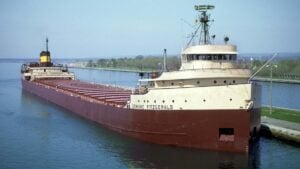 A 13,632-ton freighter lies broken in two 530 feet down in Lake Superior, 51 years after she sank in a November storm with all 29 men aboard, and federal scientists estimate up to 1,191 barrels of heavy fuel oil could still be inside a wreck with no reported leakIndustry · 2 weeks ago