
The fight over trucks on the Brenner has been running long enough to have generated its own case law. The European Court of Justice ruled on Austrian traffic restrictions there in 2005, ruled again in 2011, and on July 16 one of its Advocates General handed the judges a fresh opinion saying three of Austria’s current truck bans still break EU law.
The opinion is not binding. The bans stay in force until the Court rules, and the Court has not said when it will. Round three, then, of an argument nobody has actually won.
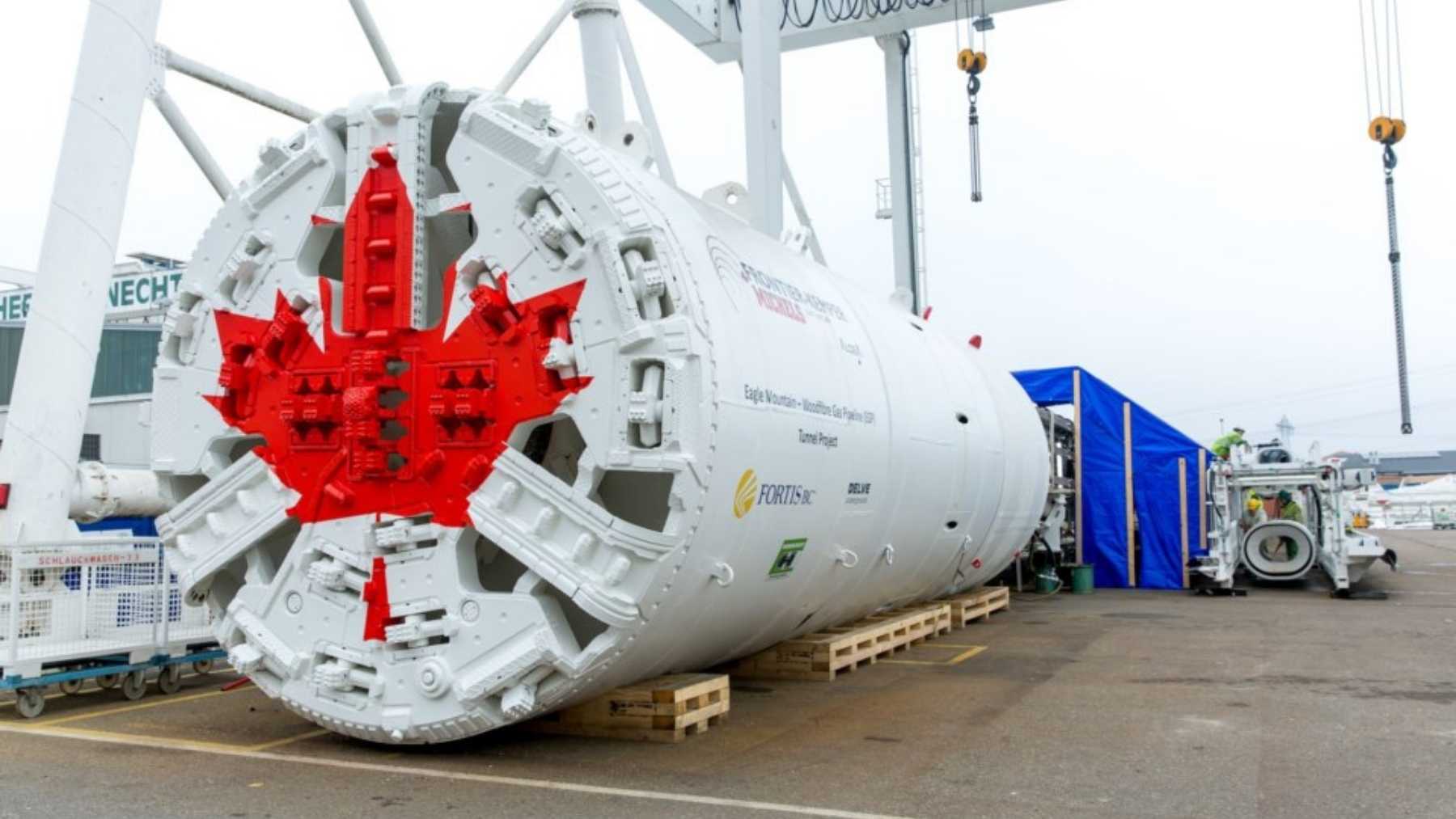
On the Italian side of the pass, a different answer to the same question has been eating a mountain since May. It is 472 feet long, weighs 2,000 metric tons, answers to the name Kathrin, and it is boring the railway that is supposed to make the argument overhead beside the point.
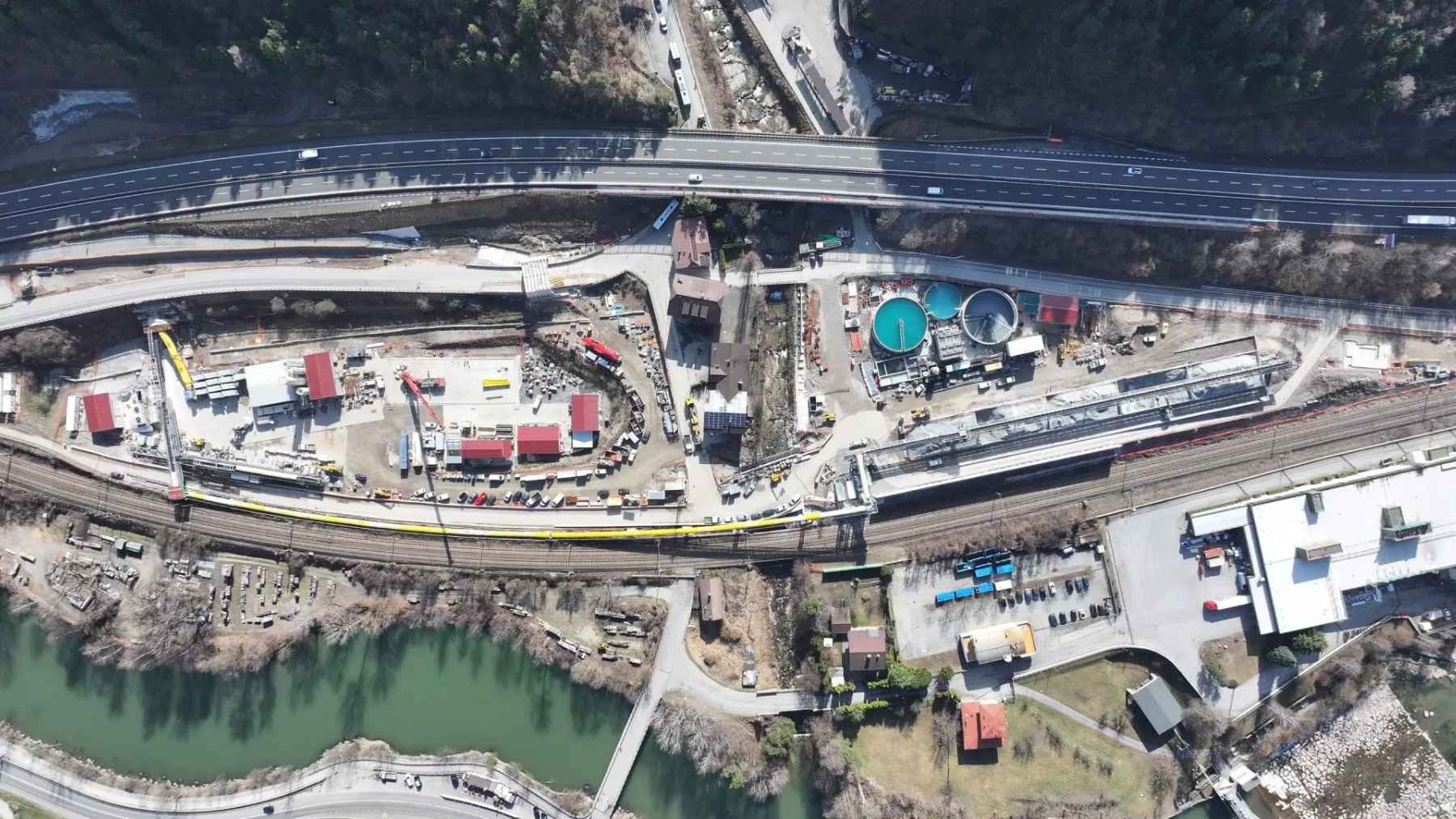
Kathrin is working the Fortezza-Ponte Gardena stretch in South Tyrol, the first functional lot of the Italian approach to the Brenner Base Tunnel. The base tunnel gets the ceremonies and the prime ministers. The ramp that feeds it from the south gets one borer, a hole in a side valley, and a schedule.
Kathrin has to dig the same tunnel twice
The machine went into the ground at Funes on June 20, 2025, according to OTI Nord, the infrastructure monitoring body backed by Italy’s Confindustria industry associations. Its first job was the Funes window, a 650-meter access bore that punched through to the mountain massif and gave the project a working face.
That finished, and on May 13 Webuild announced that Kathrin had started the Gardena tunnel itself. The contractor puts the total scope at more than 16 kilometers of tunnel and roughly 9,000 precast concrete segments for the lining.
The awkward part is not the size of the job. It is that the Gardena tunnel is two separate single-track tubes and there is exactly one machine. So Kathrin bores the first tube plus an interconnection tunnel, about nine kilometers of work by OTI Nord’s count, and then stops.
Crews then take the machine apart, haul the pieces back through the tunnel it just dug, and reassemble it in a cavern built at Funes for exactly that purpose. Then it turns around and does the second tube and a second interconnection, roughly another eight kilometers.
Big borers are usually one-way tools. They are built for a specific hole, they finish it, and then they get buried, cut up for scrap or sold on. Some never come back out at all, like the 3,200-ton machine being bolted together inside the Lyon to Turin tunnel because there is no other way to move it once assembled.
Walking one backward through its own bore to start over is the cheap option here only because the alternative is buying a second 2,000-ton machine.
It already went under the Brenner motorway without closing a lane
Webuild says the machine’s flexibility was proven under the Brenner motorway, which it passed beneath without ever interrupting surface traffic. That is the A22, the Italian half of the road everyone is arguing about in Luxembourg.
SYSTRA, one of the engineering firms on the project, counts roughly 50,000 vehicles a day on the stretch of A22 the tunnels pass under. The same design brief also has the alignment crossing beneath the working Verona to Munich railway, which carries about 280 trains a day.
Neither of those got shut down for the crossing, which is the entire point of doing it with a shielded machine instead of drill-and-blast. Blasting under a live motorway means closures, and closures on this particular motorway are how you end up in court.
Traffic up there is already thin on patience. ASFINAG, the Austrian motorway operator, cut the 1960s-era Lueg Bridge on the A13 down to one lane in each direction on January 1, 2025, to take load off a structure at the end of its service life. Its own factsheet says single-lane running ends only when the first new bridge deck is built and open, and not a day sooner.
Dual mode is the part that keeps a machine like this from getting stuck
Kathrin is what the industry calls a dual-mode machine. It can run as a closed earth pressure balance shield, holding the face up with the muck it is cutting, and it can switch to open hard-rock mode when the ground is competent enough to stand on its own.
That matters because the rock here does not stay one thing. Trade journal Tunnel Business Magazine logged the alignment as mostly porphyry and phyllite, with unconfined compressive strengths between 40 and 80 megapascals, a minimum curve radius of 280 meters and up to 600 meters of rock overhead.
Phyllite is the one to watch on that list. It is a foliated metamorphic rock, and under enough overburden foliated rock converges on the opening you just cut, which is how a shield gets gripped and stops. The build spec answers that directly. The same magazine lists a lifting main drive for long-distance overcutting in converging ground, so the machine can carve itself a little extra clearance rather than get squeezed still.
Webuild also claims the machine burns 20 to 25 percent less energy per cubic meter excavated than a conventional borer, crediting high-efficiency motors and a cooling water recovery system. That is a contractor figure with no third-party audit attached, so take it as the manufacturer’s number rather than an independent one.
The borer under Italy’s ramp was built in China
The base tunnel above it was bored almost entirely by German-built machines, Wilma and Olga among them, the last pair assigned to the project on the Austrian side. We went through that fleet and its remaining meters in a separate piece on the main bore.
The Italian approach went a different way. Tunnel Business Magazine reported that China Railway Engineering Equipment Group designed and built the dual-mode machine for the Fortezza-Ponte Gardena lot and cleared its factory acceptance test in Zhengzhou on July 19, 2023, listing it at 9.68 meters of cutting diameter, 2,000 metric tons and 16.13 kilometers of scope across both tubes. Those are the numbers Webuild describes for Kathrin.
CREG is not a small player and this was not a punt on an unknown supplier. It does leave a neat split on a corridor this symbolic. The hole under the Alps is German-bored. The Italian ramp up to it is Chinese-bored.
Kathrin is not alone on the lot either. A second machine, Barbara, finished the Forch access window in September 2025, per OTI Nord, and two more borers are due to be assembled at Forch to dig the twin tubes of the 15.4-kilometer Scaleres tunnel southward from there.
The tunnel gets finished years before the line it feeds
The reason any of this exists is grade. The current railway out of Fortezza dates to the 1860s and climbs at up to 23 parts per thousand, a 2.3 percent ruling grade, with line speeds of 80 to 90 km/h, call it 50 to 56 mph. The new alignment cuts the grade to 12.5 parts per thousand, or 1.25 percent, and Webuild says the line is designed for 225 km/h, about 140 mph.
Flat track is what lets a freight train get longer and heavier without extra locomotives on the drawbar. OTI Nord’s figures put the payoff at 60 to 90 additional freight trains a day across the corridor and about 20 percent more average load per train, with roughly 50 minutes cut off the Innsbruck to Bolzano passenger run.
Lot 1 is funded at around 1.5 billion euros and due for completion in 2029, three years before the base tunnel is scheduled to carry anything. The rest of the southern ramp is where it gets uncomfortable. The Bolzano bypass, the Rovereto bypass and the Verona approach are all still short of full financing, and three completion lots were only scheduled to begin their feasibility paperwork this year.
So the corridor is being built from the hard middle outward, on the reasonable theory that a 64-kilometer hole under the Alps forces the rest of the money to show up eventually.
The Advocate General’s opinion from July 16 is a decent snapshot of where the road half of this stands. Advocate General Manuel Campos Sánchez-Bordona told the Court that Austria’s night, sectoral and winter Saturday truck bans breach EU law, that the traffic dosing at Kufstein is “not open to criticism” as long as it works the way Austria describes it, and that with the winter ban stacked on the rest, trucks could run unrestricted for only about 46 percent of the week.
Kathrin will be somewhere in the second tube by the time the judges get around to answering that. Either way the trucks keep crossing the pass, because the railway built to take them off it is not scheduled to carry traffic until around 2032, and no court in Luxembourg can rule a tunnel into existence faster than a borer can dig one.