
- 2 MONTHS AGO · ENERGYTwo 262-foot barges were flooded and sunk to the bottom of the Danube, helicopters dropped 4,400-pound concrete blocks into the river, and the rock wall that followed now holds the water 20 inches higher so Hungary’s only nuclear plant can keep all four reactors running
- 2 MONTHS AGO · ENERGYA reactor at Canada’s largest nuclear plant came off the grid by evening and a second one dialed back to 87 percent power, both pulled by hand as millions of gizzard shad packed the intake screens, and the count hit up to 4.95 million fish against a site record of 800,000
- 1 MONTH AGO · ENERGYTwo 705-megawatt reactors on the Danube have been off since the summer because the river dropped too low for their cooling-water pumps, Romania is letting water out of three reservoirs to prop it up, and the river is still carrying under a third of its usual October flow
- 4 WEEKS AGO · ENERGYAn 876-megawatt Georgia reactor was running at full power when an electrical jolt knocked its turbine offline at 4:14 in the afternoon, so the unit dropped its own control rods and dumped steam into a donut-shaped pool under the containment, and the twin next door never felt it
- TODAY · THIS ARTICLEA 705-megawatt reactor on the Danube came back after 99 days dark, then dropped off the grid three days later at 6 in the evening with a fault in its turbine condenser, and only reconnected on November 13, reaching full power the next day, after its twin had already beaten it back
Say you’ve left a car sitting all summer. You finally get it running, take it out on the highway, and three days later something that has nothing to do with the engine quits on you. Meanwhile, the identical car next door, which couldn’t start while yours was running because the two of you share one fuel line, fires up and gets back on the road before you do.
That’s pretty much the week Romania’s only nuclear plant just had.
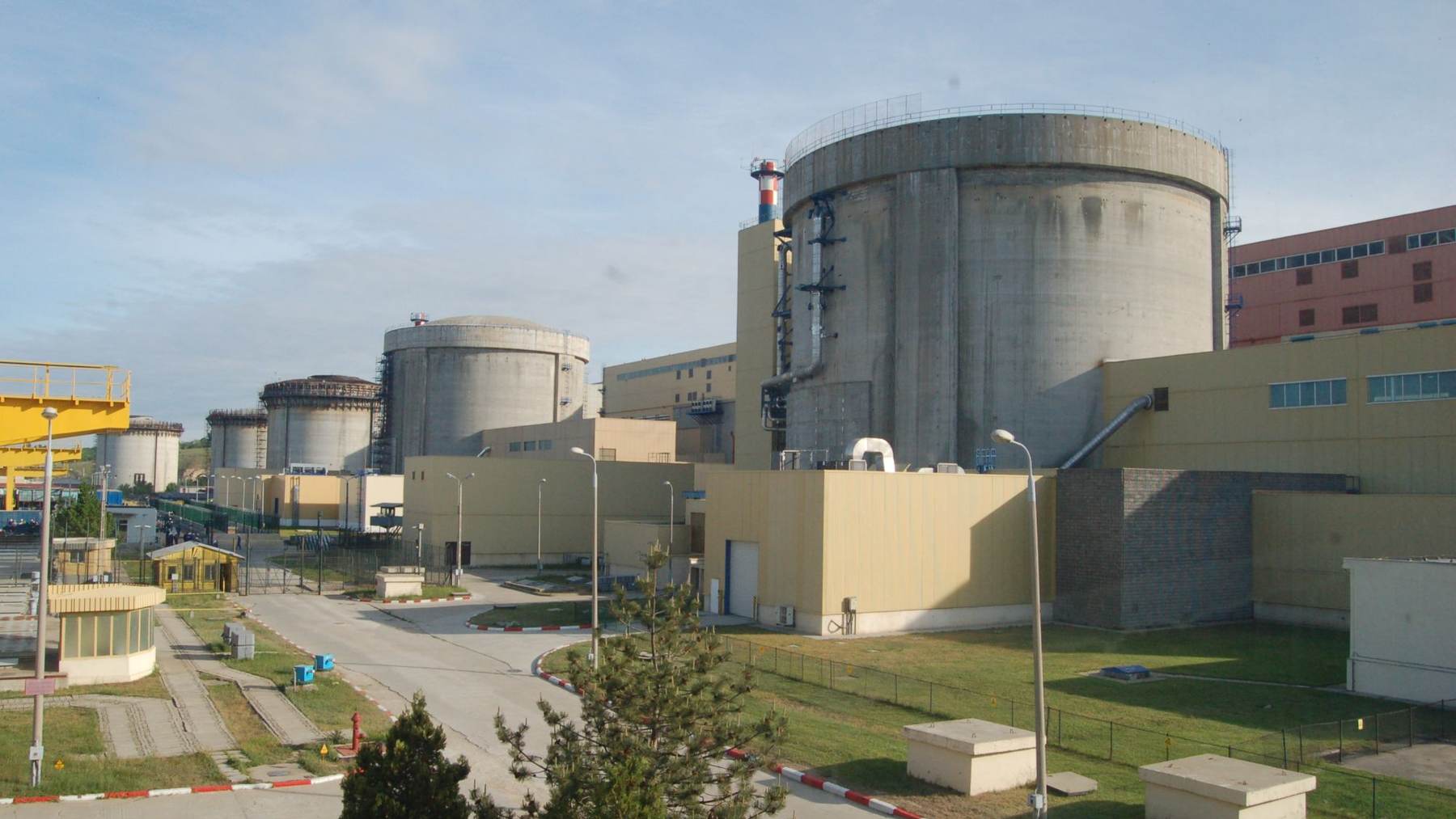
In October, I wrote about two Danube reactors that went dark because the river fell below their cooling pumps. Both units at Cernavodă had been down since summer, Unit 1 since July 28 and Unit 2 since Aug. 13. They’re Canadian-designed CANDU-6 reactors rated at about 705 megawatts each, or roughly 650 megawatts once you take out what the plant needs to run itself, according to World Nuclear News.
Nuclearelectrica, the company that runs the plant, started bringing Unit 1 back on Nov. 4. That was day 99 of its shutdown. The reactor got back on the grid on the afternoon of Nov. 6 (day 101, if you’re counting) and hit full power at 10:07 a.m. on Nov. 8. Nuclearelectrica hasn’t given an exact time for that Nov. 6 synchronization, only that it happened in the afternoon.
So why couldn’t both reactors start at once?
Because they drink from the same glass, basically. Both units pull their cooling water from one intake basin at the head of the Danube–Black Sea Canal, and the pumps that feed them sit at a fixed height. A running reactor pulls so much water out of that basin that the level drops, and if it drops too far, the pumps can’t get enough water and start sucking in air instead.
Nuclearelectrica spelled that out on Nov. 4, warning in its restart announcement that running Unit 1 “will lead to a drop in the water level in the intake basin.” So Unit 2 had to wait for the Danube to rise and stay up.
How much higher did it need to go? On Nov. 7, plant director Romeo Urjan said the local reading was about 6.8 feet, which was fine for Unit 1, while Unit 2 needed another 4 to 6 inches on top of that, according to the Romanian news agency AGERPRES via Energynomics.
That sounds like a rounding error for a river the size of the Danube. For a pump that can’t move up or down, it apparently isn’t.
The river came through. Unit 2’s startup sequence began at 12:42 a.m. on Nov. 9, according to a Romanian Energy Ministry statement cited by Energynomics, and Nuclearelectrica said the water level it needed had been reached.
So what knocked Unit 1 back off the grid?
Unit 1 dropped off the grid on the evening of Nov. 9. Capital, a Romanian business paper, put it at 6 p.m. local time (11 a.m. on the East Coast), and citing data from grid operator Transelectrica, it pinned the problem on the vacuum control system for the turbine’s condenser.
If you’ve never had to think about one, a condenser takes the steam that just spun the turbine and turns it back into water by running it past pipes full of cold water. Doing that also keeps a vacuum on the turbine’s exhaust side, and without the vacuum the turbine can’t keep going, so the whole unit has to come off the grid.
Nuclearelectrica’s own wording is vaguer. Its Nov. 9 statement says the fault was in the conventional part of the plant, meaning the non-nuclear side, and that it had no impact on nuclear safety, personnel or the environment. The company doesn’t name the component, and it says the root cause will be laid out in a later report.
So after three months of waiting on a river, Unit 1 lasted three days and got knocked out by equipment that isn’t even part of the reactor. That’s frankly brutal timing.
That same Nov. 9 statement said the plant’s technical director will be replaced on Dec. 1, and that all maintenance work will be reviewed against the plant’s procedures and international standards. On Nov. 12, Nuclearelectrica named Bogdan Deaconu, an engineer trained at Cernavodă, for the job.
Unit 2 beat it back
While Unit 1 was in the shop, Unit 2 synchronized with the grid on Nov. 11, and Romanian outlets reported it at full power by Nov. 12. That’s the reactor that couldn’t start a week earlier because its sibling was drawing down the water.
Unit 1’s comeback, meanwhile, kept slipping. Nuclearelectrica’s first estimate gave the repair two to four days. On the morning of Nov. 11, it said Unit 1 would reconnect on Nov. 12. Late that afternoon, it pushed that to Nov. 13, saying the repair work needed more time. This time the date held.
The reactor reconnected on Nov. 13 and reached full power on Nov. 14, in line with the schedule Nuclearelectrica announced on Nov. 11.
If you’re keeping score, that’s roughly four days from disconnection to reconnection, right around the top end of the original estimate. Not great, but not a disaster either.
So is the plant back to normal?
Mostly, though the summer wasn’t cheap. Romanian Prime Minister Luca Niculescu put the cost of shutting both units down at €200 million, or about $221 million at the European Central Bank’s Nov. 13 reference rate, according to World Nuclear News. He also called a project known as Bala 2, which is meant to get more water to the plant, a priority.
I’d argue that’s the fix that matters more in the long run. You can repair a condenser system in a few days, but you can’t do much about a river that drops below your pumps in a dry summer. Romania has already tried sinking barges in the Danube to steer more water toward the plant, and as we covered in October, the gain it bought faded within days.
Nuclearelectrica put Unit 1 at full power on Nov. 14, and with both units running, the company says the two Cernavodă reactors together will be covering about 20% of what Romania needs.
 A 100-watt nuclear reactor sitting in a 35-foot concrete pit under Texas ranch land has been cleared by the Energy Department for unrestricted operations three months after its first chain reaction, and its maker will use it to train operators and check its math for an isotope reactorEnergy · 2 days ago
 A 4-foot tidal turbine with three rubber blades developed with a French tire maker matched the output of turbines whose blades are turned by motors, and it did so because each blade flattens on its own as the water speeds up, cutting the jolts that wear turbines out by up to a thirdEnergy · 2 hours ago
 A 21-foot-wide shaft has reached 5,203 feet under a Quebec gold mine whose open pit had part of its north wall move this summer, and its 305-foot headframe is now trading the sinking gear for a production hoist sized for about 22,000 tons a day, with shaft hoisting due next springEnergy · 15 hours ago