
If your basement’s ever flooded, you know the drill. You get a sump pump, it moves somewhere around 40 gallons a minute, and you feel pretty good about yourself. Now scale that problem up to a steelworks that makes nuclear submarine parts, sits right up against a river, and has an entire stream buried underneath it. The pumps going in there are designed to move just over 2,100 gallons every second.
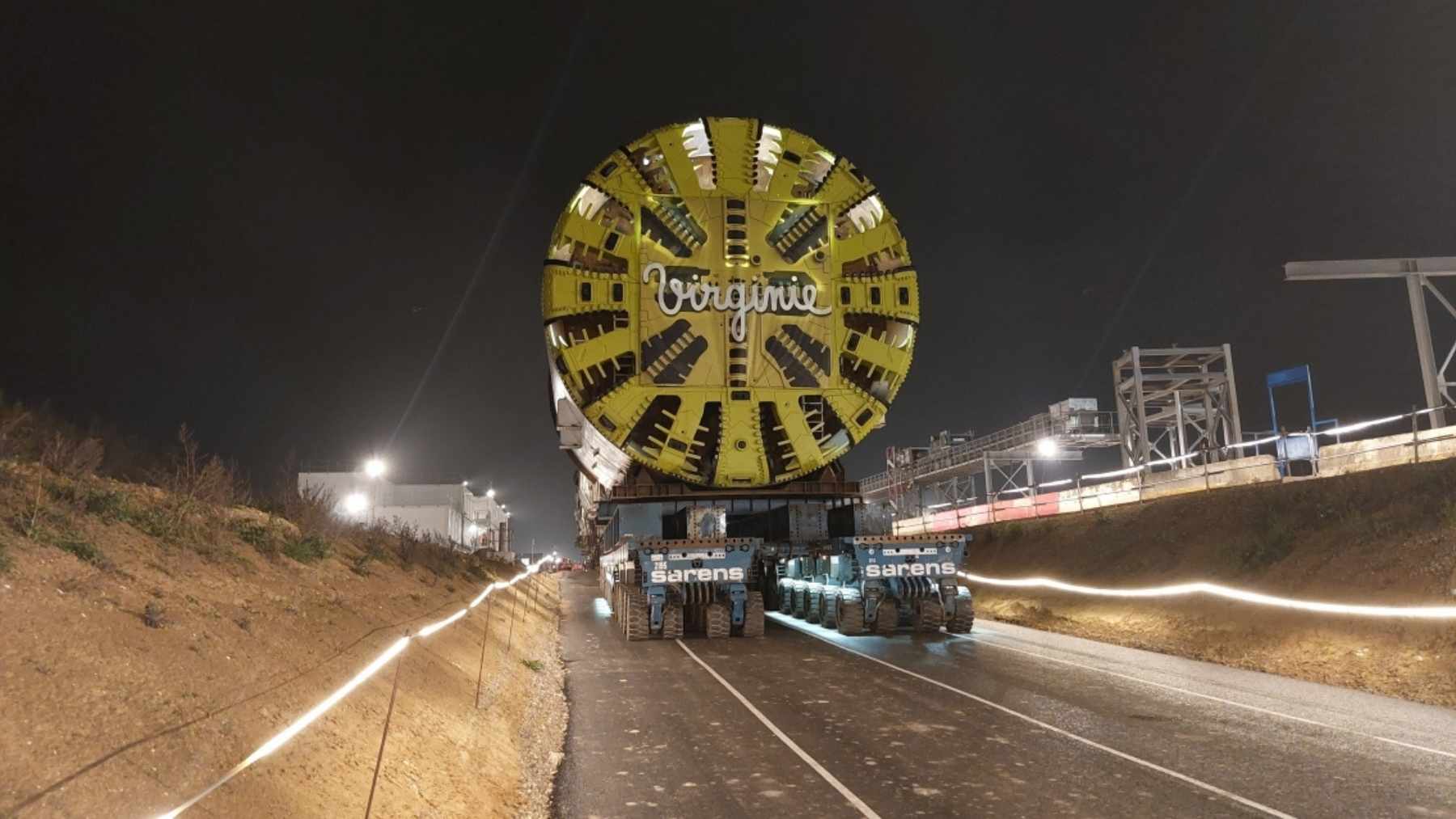
That steelworks is Sheffield Forgemasters, in the north of England, and since the start of September it’s had a tunnel boring machine grinding away beneath its main road.
The machine went into a concrete shaft next to the River Don, and it’s now cutting a 1,050-foot tunnel under Brightside Lane, the road that runs along the site. The finished passage will be six feet across and sit about 39 feet down, connecting two stormwater shafts, and traffic keeps rolling overhead the entire time. According to Mark Wood, contracts manager at JBA Bentley, the civil engineering firm running the dig, “motorists and pedestrians will not even be aware that the machine is in operation,” in remarks carried by The Construction Index.
So why is a steel forge digging a stormwater tunnel?
Sheffield, like a lot of old industrial cities, built right over its smaller rivers. One of them, Bagley Brook, now runs through a culvert. A culvert’s basically a stream stuffed into a pipe, and this one passes straight through the Forgemasters site on its way down to the Don.
Most of the time that’s fine. But when a storm dumps more water than the pipe can swallow, the overflow has to go somewhere, and the somewhere has historically been the northern end of the plant.
And this isn’t a site you want underwater. The UK’s Ministry of Defence bought Forgemasters outright in 2021, and the company makes parts for nuclear submarines and civil reactors. Earlier this year it welded a full-size nuclear reactor vessel in the same complex. The flood scheme is actually a planning requirement attached to the company’s new forging line, which is going up alongside the Midland Main Line, the rail route that runs past the site, and built around a 14,300-ton press (13,000 metric tons).
So why not just shove the overflow straight into the Don and call it a day?
Presumably because when the brook’s overloaded, the river’s having a rough day too. The whole design works on timing. Catch the surge, hold it in the shafts, then hand it back to the Don at a controlled rate once the storm’s moved on.
One shaft ends up doing two jobs
The shaft the machine launched from, over on the river side, is 49 feet across and about 39 feet deep. Once the boring’s done, that hole doesn’t get backfilled. It becomes the storage tank and the pumping station, which is frankly a smart bit of double-duty for what’s otherwise a very large pit.
The machine’s heading for a much smaller target: a 16-foot-wide reception shaft on the other side of Brightside Lane, close to where the culvert enters the site.
JBA Bentley will then cut a new weir chamber into the flank of the old culvert. A weir’s essentially an overflow wall. Normal flows slide past it and carry on down the pipe, and only when the water climbs high enough does it spill over into the new system.
Down by the river, a section of the site’s flood wall gets repositioned to make room for a new outfall. That’s the structure the stored water passes through on its way back into the Don. The design discharge rate is 8,000 liters per second, or 2,113 gallons. The pumps handle the rest. Forgemasters’ own math translates that flow to roughly 50 bathtubs a second, and that’s the unit I’d have led with.
The whole package (tunnel, shafts, weir chamber, pumping station and outfall) sits inside a £19 million contract, roughly $25 million, that New Civil Engineer reported as a two-year job when JBA Bentley picked it up.
The machine itself is a bit of a mystery
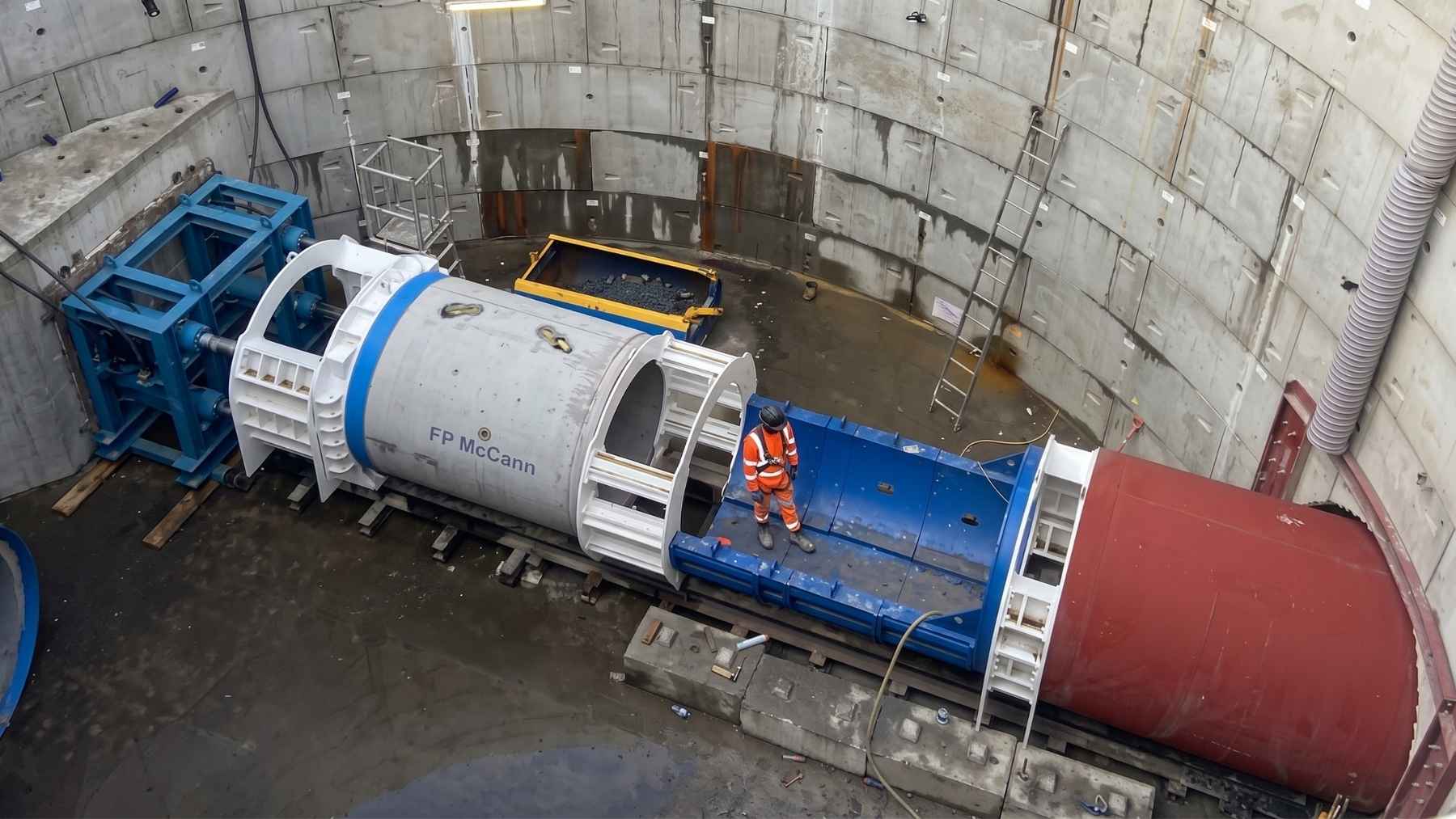
Here’s what I can’t tell you: who built the tunneling machine. Forgemasters hasn’t named a manufacturer, and I couldn’t find a model or a weight for it anywhere. The photo in the company’s announcement shows the rig sitting in the launch shaft with its push gear and one of the crew standing alongside, which at least gives you a sense of scale. It’s a compact machine, as these things go. A six-foot bore is pretty modest next to the 46-foot monsters that chew out highway tunnels, and that’s sort of the point, because this one has to cross a working steelworks without stopping traffic on the road above.
It’s not even the only machine digging water storage under England this summer. Another one spent August working around a protected pool in Cheshire. Apparently the way you fix an old English water problem now is to buy a boring machine and start digging.
The cutting carries on under Brightside Lane all the while, out of sight of everyone driving over it. Sheffield Forgemasters confirmed the machine was in the shaft and boring in the first days of September 2026, and the two-year clock on JBA Bentley’s contract is already running.