
Welding is slow, careful work, and the thicker the steel, the slower it gets. Anyone who has watched someone lay down a serious weld knows it is mostly waiting: pass after pass, then inspection, then more waiting. Now picture a piece of steel 200 millimeters thick that has to hold a nuclear reaction for 60 years without cracking, and picture the seams that hold it together.
Done the conventional way, those seams are about a year of work.
A forge in Sheffield, England did them in under a day. Not a test coupon or a mock-up, but a full-size small-reactor vessel, three meters across, closed up with four nuclear-grade welds in less than 24 hours.
That demonstration is a couple of years old now, and on its own it would be a neat engineering footnote. What makes it worth pulling back up in the summer of 2026 is timing. Britain’s home-grown small-reactor program just stopped being a slide deck and turned into a funded build, and the question of who actually makes the steel for those reactors is suddenly real money instead of a talking point.
Four welds in under a day, instead of a year
The company is Sheffield Forgemasters, a state-owned steelmaker on Brightside Lane that has been forging heavy nuclear and naval components for decades. In early 2024 it finished assembling a full-sized demonstrator of a small modular reactor (SMR) pressure vessel, joining five forged sections, four shells and a head, with four welds.
The vessel measures three meters in diameter with a 200mm wall. The whole set of welds went in under 24 hours, a job the company says normally takes a year. Its research, design and technology director, Professor Jesus Talamantes-Silva, described the result as “100 per cent success and no defects.”
The groundwork showed up two years earlier. In 2022 the same team joined two 200mm-thick, three-meter sections with a single weld roughly 10 meters long, and finished it in 140 minutes in one pass, according to World Nuclear News. A weld like that would usually run for months, stacked with heat treatment and repeated non-destructive testing along the way.
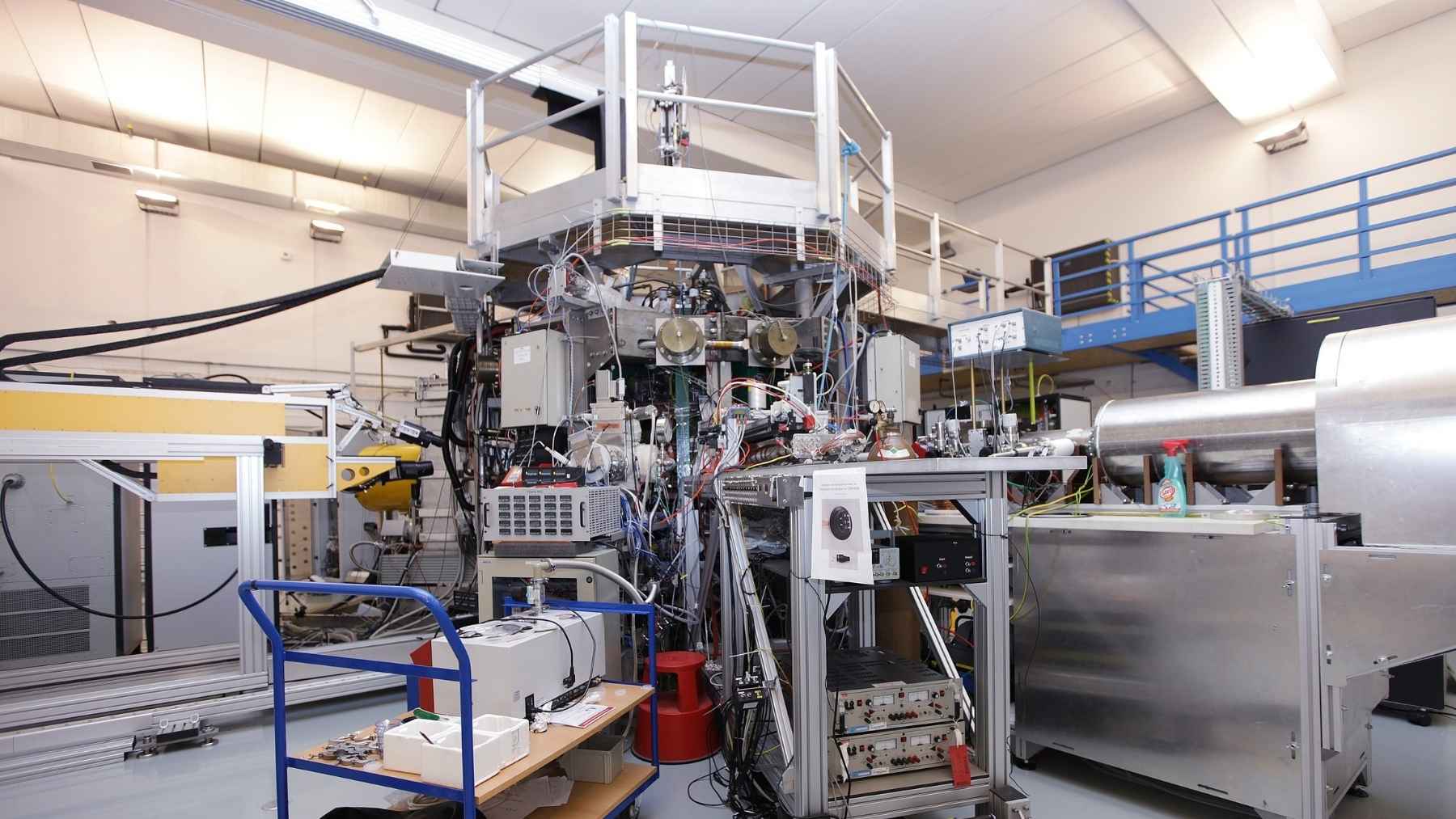
The trick is the process. It is called local electron beam welding, developed with Cambridge Vacuum Engineering. A high-power electron gun fires a beam that penetrates the full thickness of the steel and fuses the two parts in one shot, instead of building up dozens of layers of filler wire.
The word doing the heavy lifting there is “local.” Ordinary electron beam welding needs the entire part sealed inside a vacuum chamber, which is fine for small components and impossible for a can the size of a grain silo. The Sheffield version pulls a vacuum only around the joint being welded. That is the difference between a lab curiosity and something you could put on a factory floor.
A reactor vessel is either forged in one piece or welded together
Strip a reactor down to its single most important part and you get the pressure vessel: the thick steel can that holds the fuel and the coolant, and has to shrug off pressure and radiation for the life of the plant.
There are two ways to make one. You forge the ring in a single seamless piece, or you weld several forged rings together. The seamless version is the gold standard, because every weld is a spot you have to inspect for decades and a potential place for the steel to fail. The World Nuclear Association’s line on it is simple: fewer welds, better.
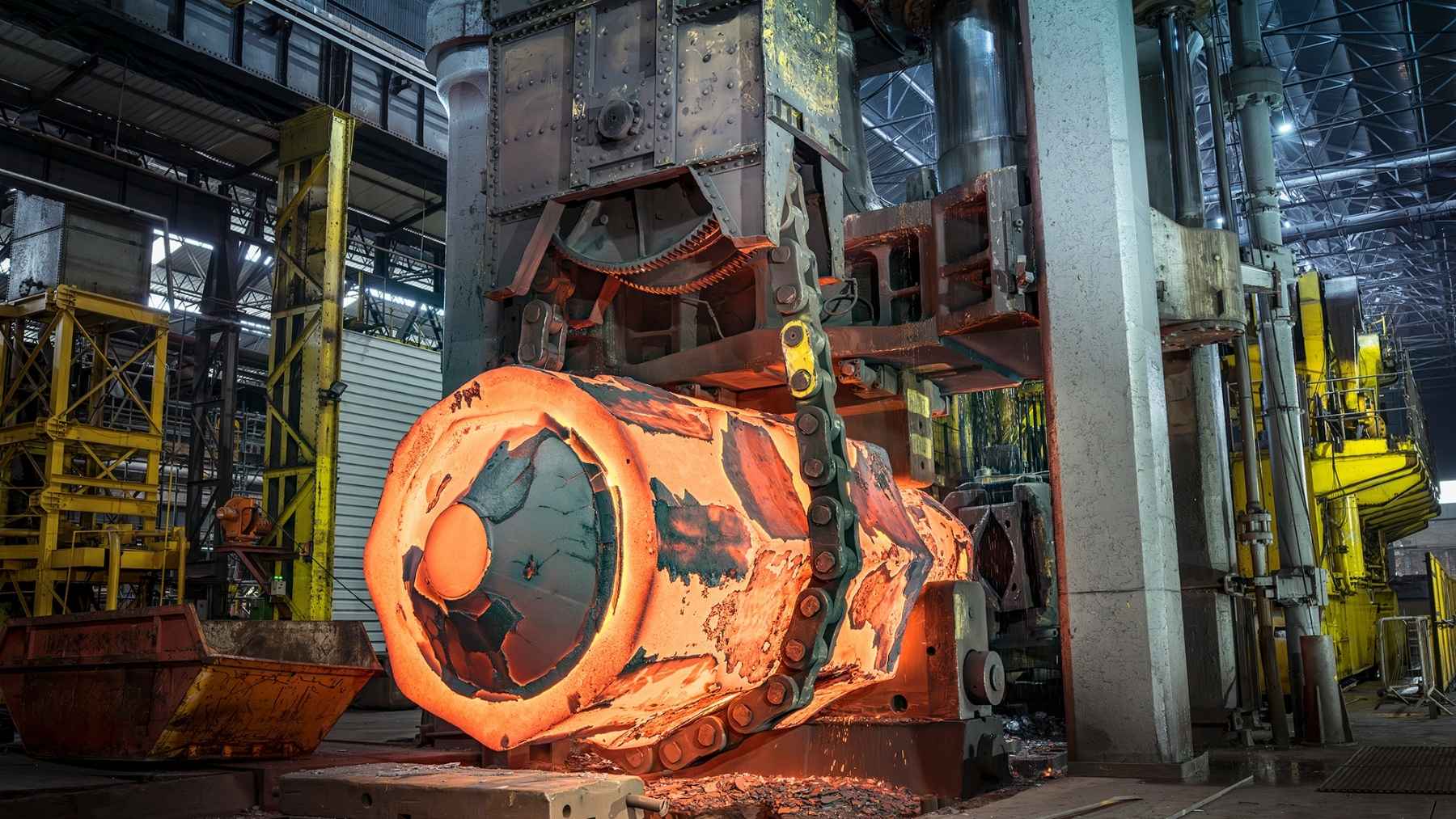
The catch is that forging a single piece that big is brutal. You need a press in the 14,000-ton class squeezing a steel ingot of 500 to 600 tons, and there are almost none of those on Earth. A single forging line in northern Japan turns out only about four reactor vessels a year, and most of the world’s biggest reactors quietly line up behind it.
Welding rings together is the way around that bottleneck. It just came with the usual penalty: every seam was slow to make and a lifelong inspection point.
Sheffield’s pitch is that local electron beam welding erases most of that penalty. It welds in hours, and because the join is meant to replicate the parent steel rather than sit on top of it as filler, the company argues it is not the usual weak point either. If that holds up in service, you get the flexibility of a welded vessel without the reason forging existed in the first place.
That is why this is a British story and not a general one. Britain does not have a giant single-piece forging press. Its full-size reactor at Hinkley Point C was forged across the Channel in France, not at home. Local electron beam welding was Sheffield’s route to building nuclear vessels in the UK without owning one of those presses.
Britain’s small-reactor program is finally real
For years, the UK SMR was a design and a funding fight more than a project. That changed fast.
The reactor is the Rolls-Royce SMR, a 470-megawatt small pressurized water reactor, the country’s own design. In November 2025 the government picked Wylfa, on Anglesey in North Wales, for the first fleet, up to three units on the site.
Then the money moved. In April 2026, Rolls-Royce secured up to £599 million from the UK’s National Wealth Fund, and Great British Energy – Nuclear signed a contract to start site-specific design work for the three Wylfa units. A parallel early-works deal covers a Rolls-Royce SMR project at Temelín in the Czech Republic. A final investment decision is expected around 2029.
So the reactors are coming, the sites are named, and the parts have to come from somewhere. Which is where the welding demo runs into the real world.
The vessels are being sourced abroad
In late May 2026, Rolls-Royce SMR named the firms that will do the early work on its most critical long-lead parts. For the reactor pressure vessel body, it picked two suppliers: Škoda JS of the Czech Republic and Doosan Enerbility of South Korea.
Neither is British.
The work covers pre-production, design finalization and manufacturing readiness rather than final construction, and Rolls-Royce is running it as a deliberate dual-supply setup to reduce risk. Ruth Todd, the company’s operations and supply chain director, called the vessels “some of the most important long-lead items in nuclear plant construction.”
Rolls-Royce’s reasoning is that the UK does not currently have the capacity to make these particular components, and it has singled out pressure vessels, steam generators and reactor coolant pumps as the gaps. The company says it is committed to maximizing UK content where domestic capability exists, and that 88 percent of its spending since 2021 has gone to UK-based businesses.
That has not settled the argument. Liam Byrne, who chairs Parliament’s business and trade committee, said he was writing to ministers to ask how sending the vessel work overseas squares with the government’s target of 70 percent British-built content across the SMR fleet. The lobby group UK Steel called the decision “extremely disappointing,” according to a Telegraph report, and Rolls-Royce had previously told MPs up to 78 percent of a reactor could be made at home.
The proportions are worth a glance. The reactor island is about 20 to 25 percent of an SMR’s production value, and the pressure vessel itself is less than 0.5 percent of it. The vessel is a tiny slice of the bill and roughly all of the political noise, mostly because of what it symbolizes.
And the door is not fully shut on Sheffield. The contracts are early-stage, Rolls-Royce says it is actively connecting UK suppliers to the program including for forgings, and the Telegraph reported that Sheffield could still play a role, even as it noted the firm’s once-trumpeted involvement now looks like a downgrade. Rolls-Royce, for its part, dropped its own plan for a UK pressure-vessel factory back in 2024.
Cracking the welding is not the same as winning the work
Sheffield proved the hard part is doable. You can weld a reactor vessel in a day instead of the year the textbook allows, and do it without owning a press the size of a building.
Proving something in a demonstrator hall and winning the contract to build it at scale are two different animals, though. The vessel work for Britain’s first home-designed reactors is heading to Czechia and Korea, at least to start, in a country that just showed it can weld the thing faster than almost anyone.
The forge that cracked the welding may still end up making the forged rings that go into those welds. Whether the breakthrough turns into the steel that actually shows up at Wylfa is the open part, and for now the most important can in a British reactor is being shaped somewhere else.
 @mikeconley ENTHUSIAST3 months ago