
England’s sewers were mostly laid when Victoria was on the throne, and they were sized for a country holding a fraction of the people who live there now. They also carry rainwater and sewage in the same pipe, which works fine until it rains hard and the system dumps the overflow into the nearest river.
Replacing that pipework normally means digging up a street and leaving it dug up for the better part of a year. Every shop on it loses trade, and nobody thanks you.
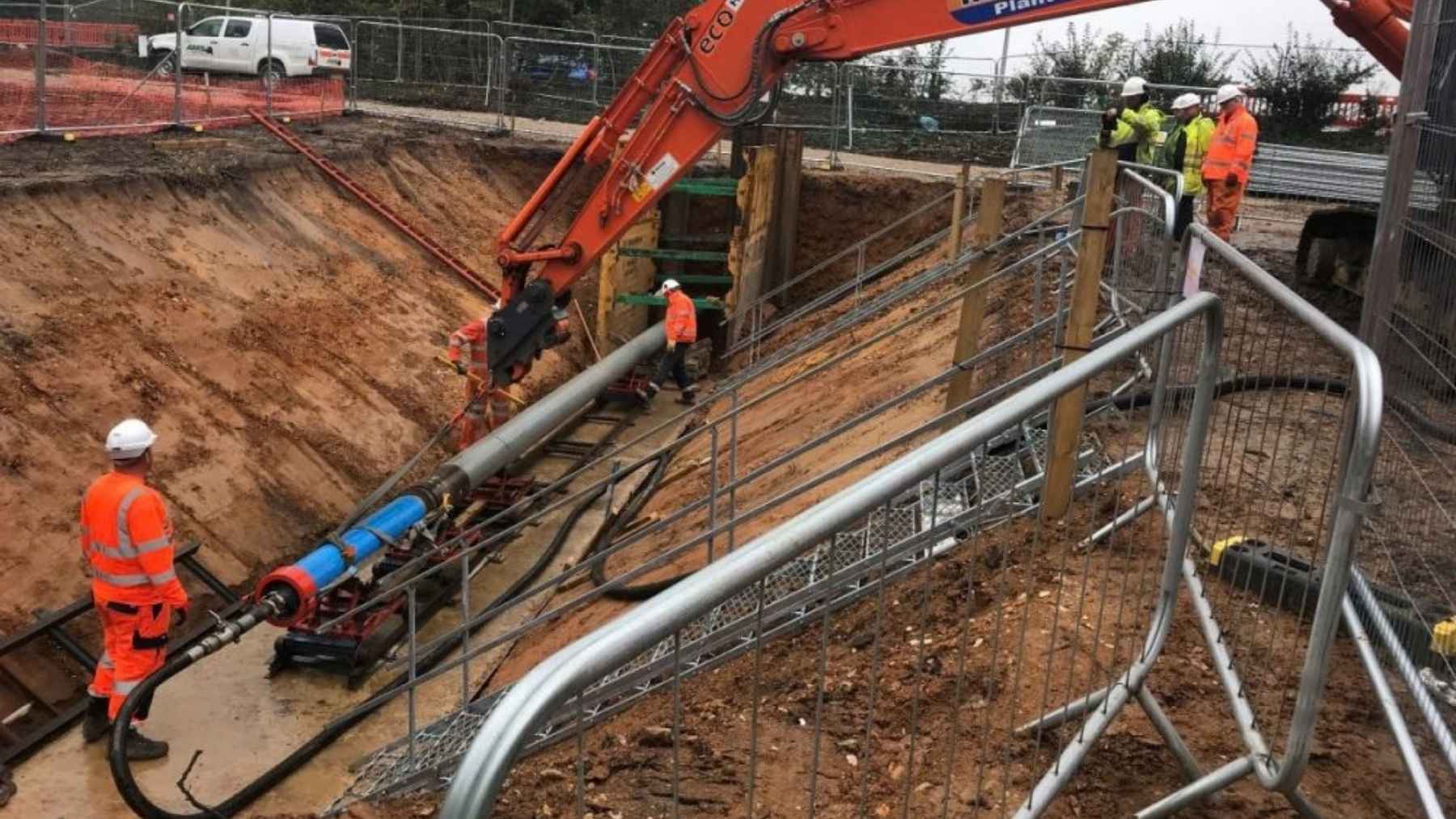
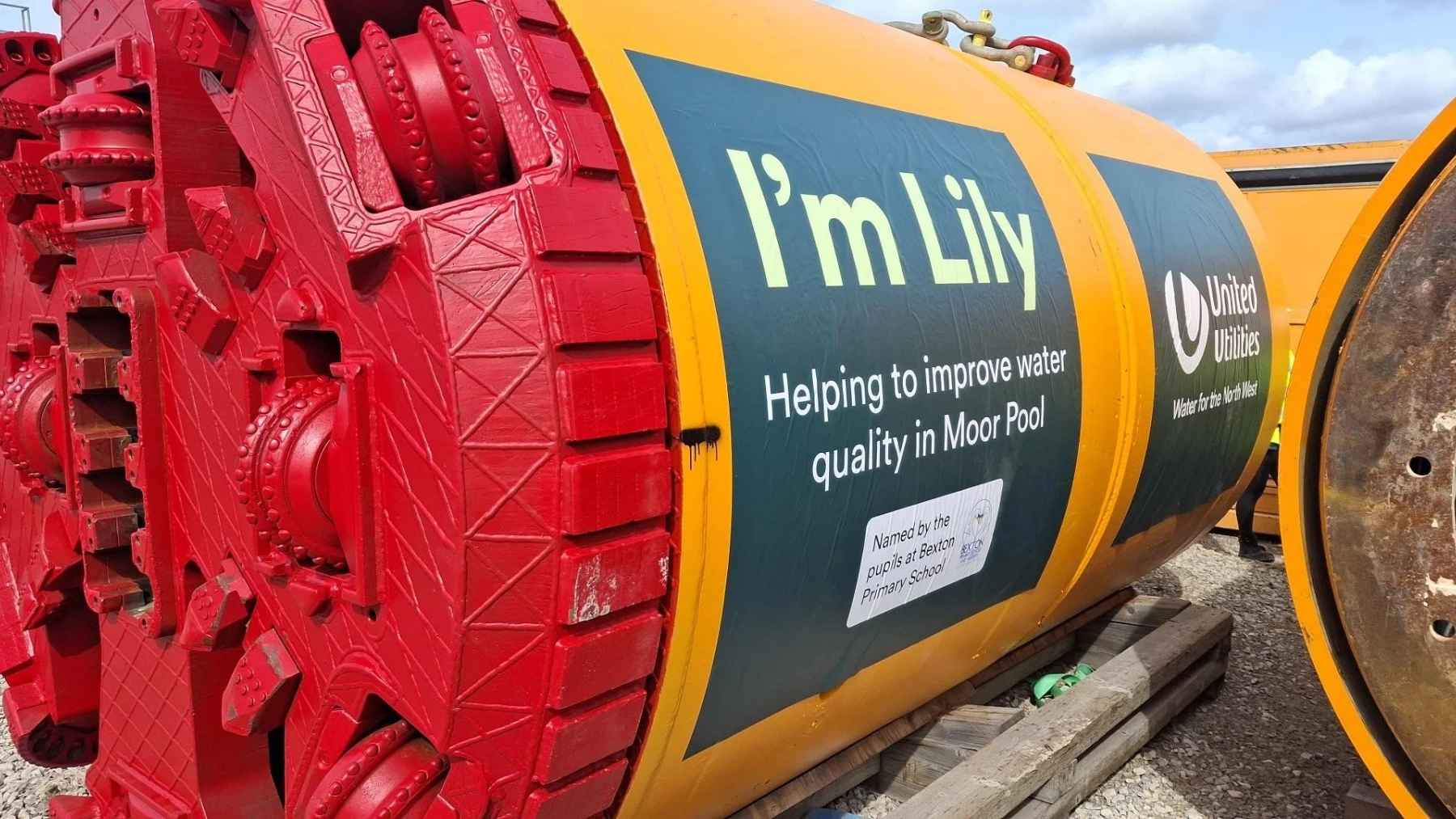
So in Knutsford, Cheshire, the water company went underneath the town instead. The machine doing the digging weighs 44 tons, answers to Lily, and was named by a room full of primary school kids after what locals claim is one of the smallest rivers on the planet.
Lily surfaced at the far end this month.
Half a mile down, nothing torn up on top
TheBusinessDesk.com reported that Lily broke through at Knutsford Wastewater Treatment Works, closing out the first of two drives on a £48 million United Utilities scheme.
Worth being precise about the geometry, because the numbers get garbled easily. The finished bore is 1.8 kilometers end to end, or about 1.1 miles, running between the Moor Pumping Station and the treatment works.
Lily launched from a central shaft at Parkgate Industrial Estate and drove one direction. She now gets craned out, hauled back to Parkgate, dropped in again and sent the opposite way toward the pumping station. Two drives, roughly half the route each, one continuous tunnel at the end of it.
The pipe itself is 2 meters across, which is about 6 and a half feet, and sits up to 20 meters down at the deepest point. Call it 66 feet, or a six-story building’s worth of Cheshire clay between the cutting head and somebody’s back garden.
Capacity is 5.5 million liters, which works out around 1.45 million US gallons. Maria Fletcher, county business lead for wastewater in Cheshire, described that to the Chester Standard as roughly two Olympic swimming pools.
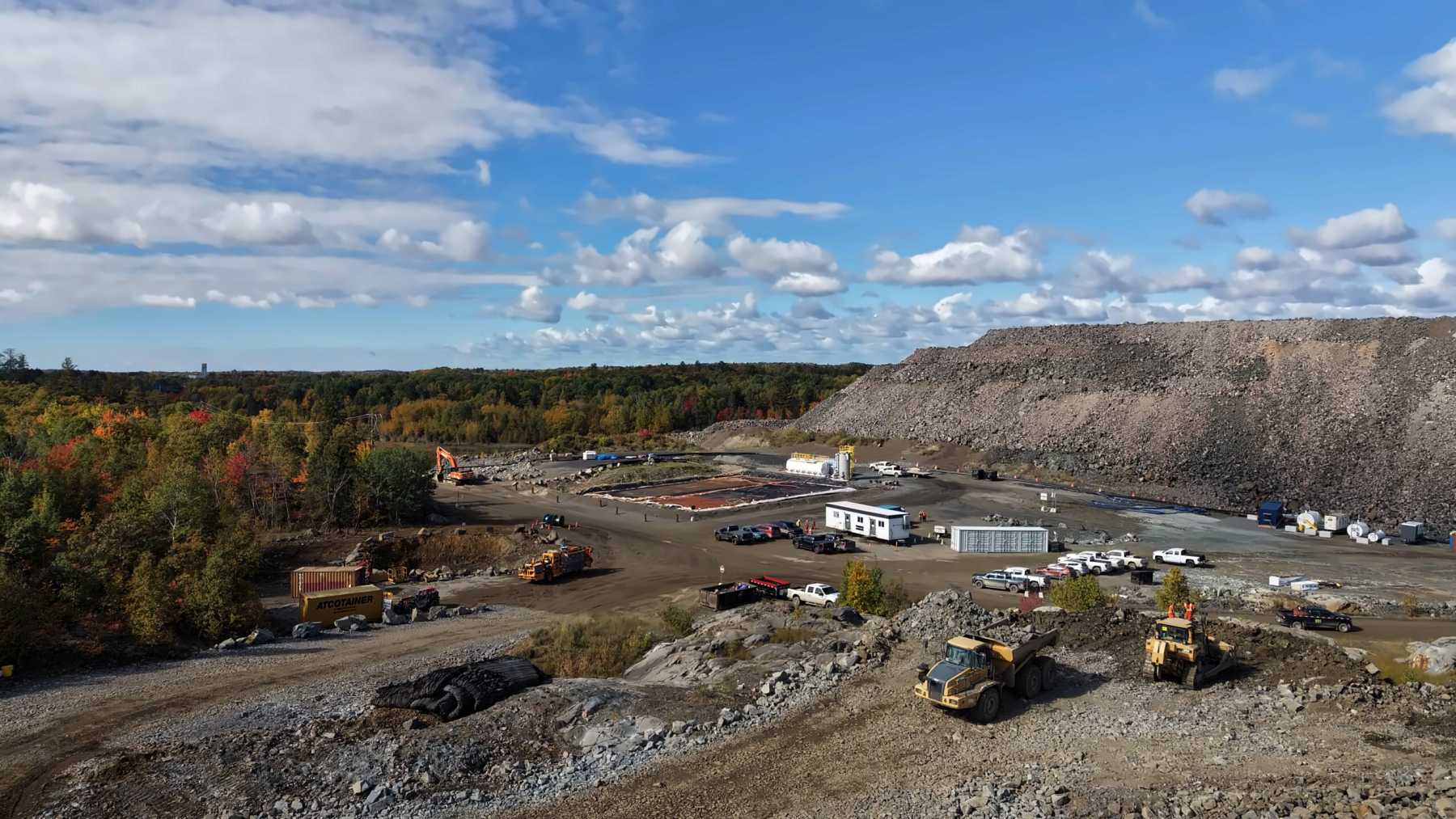
Principal contractor on the job is Ward & Burke, per New Civil Engineer, which set up its tunneling compound off Parkgate Lane back in January. The nearby children’s playground stayed open throughout.
The pool at the end of it is legally protected
Moor Pool is not a random pond. It sits at the eastern edge of Knutsford town center, and Knutsford Town Council describes it as a RAMSAR and SSSI site in its own planning notices.
Those are two different things stacked on the same water. An SSSI is Natural England’s domestic designation for a site of scientific importance. RAMSAR is the international wetland listing, signed in Iran in 1971, and in England those sites get handed the same strict legal protection as Special Protection Areas.
Cheshire East Council notes the Moor sits adjacent to the Tatton Mere SSSI and RAMSAR site, with reed bunting, mute swan and teal on the water. Dumping storm sewage into that is not a great look for a water company already under national scrutiny.
Which is the actual reason for the trenchless approach, and not some engineering flex. You cannot cut a mile-long trench through a protected wetland and then issue a press release about environmental stewardship.
Somebody had to move the fish first
Phase two deals with the pool itself, and the prep work for that was more involved than the tunneling.
Working with Natural England and Tatton Estates, contractors emptied the water of anything living before sediment removal could begin. MegaProject reported the tally: 19 pike, 24 bream, one carp, and a lot of roach and perch, all netted and rehomed upstream at Peover.
The single carp is a detail that sticks. One fish, counted individually, in a document about a £48 million infrastructure scheme.
What they are digging out underneath those fish is close to a hundred years of accumulated silt. That is the part nobody photographs.
Lily is named after a river you could step over
Pupils at Bexton Primary School picked the name, after the nearby River Lily. Which sounds ordinary until you look up the River Lily.
It is a stream. It runs into Tatton Mere under an unmade road, and Knutsford has spent decades claiming it as the smallest river in the world, a boast that appears to rest mainly on nobody bothering to contest it.
It also gave the town its name. Local tradition holds that King Canute forded the Lily on his way north, making this Knutr’s ford, though the English Place-Name Society allows that the second half might just mean a hillock. Rival accounts point at Birkin Brook instead.
So: a 44-ton machine, named for a river a grown adult could clear in one stride, in a town named after a Viking king getting his feet wet in it.
Naming tunnel boring machines after women is old practice, and it predates any of this. The Institution of Civil Engineers traces it to miners praying to Saint Barbara for protection underground, a habit going back to the 1500s.
Crossrail ran eight of them under London. The first six honored historical figures including Ada Lovelace and Phyllis Pearsall, who walked 3,000 miles of London streets to compile the A-Z. The last two, Jessica and Ellie, were named for an Olympic heptathlete and a Paralympic swimmer, and the winning suggestion came from a primary school in Stepney.
Which means Bexton Primary is not doing anything novel. They are doing exactly what Marion Richardson Primary did for the biggest civils project in Europe.
The same trick already worked in Bolton
United Utilities has run this play before, and the results are in.
Over in Bolton, a microtunneling machine called Jane dug a 900-meter storm storage network between Firwood industrial estate, Bolton Arboretum and Longsight Park, going as deep as 38 meters. The BBC covered the launch in 2024.
Jane was named after Jane Wilcock, a volunteer with the Friends of Longsight Park who had been pushing the company for years to do something about Bradshaw Brook. She told the BBC she wanted a clear-water brook rather than the brown one she had.
That scheme finished. Civils wrapped in December 2024 and commissioning completed in April 2025, according to Water Projects Online, on a contract awarded only twelve months earlier.
Here is the number that matters. In its first three months live, that tunnel filled completely three times and kept roughly nine million liters of wastewater out of the River Irwell. Around 2.4 million gallons, in one quarter, from one buried pipe.
The national picture is improving, and the weather helped
Storm overflows are a live political problem in Britain. The House of Commons Library puts 2025 at roughly 290,000 recorded discharges across England, running about 1.9 million hours.
That sounds appalling and it is also a sharp improvement. Environment Agency figures published in March logged 291,492 spill events, down 35% year on year, with total spill duration down 48% and the average per overflow falling from 31.8 to 20.5.
The agency was upfront that dry weather did a lot of the work, following a very wet 2024. Rain, not engineering, moves these numbers around more than anyone in the sector would like.
Cheshire specifically saw spill duration fall 45% and spill counts fall 33% in 2025. United Utilities credits 64 storm overflow improvements in the county, plus inspecting and cleaning 9,488 meters of sewer, which on its own headed off 192 activations.
The company is targeting a 60% cut in spills by 2030 across more than 1,100 overflows, inside a £13 billion program it calls the Big North West Upgrade.
What is left to do at Knutsford
Lily has to go back in and drive the other half. Then the pumping connections get made, then the pool gets dredged of its century of silt, and only then does any of this hold water.
The trenchless method is not free either. Microtunneling costs more per meter than open-cut, needs launch and reception shafts, and demands a laser-guided drive that stays on line for the full run. What it buys is a high street that never closed.
For a market town with a protected wetland sitting in the middle of it, that was always the only version of the job that worked. The alternative was a mile of trench through a RAMSAR site, which is not really an alternative.
Knutsford still gets rain, and the North West gets a great deal of it. The difference, once both drives are done, is where the overflow goes when it does.