- 4 MONTHS AGO · INDUSTRYA 1,680-ton German boring machine with a cutterhead over 28 feet across is being bolted together in a New Jersey trench to chew through rock so abrasive its cutters wear out every two days, on a route where 40 people work inside the machine
- 4 MONTHS AGO · INDUSTRYA 1,624-ton machine is carving a 4.5-mile rail tunnel under London, erecting rings of six-ton concrete segments behind her as she chews up to 150 meters a week — 130 feet below a Victorian cemetery, meters from the grave of the man who invented her in 1818
- 2 MONTHS AGO · INDUSTRYA 1,680-ton boring machine turned its 28-foot cutterhead for the first time in a New Jersey pit, built to grind out the first new rail tunnel under the Hudson in more than a century, and the 200,000 riders a day who cross the river still squeeze through one pair of tracks
- 2 WEEKS AGO · INDUSTRYA nearly 23-foot tunnel boring machine just broke through into its first station under downtown Toronto after cutting about 4,265 feet and lining the tunnel with roughly 780 concrete rings, and its twin is due to punch through right beside it in December
- TODAY · THIS ARTICLEA second 1,680-ton boring machine with a 28-foot cutterhead has started chewing through the rock under New Jersey beside its twin, each one dragging 500 feet of gear and lining its tube with 850 concrete rings, and both get swapped out for new machines before the Hudson
Digging one tunnel is a big enough job. The crews under New Jersey’s Palisades are digging two, and they’re now doing both at once.
The Gateway Development Commission, the agency building the new rail tunnel between New Jersey and Manhattan, announced on November 18 that its second tunnel boring machine has started mining the southern tube. GDC’s chief of program delivery, Jim Starace, told the agency’s board the launch happened the week before. Its twin has been grinding through the northern tube since early October.
That means both tubes of the new tunnel are finally under construction. If you missed the first one, we covered the 1,680-ton machine’s first spin back in October. So I won’t rehash the launch. What’s new this time is that GDC has put a count on the concrete these two machines will set, and it’s a lot more than I expected.
So why run two machines at once?
The new tunnel has two tubes, and each one will eventually carry a single track. You could, in theory, bore one tube and then haul the same machine back to the start for the other. That would basically double the schedule, so it’s no surprise the project has a matched pair working side by side.
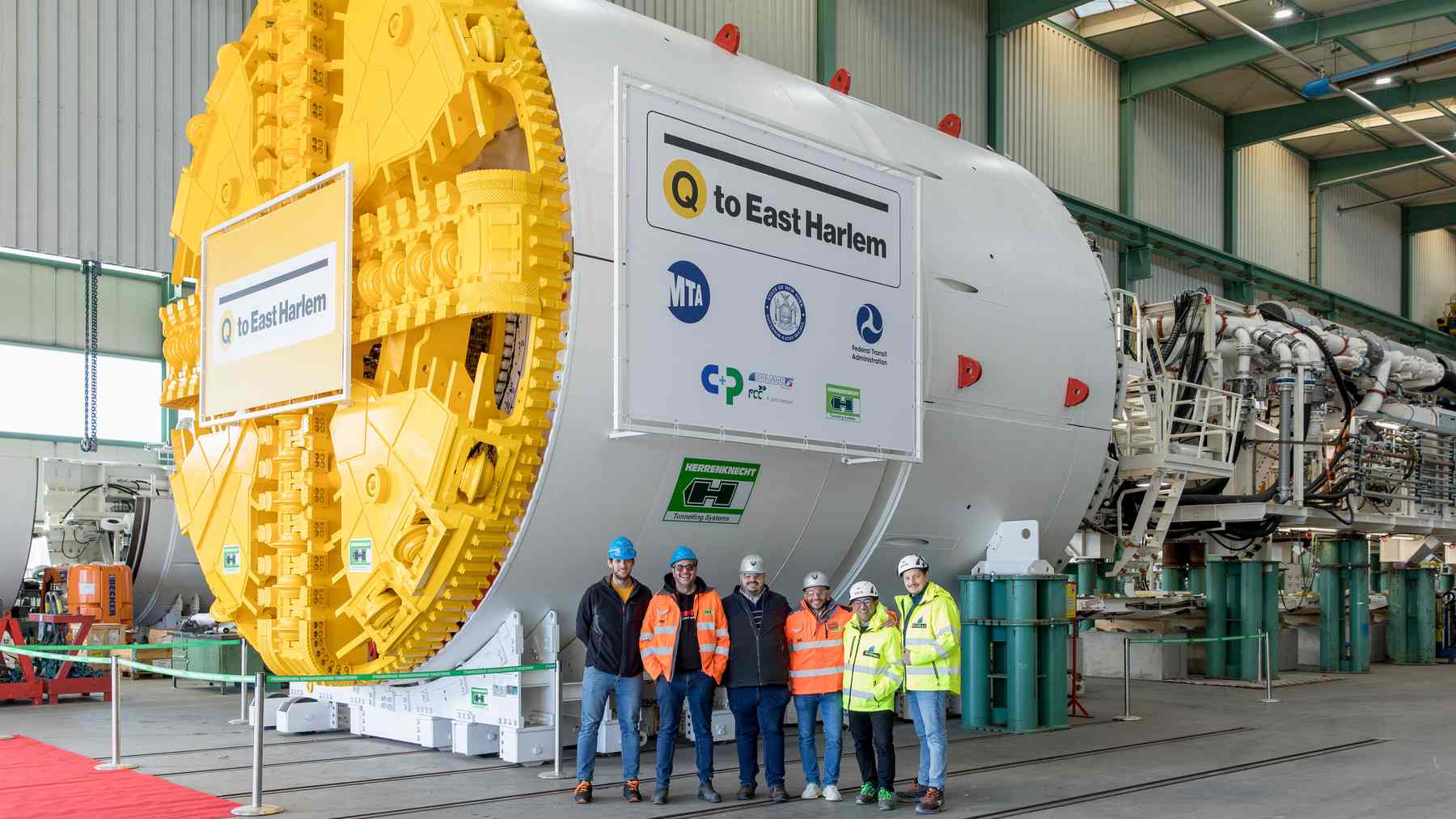
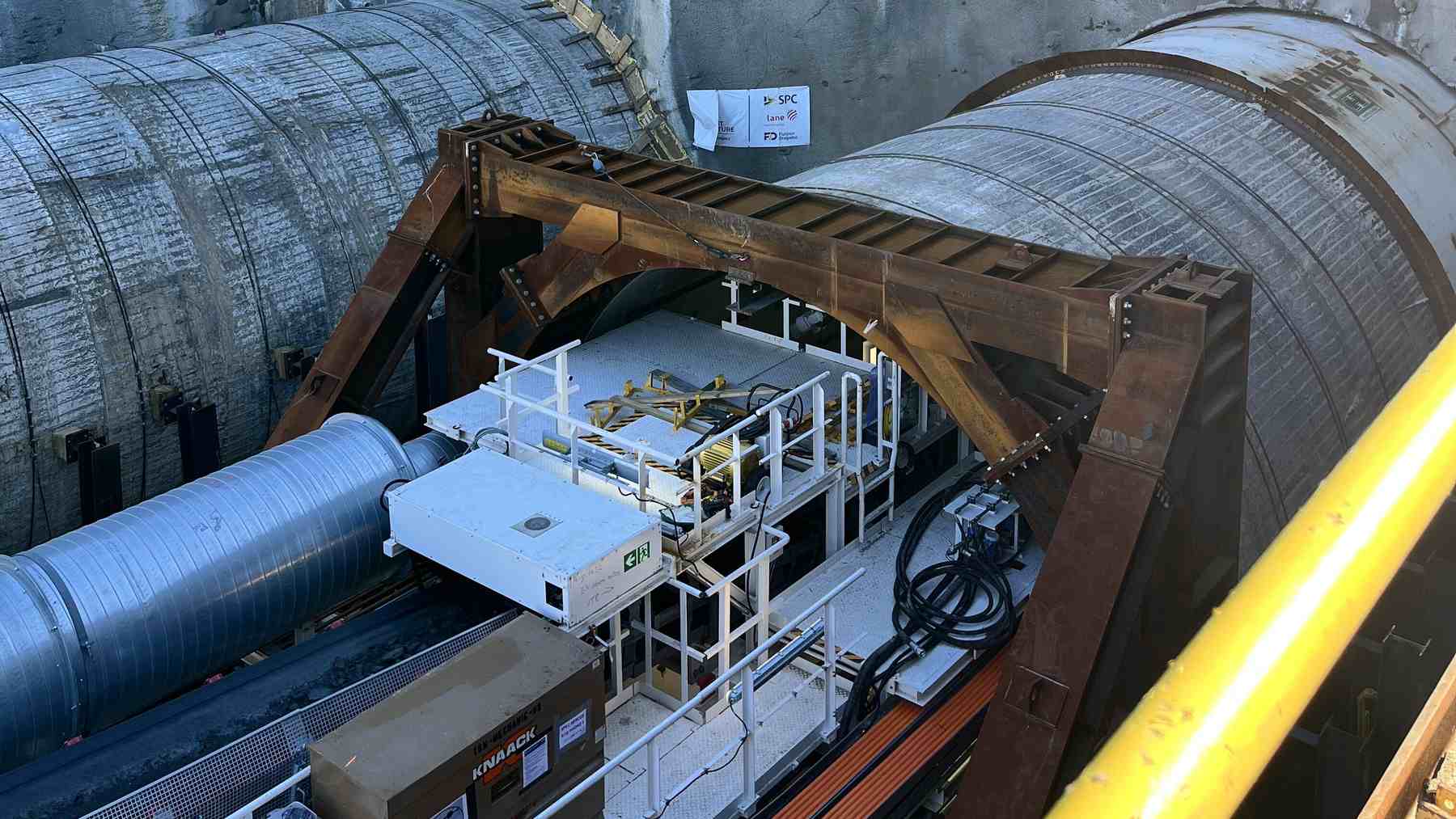
We first looked at this pair back in July, when they were still being bolted together in North Bergen. Each machine has a cutterhead 28 feet 8 inches across, and it drags a string of trailing gantries roughly 500 feet long behind it. GDC says the whole setup weighs more than 1,680 tons. Those gantries are where everything else lives, from the conveyor that hauls broken rock out of the tunnel to the stack of lining pieces waiting to go in.
Frankly, running both at the same time is the sensible call. GDC expects this whole stretch to take about a year, and nobody wants to sit through that twice.
These machines build the tunnel as they go
Both are single shield machines, which GDC says are designed for hard, dry rock. A single shield is basically a big steel tube with a spinning cutter on the front. The cutter grinds the rock face into chips, and inside the tube, the crew lines the fresh hole with concrete before the machine pushes forward off the ring it just built.
That lining comes in rings. GDC says each machine will set nearly 850 of them, using more than 5,000 precast concrete segments. According to Construction Dive, a small crane inside the shield hoists each segment up and workers bolt the ring together. GDC doesn’t say how many segments make up a single ring. If you divide one figure by the other, though, you get roughly six.
The spacing works out neatly too. Nearly 850 rings over 5,100 feet comes to about one ring every 6 feet. Double the totals for both tubes and you’re looking at around 1,700 rings and more than 10,000 pieces of concrete, every one of them lifted into place inside a machine sitting under a cliff. That’s a pretty serious jigsaw puzzle for a stretch of tunnel that’s roughly a mile long.
The first machine is about 400 feet in
By the time GDC put out its November 18 release, the northern machine had bored about 400 feet and installed more than 60 lining rings. That’s less than a tenth of its 5,100-foot drive.
If you’re thinking 400 feet in about six weeks sounds slow, I wouldn’t read too much into it yet. GDC’s one-year estimate already includes scheduled maintenance pauses. Starace also told the board he expects production to keep climbing all the way to Weehawken. The southern machine, meanwhile, has barely started.
“The second one is really just beginning,” Starace told the board, according to Construction Dive.
So why swap machines before the river?
You’d think a machine that’s already chewed through a mile of rock could just keep going. Why can’t it?
Because the ground changes. The Palisades are solid, dry rock, but GDC says the river stretch has mixed ground conditions. That’s tunnel-speak for a face that can be part rock and part soft, wet soil at the same time. A machine built to grind hard rock in the dry isn’t designed to hold back loose, waterlogged ground, so the plan has always been to bring in a different pair for the trip under the Hudson.
The handoff happens at the Hudson County Access Shaft, on the border of Weehawken and Hoboken. Both Palisades machines finish their 5,100 feet there and get pulled out. Then two new machines built for the river take over and dig the rest of the way to Manhattan. GDC’s release doesn’t say much about the river machines beyond the ground they’re built for.
It’s arguably the weirdest bit of the plan if you picture one machine going end to end. But it’s pretty much the same logic you’d use in your own garage: you don’t cut tile with a wood blade. That shaft isn’t ready yet, either. Crews there are 50 to 60 feet down so far and have hit rock, according to Construction Dive.
The handoff is about a year away
Schiavone Lane Dragados JV is building this stretch, which also includes the access shaft, with the Port Authority of New York and New Jersey managing delivery alongside GDC. Starace told the board he expects the shaft to be done, and both machines to punch through into it, roughly a year from now. The river machines aren’t due to start digging until 2028.
Until then, GDC’s November 18 count stands at about 400 feet and more than 60 rings for the northern machine, and the southern one has nearly 850 rings still ahead of it.
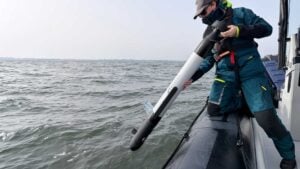 A 29-pound underwater drone 4.3 to 4.5 feet long and 4.7 inches thick is rated to 984 feet, carries a side-scan sonar plus either a magnetometer or a camera lit by 24,000 lumens, and one person can launch it to run as long as eight hours at up to 6 knotsIndustry · 6 hours ago
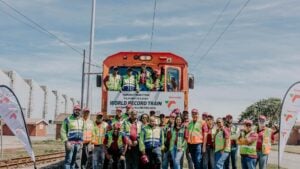 A 4.7-mile freight train of 696 empty ore cars ran 535 miles over two days with electric and diesel locomotives spread through it and synced by radio so they pulled and braked as one, and it topped a length record a 4.6-mile ore train had held for a quarter of a centuryIndustry · 20 hours ago
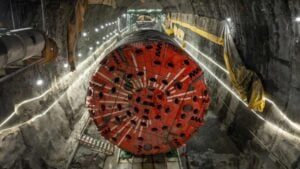 A 2,535-ton German boring machine 2,300 feet under the French Alps spent months inching through about 200 feet of coal seam, water and mud, then hit up to five concrete rings a day, roughly 33 feet of tunnel, before parking for scheduled maintenance until the new yearIndustry · 4 days ago