
- 3 MONTHS AGO · ENERGYA shop floor in Derby is building the fifth reactor for a British submarine class that has no hull yet, the first steel gets cut at Barrow in 2027, the site around it is doubling by a million square feet and 1,170 jobs, and Australia is part-paying for the concrete
- 2 MONTHS AGO · ENERGYA 63-ton curtain of 504 solar panels will hang from steel cables 14.3 feet above an open tank of sewage in Vienna and pull itself back in 30 seconds when hail rolls in, because crews have to see the scum on the surface, and the whole thing makes what 25 American homes use in a year
- 1 MONTH AGO · ENERGYRows of solar panels 9.2 feet tall fold 70 degrees apart to let the combine drive through an Austrian wheat field, and in a drought year the wheat between them came in 14 percent ahead of the open field next door, because a moving band of shade keeps the soil damp
- 4 WEEKS AGO · ENERGYFour 474-ton steam generators sailed around Spain and Portugal to reach a nuclear plant on the French coast, then crawled the last 22 miles by road over three days, an inch from a roadside cross, and will sit in storage for a year before the reactor shuts down to take them
- TODAY · THIS ARTICLETwo 220-ton steel catamarans carrying 600 solar panels each were towed around Spain from a shipyard in Vigo and now sit on the open sea outside the Port of Valencia’s breakwater, a one-megawatt plant that keeps its panels above the waves on two hulls
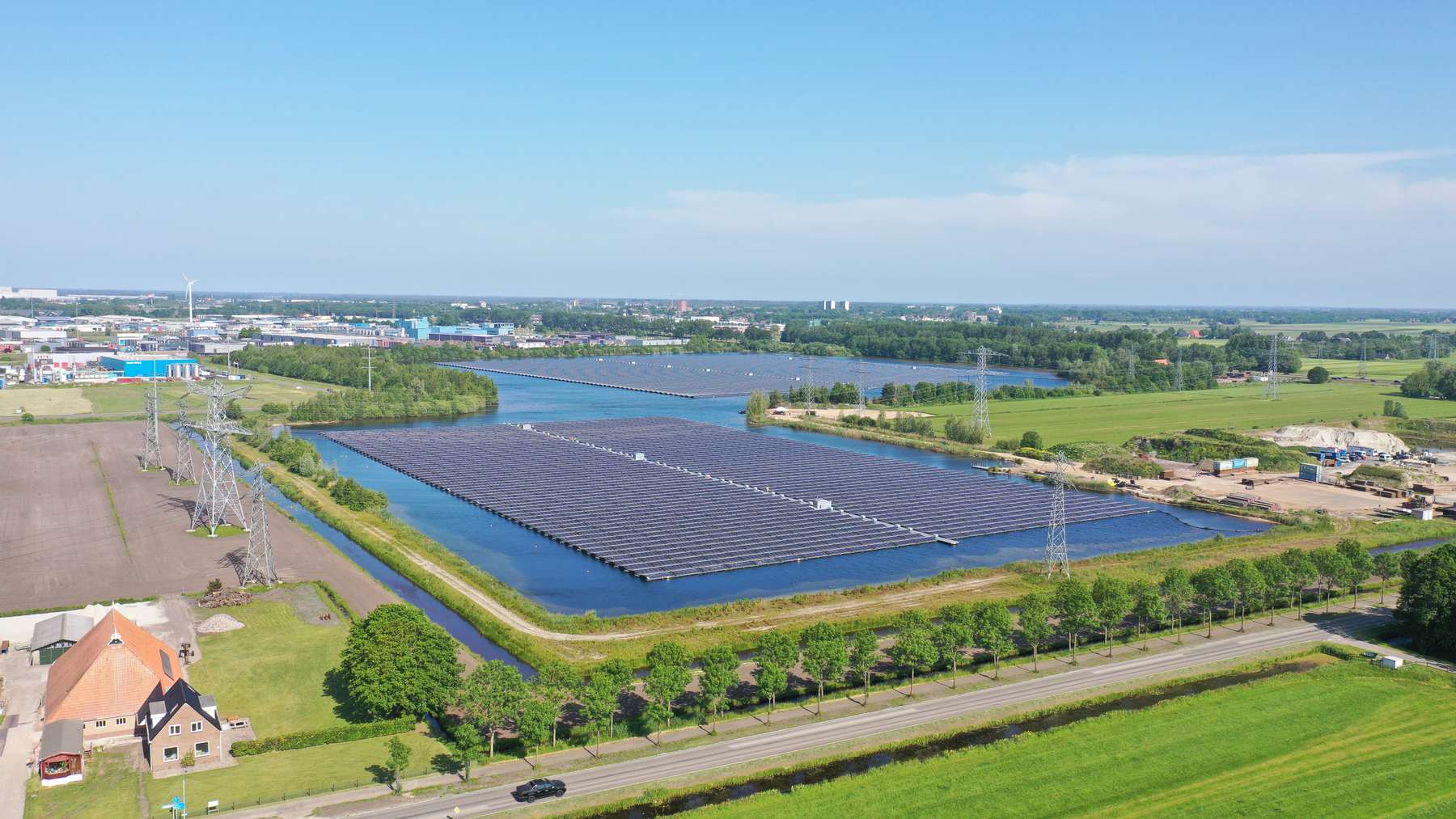
You’ve probably heard of floating solar panels. You can picture them sitting calmly on still water, soaking up the morning sun. You usually find them on reservoirs, irrigation ponds, flooded quarries, the occasional Bavarian lake. Freshwater, barely a ripple, and usually a shoreline close enough to run a cable to.
The ocean is a different animal. Salt eats everything, the swell never stops, and anything you moor out there has to survive the one bad storm a year that nobody put in the brochure.
So the interesting part of the news out of Valencia isn’t the megawatt. It’s where they put their panels.
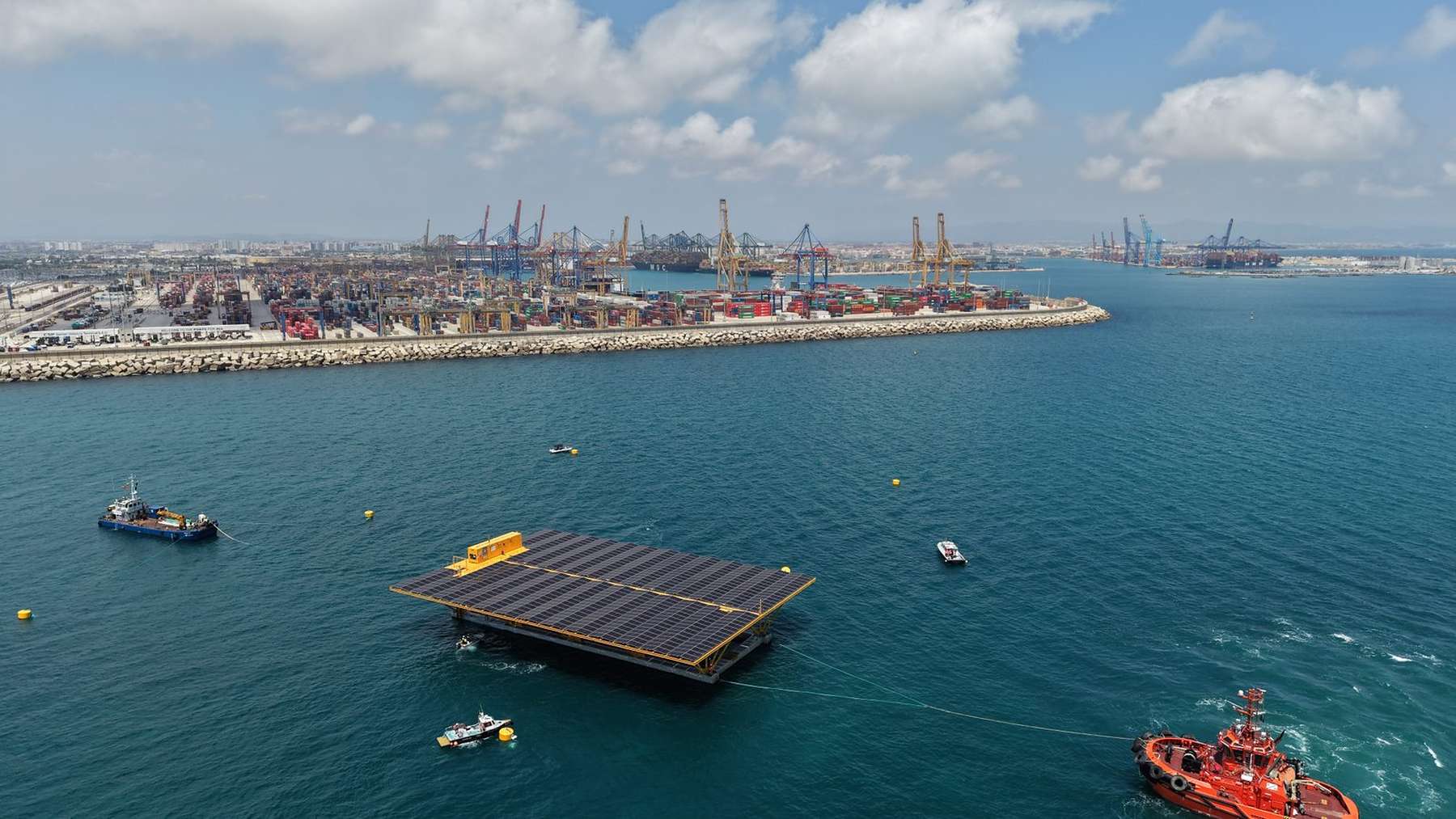
A Spanish startup called BlueNewables, backed by the utility Naturgy, has parked two 500-kilowatt solar platforms on the seaward side of the Port of Valencia’s southern breakwater. The Port Authority announced on October 1 that the second one was in place and the whole 1-megawatt setup had moved into its testing phase.
Both platforms were built at a shipyard in Vigo, on the opposite corner of Spain, and towed around the Iberian Peninsula to reach the site. Which is a long way to drag a solar farm, but you’ll see why in a minute.
Spanish port officials call it “offshore” solar. I’d call it “just past the rocks” solar, but it’s still salt water, and it still moves… But that’s apparently the point.
So what exactly is floating out there?
Each platform is a steel catamaran with a deck about 210 feet long and 135 feet wide, which works out to a little over 28,000 square feet of surface per unit. The deck carries 600 solar panels, so 1,200 across the pair, and a technical area with the inverters and transformers that turn what the panels make into something the port’s grid can take. Reporting from the Vigo shipyard put the second platform’s weight at a bit over 220 tons, and the two share the same design.
The catamaran shape isn’t a styling choice. Two hulls hold the deck up above the waterline, so the panels sit clear of the waves instead of bobbing in them, and a maintenance crew can walk around on a flat surface rather than a raft.
BlueNewables also says the platform uses the seawater underneath as a natural coolant, which, if it holds up in practice, is pretty handy. The panels on your roof lose efficiency as they get hot, and the Mediterranean in August is hot.
The panels themselves are bifacial. If you haven’t run into the term, it means they have cells on both faces, so the back of the panel picks up light bouncing off whatever is underneath it.
On a roof that’s not much. On open water it’s a lot of glare, and the company is counting on that reflected light to bump the output.
The two units are named Paiporta and Catarroja, after two towns outside Valencia that were hit hard by the floods that tore through the region two years ago this month. Paiporta went into the water at the San Enrique shipyard on May 18, according to BlueNewables, and the Port Authority logged its arrival in Valencia on July 13.
Catarroja followed in early August, with the shipyard using two cranes and a rising tide at the same time to walk it off the slipway, and the yard formally handed it over on September 4. Getting a 220-ton object from a slipway into the water without a drydock apparently takes about 15 people and some patience, and you don’t get a second try at it.
Why not put the panels on the dock instead?
Fair question. Valencia is one of the busiest container ports in Europe, and every square foot of quay is already doing something that pays better than a solar panel, as you’d expect. The port already gets north of 20 percent of its electricity from renewables and has gone as far as bolting panels to the side of one of its buildings, but a working harbor doesn’t have a spare field lying around, and the land behind it is city.
So BlueNewables’ pitch is basically that the water next to a port is a surface nobody’s fighting over. Same logic for islands, and for any coastline where the grid is weak and the land is spoken for. The company’s own description talks about places where land is scarce or expensive, grids are thin, or the power system is an island one, and a Spanish port with a city on one side and the sea on the other checks most of those boxes.
We’ve seen this “put it somewhere weird” approach work before. A German operator stood 2,600 panels upright on a Bavarian lake because a law capped how much water they could shade, and a town utility hung 64 of them on a public pool fence facing the parking lot.
Valencia is the same idea with a lot more salt and a lot more steel. Everyone involved is careful to call it a pre-commercial demonstrator, and you should read it that way too.
This is a test, not a power plant yet
The money comes through a program called RENMARINAS VALENCIAPORT, funded by Spain’s energy agency IDAE with European NextGenerationEU recovery cash. The Port Authority built the test area and the grid connection, and says that infrastructure will stay put for whatever marine energy demonstrator comes next. BlueNewables brought the platforms.
Naturgy, through its innovation arm, is in for two years of shared data: how much the thing produces, what breaks, what maintenance costs, and what the port learns about plugging a floating generator into a harbor grid. That’s where the actual value of the project is, and you can’t see any of it from the beach.
The budget for the two platforms was about €4 million, call it $4.5 million and change, according to Navalia, the Vigo shipbuilding trade show, and the shipyard’s owner Marina Meridional projected the pair would generate around 1,500 megawatt-hours a year, enough for about 500 Spanish households by its math. Is 1,500 megawatt-hours good? For a 1-megawatt plant, it’s fine.
I ran the numbers, and it means the platforms would average about 17 percent of their nameplate output across every hour of the year, nights included, which is a normal figure for solar at that latitude. Frankly I’d expect the bifacial panels and the cooling to help a little, and the salt spray and the occasional seagull to hurt a little, and we’ll find out which wins.
So what don’t we know yet?
Quite a bit, and I looked. There’s no kilowatt-hour figure from the water yet, which is reasonable when you consider the second platform has only been in place since the start of October.
The cost per kilowatt-hour hasn’t been published either, and for a demonstrator that’s the number that decides whether anyone builds a third one. I’d also like to see how the mooring handled the fall weather so far, since that’s arguably the thing you’d most want to know before buying one of these for a port in, say, Florida, and that data isn’t public.
The Port Authority’s own release says the results will be collected as operation progresses, which is a polite way of saying check back in a year. That’s fair. A demonstrator that announced all its answers in month one is the kind I’d be skeptical of.
Bernardino Couñago, BlueNewables’ co-founder and CEO, called the first launch in May “a very important milestone in the roadmap of our technology.” The company hasn’t named a second site, and I’d be a little surprised if it did before the Valencia numbers come in. The two platforms were shown to delegates of the ENERMAR marine energy conference, which the Port Authority hosted from September 30 to October 2, and Valenciaport declared the demonstrator fully installed and in testing on October 1, 2026.
 A reactor built from 664 two-inch uranium cubes hung on wires in heavy water under a German castle was Heisenberg’s last shot at a chain reaction, and two of the surviving cubes now show it needed about twice the uranium and heavy water it held, more of both than Nazi Germany hadEnergy · 12 hours ago
 A 66-foot-deep gravel pit in Finland just started taking in about 100 million gallons of tap water, and once a nine-acre lid goes on top, it’s meant to hold enough summer heat at up to 194°F to cover as much as nearly a quarter of the town’s yearly heat demandEnergy · 14 hours ago
 A 375,000-pound turbine now spins inside a Tennessee dam in place of one that ran for more than 80 years, and a federal watchdog just found that 196 of the 240 welds on the ring guiding water out of it failed on a job where some welders weren’t qualifiedEnergy · 17 hours ago