
If you have ever taken an Amtrak or NJ Transit train into Penn Station from the Jersey side, you rode through one of two single-track tubes that opened in 1910. Amtrak has said that closing one of them for a year of repairs would cut capacity across the Hudson by 75%. That is the reason a replacement exists on paper at all.
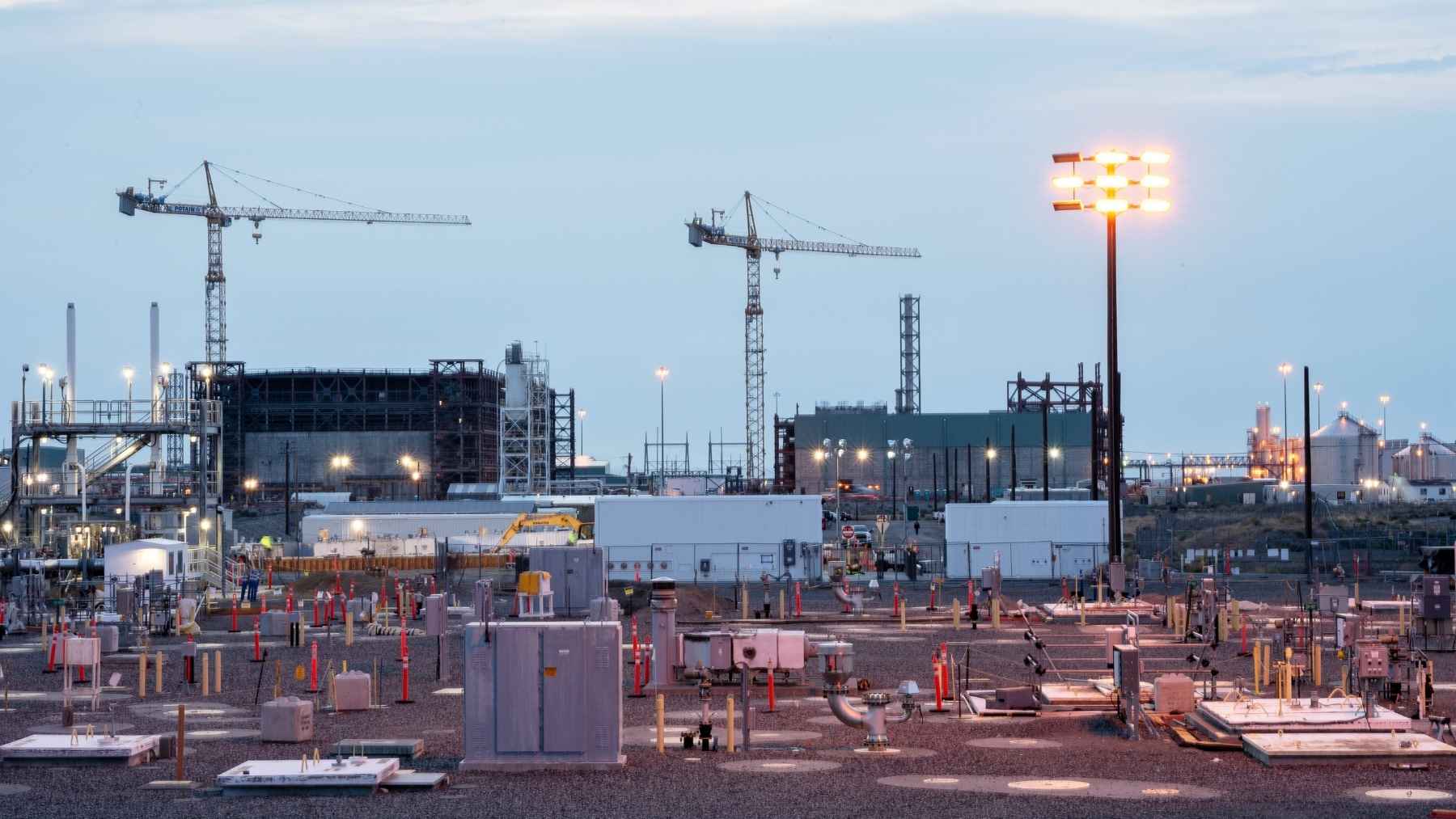
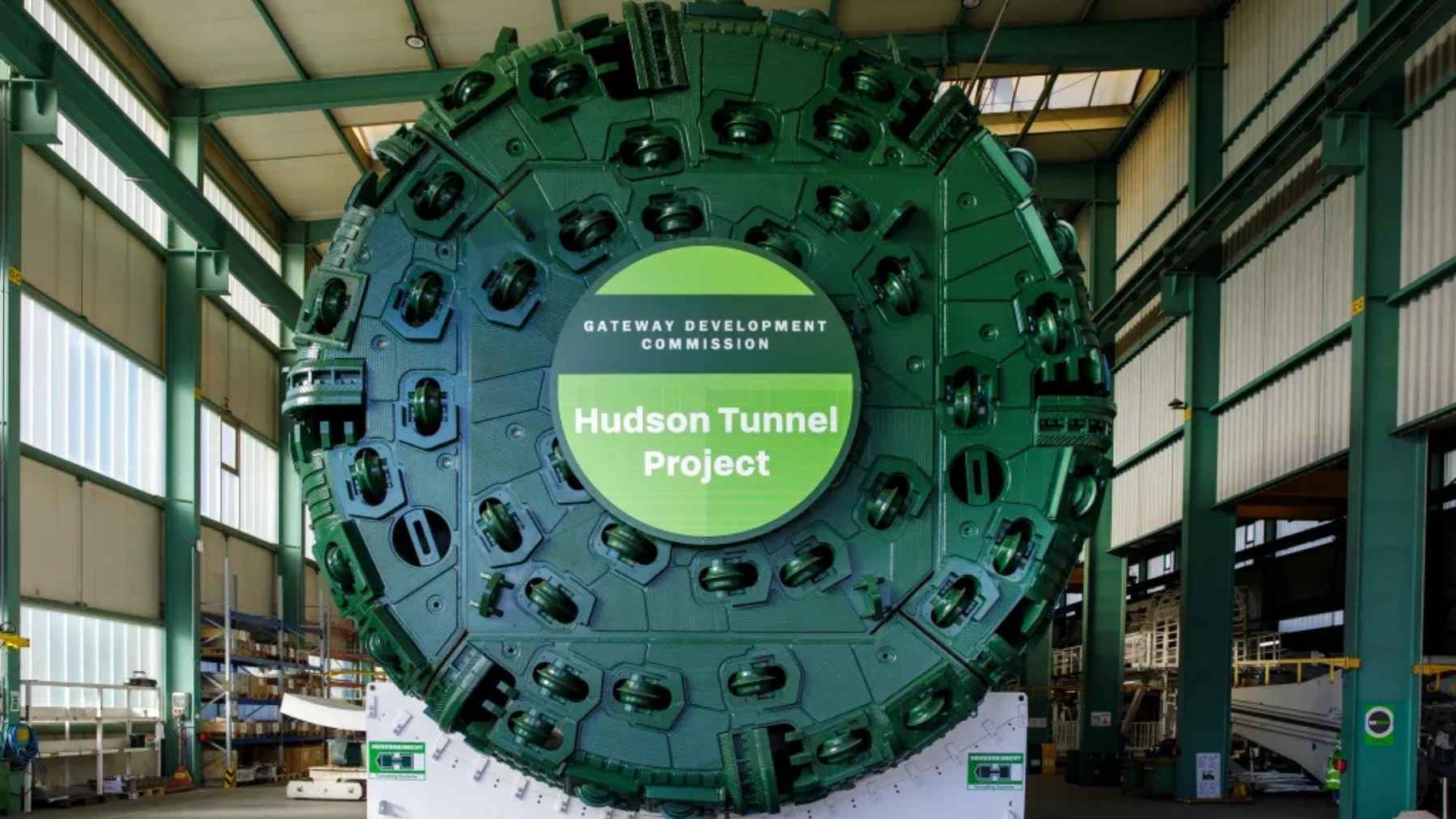
The replacement is now two German boring machines being bolted together at the bottom of a trench off Tonnelle Avenue in North Bergen. They have been delivered. They are not digging yet, and the Gateway Development Commission has not announced a date.
On Wednesday its board spent $88 million on a problem that has nothing to do with rock. Crews are going to pull roughly 500 wooden posts out of the bottom of the Hudson River, one at a time. They run about 50 feet long, and some of them are tree trunks.
Those posts are not in the way of the machines in North Bergen. They are in the way of a second pair of machines that will start boring under the river in 2028.
Pier 68 burned in 1964 and left 500 posts in the mud
The board approved the money on July 8. According to ROI-NJ, the $88 million is a change order to a contract Weeks Marine already holds, and it bolts pile removal onto a job that until now was about mixing lightweight concrete into Hudson mud to firm it up.
Pier 68 was built in the late 1800s on the Manhattan side as a freight pier for the Delaware, Lackawanna and Western Railroad, the same company that owned Hoboken Terminal across the water. A fire wrecked the pier in 1964 and the structure came down. The piles holding it up stayed where they were.
Engineers spotted them during preliminary design and flagged them as a boring hazard. James Starace, Gateway’s chief of program delivery, told nj.com that a boring machine handles a few wooden piles without complaint. The problem is density, and Pier 68 left a lot of them in one place.
So the plan is to push the temporary cofferdam about 265 feet further east toward Manhattan, survey the riverbed, and start extracting. Piles that break on the way up get grouted in place. Then crews fill the holes and firm up the soil around whatever is left down there.
Weeks Marine ran a test in 2025 pulling a few of them to see what the work actually involves, which is where the “old trees” observation comes from. Extraction starts late this year. It has to be finished before the river machines show up in 2028.
One mile of rock, and cutters that wear out in two days
The machines waiting in North Bergen belong to the Palisades Tunnel Project, the first mile of the crossing and the only stretch on dry land. Per GDC’s project page, each is a single-shield Herrenknecht borer weighing 1,680 tons, with a cutterhead 28 feet 8 inches across and gantries trailing about 500 feet behind it.
They bore two parallel tubes roughly 5,100 feet long, connect them with six cross passages, and install the concrete liner as they advance. The finished inside diameter is 25 feet 2 inches. Expected pace is 30 feet a day, which puts the mile at about a year.
What they are cutting into is the Palisades Sill, the diabase ridge you see from the West Side Highway. Gateway chief engineer Hamed Nejad told trade outlet Daily Commercial News the rock averages around 35,000 psi and is abrasive enough that crews may need to change worn cutters every two days rather than once a week. Each cutterhead carries about 59 cutter wheels, per NJBIZ, turned by a main drive of roughly 175 to 180 tons and 11 hydraulic motors.
Nejad has described each machine as a self-contained underground factory, and the description holds up. About 40 people work inside one. Probes drill 150 feet ahead of the cutterhead looking for water, because a fault sits somewhere on the route and nobody wants to meet it by surprise.
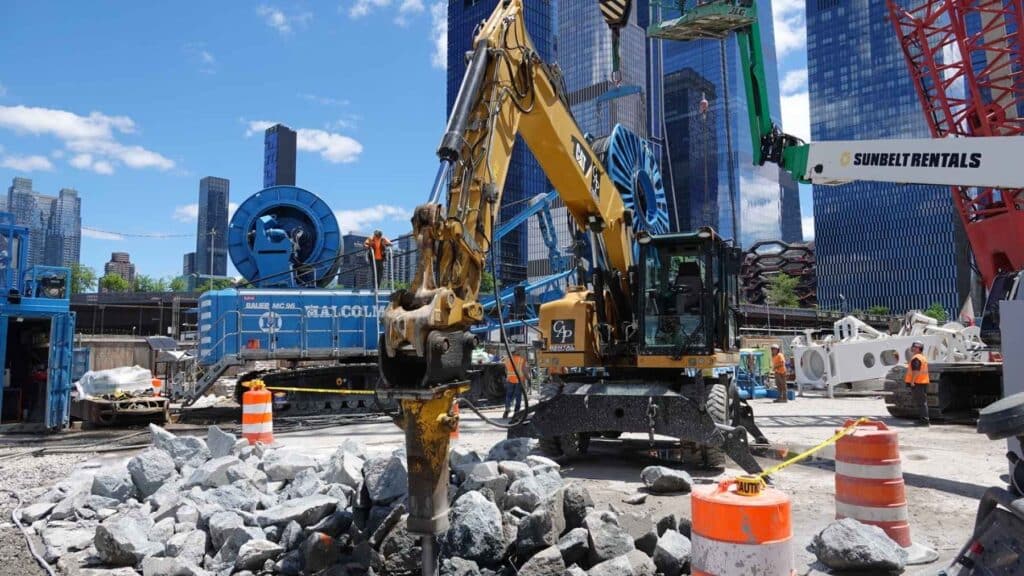
Assembly happens inside a launch box: a 600-foot trench about 80 feet deep, walls braced with soldier piles and lagging and sprayed with shotcrete, with a 300-ton crane lowering the heavy pieces in. Sydney went the other way and built its 4,350-ton borer inside a cavern dug under a cricket ground. Both approaches solve the same problem, which is that these things do not fit on any road.
The tunnels start about 80 feet below street level and drop to roughly 280 feet under the ridge.
So why can’t those machines keep going under the river?
Nejad says he fields that question constantly. The Palisades is hard rock. The Hudson is not.
Under the river the tubes pass through soft soil, rock, and ground that has already been treated by the stabilization crews. A borer set up for 35,000-psi diabase is the wrong machine for that, the same way DC Water is running two different borers under the Potomac because the geology changes along the route.
So the Palisades pair stops in Weehawken and gets lifted out through the Hudson County Access Shaft. Two purpose-built machines, designed for mixed ground, go in behind them.
That contract went to a Traylor Bros., Walsh Construction and Skanska joint venture on April 27 for $1.29 billion, per Engineering News-Record. It covers two tubes of roughly 7,250 feet each, running from Weehawken to a shaft at 12th Avenue on Manhattan’s West Side, plus nine cross passages.
The riverbed work exists to hand those machines a clean run. Crews have been mixing concrete into a 1,200-foot section of the bed since 2024, working east from mid-river, and that job is now more than 75% done. It cannot be finished until Pier 68’s legs come out.
The machines have been ready longer than the money has
Nothing holding this up is mechanical. The first borer passed its factory acceptance test in September 2025, the second in early December, and Herrenknecht shipped both without slipping.
The U.S. Department of Transportation suspended the project’s federal grant payments on September 30, 2025. President Trump said the funding was terminated. GDC ran on a line of credit until it ran out.
On February 6 the commission announced it would begin suspending work at 5 p.m. New Jersey Gov. Mikie Sherrill warned that “1,000 workers will immediately lose their jobs.” Judge Jeannette A. Vargas issued a temporary restraining order that evening, money started moving again, and by March GDC said every suspended activity had restarted.
On June 29 Vargas made it permanent, vacating the suspension and barring the department from relying on it again. As Engineering News-Record reported, she wrote that the suspension “skipped right to payment suspension” without any finding that GDC had broken a law. The commission’s separate breach-of-contract claim over what the shutdown cost is still open.
A launch date still is not public. Starace told ENR in April that none had been set and the goal was to start “as soon as possible.” GDC’s project page, updated in mid-June, still says boring launches from Tonnelle Avenue sometime in 2026.
Wednesday’s meeting fell on the second anniversary of the $6.88 billion federal grant agreement, the largest transit grant ever awarded. Seven construction packages are under contract. One is finished: the Routes 1 and 9 bridge in North Bergen, built over the future tunnel mouth. GDC CEO Tom Prendergast said a project this size “brings new challenges every day.”
The twins don’t have names yet
Boring machines get named, and crews take it seriously. Washington has Mary and Emily, after two sisters who tried to escape slavery up the Potomac in 1848. Sydney has Patyegarang and Barangaroo. Montreal has Lisette.
The Hudson pair still had no nickname as of ENR’s report last August, and none has surfaced since. They have serial numbers instead. Lisette, the 2,000-ton borer now digging under Montreal, carries S1423, and her project director told La Presse that made her the 1,423rd machine of her kind out of the same German factory.
Above all of it, the 1910 tubes keep moving their 24 trains an hour with the salt corrosion Sandy left behind, and they will keep doing it until the new crossing opens in 2035. Rehabilitating the old pair runs to 2038.
The one part that will not go according to plan is already accounted for. Some of those 500 posts will snap as the crane hauls on them. Those get grouted where they lie, and in 2028 a machine built in Germany will grind straight through what is left of a freight pier that has been gone for 62 years.
 jason ROOKIE3 months ago