
Knocking down a nuclear building looks like the satisfying half of the atomic cleanup business. Excavators roll up, walls drop, somebody films it, and a chunk of Cold War history turns into gravel. But if you’ve ever wondered where the years and the money actually go on these jobs, the Department of Energy published a pretty good answer on August 18, and the wrecking machines aren’t anywhere in it.
The building is 3042, in the central campus of Oak Ridge National Laboratory in Tennessee, and it housed the Oak Ridge Research Reactor from 1958 until 1987. The reactor itself is long gone. Crews cut the last piece of its 32-foot vessel out of the pool back in 2024 and shipped it off inside a 32,000-pound protective cask. The building’s still standing, though, and DOE doesn’t expect the excavators until 2029.
So what have people in hazmat suits been doing in there since the reactor left?
Stripping the place, basically. The August update from DOE’s Office of Environmental Management puts numbers on the haul so far: around 300,000 pounds of lead shielding, 16,000 linear feet of contaminated pipe, 160-plus waste containers and six gloveboxes, all removed since the vessel came out. That’s 150 tons of lead alone, carried out of one mid-century laboratory building. Steven Reed, project manager at cleanup contractor UCOR, said removing the reactor “opened the door to the next phase of cleanup,” and it’s been running quietly for two years now.
What’s deactivation, exactly?
Demolition is machines working from the outside. Deactivation is people working on the inside, and it’s how a contaminated building gets made safe enough to smash. You can’t just fold a reactor facility in on itself while its pipes still hold residue from decades of nuclear work, so crews vent, purge, drain and inspect every run before it’s cut out and boxed. The 16,000 feet DOE counted is what’s already left the building, and the upper floors still have more waiting.
Then there’s the lead. Lead soaks up gamma radiation better than just about anything you can stack by hand, so mid-century nuclear labs used it the way ordinary buildings use drywall. When crews pulled the shielding around the reactor pool in 2024, 20 workers boxed up 157,000 contaminated bricks. Frankly, I find that number more impressive than the reactor lift, because a crane did the lift and people did the bricks.
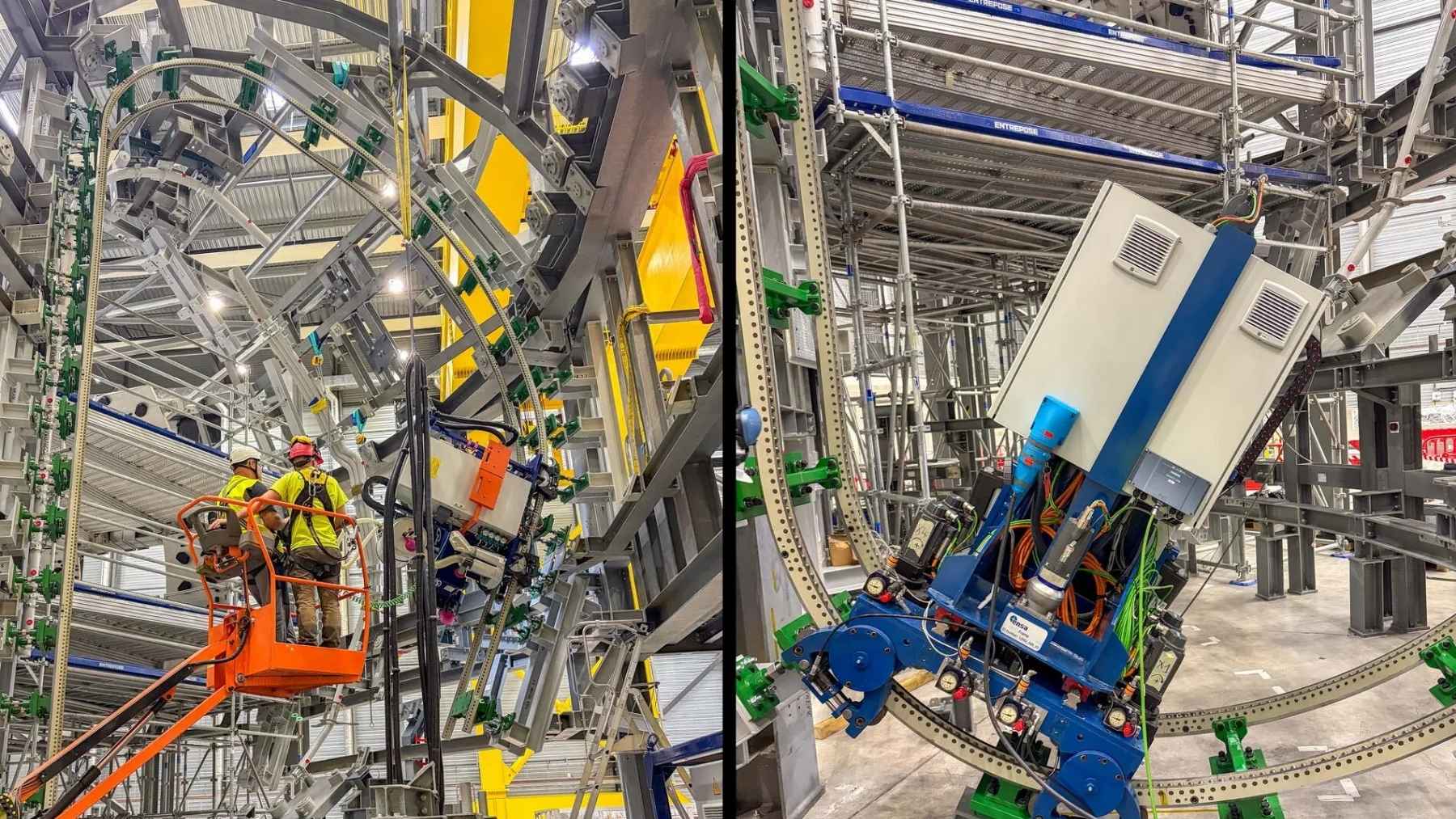
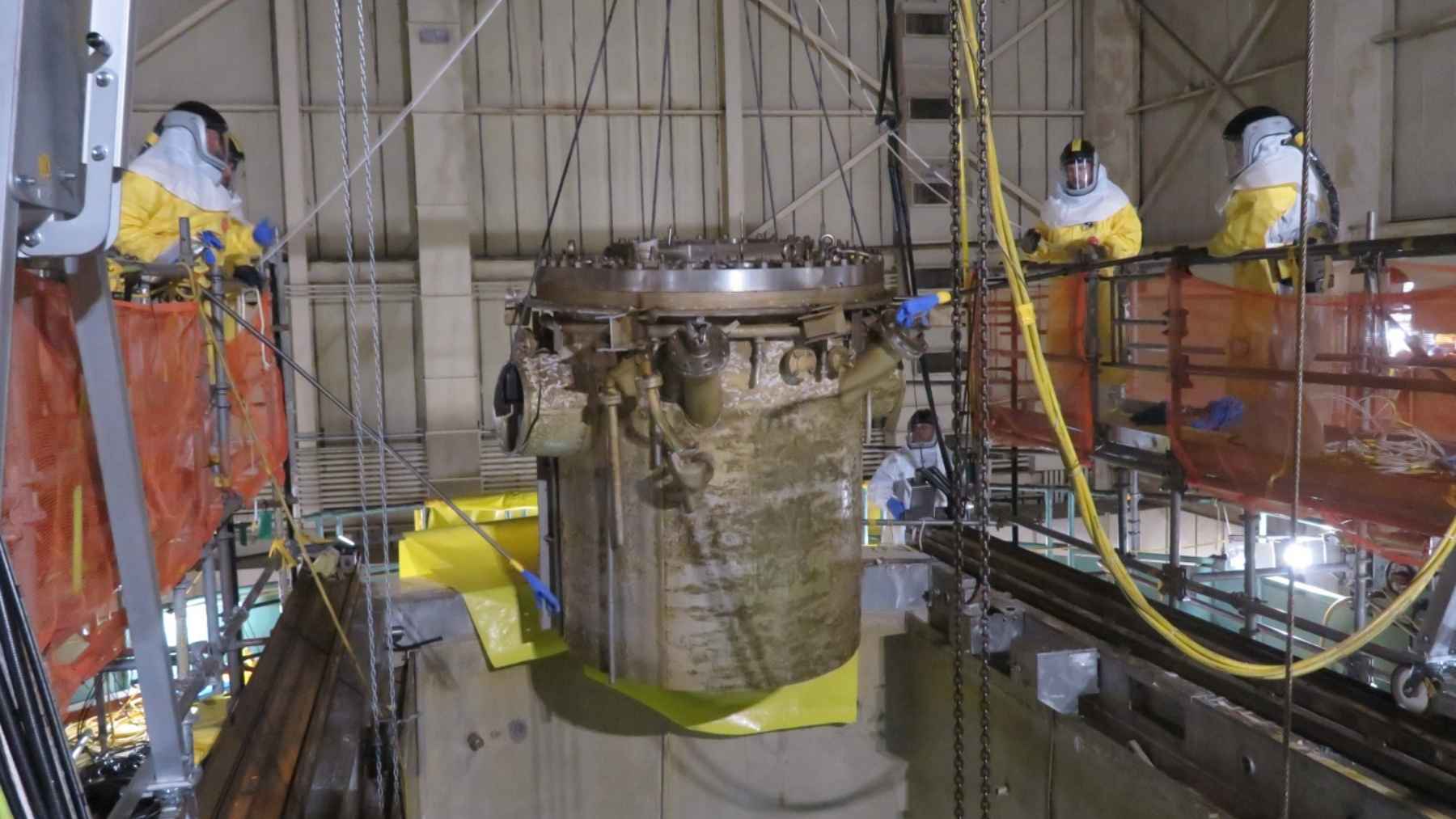
The gloveboxes are gone too. A glovebox is essentially a sealed cabinet with a window and arm-length rubber gloves built into the front, so a technician can handle radioactive material without ever sharing air with it. Building 3042 had six. And the heavy gear keeps coming out of the basement piece by piece: a DOE photo from the August update shows the eighth of 13 process tanks being lifted clear.
DOE is working the building from the bottom up, which isn’t the order I would’ve guessed. Crews expect to clear the last of the radiologically contaminated equipment out of the basement this year, then head upstairs for the rest of the pipe and equipment.
So how did they get the reactor out?
A quick rewind, because the vessel removal explains the state of the building today, and it was a saga on its own. When the Oak Ridge Research Reactor shut down in 1987 after nearly three decades of neutron research and isotope production, it left a 32-foot vessel standing in a 25-foot-deep pool. UCOR started at the top in the fall of 2023, cutting the upper section out in pieces sized by how radioactive each one was. Then came the water. Workers filtered and pumped 127,000 gallons of pool water and sediment out of the way to reach the lower section, and here’s where it gets uncomfortable: the radiation dose rates climbed as the pool level dropped. Water’s terrific shielding, which is why spent fuel sits in pools for years, so every foot the crews drained thinned the buffer between them and the irradiated metal below. In August 2024, a 72-inch diamond wire saw cut the last pieces anchoring the lower vessel to the pool floor, and a 20-ton overhead crane lifted it out and into that 32,000-pound cask.
Where did the vessel actually end up? DOE only says it shipped offsite for disposal. For what it’s worth, when the lab’s smaller Low Intensity Test Reactor came out of the ground nearby, its 37,600-pound vessel rode a truck to a disposal facility in Clive, Utah, so it’s safe to assume this one took a similar trip. The department hasn’t said.
And this wasn’t even the first reactor pulled from this stretch of the campus. It was the third, after the Bulk Shielding Reactor and the Low Intensity Test Reactor. Oak Ridge is basically working its way down the block, and this building’s next.
The basement gets filled solid before anything falls
Once deactivation wraps, crews will pump a concrete-like fill through the whole lower level. That’ll sound like a strange final touch until you think about what comes next. The heavy machines that eventually chew through a building this size will be working right on top of that basement, and hollow space under tracked equipment isn’t a great combination, so DOE’s turning the bottom floor into a solid foundation before the first wall moves.
If that timeline sounds glacial to you, welcome to federal decommissioning. This job runs alongside a stack of other cleanup projects reshaping ORNL’s central campus, while a few buildings away the same lab’s still very much in the isotope business, making the californium that wakes up new American reactors. The campus has stranger chores on its list too, like old fuel rods, an argon room, a Sharpie and some tape. And the commercial world’s running the same playbook on a bigger scale: San Onofre’s twin domes start coming down in California early next year.
DOE’s August 18 update leaves the schedule like this: crews expect the basement cleared of contaminated equipment by the end of this year, the upper floors come next, and Building 3042’s set to start coming down in 2029.