
A vehicle built by construction equipment manufacturer JCB has set a new land speed record for a hydrogen-powered vehicle. The JCB Hydromax was clocked at a speed of 406.320 miles per hour, more than doubling the previous hydrogen-powered record of 185.5 mph.
The speed record was set over a flying mile on on the Bonneville Salt Flats in Utah and driven by Wing Commander Andy Green OBE. Green has set a number of land speed records, including the overall record of 763.035 mph which he set while driving the ThrustSSC in 1997. Green also set a diesel-powered world record in a different JCB-manufactured vehicle back in 2006.
Speaking after setting the record, Green said: “Bonneville is the spiritual home of the World Land Speed Record, and Hydromax has just written itself into that history. The car was magnificent, stable, strong and fast. To set a world record with hydrogen, twenty years after Dieselmax, is a privilege.”
As with all land speed records, the JCB Hydromax’s effort is in the process of being ratified by the FIA. In a statement, FIA president H.E. Mohammed Ben Sulayem praised JCB’s achievement, along with what it means for mobility on the whole. He said:
“This is a truly historic milestone for motorsport showcasing how innovation, performance, speed, and sustainability can go hand in hand.
Motorsport has always been a catalyst for technological progress pushing the boundaries of what is possible. This new land speed record continues this tradition, showcasing the potential of hydrogen combustion for the future of sustainable mobility. “
The record shines a bit of a spotlight on hydrogen power, which has long been considered a potential alternative to fossil fuel. JCB chairman Lord Bamford was, as you may expect, proud of his company’s achievement and seems enthusiastic about the prospect of hydrogen as a fuel source saying: “That is the point of JCB Hydromax: it shows hydrogen works, and it works today at the highest level with zero emissions.”
But just how viable is hydrogen exactly?
Hydrogen power is still a thing
Hydrogen power was seen as the next big thing for quite a while. Before the current generation of EVs, many were looking towards the hydrogen fuel cell as an alternative to fossil-fuel powered vehicles. Now the hydrogen fuel cell has existed for several years, but the vehicle format hasn’t really taken off.
There are a few reasons for this, but the two main ones are hydrogen supply and infrastructure. While hydrogen is the most abundant element in the universe, getting a large amount of it isn’t exactly straightforward. Along with being the most abundant, it’s also the lightest element. So it tends to float away into the upper atmosphere when it leaks out.
Producing hydrogen currently involves using large amounts of electricity to split it off from methane. You may be thinking “isn’t a good amount of water made out of hydrogen?” and the answer is yes. But breaking the chemical bonds between hydrogen and oxygen in water requires so much power that it isn’t really worth it. So as things stand, hydrogen is difficult to produce in large quantities, only refined in certain locations, and quite expensive by the time it gets to a refueling station.
Natural hydrogen can be found underground, but such wells are rare and drilling for hydrogen is a relatively recent thing.
Those refueling stations are another issue. Basically, there aren’t many of them outside of California. Which means if you buy a hydrogen-powered car and don’t live in LA, you’re not going to be able to fill up its fuel tank easily.
Solutions have been floated including repurposing natural gas piping, which is being phased out in some states, to deliver the gas to refueling locations. But it’s pretty clear that infrastructure is a long way away from where it needs to be.
All of these problems are solvable. Especially if nuclear fusion does become viable in the next decade or so. This will provide a huge amount of cheap power, and may even make splitting hydrogen off from water worth the energy costs. But as things stand, we’re a long way away from hydrogen-powered vehicles being practical in the US and sales of hydrogen vehicles reflect that.
What is driving a hydrogen vehicle like?
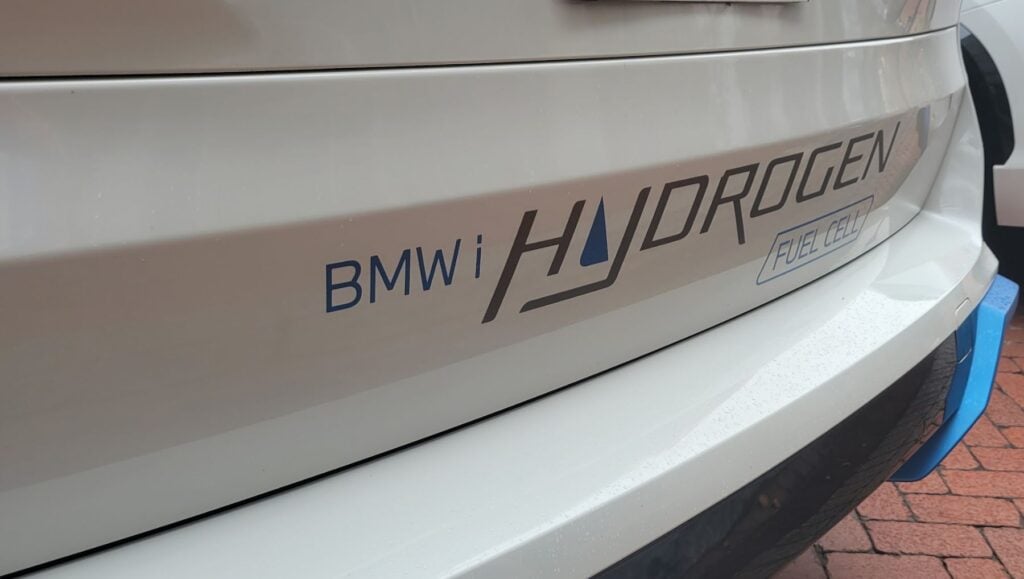
You may wonder what driving a hydrogen-powered vehicle is like. Well, now seems a perfect time to point out that there are two kinds of hydrogen-powered car. One uses direct combustion, where hydrogen is pumped into an engine in pretty much the same way gasoline is and ignited. And then you have the hydrogen fuel cell, where hydrogen is used to charge a battery which then powers an electric motor. The latter is much more common.
A hydrogen fuel cell vehicle essentially drives like an EV. You get the same lightning quick acceleration and smooth acceleration curve. Regenerative braking is usually present too, as putting charge back into the battery saves on fuel. The only difference is the refuelling process, which involves attaching a large hose and filling a tank up with hydrogen gas. This takes minutes and is much faster than any current charging method.
Gasoline will eventually run out, and direct hydrogen combustion is a potential way classic cars could stay on the road decades from now. While there are issues and a significant degree of complexity is involved, it is possible to convert ICE engines to run on hydrogen. Many ICE evangelists may prefer the feeling of purpose built hydrogen engines to EVs or hydrogen fuel cell vehicles too.
Again, hydrogen supply and infrastructure seems to be the main sticking point. But as the new land speed record shows, companies have not abandoned hydrogen as a concept. The technology behind it will continue to develop, and is doing the job to some degree at the cutting edge. Now we just have to wait until it becomes viable in daily life.
 @andygoddard ROOKIE2 months ago