
When most people picture a military drone taking off, they picture something pretty dry. A catapult on a ship’s deck, a launcher bolted to the back of a truck, or a soldier lobbing a quadcopter into the air like a paper airplane.
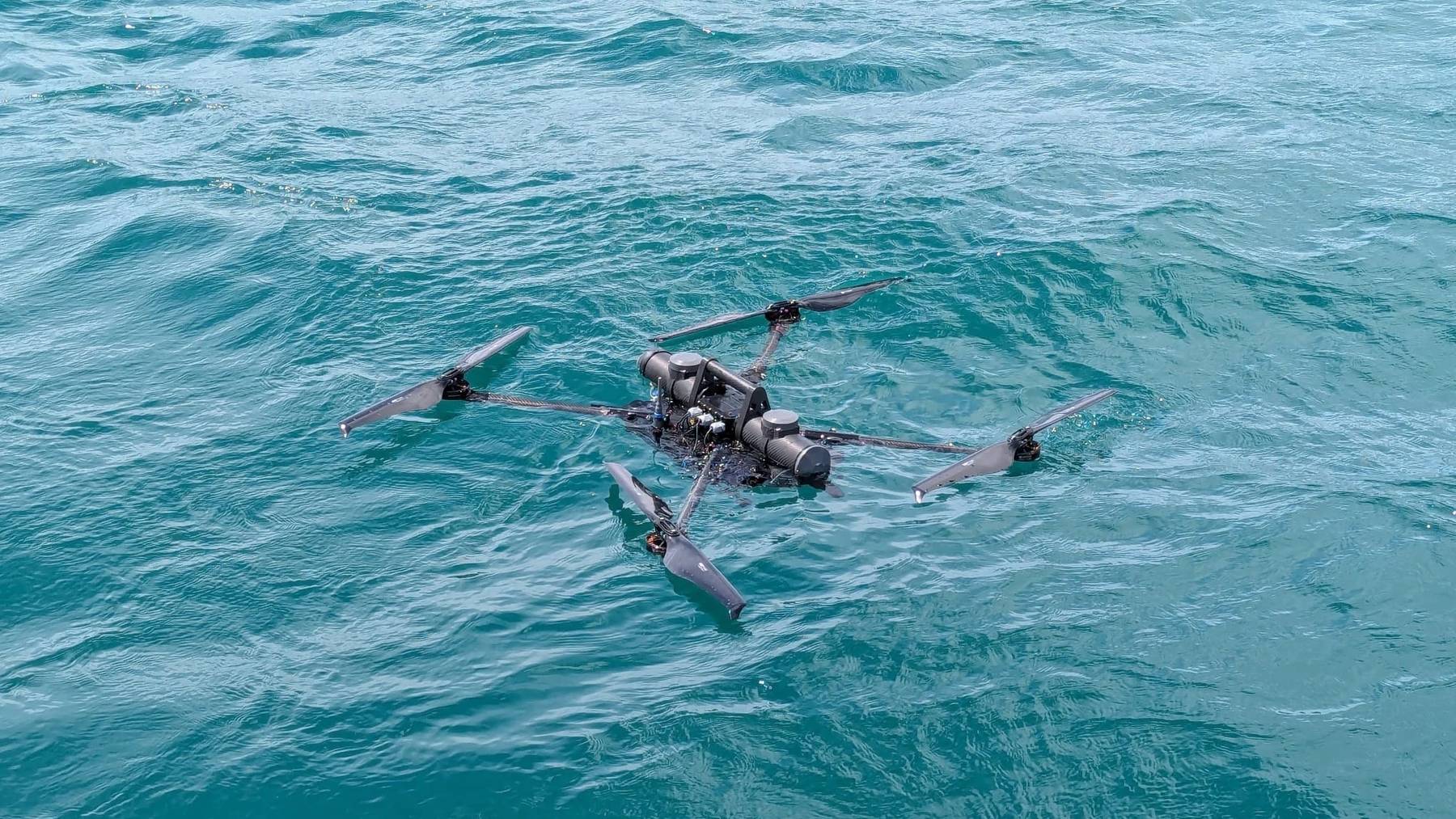
But a pair of drones that went through their paces off California last month started out about as far from dry land as you can get. Divers released both of them underwater. One climbed to the surface and took off as an aircraft. The other stayed down below and picked up information from the first one about a target on the surface.
The aircraft is called CADDIS, and it comes from SubSea Craft, a maritime tech company based in the UK. The underwater drone is Arowana, built by Naval Systems Inc. (NSI) and its partner Dragonfish Technical Solutions. According to SubSea Craft’s November 4 release, the demonstrations ran October 5 to 8 as part of Maritime Big Play Pacific, a multinational exercise run by the AUKUS partners (Australia, the UK and the US).
So why would anyone launch an aircraft from underwater?
The short answer is that whatever launches a drone usually gives itself away. A ship or a boat has to sit on the surface to do it, and anything sitting on the surface can be spotted. If the launch starts below the waterline, there’s nothing up top to point at until the aircraft pops out.
That’s pretty much how SubSea Craft pitches CADDIS. Its product page describes a subsurface-launched aircraft that handles surveillance and other jobs above the water while whatever launched it stays hidden below, and it says the drone doesn’t need a purpose-built launcher. The release makes a similar case for the whole setup: if you start underwater, you’re leaning a lot less on conventional launches from the surface.
So what did the divers put in the water?
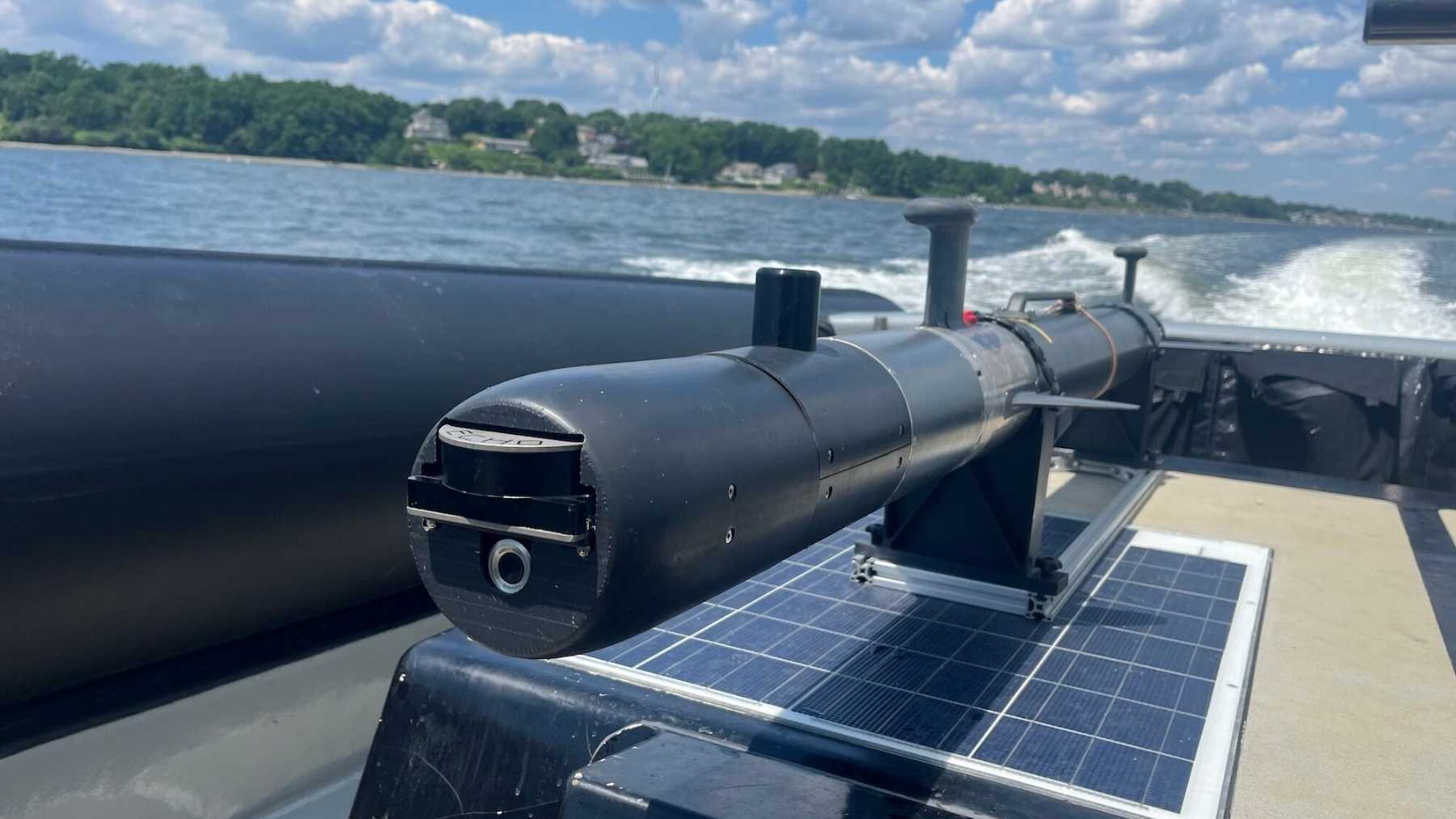
If you haven’t run into the term before, Arowana is a UUV, or unmanned undersea vehicle. Basically, it’s a small submarine with nobody aboard that either drives itself or takes orders from someone far away.
In the second of SubSea Craft’s two demonstrations, divers deployed CADDIS and Arowana separately from underwater. CADDIS made its way up, broke the surface, switched to flight and headed toward a designated target, relaying information to Arowana along the way. Arowana could then head for that same surface target.
It’s easy to picture this the wrong way, so I’ll spell it out. CADDIS didn’t come out of Arowana. The divers put each one in the water on its own.
Here’s where I’d like a lot more detail. The release doesn’t say what that information was, whether it was a position, a video feed or simply a go signal. It also skips how an aircraft in the sky got data to a vehicle under the water, which is a slightly odd thing to leave out. Ordinary radio doesn’t travel far through seawater, so how that hop happened is a pretty big question, and SubSea Craft hasn’t answered it publicly.
The release also leaves out the numbers you’d want, like how deep the divers were or how far anything traveled. It reads more like a walkthrough of what the setup can do than a play-by-play of each run.
The crewless boat had its own job
The first demonstration was a different thing entirely, and the two shouldn’t be mashed together. In that one, SubSea Craft’s MARS, a crewless surface boat, sent several Arowana drones out after surface targets in open water, beyond the horizon, in what the release calls simulated kinetic engagements.
That’s a lot of military jargon in one sentence, so let’s unpack it. Kinetic basically means physically hitting something, as opposed to jamming it or just watching it. Over the horizon means the targets were too far away to see from the boat. And simulated means the attack part was played out as an exercise.
SubSea Craft says the runs were repeated and successful, and that they showed accuracy and endurance. It doesn’t say how many Arowanas MARS carried, how far they went or what counted as a success. I’d take the success claim with a grain of salt until somebody publishes real numbers, but that’s pretty standard for a company release.
If MARS sounds familiar, we covered it back in September, when SubSea Craft unveiled swappable payload cassettes for the boat. When the company first showed MARS to the public, an official told Shephard it could hit up to 30 knots (about 35 mph) and run up to 300 nautical miles (roughly 345 miles). SubSea Craft’s current MARS page doesn’t list those figures or any dimensions, so I’d treat them as early numbers.
That page just says MARS takes kinetic and non-kinetic modular payloads. Which is basically a polite way of saying it can carry things that hit stuff and things that don’t.
All three machines got into Maritime Big Play Pacific through a US Navy solicitation called BARB, which went looking for ideas for undersea warfare. The Office of the Under Secretary of War for Research and Engineering sponsored the wider event, and its exercise staff asked for this particular demonstration. Getting picked for an exercise isn’t the same as winning a contract, and the release doesn’t mention any orders.
Was all this really put together in 48 hours?
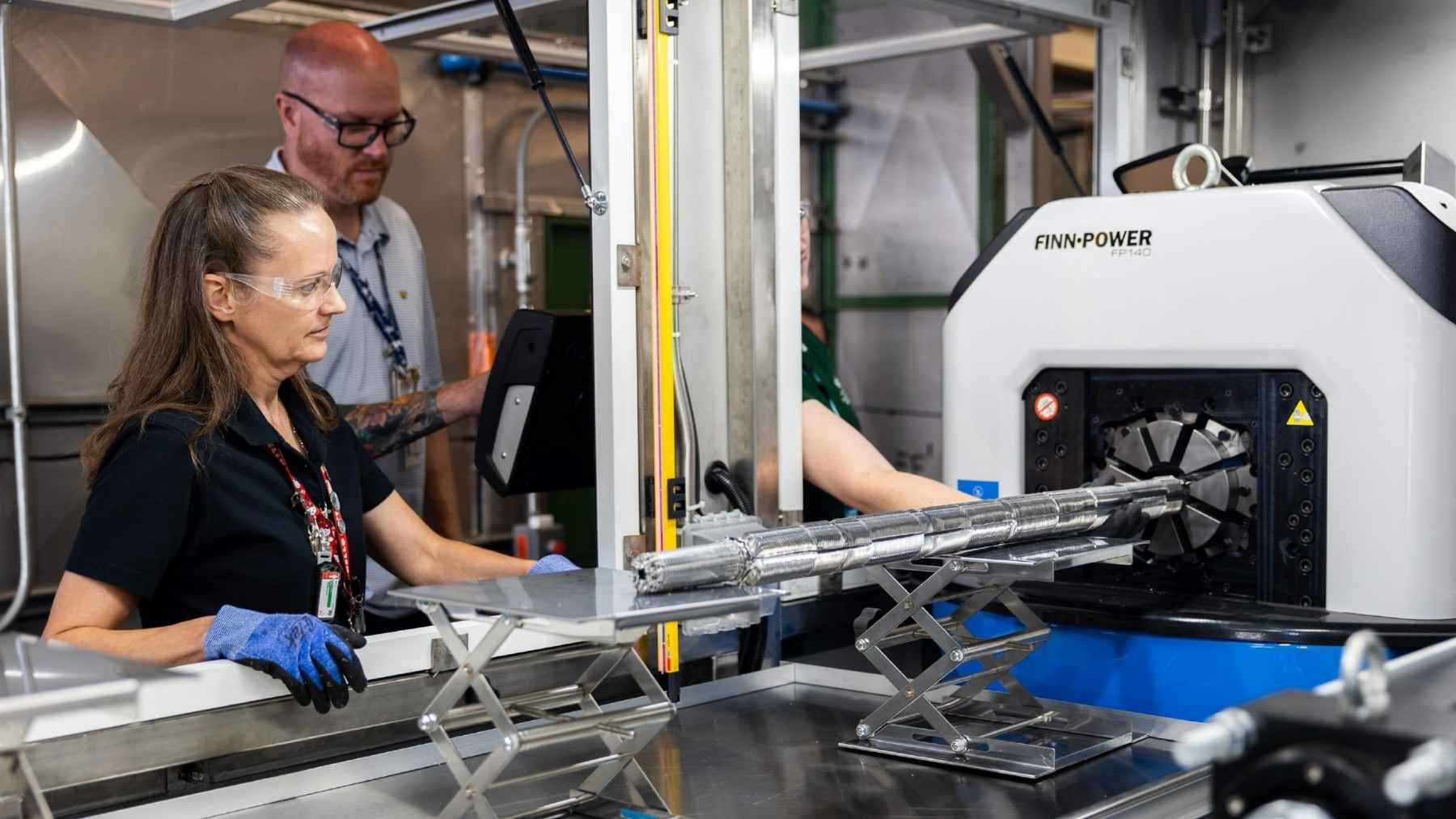
According to the release, once planning and design were done, it took 48 hours to get the three systems hooked up, tested and running for the exercise staff. That’s a pretty eye-catching line. But in the same release, Robert Gibson, chief engineer and managing director at Dragonfish, says his teams needed about a month to connect the hardware, build the interfaces and test it all.
Those two figures don’t really clash if the month of engineering came first and the 48 hours covers hooking everything together at the exercise itself. That’s my reading, though, and neither company spells out exactly what each number covers. I wouldn’t go around telling people these machines were built in two days.
Gibson also talked up sending several Arowanas, CADDIS aircraft and MARS boats at one target, with “each vehicle approaching from a different direction.” That’s arguably the most interesting idea in the whole release. Think about it from the ship’s side. If you’re on that crew, one drone coming at you is one problem to deal with. A handful coming from different sides at the same time is a much harder one, and frankly that’s the whole appeal of having lots of small crewless machines in the water.
Arowana also took new orders from a seaglider
Arowana kept busy at the same exercise. In a separate release, also dated November 4, REGENT says it paired its Squire drone with NSI’s Arowana during Maritime Big Play Pacific, in the waters off San Clemente Island. This was a different test with different hardware, and CADDIS wasn’t part of it.
Squire is what REGENT calls a seaglider. It’s basically a cross between a boat and an airplane: it takes off from the water and flies just above the waves in what’s called ground effect, riding a cushion of air that builds up under its wings. REGENT says that keeps it below radar line of sight.
In this run, Arowana launched from a support vessel and set off on a 2-mile transit toward a simulated high-value unit, which in Navy terms usually means an important ship. While it was underway, operators used Squire as what REGENT calls a mobile gateway to hand Arowana updated tasking as fresh intelligence came in, without recalling it or bringing it to the surface. NSI CEO Ed Rule called that sort of mid-mission retasking “the kind of flexibility the fleet needs.”
The teams also guided Arowana over a fiber-optic tether, which keeps a control link going where radio struggles, and practiced handing control from a short-range controller to a longer-range ground station. REGENT doesn’t say how Squire’s link to the submerged drone was physically set up. I wouldn’t assume the tether was part of it either, since the release lists the two as separate pieces of the scenario.
On paper, REGENT rates Squire at up to 70 knots (about 80 mph) with a 50-pound configurable payload and a planned range of more than 100 nautical miles (about 115 miles). REGENT calls that range planned, so it’s still a goal. If you want the backstory, we wrote about Squire’s early flights in June.
As for the diver-launched pair, CADDIS and Arowana did their underwater start during the October 5 to 8 runs off California, and SubSea Craft published the results on November 4.