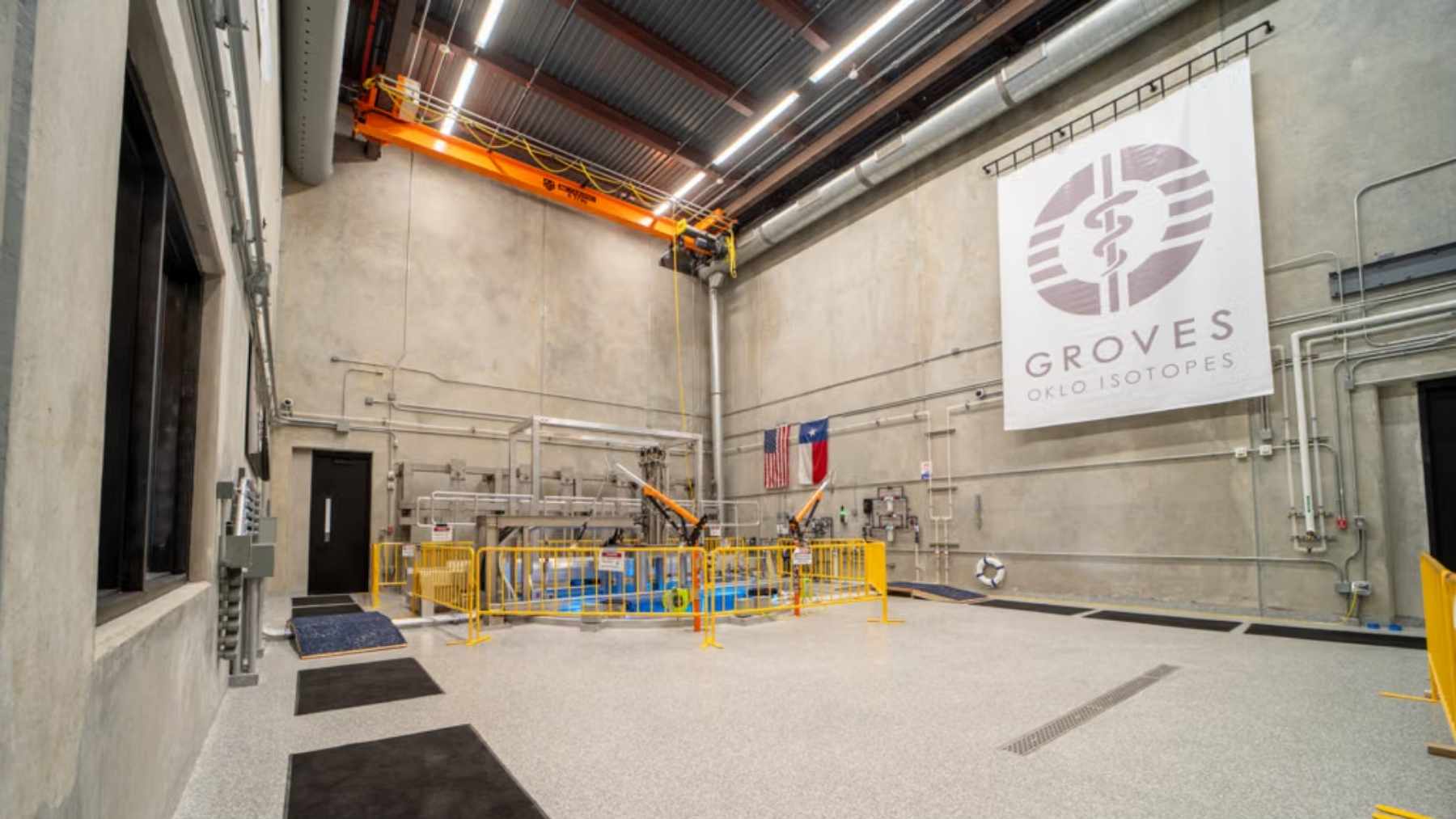

- 2 MONTHS AGO · ENERGYA 6-inch nickel can grew in a bath around a plastic mold, and acid dissolved the mold out from inside, leaving a container with no weld anywhere on it. Oak Ridge packed it with powder and squeezed out a 15.7-pound block of solid metal for a reactor
- 2 MONTHS AGO · ENERGYA tunnel borer cut 510 feet through hard rock from a sealed shaft 100 feet deep and came out through the bottom of an Oklahoma lake, leaving the 6-foot steel intake that now feeds a 70-mile water system whose 10.5-million-gallon-a-day plant was completed in August
- 4 WEEKS AGO · ENERGYTwo drilling rigs bored 31 miles of hole under a Bavarian town, two shafts 13,894 feet deep and twelve 2.2-mile side tunnels through 338-degree rock, in 27 months against 107 days planned, and the loop makes 2 megawatts of the 8.2 it was built for, so the rigs went home
- 1 WEEK AGO · ENERGYA 308-foot dam in Arizona just let out about 60,000 cubic feet of water a second, the most its operator believes it has sent downstream in 33 years, and the Salt River through Phoenix, a dry bed most of the year, is expected to keep running for days if not weeks
- TODAY · THIS ARTICLEA copper mine with no pit and no shaft is running southeast of Phoenix on about 145 wells that push weak acid through broken rock as deep as 1,200 feet and bring the metal back up dissolved in it, built to turn out 85 million pounds of cathode a year from a deposit sized for 22 years
Earlier this month, we wrote about the Berkeley Pit in Butte, Montana, an old copper mine that’s 1,780 feet deep with a lake of acidic water sitting in the bottom. That’s pretty much what most of us picture when someone says copper mine: a giant terraced hole and a whole lot of rock that’s been moved somewhere else.
Florence Copper, just outside the town of Florence and midway between Phoenix and Tucson, doesn’t look anything like that. It doesn’t have a pit. And if you go looking for a headframe over a mine shaft, you’ll be looking for a long time.
What it does have is a field of wellheads, a lot of pipe, and a plant that turns out sheets of copper. Trekor Metals (formerly Taseko Mines) celebrated the start of commercial production there on October 6, with EPA Administrator Lee Zeldin on hand. Trekor bills it as the first greenfield site in the world to recover copper this way at commercial scale, and Zeldin noted that the US had gone almost 20 years without opening a new source of copper.
It’s frankly a pretty strange-looking mine, so I went through the slide deck Trekor put together for an October site tour to figure out how it actually works.
So how do you mine copper without digging?
In-situ recovery basically means you leave the rock where it is and only bring up the metal. You drill wells into the ore, push a weak acid down some of them so it dissolves the copper, and pump the copper-loaded liquid back up through others, so nobody has to blast, haul or crush anything.
Trekor describes the stuff going down its wells as only lightly acidic, “similar to household vinegar.” That’s arguably the most neighborly way a mining company has ever described acid. Still, the job hasn’t changed from any other leaching operation: get the copper to dissolve, then go get the liquid.
The copper here sits in what geologists call an oxide zone. According to the project’s technical report, it’s buried under 400 to 425 feet of alluvium and basin fill, which is basically sediment that’s washed into the valley over a very long time. The ore zone itself averages about 400 feet thick and gets as thick as 1,000 feet in places.
How deep do the wells go? Trekor hasn’t published a maximum depth for its commercial wells. The test wells it drilled on the property went down to 1,225 feet, so somewhere around 1,200 feet is a fair ballpark for the deep end, but I wouldn’t treat it as a spec.
Florence runs on about 145 wells
There were about 145 wells in operation as of October, the company says. Every one of them is built so it can work as an injection well, a recovery well or a hydraulic control well, which presumably lets the operators change what each hole does as the ore around it gets used up.
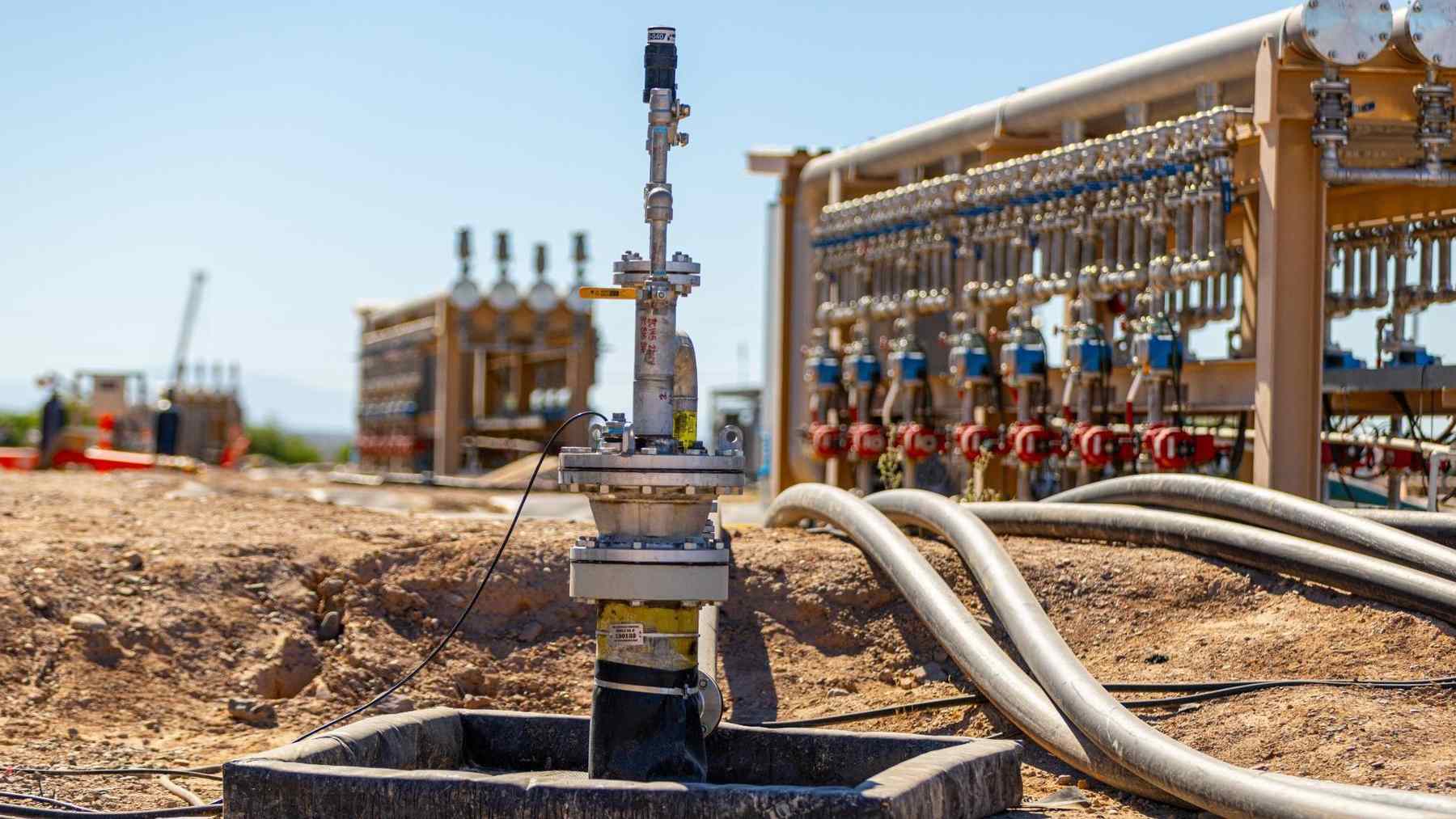
The wells are run in groups. Trekor operates 12 pipe skids, and each one controls somewhere between 8 and 14 wells. If you’ve never seen one, a pipe skid is basically a steel frame loaded with valves, meters and piping that sits on the surface and handles the flow for its own little cluster of wellheads. The 20 wells Florence brought online in August went in with a new skid design.
Then there’s the drilling, which hasn’t stopped. Six rigs are working the site, a mix of table-drive and top-head-drive machines. The plan is to finish about 100 wells this year, and Trekor’s third-quarter results say 32 new ones came online between July and September. By the end of September, the wellfield was moving about 5,100 gallons of solution a minute. That flow sets the pace for everything else. The plant can only make copper out of the liquid the wells send it.
So what keeps the acid where it’s supposed to be?
It’s the first thing you’d want to know about any mine that pumps acid into the ground, and Trekor’s answer comes down to concrete and pressure.
Each well is encased in concrete, with a seal sitting above the oxide zone, and the company says that’s there to protect water quality. So the only place the solution is meant to get out is down in the ore.
The other half is hydraulic control. The recovery wells pull liquid toward the middle of the wellfield, and dedicated wells around the edges help keep that inward flow going, so the solution heads for the pumps instead of drifting off. Trekor also keeps watch on a set of observation wells around the clock to make sure it’s all behaving.
Trekor didn’t jump straight to the big version, either. It ran a much smaller test wellfield there first, with the wells spaced and built just like the ones it planned for the commercial field, and one of the main jobs of that test was proving it could hold that inward flow.
If that sounds a bit familiar, it isn’t that far off the 19,448-foot geothermal well we covered in Utah, which pushes water through hot rock and brings it back up. Florence pulls a similar trick with chemistry instead of heat, and a lot closer to the surface.
The plant is ahead of the wells
Once the copper-loaded solution comes up, it goes to an SX/EW plant, short for solvent extraction and electrowinning. Solvent extraction pulls the copper out of the weak leach solution and into a much cleaner, stronger one. Electrowinning then runs an electric current through that liquid, and the copper plates out as solid sheets called cathodes.
The plant started up in February, and the first cathode came out on February 27. Trekor says it’s already spent several days running at design capacity.
Which tells you something. From the looks of things, Florence’s bottleneck is underground, not in the plant. Trekor says the wellfield is roughly three months behind the company’s original schedule, and it’s leaning on those six rigs to catch up.
Florence turned out 7 million pounds of copper in the third quarter, according to Trekor’s production update. The company now expects 25 to 28 million pounds from it this year, and wants to be making about 7 million pounds a month in early 2027. Do the math on that and you land pretty close to the 85 million pounds a year it’s designed for.
The site tour also projects about 105,000 tons of acid going into the ground this year. That’s a lot of vinegar, if you’re keeping score.
So it isn’t a finished machine yet. It’s a mine that’s still being built while it runs, and as far as I can tell, that’ll stay true for a while, since the wellfield has to keep growing to reach fresh ore.
Trekor says Florence should be running at full capacity in early 2027. Until then, those six rigs are supposed to keep drilling toward the 100 wells the company planned for this year.
 A 590-megawatt reactor on the Lake Michigan shore shut itself down from full power at 5:12 in the morning when its main generator locked out, its leftover heat went out as steam through valves that vent to the open air, and three days later the 56-year-old unit was still at zeroEnergy · 6 hours ago
 A 426-foot ship built to lay internet cable across oceans can now carry about 4,400 tons of power cable on two giant turntables, and it has started unspooling 311 miles of it across the seabed of a British wind farm to plug 197 turbines into two converter stations out at seaEnergy · 21 hours ago
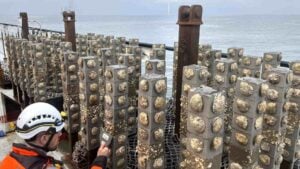 A Dutch crew took a 402-foot cable-laying ship 33 miles out to sea and lowered six hubs of live oysters onto the seabed inside a 52-turbine wind farm, about 3,600 European flat oysters and thousands of young ones meant to breed in water where fishing boats can’t drag the bottomEnergy · 23 hours ago