
- 3 MONTHS AGO · ENERGYA solar panel the size of a drink coaster split water into hydrogen at 10.8 percent efficiency two years ago, and when the same company built one twelve times bigger the number dropped to 9, which is the part nobody put next to this month’s announcement
- 2 MONTHS AGO · ENERGYAn 85-foot nuclear reactor vessel filled with 654 cubic yards of concrete rode a self-propelled platform 2,000 feet down the road to a hall built to hold it alone, and the plan now is to wait 30 to 60 years, because the steel gets safer to cut every decade it sits
- 2 MONTHS AGO · ENERGYWhile one Three Mile Island reactor just cleared its final review to restart, the reactor that melted down next door still holds up to 2,480 pounds of fuel debris fused to its pipes and tanks — and when it finally comes out, it moves a few hundred yards to a pad and waits
- 1 WEEK AGO · ENERGYA 3-by-3-foot underwater flap has been swinging with the waves off a Hawaii pier for months, pumping hydraulic fluid until the pressure is high enough to spin a generator, and researchers are streaming every reading from it live to anyone who wants to watch
- TODAY · THIS ARTICLEA British company laid three fiberglass pipes 200 feet long up a Devon hillside and filled them with a fluid dense enough to float concrete, and the government’s final report says the plant hit 500 kilowatts but can hold that output for about 15 minutes, not the four hours it was built for
Back in August, we wrote about a small power plant in Devon, England, that stores electricity by pumping a fluid dense enough to float concrete up a hill. Plenty of you had thoughts in the comments. One of you wanted to know how efficient the thing really is, and another asked what it takes to make all that fluid in the first place.
Well, the British government has published the project’s final report, which the company behind it wrote for the program that paid for it, and it answers both. Most of them are pretty good news. One of them is a bit awkward.
The plant, built by a company called RheEnergise, did reach its full 500 kilowatts. But it was designed to keep that up for four hours, and the report says that with the fluid it actually has on site, it can manage about a quarter of an hour.
What’s actually on that hill?
The plant is called Cornwood, and it’s basically a hydro plant with the lake taken out. RheEnergise built it on a hillside at a kaolin mine run by Sibelco, just outside Plymouth. Kaolin is a fine white clay, and the mine’s output mostly ends up in bathroom fixtures and ceramics. RheEnergise says the plant backs up the mine’s operations when energy demand peaks.
The upper reservoir doesn’t look like a reservoir at all. It’s three fiberglass pipes, each about 200 feet long and just over 8 feet across, buried in the slope. According to the report, the original plan up top was a concrete structure, and the design switched to big fiberglass pressure pipes instead. A buried tank sits lower down the hill, a steel pipe connects the two, and a powerhouse holds the pump and turbine.
The fluid is what makes it different. RheEnergise calls it R-19, and a given volume of it weighs about 2.5 times what the same volume of water does. Most concrete is a little lighter than that, so a block of it would bob right on top. Since every gallon you drag uphill weighs more, every gallon also stores more energy, so you can get away with a smaller hill.
A turbine built for water isn’t designed for something that heavy, so the pump-turbine here was built around R-19. It peaked at 89.6% hydraulic efficiency on water and 84.8% on the dense fluid, according to the report. Losing about five points when you swap water for a mineral-heavy fluid seems like a pretty reasonable trade to me.
So why does less fluid mean fewer minutes?
This is where you need to separate power from energy, because people mix them up all the time. Kilowatts are like your car’s horsepower: how hard the plant can push at any moment. Kilowatt-hours are more like the size of the gas tank.
At Cornwood, the turbine sets the horsepower, and that side of things works. The amount of fluid waiting in those pipes up top sets the size of the tank, so if there’s less fluid up there, the plant runs dry sooner at the same 500 kilowatts.
How much less are we talking? The design called for roughly 375,000 gallons of fluid. In October of last year, RheEnergise asked to change the project’s scope, and the plan dropped to about 143,000 gallons. The report says that cut brings the plant’s total running time down to “c. 15 minutes at full power.”
If you’re doing the math at home, a little over a third of the fluid buying you a sixteenth of the run time doesn’t scale the way you’d probably expect. The report doesn’t break down where that gap comes from, and I’m not going to pretend I know.
Why cut the fluid at all? The report blames production problems. Making enough of the stuff to spec turned out to be harder than planned, and the government program paying for the work, the Net Zero Innovation Portfolio, was winding down. RheEnergise settled on what the report calls a minimum viable product, with enough fluid to commission the whole system, run it and collect real data. RheEnergise calls the move a compromise in the report. It also says there wasn’t a reasonable alternative at that stage.
Frankly, that’s pretty normal for first-of-a-kind hardware. You’d rather have a plant that runs properly for 15 minutes than one that’s still sitting empty. It’s also about as close as the report gets to answering the reader who asked about making the fluid, since producing it at volume is what ran out of time.
Commissioning with the dense fluid happened last December, per the report, and wrapped up with the plant running steadily at its 500-kilowatt design output. RheEnergise announced on Jan. 27 that it had hit full power.
The efficiency came in above the model
Now for the reader who asked about efficiency. Round-trip efficiency is basically what you get back out of a storage system compared with what you put in. Push 100 units of electricity into Cornwood to pump the fluid uphill, and you get about 59 back when it runs down through the turbine.
The report’s model predicted 56%, and the plant measured 59%. The report flags a catch, too. Those figures leave out parasitic losses, which is the electricity the plant spends keeping its own systems running. They haven’t been measured yet. The model put them at 1.18% on average across a year, so if that estimate holds, they shouldn’t move the result much.
Is 59% any good?
For a demonstrator this size, I’d call it pretty respectable, though it isn’t going to make anyone selling lithium batteries nervous. RheEnergise tells the government it’s targeting 80% round-trip efficiency on larger commercial projects, and it describes that goal as highly achievable. That’s the 80% figure we mentioned in August, when it was the company’s own calculation. Until one of those bigger plants gets built, it’s still a target.
Making the fluid is still the holdup
CleanTechnica’s Michael Barnard, who went through the report in September, gives RheEnergise credit for actually building the thing. His bigger worry is scale. Longer storage times mean a lot more manufactured mineral fluid, and that’s exactly what Cornwood ran short of. That’s a fair point as far as I can tell, though Cornwood is a 500-kilowatt test rig, and we don’t know yet how fluid production will look at a commercial site.
Then there’s the money. RheEnergise first won a little more than £8 million (about $10.6 million) under the government’s Longer Duration Energy Storage program, and that was later raised to £9.8 million (about $13 million). The report puts total spending at £10.2 million (about $13.5 million). Those dollar figures use the European Central Bank’s Nov. 13 reference rate.
The report says RheEnergise intends to produce the rest of the fluid later this year, once more refinement of the system is complete. RheEnergise’s news page doesn’t list a new batch as of Nov. 15, which leaves Cornwood as a 500-kilowatt plant with about a quarter of an hour in the tank.
 A 705-megawatt reactor on the Danube came back after 99 days dark, then dropped off the grid three days later at 6 in the evening with a fault in its turbine condenser, and only reconnected on November 13, reaching full power the next day, after its twin had already beaten it backEnergy · 2 hours ago
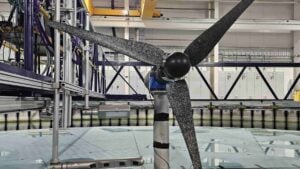 A 4-foot tidal turbine with three rubber blades developed with a French tire maker matched the output of turbines whose blades are turned by motors, and it did so because each blade flattens on its own as the water speeds up, cutting the jolts that wear turbines out by up to a thirdEnergy · 3 hours ago
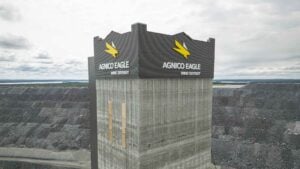 A 21-foot-wide shaft has reached 5,203 feet under a Quebec gold mine whose open pit had part of its north wall move this summer, and its 305-foot headframe is now trading the sinking gear for a production hoist sized for about 22,000 tons a day, with shaft hoisting due next springEnergy · 16 hours ago