
- 5 MONTHS AGO · INDUSTRYAn Australian company is about to launch a rocket that climbs to the edge of space at seven times the speed of sound and comes back, selling five minutes of hypersonic flight by the seat to defense labs and universities that have nowhere else to fly their hardware
- 4 MONTHS AGO · INDUSTRYThe hero shot is always the 650-foot German machine, and back up the tube out of frame there is a shed full of compressors pushing brine at 26 below into the dirt until the sand turns into a 6.5-foot wall of ice — and it does not get to stop until the concrete is in
- 3 MONTHS AGO · INDUSTRYA 236-foot American solar drone with a wingspan longer than a 747’s flew eight days over the Gulf with no fuel and nobody aboard, ran a Navy radar the whole time, and then went into the water on the way home because the batteries ran flat before sunrise
- 1 MONTH AGO · INDUSTRYA 170-ton steel pile 8 feet across slides more than 50 feet into a riverbed the consistency of oatmeal before a hammer drives it home, and 55% of those for the south tower are already in, next to the channel where a container ship took down Baltimore’s Key Bridge
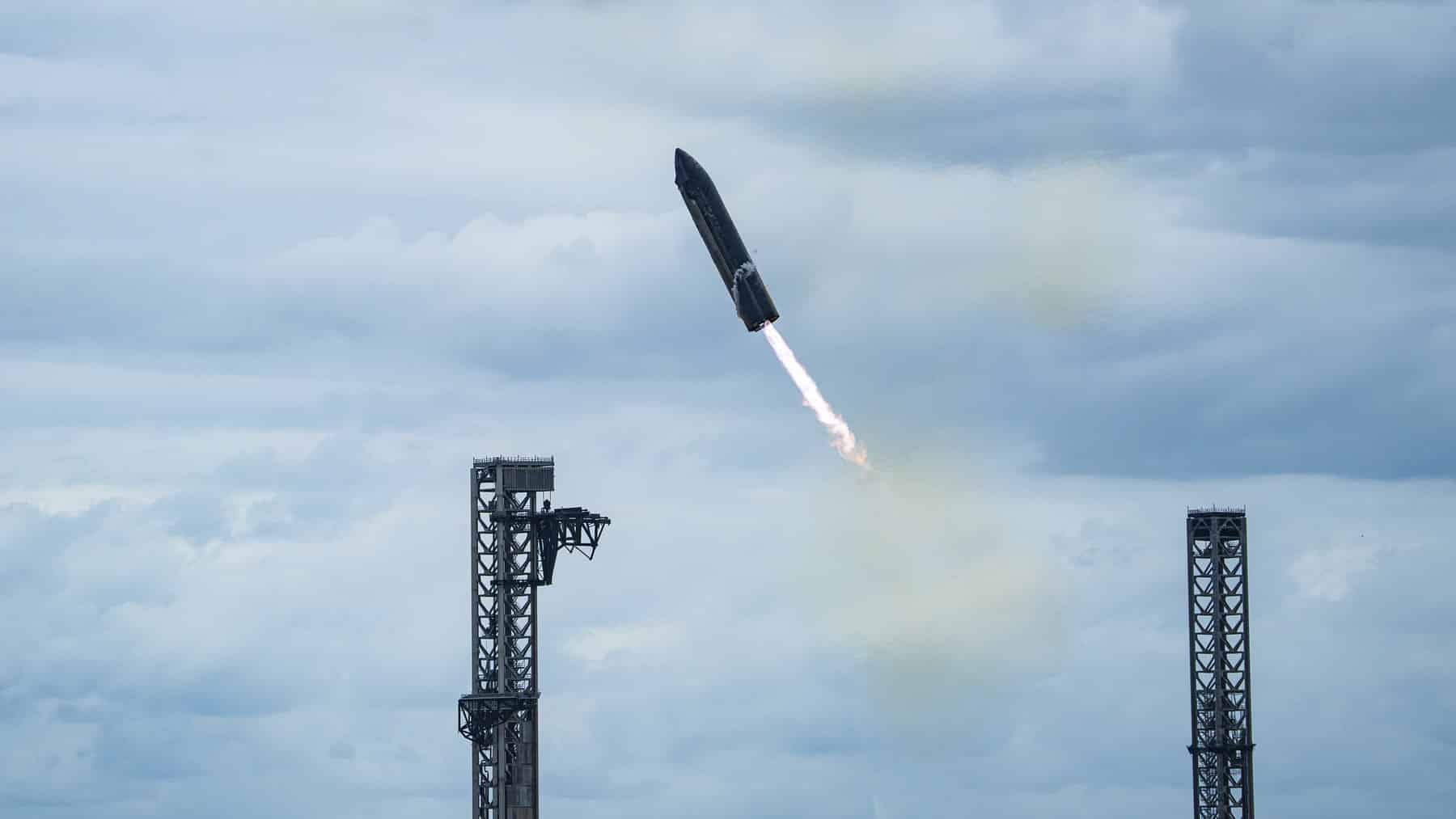
- TODAY · THIS ARTICLEA 29.5-foot-wide spaceship fell back from orbit over northern Mexico and South Texas, flew in flat until the last moment, flipped upright on three engines and was caught by a launch tower’s two arms, the first time a tower has caught the top half of this rocket
SpaceX has been plucking its Super Heavy booster out of the air with a pair of giant mechanical arms for a while now. It’s pulled that off on three previous Starship flights, according to Space.com, and it’s still a pretty wild thing to watch. But the booster is arguably the easy half. It splits off a couple of minutes after liftoff, flips around and, when things go to plan, heads back to a tower that’s basically next door.
On Saturday afternoon, a tower at Starbase, Texas, caught the other half.
Ship 42, the upper stage on Starship’s 15th test flight, came back from orbit and settled between the arms at Pad 2, the same pad it had launched from on Friday. SpaceX’s Flight 15 mission page says it’s the first time those arms have ever closed on a returning Starship. Space.com puts the catch at about 4:20 p.m. ET.
You’ll see “22.5 hours” in a lot of the coverage. That’s the whole trip, liftoff to catch, and the ship didn’t spend all of it in orbit. SpaceX says its flight controllers kept an eye on the ship’s systems for over 20 hours in space before bringing it home. The rest went into climbing to orbit, dropping off 26 Starlink V3 satellites and the long ride back down.
So why is the ship so much harder to catch?
The booster never gets close to orbital speed, so it comes home from relatively nearby. The ship’s got to shed all the speed it picked up in orbit by plowing through the atmosphere, survive the heat that comes with that, and then still turn up right next to a steel tower.
Space.com makes the same point: compared with the booster, the ship goes up higher, travels a lot farther and moves faster. SpaceX said Ship 42 was headed for an orbit roughly 170 miles up. That’s a long way to fall and still hit your mark.
What does the tower actually hold on to?
Here’s where it gets a bit nerve-racking. The arms don’t wrap around the ship like your hand around a soda can. SpaceX’s return plan, published on November 7, describes two catch fittings mounted right under the forward flaps, the smaller wings up near the nose. The arms close in, and the ship ends up resting on those two fittings.
How big are they? Eric Berger, who watched the catch in person for Ars Technica, wrote that the two nubs are “each protruding only about one foot.” SpaceX lists the ship at about 171 feet tall and 29.5 feet across. So you’ve got a ship that size hanging on two pieces of hardware that stick out about as far as a footlong sub. That’s frankly not a lot of room for error.
The arms got a rework for Pad 2, too. SpaceX said back in May that the new chopsticks are shorter so they can move faster and keep up with a vehicle during a catch, and that their main actuators went from hydraulic to electromechanical. Hydraulic arms work like the ones on an excavator, with pressurized fluid shoving pistons around. Electromechanical ones use electric motors to drive the motion directly, which SpaceX says is quicker, more redundant and more reliable. That seems like a pretty sensible trade when the thing you’re grabbing is still moving.
How did Ship 42 get back to Texas?
It started with a short burn on a single Raptor engine. SpaceX’s timeline has the deorbit burn starting at T+21:35:57 and shutting down 10 seconds later, which was enough to drop the ship out of orbit and put it on course to hit the atmosphere over the Pacific.
From there, the ship steered with its four flaps. SpaceX’s plan had it making a string of gentle turns over thinly populated stretches of northern Mexico and South Texas, skirting the big Rio Grande Valley cities, clearing South Padre Island to the north, then swinging over the Gulf and banking south toward Starbase. SpaceX had warned folks in Cameron County they could hear a sonic boom or two.
Then came the bellyflop, which is pretty much what it sounds like. The ship falls with its broad side facing the ground, a bit like a skydiver spreading out, and uses the air to slow itself down. Berger wrote that it stayed flat almost all the way down, and that the tower had it under a minute after it first showed up below the clouds.
The last 18 seconds happen fast
I went through SpaceX’s flight timeline, which the company says is approximate, and the landing itself only takes about 18 seconds. The landing burn starts at T+22:32:16, when three Raptor engines light up. Two seconds later the ship swings upright and tucks its flaps away. At 22:32:26 it drops to two engines and moves in between the arms. At 22:32:33 it’s down to one engine and nearly hovering. The arms snap shut, the ship senses it’s touching them, and it cuts its last engine, which SpaceX logs as the catch at 22:32:34.
Which means Ship 42 spent roughly one second on a single engine before the tower had it. Each of those sea-level Raptor 3 engines is rated at 551,000 pounds of thrust, according to SpaceX.
Space.com reported that SpaceX’s webcast ran “Baby Come Back” as Ship 42 settled into the arms. Someone at SpaceX apparently couldn’t resist.
So what happened to the booster?
The plan was to catch both halves. That didn’t happen. Booster 22 cut its boostback burn short because it’d run low on fuel, and SpaceX says it’s still digging into why. The booster’s own guidance called off the return and steered it to a spot offshore, where it fired its landing burn hovering above the Gulf. SpaceX says its flight termination system, the safety system that’s built to destroy a rocket on command, kicked in once those engines shut down.
So this wasn’t a full recovery of the rocket. Getting the ship back is still a long way from something like the 215-foot rocket we looked at on Friday, which sheds its side boosters and nose fairing on the way up.
SpaceX hasn’t said how the heat shield held up
We’ve got a decent idea of how it looked before the landing. Three of the Starlink satellites on board were modified to photograph the ship’s heat shield, and about seven hours into the flight SpaceX posted that the ship and its heat shield were healthy. Space.com reported that those images, plus cameras on the ground, suggested Ship 42 was in solid condition before it headed home.
What we don’t have is a look at it after reentry. As of Sunday morning, SpaceX hasn’t published an inspection, so I can’t tell you how many heat shield tiles made it home or whether this ship’s ready to fly again. SpaceX also hasn’t said how fast Ship 42 was moving when it met the arms or how much it weighed, and honestly, those are the two numbers I’d most like to see.
Ship 42 came home to Pad 2 at Starbase, the same tower it left on Friday, and SpaceX’s flight page logs its landing burn shutdown and catch at T+22:32:34.
Credit: SpaceX
 A 15.7-foot government drone boat sat on Lake Erie with one foot of hull above the water, no radar reflector and its cameras off until a 45-foot cruiser hit it and wound it into a propeller pod, and federal investigators now want the Coast Guard to write rules for boats with nobody aboardIndustry · 15 hours ago
 A 99-year-old lock chamber on the Allegheny River, 360 feet long, was pumped dry behind 16 bulkheads and 13 structural struts because winter ice tore gaps in the oak sill its gates seal against, and with barge traffic stopped until December all eight emptying valves are being replacedIndustry · 18 hours ago
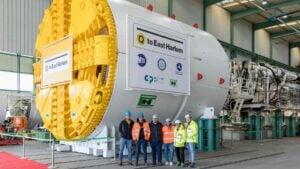 A 700-ton boring machine with a cutting face 23.5 feet across just passed its factory tests in Germany and ships early next year to dig 1.6 miles under Manhattan’s Second Avenue, between 35 and 120 feet down, on a line that will also reuse a stretch of tunnel built about 50 years agoIndustry · 19 hours ago