Follow us on Google Get our news on Discover Follow

A fission reactor the size of a 20-foot shipping container went critical in Idaho 150 days after the project started, makes one megawatt, runs on the same 4.95 percent fuel every US plant already burns, and is now booked for a full-power run in 2027

A fission reactor the size of a 20-foot shipping container went critical in Idaho 150 days after the project started, makes one megawatt, runs on the same 4.95 percent fuel every US plant already burns, and is now booked for a full-power run in 2027

{{author_name}}

Luis Reyes

Oct 21, at 2:05pm ET

The 20-foot shipping container is the most standardized object in world trade. Sneakers, engine blocks, flat-pack furniture: anything that fits the box moves by truck, rail or ship without anyone redesigning a thing. A Houston company called Deployable Energy built a nuclear reactor to those exact dimensions, ran a self-sustaining chain reaction inside it on June 30, and on October 7 got the slot it needs for the next step: a full-power run inside the containment dome of a dead breeder reactor in Idaho.

The product’s called the Unity Nuclear Battery, and the name undersells the physics. Each unit is a 1-megawatt-electric fission reactor, water-moderated and helium-cooled, packaged into a standard 20-foot box, 8 feet wide and 8.5 feet tall, that travels on ordinary trucks, trains and ships. Deployable hasn’t published what a fueled unit weighs.

The facility it’s headed for is called DOME, the Demonstration of Microreactor Experiments, run by the National Reactor Innovation Center at Idaho National Laboratory. DOME sits inside the containment building of the Experimental Breeder Reactor-II, which ran for 30 years before it was shut down, and it can host fueled test reactors of up to 20 megawatts thermal. Deployable’s announcement schedules the campaign for 2027.

The 2027 run’s designed as a dress rehearsal for the business model rather than a physics experiment. Deployable plans to load fuel into the reactor at a factory, haul the fueled unit to Idaho, slide it into DOME, run it at full power, then move it again within the lab and dispose of the fuel. Every one of those steps is something the company wants to do hundreds of times a year by the end of the decade, and none of them has been done with a Unity yet.

The “battery” is a real fission reactor

Plenty of devices get called nuclear batteries, and most of them are radioisotope generators: lumps of decaying plutonium or strontium that trickle out watts for decades, the kind NASA bolts to space probes.

Unity isn’t that. Unity runs a controlled chain reaction in uranium fuel, the same physics working inside every commercial power plant in the country.

The battery framing describes how Deployable wants customers to use the thing. The company builds the reactor in a factory, ships it sealed, plugs it in where power is needed, and swaps cores every five years, with used fuel going to a central site. A single box makes 1 megawatt. Deployable says identical modules stack into arrays of several hundred units, and the heat coming off one can go to liquid, go to air, or get taken straight off as process heat.

For scale, Aalo Atomics is packaging 10-megawatt reactors into 50-megawatt pods aimed at AI data centers. Deployable went the other way, down to 1.

Four reactors made a three-reactor deadline

Executive Order 14301, signed in the spring of last year, handed the Department of Energy a strange and very specific homework assignment: get at least three brand-new test reactors to criticality by July 4, 2026, the country’s 250th birthday.

Two DOE fast tracks ran under it. The Reactor Pilot Program let companies build and test first-of-a-kind reactors on DOE authorization instead of a Nuclear Regulatory Commission license. The Nuclear Energy Launch Pad arrived in March through the National Reactor Innovation Center, extending that same route to developers the first program had no room for.

The deadline held. Antares Nuclear’s Mark-0 went critical at Idaho on June 4. Valar Atomics’ Ward 250 followed at the Utah San Rafael Energy Lab on June 18. Unity sustained its chain reaction on June 30, the first criticality logged under the Launch Pad, roughly 150 days after the project kicked off. Aalo’s Aalo-X crossed at 12:20 a.m. MT on the Fourth itself.

“We met the July 4th goal by moving fast without compromising safety or quality,” Deployable co-founder and CEO Bobby Gallagher said in the October 7 announcement.

Criticality’s the point where the neutron bookkeeping balances: each generation of fissions kicks off exactly enough neutrons to start the next, no outside source required. Unity’s June run was a zero-power demonstration on a full-scale core load, which means the chain reaction held without producing meaningful heat or a watt of electricity. That’s the gap DOME is there to close. Full power’s where the helium loop, the heat exchangers and the control system have to work together for real, and where the NRC, which observed the June test and says it’ll keep observing, gets the data it would want for a license.

Output per box
1 MWe
One 20-foot container per unit. Deployable says identical modules stack into arrays of several hundred.
Fuel enrichment
4.95%
Uranium dioxide under the 5% commercial ceiling. Helium-cooled, water-moderated, five-year refueling cycles.
Kickoff to criticality
150 days
Zero-power chain reaction on June 30 at Idaho National Laboratory, the first under the Launch Pad initiative.
NEXT
Full-power test
2027
Inside DOME, the 20-megawatt-thermal test bed built into the old EBR-II containment. Selected October 7.

The fuel is the clever part

Most microreactor startups designed themselves into a fuel problem. Their cores call for high-assay low-enriched uranium, HALEU, material enriched between 5% and 20% that remains scarce in the United States: Antares got its TRISO fuel fabricated on a conditional commitment of the government’s own HALEU stock.

Deployable skipped the line. Unity runs on uranium dioxide enriched to 4.95%, per the company’s technical specifications, just under the 5% ceiling that commercial reactor fuel has sat below for decades. Every fabricator already serving America’s power plants handles that material today, and Gallagher’s credited that supply chain as one of the things that made the 150-day sprint possible.

The coolant’s helium, the moderator’s ordinary water, and the listed materials are deliberately unexciting industrial stock rather than exotic alloys. A reactor made of parts factories already produce is a reactor that fits on an assembly line, which is the entire business model.

Unity also parts ways here with the Pentagon’s Pele microreactor, the transportable unit whose 40,000 fuel compacts have been sitting in Idaho waiting for final assembly in Virginia. Pele’s a one-off Pentagon prototype built for a single demonstration. Unity’s pitched as a catalog product on standard oxide fuel.

Utah, a boat and a stack of paperwork

Between the June criticality and the October selection, Deployable spent the summer signing things. Utah signed a memorandum of understanding on August 18 to work out whether and where Unity units could be sited across a state that still carries zero commercial nuclear generation on its grid, under Governor Spencer Cox’s push to double in-state power production inside ten years. The document approves no construction, licenses no reactor and obligates nobody to buy anything.

Hornbeck Offshore, which runs high-spec service vessels across the Gulf and Latin America, signed its own MOU a day earlier and put in money as a strategic investor. Solaris Energy Infrastructure, the NYSE-listed outfit renting mobile turbine fleets to data centers, disclosed an equity stake of its own. Lloyd’s Register had already issued an Approval in Principle in February for a hybrid nuclear-diesel arrangement on an amphibious stern landing vessel.

On August 28 the National Reactor Innovation Center picked Deployable for two more Launch Pad demonstrations, the full-power run and a maritime one. The October 7 release firms up the first and says Deployable is the only company selected for a commercial nuclear maritime demonstration under DOE authorization in the United States. No date’s been published for the boat.

Deployable’s also opened a file at the NRC. The regulator’s pre-application page for Unity lists a letter of intent, a regulatory engagement plan, white papers on fuel qualification and design criteria, and a request for a readiness assessment of a construction permit application for a first-of-a-kind facility. A construction permit’s the ordinary commercial route, the one DOE authorization lets test reactors skip.

Zero Unity units have been sold, sited or licensed for commercial operation anywhere. Nuclear Engineering International has reported that Deployable’s spec sheet quotes six-month delivery lead times starting in 2030, and the company’s own sequence for getting there now runs through one building in Idaho: fuel the box at a factory, truck it to DOME, run it at full power in 2027, and move it again afterward. The first Unity went critical on June 30, 2026. The selection for the full-power run is dated October 7.

THE LOTvia The Lot
43 comments

What do you think?

Sign in with Google when you post
ROOKIE›DRIVER›ENTHUSIAST›EXPERT›LEGEND ★
@brucejaworski ROOKIE2 months ago
Why don't they say how much each unit costs and is there a price break at 100?
2
hanswolfgangsch DRIVER2 months ago
Yeah, not all journalism is that level. But the hint was its supposed to be cheaper by 25%, assuming nothing was left off the invoice.
1
@bellington007 ROOKIE2 months ago
Good article. Misleading jargon "went critical" in the headline may give laymen the impression the reactor failed, when in fact it became operational. Please consider changing the headline.
2
@davidroberts ROOKIE2 months ago
Yes, industry jargon should be avoided if possible in public forums. Perhaps something like 'demonstrated a self sustaining reaction ' would be better.
2
hanswolfgangsch DRIVER2 months ago
Critical is the half century old word for operational, as enough neutrons have to join the race to generate a sustainable reaction.
1
@fromdavewood ROOKIE2 months ago
That's what I thought. It failed.
0
@jordanloveless ROOKIE2 months ago
Yeah, I thought it meant it went boom boom at first, but after reading the article, I deduced that it meant gained functionality.
0
@frankk ROOKIE2 months ago
You are confusing it with SUPERcritical, which admittedly would be bad. Going critical is a steady thate that is required for operation.
0
@allenmorgan ROOKIE2 months ago
Going critical does not imply or mean its producing any electrical power...that's just testing the nuclear fuel configuration/loading and control of it. They'll be doing that for at least weeks if not months. And as others have noted, hook up to grid, maintenance facilities,and cooling may not be complete themselves... And this brings up another question...do you have to have nuclear operator(s) on site and monitoring 24 x 7? What about security...Nuke plants require 24 x 7 armed perimeter security.
2
@jeremiahmorgan DRIVER2 months ago
Critical just means it is a self sustaining reaction that no longer requires any energy input. But I got the same impression at first since it was the title of a news article.
0
@santoshhegde ROOKIE2 months ago
Yes but then no one would click the link. Unfortunately a side effect of the times we live in
0
@andythreadnanny ROOKIE2 months ago
What happens when a Nepal like disaster strikes and the container is damaged. Do we have another catastrophe on hand ?
2
@jasonisbored ROOKIE2 months ago
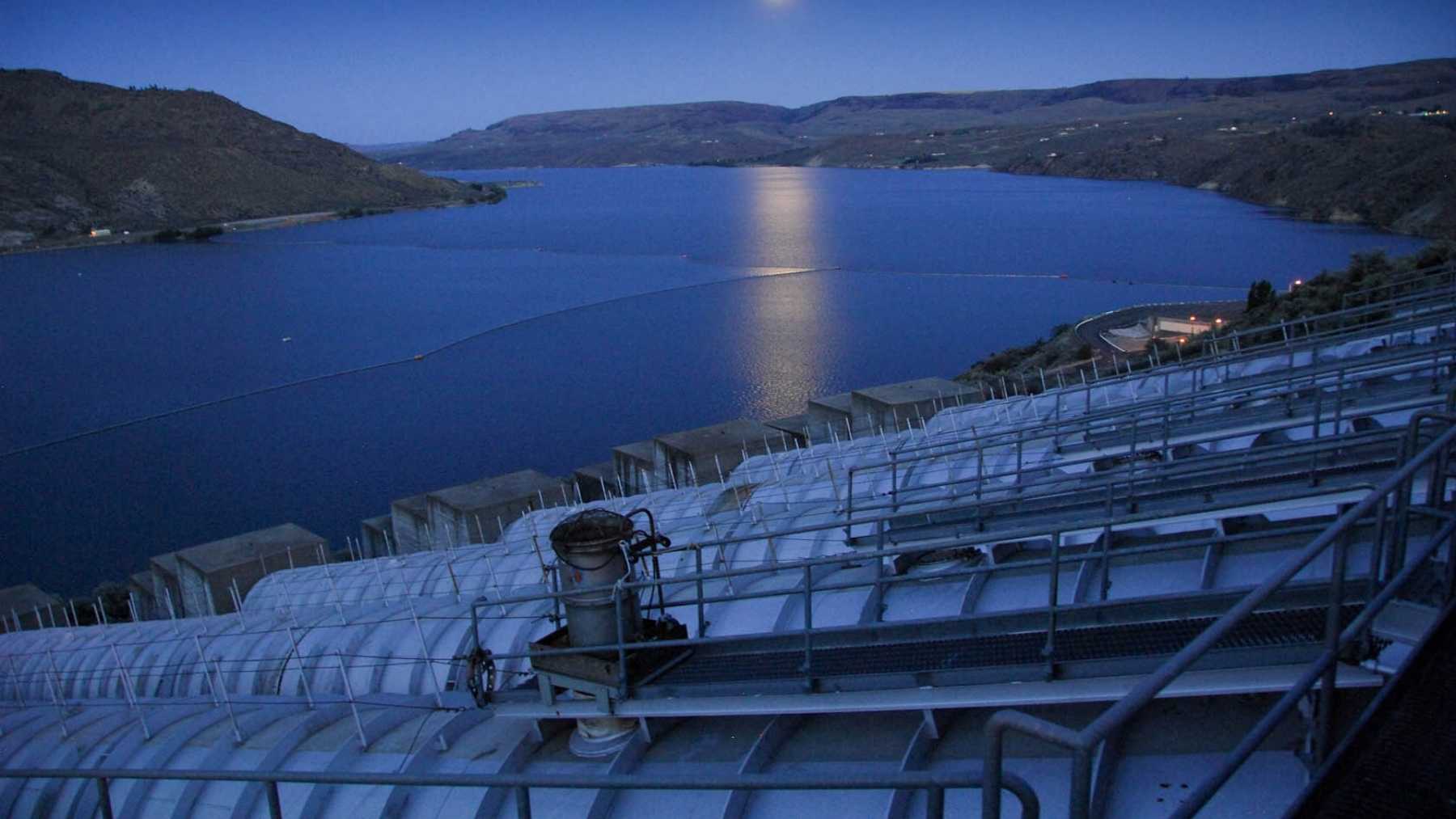
The Chinese rail corporation had decided that the land where the collapse was started was far too unstable to use, and the CCP ordered things built there anyways for political reasons, likely causing the collapse. Common sense would avoid 98%+ of potential disasters. The other big thing is that it is helium cooled. Supercriticality could melt a reactor, but it won't cause an explosion unless there is something like steam which can build up huge pressure. That's bad, but that's a three mile island type bad, not a Chernobyl type bad, and at a much much smaller scale.
0
@davidroberts ROOKIE2 months ago

If this article is intended for laymen, how many will relate to 1MWe? One could, for scale say about enough power to supply 800 households.
1
@generussel ROOKIE2 months ago
I would wager that most people who understand an article like this well enough to keep reading are capable of doing some cursory research on things they do not understand. Besides, the power quantity is somewhat irrelevant to anyone who isnt trying to buy power. The point is that a breakthrough in small scale able nuclear has happened and appears to be ready to deploy at scale without hiccups in fuel sources which have been issues for other companies. The rest is researchable.
-1
@rogeroakes ROOKIE2 months ago

The cooling system is in need of more emphasis as all nuclear accidents of whatever size we're always due to failed water based coolants. Here they mention water based moderators but helium as a coolant? Helium is much more rare and expensive than water and the loss of coolant caused all accidents.
1
@generussel ROOKIE2 months ago
That’s not really how nuclear accidents work. Cooling failures can be a problem, but saying every nuclear accident was caused by losing water coolant is just wrong. Chernobyl, for example, was mainly caused by a badly designed reactor and a runaway power surge, not the cooling water failing. Helium is also used on purpose in some newer reactor designs because it doesn’t boil, doesn’t react chemically with the reactor, and can operate at much higher temperatures. Yes, helium costs more than water, but coolant cost is a tiny issue compared with whether the reactor is safer and easier to keep cool. Also, a moderator and a coolant do different jobs, so using water for one and helium for the other is completely normal.
1
@jeremiahmorgan DRIVER2 months ago
I thought most were caused by malfunctions in the systems that control the reaction like the control systems for the fuel rods and the control systems for the control rods that slow the reaction.
0
@joshuazgardzins ROOKIE2 months ago

And Helium is used for coolant for MRI + CT machines and now we're using it for cooling The Nuclear set up. Even though Helium is in low amounts everywhere. Go figure 🤔 🙄
0
@madmick ROOKIE2 months ago
Its a failure, helium being such a finite resource we are running out of does not make it scalable.
1
@generussel ROOKIE2 months ago

Reactor helium is a closed loop system and not considered a consumable. Currently we habe about 8.5 billion cubic meters of recoverable helium in the us reservoirs alone, I dont think that is generally going to be an issue for production of this size of reactor. Helium has been used as a coolant for a long time. Fort St. Vrain in Colorado, a commercial 330 reactor that used helium as its primary coolant was online for 20 years and China's newest reactors also use helium as a coolant..its just more efficient in a closed loop and doesnt create pressure since it doesnt boil.. you are right that it is a finite resource but given in these cases it is also not a consumable I dont think this will be problematic.
0
@allenmorgan ROOKIE2 months ago

This is more of an advertisement then journalism. Ok, how long does it produce 1Mw power before it begins to run down...say to 90%? 90 Days...180? What? Also, when does it get refueled...also, how does it get refuled and at what cost, and how long does it take to get refuled...what happens to the old fuel? Who recycles that, and at what cost, at what danger to immediate and long term? What increased likely hood of terroist use of a higher grade uranium is there...will it make a better dirty bomb?

1
@jscottburge ROOKIE2 months ago
The article says it gets refueled every 5 years.
0
@jeremiahmorgan DRIVER2 months ago
It's the same fuel rods that big reactors use so it will be disposed of the same way. Encased in lead then put into a carved out mountain cave somewhere with lots of security.
0
@nicolasmartin ROOKIE2 months ago
If only this had been written well.
1
@jamesvanzandt ROOKIE2 months ago
I wonder how many towns in Alaska could use one of these to replace diesel generators? They could get district heating too. Maybe use "ice road truckers" to deliver that shipping container?
1
@markswallow ROOKIE2 months ago
What about the waste? How are we going to keep this material out of the hands of terrorists? So many safety questions...
1
@jeremiahmorgan DRIVER2 months ago
We already keep this exact waste out of terrorists hands. It's the same fuel rods used in large reactors. The supply chain for waste disposal already exists.
0
@jasonisbored ROOKIE2 months ago
Same way regular nuclear does. The DOE has trained agents authorized to shoot you if you steal it.
0
@paulwortley ROOKIE2 months ago
Great article. Pity about the comments.
1
@ryangreen ROOKIE2 months ago
What does the size of the reactor matter if you still need 5-10 acres of building infrastructure and another 20-30 acres for grid infrastructure and fencing? They may be smaller than conventional nuclear plants but they make a lot less power (this 1 Mw is 1000x to 1600x less than a modern full size plant) and aren't nearly as portable as the constant headlines only mentioning the reactor size make them sound.
0
hanswolfgangsch DRIVER2 months ago
Agreed, smr don't yet explicitly list what is required to support them. Probably lots of water and a cooling tower and a turbine as a minimum.
0
@rogeroakes ROOKIE2 months ago
The micro sized vs small sized difference is being overlooked here. Kind of like the difference between computer size differences were underappreciated in the 1950-2000-2020s where we went from room size to bookcase to desktop to handheld computers now called "phones" please don't make that mistake in downsizing and upgrading the benefits of nuclear energy at the same time. Nowhere does the article mention any limitations in Max or min terms for grid or building infrastructures. I think too many "boxes" exist in the conversation that needs to be widened by more in depth information and mind and culture constraints erased.
0
@jordanloveless ROOKIE2 months ago
I'm thinking they're going to power the floating data centers and maritime hideaways for the rich and powerful. They're going to start wars and then run away to their floating fortresses where the raging plebs can't get to them.
0
@jeremiahmorgan DRIVER2 months ago
The one the military is making which is mentioned in this article takes a total of 5 shipping containers to deploy which includes the reactor in one and all the support equipment I'm another and it supposedly does not need a constant water supply it cycles the water back through which leads me to believe a lot of that support infrastructure is cooling towers. So I'm guessing the support infrastructure for this one would be similarly sized, but maybe actually smaller. The militaries experimental reactor I believe is 5 MW vs this one being 1MW
0
@jasonadams ROOKIE2 months ago
Should have used thorium
0
richardmercer DRIVER2 months ago
And a BESS battery storage unit the size of a shipping container could store 5MW of it
0
@generussel ROOKIE2 months ago
Bess requires power, it doesnt produce power. When grid is taxed or a site requires power that isnt available a battery only does good for so long.
0
@dimangel ROOKIE2 months ago
So a whole new nuclear waste stream to manage
One that needs servicing every five years and which scales up with every box they lease/sell
0
@jasonisbored ROOKIE2 months ago
If you'd read the article you'd understand that it would generate identical nuclear waste to every commercial American nuclear plant, and therefore it can be stored in the exact same ways and places.
0
@stevedavid ROOKIE2 months ago
The executive order 14301 was issued by President Trump, this was his initiative, so why do you have obama pictured. The news sites in the west are truly deplorable.
0
@garryhachey ROOKIE2 months ago
So the thing leaks and becomes so toxic no one can get near it causing millions to clean it up , what then? Fast tracked technology typically over looks safety and down the road probabilities. Nuke accidents have increased the background radiation on the earth , what does that mean? It means dangerous particles have spread and contaminated the entire earth. Cancer rates approaching 1 in 2, why is that?
0
@karlneblett ROOKIE2 months ago
Privatized nuclear reactors marketed to data centers that have already displayed gross apathy for public problems they create. What could go wrong?
-1
THE LOTOwner community
Visit →
Luis Reyes

Luis Reyes

With more than 14 years covering the automotive industry, Luis Reyes is a seasoned voice in the field. A law graduate, he channels his curiosity and expertise into the detailed analysis of national and international regulations that shape the automotive world. At Autonocion.com, Luis combines his strong legal background with a deep passion for vehicles — especially those that have left a mark on automotive history. His experience writing for multiple brands across the industry has established him as a trusted authority. Luis is committed to sharing his expertise and enthusiasm with enthusiasts and industry professionals alike, with a firm belief in the continuous evolution and innovation driving the auto industry forward.
Contact: info@autonocion.com
autoNotion · The Box






