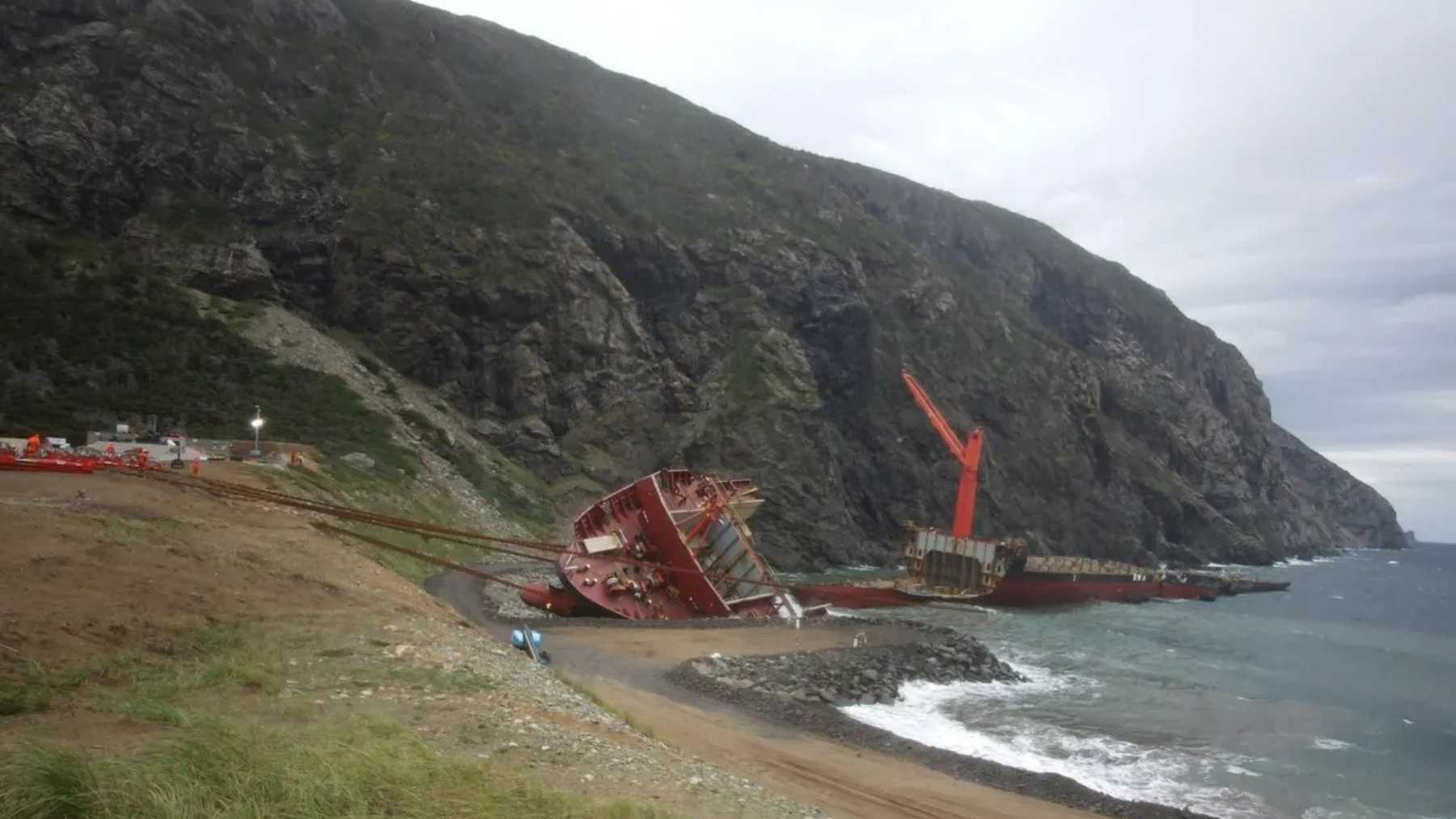

Most cities bury their single biggest weakness under a road and hope they don’t have to think about it. Calgary’s has a name: the Bearspaw South Feeder Main, a 1950s concrete pressure pipe that can carry roughly 60% of the city’s drinking water to about 1.2 million people. It failed in June 2024. It ruptured again on December 30, 2025. After the second one, Calgary didn’t wait around for a normal replacement timeline. It started building like the house was on fire.
That replacement’s now physically in the ground. The City of Calgary confirmed in a status update dated September 24 that the new 77-inch steel water main is fully installed through all 2.3 miles of Stage A’s tunnels, which thread under the Bow River, a CPKC freight rail line and two major roads, 16 Avenue and Sarcee Trail. The concrete carrier pipes are in. The steel inside them is in. And the old pipe kept supplying the city the entire time, because Calgary can’t exactly shut it off while the new one goes in.
So how do you replace a pipe you can’t turn off?
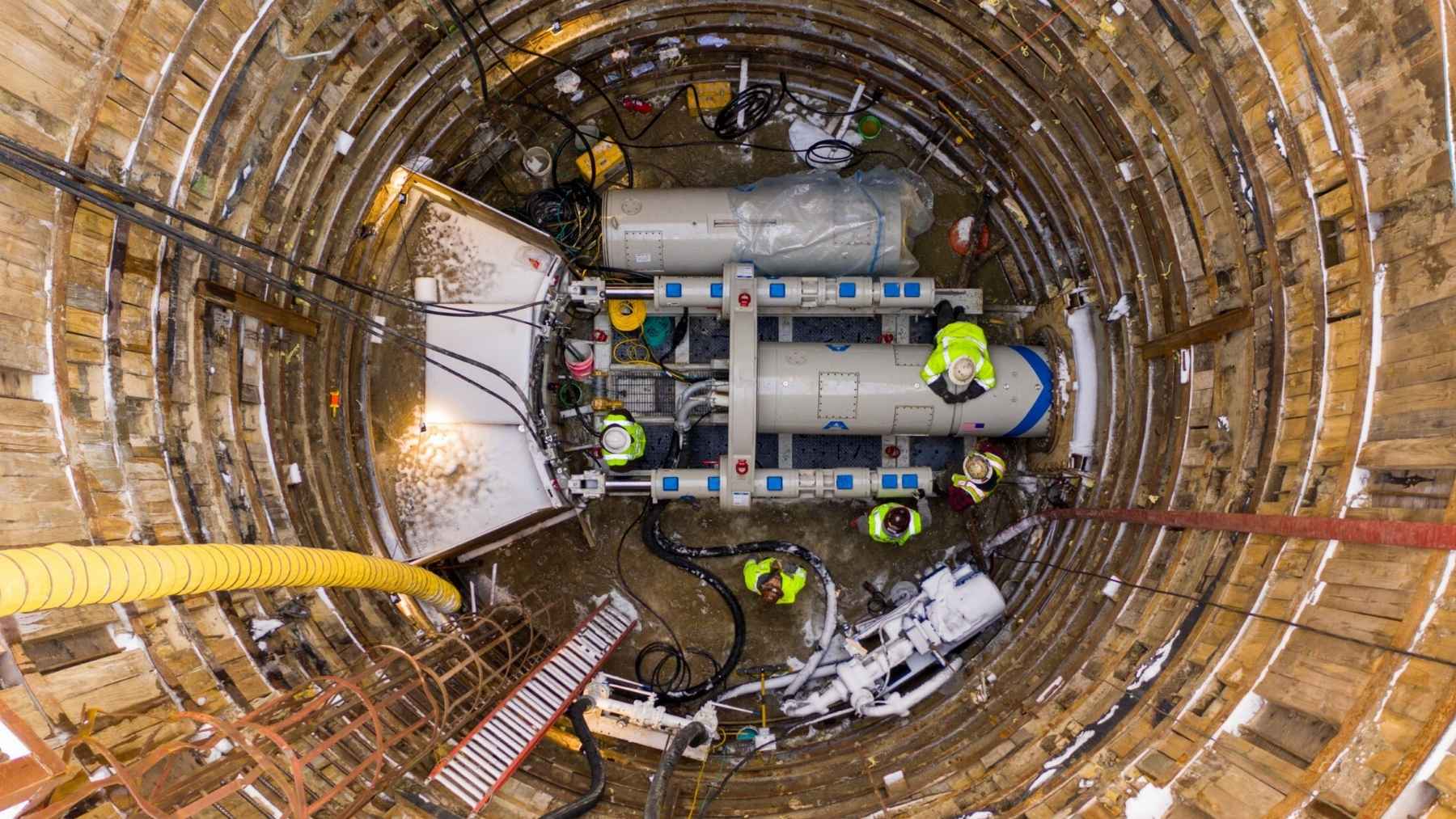
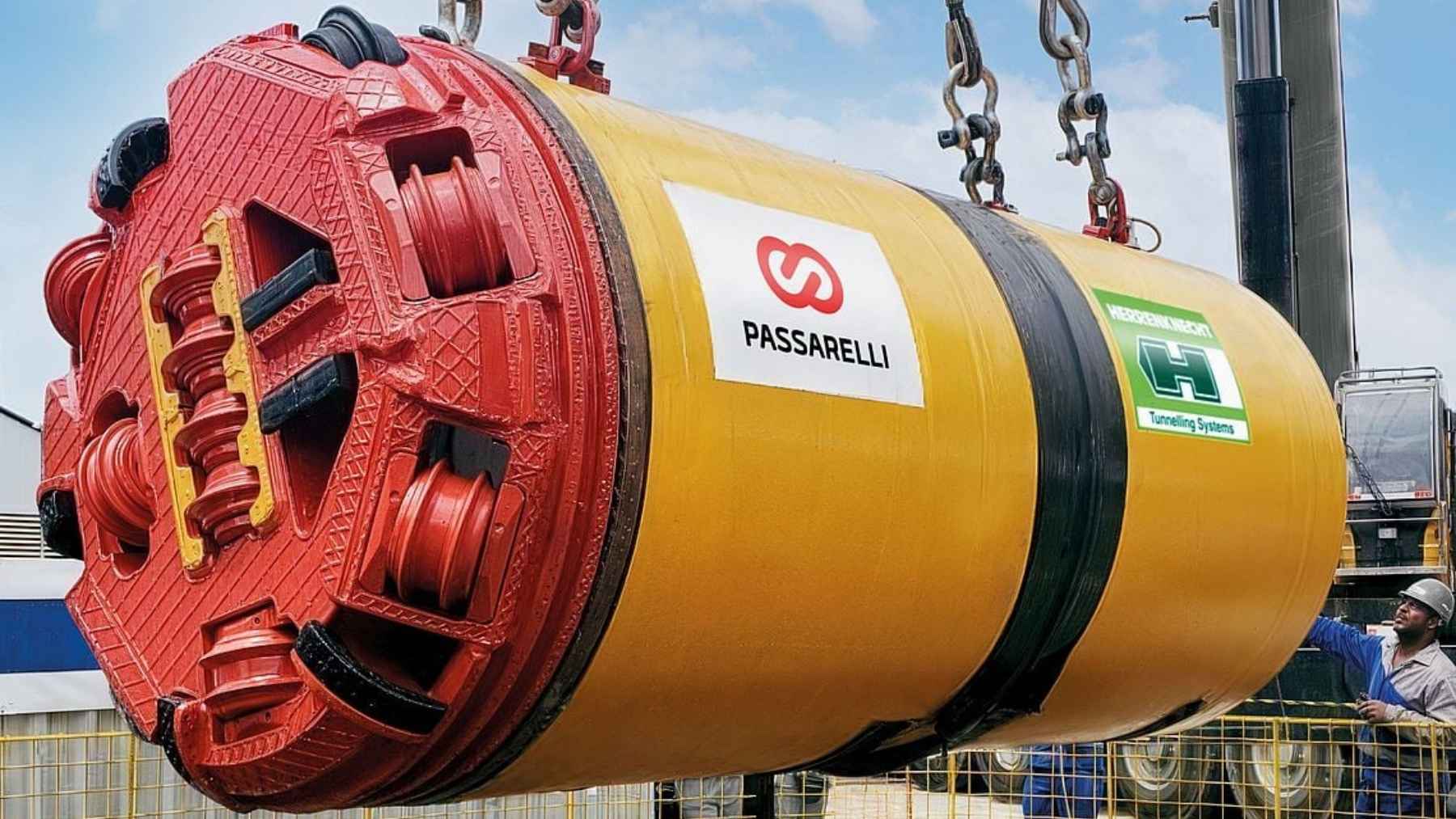
You don’t dig it up. You tunnel a brand-new route a safe distance away and leave the old main alone until the very last moment. The method is microtunneling, and here’s how it basically works: a remote-controlled boring machine chews through the ground from the bottom of a vertical shaft, and hydraulic rams in that shaft shove sections of concrete pipe in behind it, so the tunnel arrives already lined. Nobody rides in the machine. Once the concrete tube’s finished, crews lower steel pipe sections into the shafts, roll them through the tunnel on low-profile carriers, weld the joints, inspect them and grout the whole thing into place. It’s a pipe inside a pipe, and yes, it’s about as finicky as it sounds.
So what did they actually build down there?
The steel main itself measures 77 inches across, according to Ward & Burke, the contractor that handled the tunneling. The concrete sleeves around it come in two sizes. The longest drive, roughly 0.7 miles, kept the originally planned 8.2-foot inside diameter, and much of the rest was slimmed down to 7.5 feet in a redesign that cut excavation volumes, spoil trucking and the load on the slurry plants. Slide a 77-inch pipe through a 7.5-foot tube and you’re left with about six and a half inches of shoulder room per side, which I wouldn’t call generous for curved tunnel sections and welding gear.
The hardware showed up fast. Ward & Burke says it allocated four complete microtunneling setups within a week of winning the contract: three crews actively boring and a fourth full rig sitting on standby. The machines were Herrenknecht units, an AVN2500, an AVN2200 and an AVN2100, with a second AVN2200 kept as backup, because apparently one spare wasn’t enough comfort on this schedule. On the longest, biggest-diameter drive, the company added a second crew and went to 24-hour operation to keep jacking forces under control.
Jacking forces deserve a quick explanation here, because they’re what quietly kills schedules in this line of work. Every new pipe section gets pushed in from the launch shaft, so the rams aren’t just moving the machine, they’re moving the entire string of pipe already in the ground. The longer the drive gets, the harder friction fights back, and if the push stops for too long, the surrounding ground grips the pipe and the restart gets ugly. That’s why the around-the-clock shifts: they keep the string moving. Neither the city nor the contractor has published actual thrust figures, so I can’t tell you how close they came to the limit of those rams.
Two design calls did a lot of the schedule’s heavy lifting. Ward & Burke dropped an intermediate shaft into the middle of the longest planned drive, a 4,593-foot run between Shouldice Park and Edworthy Park, turning one long sequential push into two fronts tunneling at the same time. And at West Sarcee, the company raised the tunnel alignment while keeping it inside bedrock and clear of the live feeder main, which let that shaft shrink from about 125 feet deep to 92.
Why the ridiculous pace?
Because the pipe being replaced is a single point of failure for most of a large city’s water, and it’s already broken twice in two years. Global News reported that Mayor Jeromy Farkas told reporters this kind of job would normally run about four years, and he wanted it finished in one. Calgary mobilized crews on January 23, and eight months later the tunnels and the steel inside them were done, which is a pretty wild pace for heavy civil work. I’d frankly have expected a target like that to slip by now, and so far it hasn’t.
We’ve covered a few machines working under waterways lately, including the 5-foot tunnel driven under the Welland Canal in 33 days and the twin machines that finished their dig in a tunnel flooded on purpose. Calgary’s job stands out for a different reason: crews had to thread a second pipe through the first one, under a live river crossing, on an emergency clock, with the pipe being replaced still pressurized a short distance away.
What’s left before water flows through it?
The tunneled stretch is only Stage A. Stage B runs along 34 Avenue in the Bowness neighborhood and goes in by plain old open-cut trenching, and as of September 24 it sat at roughly 61% installed, with about a mile of steel in the ground and 7 of 13 blocks finished. That one’s simpler: dig a trench, drop the pipe in, cover it back up.
Then the schedule gets hairy. In mid-October, the old Bearspaw South Feeder Main gets shut down so crews can connect the new main to the water system. While it’s offline, the city plans to squeeze in six proactive repairs on a 59-inch section of the old pipe, running construction 24/7 at six excavation sites. Shutting down your most fragile, most important pipe on purpose to fix it is arguably the scariest line item in this whole project, even if it’s the only way to do the job.
Commissioning starts in mid-November. That means disinfecting the new main, filling it up, and pulling the old pipe out of service. The new steel isn’t carrying a drop of water yet; that’s what November and December are for.
The City of Calgary is holding an in-person progress session in Bowness on October 8, and its published schedule still shows the mid-October shutdown, commissioning beginning in mid-November, and the replacement pipe completed in December 2026.