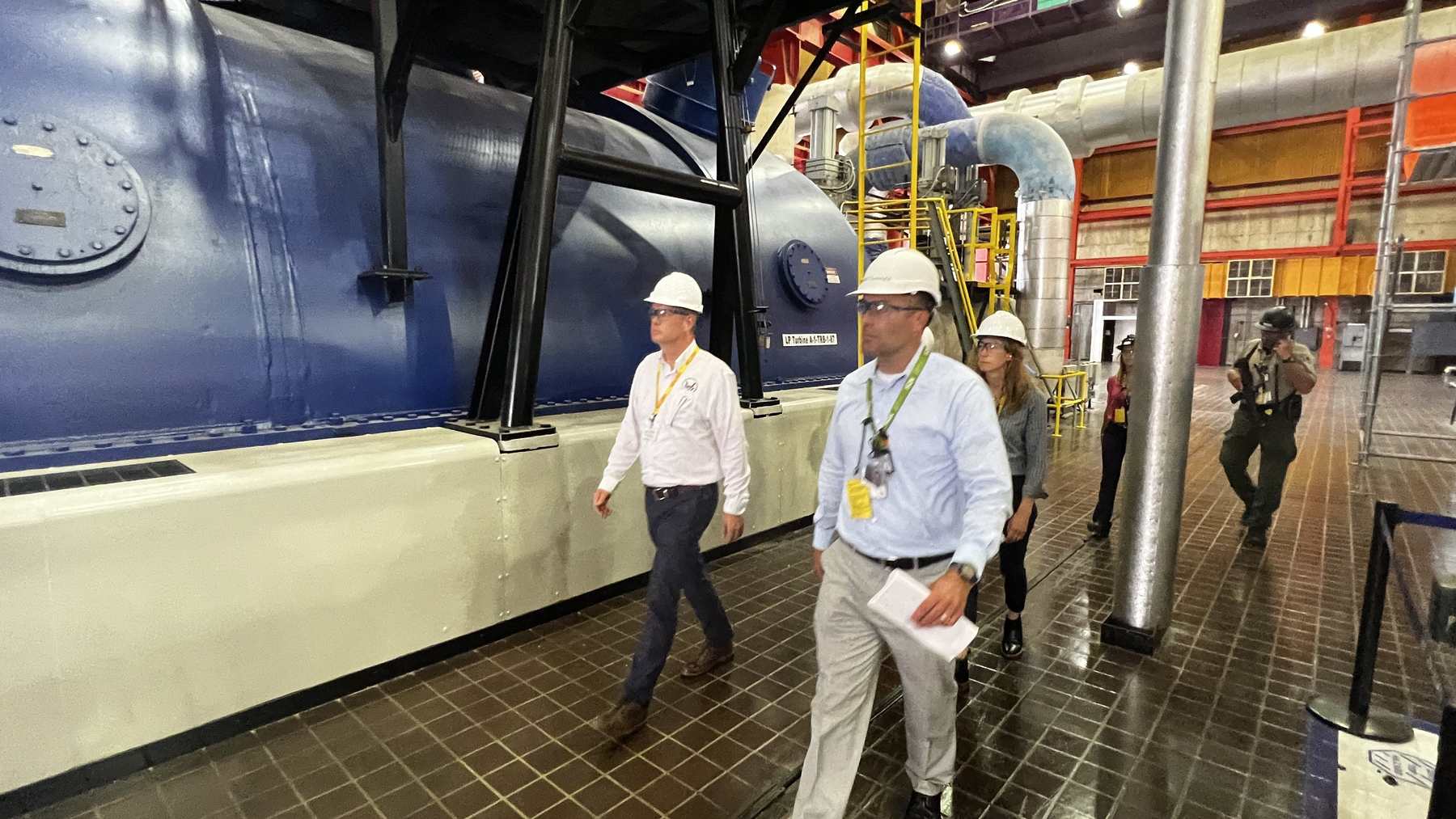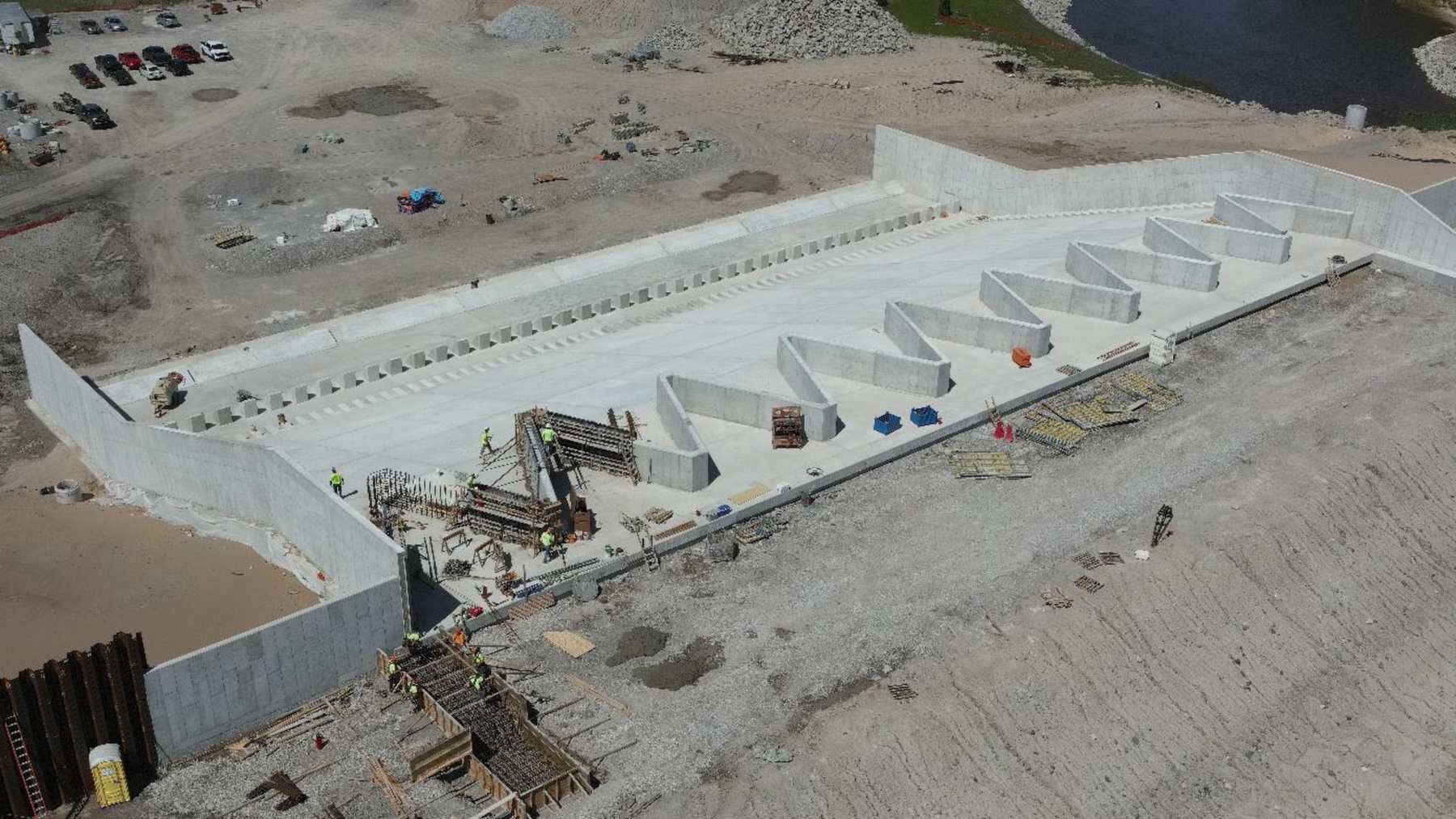

Before welding and high-strength bolts took over, rivets were how you held big pieces of steel together. If you’ve ever looked up at the underside of an old railroad bridge, you’ve seen rows of them, those little domed heads that look like someone hammered buttons into the metal. That’s more or less what happened, too.
A rivet goes in red-hot, and a worker pounds the far end into a second head so it can’t slide back out. As it cools, it shrinks and clamps the plates together for good. There’s no nut to undo, so if you ever need that joint apart again, you’re grinding, drilling or cutting your way in.
Which is exactly what the Tennessee Valley Authority ran into at Watauga Dam, the tallest of its earth-and-rockfill dams, up in the northeast corner of Tennessee. When Watauga was built, its 11-foot butterfly valves were riveted straight to the pipe that supplies the turbines. So when TVA’s crew went to pull one of the old valves out, it had to cut through the whole pipe, according to the agency’s own write-up of the project.
TVA changed the design this time around. The agency puts the new valve at 95,000 pounds, and it’s held in place with bolted dismantling joints. Thomas Bell, a project manager with TVA Generation Projects, said in that write-up that the switch from rivets means the valve can come out without any cutting, and he described the thinking as “designing for the future and maintainability.”
That’s about as plain as engineering quotes get, and I’d argue it’s the smartest call in this whole project. Whoever has to pull one of these valves next gets to leave the cutting gear in the truck.
So what’s a butterfly valve?
If you’ve ever cleaned a throttle body, you’ve already seen one. It’s the round metal plate on a shaft that tips open when you press the gas pedal and lets air into the engine.
Watauga’s version does the same job with water, and it’s 11 feet across. Turn the disc edge-on to the flow and water rushes past it toward the turbine. Swing it flat across the pipe, and the turbine’s water supply is cut off.
That water comes out of Watauga Lake, which TVA says is the highest reservoir on the whole Tennessee River system, at an elevation of over 1,900 feet. It travels through a pipe 18 feet wide that runs 3,700 feet through the rock of Iron Mountain, one of the ranges in the Blue Ridge. Near the powerhouse, that pipe narrows and splits in two, and each line has its own 11-foot valve before the water reaches the plant’s two turbines. Engineers call a pipe like that a penstock. TVA’s original technical reports called it the power conduit, which honestly sounds like something Scotty would be fixing on the Enterprise.
TVA’s photos from the job show its Dam Safety crew inside that penstock, flying a drone through it, and one caption says the last time anyone got in there before this project was about nine years earlier. From the looks of things, it’s a pretty dark place to fly a drone.
Figures: TVA.
How do you unbolt an 11-foot valve?
With a dismantling joint. It’s basically a short, telescoping section of pipe that sits right next to the valve, held together by long bolts. Loosen those bolts and the joint slides shorter, which opens up enough of a gap to lift the valve out in one piece. TVA’s photos also show the prep work on the upstream side, where a new stub of pipe called a spigot was lined up and welded into place.
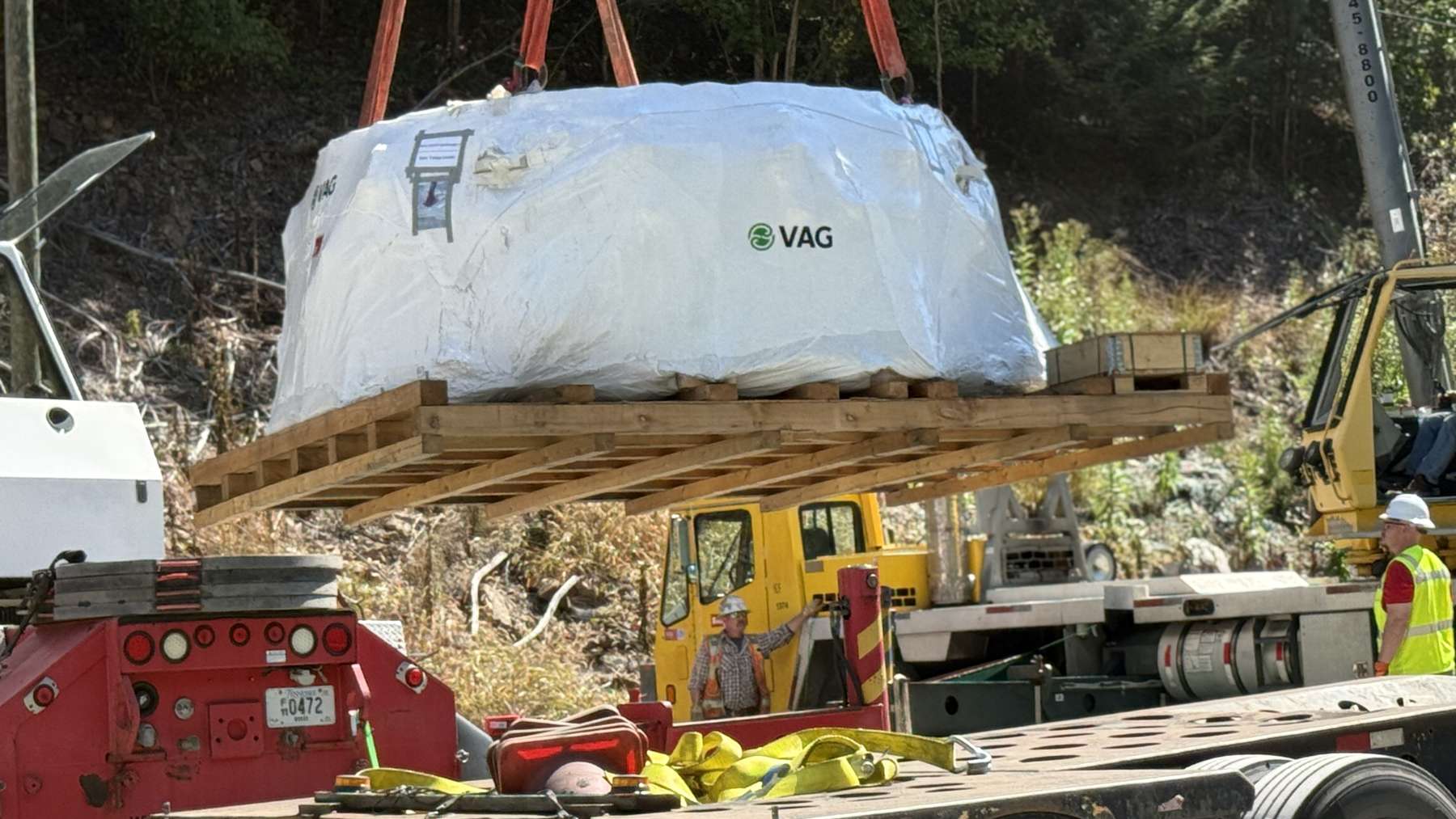
I went digging through US import records to see where the new hardware came from, and they show two shipments to the plant from VAG, a valve maker in Mannheim, Germany. The first is listed as a butterfly valve with its dismantling joint already assembled, along with two spigot pipes. The second came in at just over 103,000 pounds, gearbox, electric actuator, packing and all. That squares pretty neatly with a 95,000-pound valve, as far as I can tell.
Raccoon Mountain’s valves are a different animal
We covered TVA’s other big valve job, inside Raccoon Mountain near Chattanooga, late last month. Those are spherical valves, 10 feet across, so a foot narrower than Watauga’s 11-footers. But TVA puts each one at almost 200 tons, or close to 400,000 pounds, against 95,000 for Watauga’s new valve.
So how does that work?
Mostly, it’s the shape. A spherical valve is a giant steel ball with a channel through its center, sitting inside a heavy housing, and it’s what you’ll usually find where the water pressure gets serious, like the pair California’s Department of Water Resources installed deep in the base of Oroville Dam. A butterfly valve is basically a disc on a shaft inside a short ring of steel, so there’s a lot less metal in it.
TVA kept the original paperwork
The engineers who built Watauga are helping out on this job, in a roundabout way. TVA still keeps the records from when the plant was built, which it calls its blue and brown books, and the agency says its people use those drawings and notes to double-check old measurements and figure out what the original designers had in mind.
Jordan Clark, a construction manager on the project, said there’s even an original photo of workers easing the valve into position. That’s a pretty great thing to have sitting in the archives, and I’d love to see it next to a shot from this job.
Is the job finished?
I can’t tell you for sure. I couldn’t find anything from TVA newer than the write-up I’ve been quoting, and it describes the valve work as still in progress without giving a finish date.
The valves aren’t the whole job, either. TVA’s team is also putting in new wicket gates and bushings and updating the plant’s electrical equipment. Wicket gates, if you’re curious, are the adjustable vanes that control how much water gets into a turbine, and TVA says the new parts are there to get the gates sealing and moving properly again.
According to those import records, both new valves have made it across the Atlantic, and the second one reached the US on March 29. And TVA’s July 10 update has both of Watauga’s 11-foot valves down for complete replacement.