- 4 MONTHS AGO · ENERGYA Bavarian farmer put solar panels on top of the poles already holding up his hops, 23 feet over the field, and the first version made excellent electricity and fewer cones, because the plants reached the glass and went bushy instead of setting the part brewers pay for
- 3 MONTHS AGO · ENERGYA 10-foot-high field of solar panels covering 2.2 acres let a Massachusetts farmer pull sweet corn at about 80 percent of his open rows, at the same quality, while 832 modules on 28 tracker motors made 445 kilowatts over the same dirt
- 2 MONTHS AGO · ENERGY74,064 solar panels stand 11.5 feet over a working farm pressed against the southern runway of Berlin’s airport, and one crop is banned from the ground beneath them, corn, because tall grain pulls in flocks of birds where jets are taking off
- 2 MONTHS AGO · ENERGY3,240 solar panels stand over a Belgian pasture where 50 ewes graze between the rows, and 40 to 50% of the power they make goes next door, into the limestone quarry that owns the grass and spends its electricity turning big rocks into smaller ones
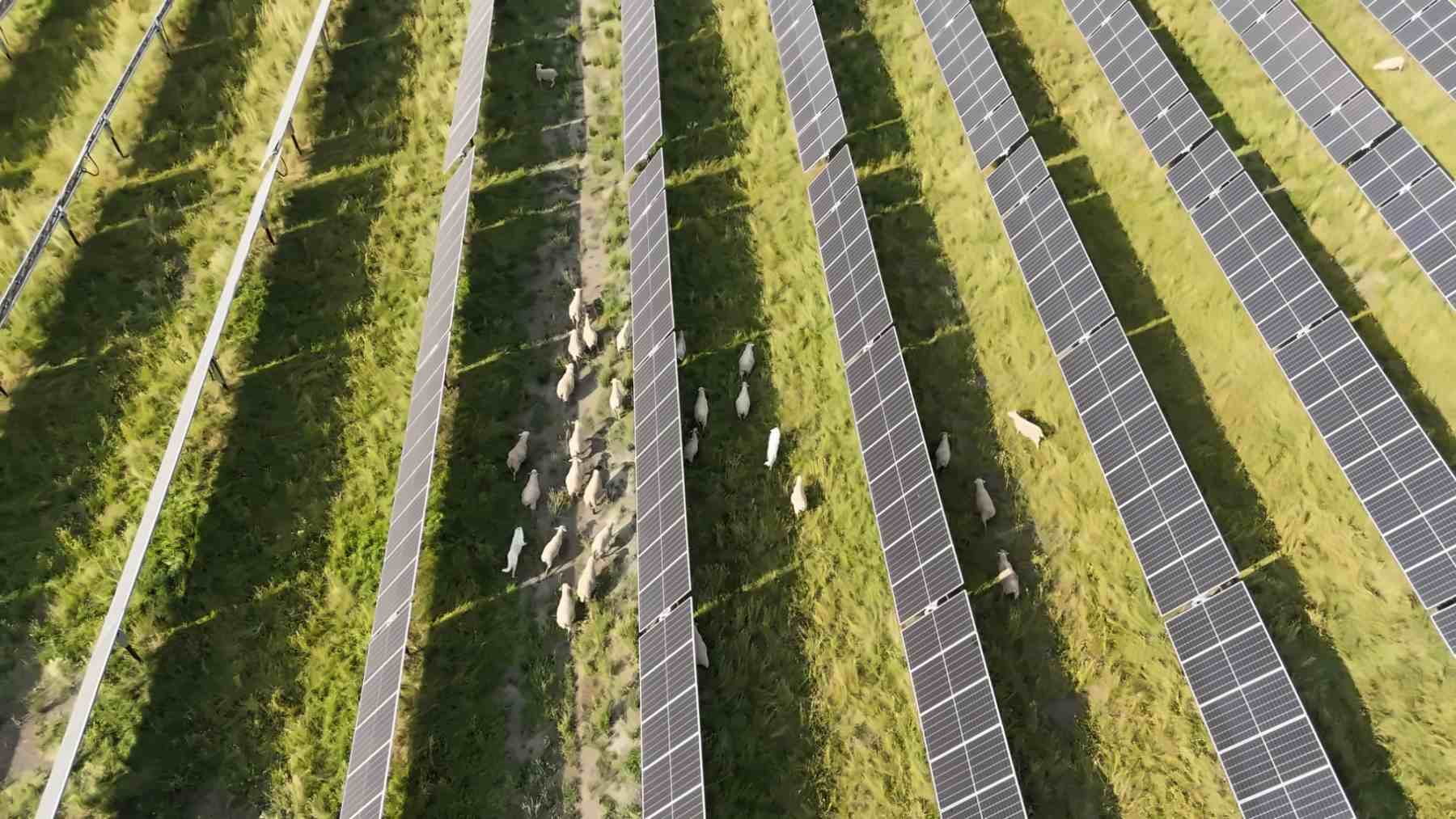
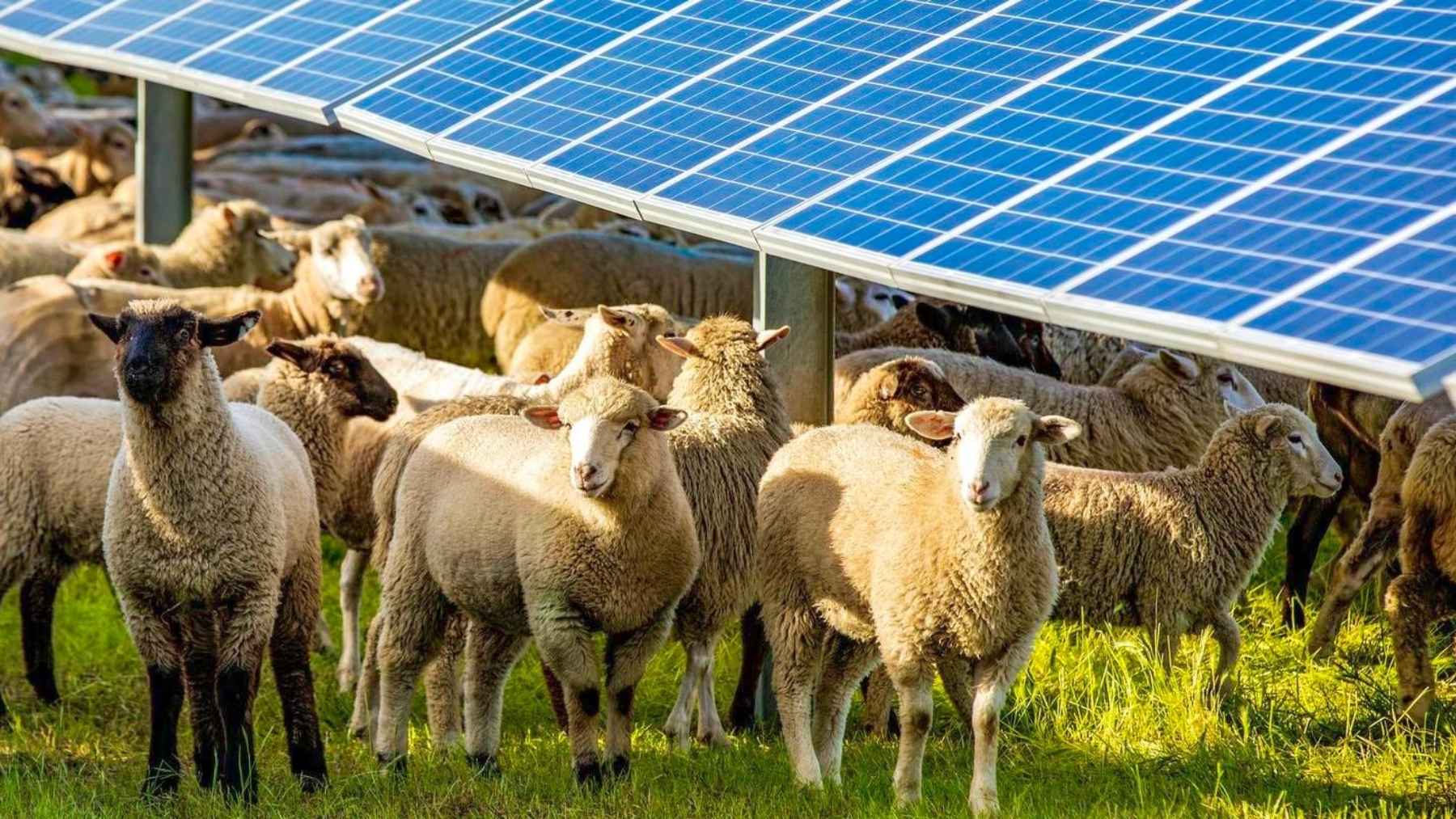
- TODAY · THIS ARTICLE755,000 solar panels in Australia hide 4,200 sheep so well that drivers kept posting there were none inside, because a merino stands knee-high and the tilting rows read as one sheet of glass from the road — so the farmer rounded the flock up between the panels and hit record
People love to argue; that’s not really up for debate. (Huh? Huh?) And one of the latest dumb arguments I’ve seen is drivers in New South Wales, Australia claiming that solar farms take up so much farmland that there isn’t even room for sheep.
The man who grazes that land had a pretty great comeback. He rounded up 4,200 sheep, out of a flock of 6,000, between the rows and hit record.
The farmer is Tony Inder, a sixth-generation wool grower from Wellington, in the state’s central west. His clips went up on Facebook, then to RE-Alliance, an Australian renewables advocacy group, which ran them in its March 2026 newsletter. By May, the viral videos had been picked up by CleanTechnica as well.
“It’s because you just can’t see under the panels,” Inder said of the doubters. The sheep are in there full-time. You only notice them when most of the flock lands in the same camera frame.
You wouldn’t think something like this would need explanation but…
So how do you hide 4,200 sheep in plain sight?
The farm in the video is Wellington North, and its numbers are frankly a bit silly: more than 755,000 solar panels on single-axis trackers, spread across 847 hectares (2,093 acres), all of it rated at 425 megawatts (the combined rating of the panels themselves). GRS, the Spanish contractor that built the plant for Lightsource bp, handed it over for provisional acceptance in December 2024.
That’s a lot of panels.
Now picture the view from a car. A merino stands somewhere around knee height, and the panels tilt through the day to track the sun, so the rows stack up into what reads like one unbroken sheet of glass and steel from the road.
Everything below that line is shade. The animals spend their days in one part of the property that a passing driver physically can’t see into (the shade). When driving by at 60 mph, a few thousand sheep simply aren’t part of the picture.
The sheep were doing a job before the argument started
Inder didn’t wander in with a camera one day. He’s the grass control. He doesn’t own the ground under the panels, and per an AFP interview from February, the landowners let him graze it for free. In exchange, the operator mows far less, and that matters twice over in rural Australia: cutting 2,000-plus acres of grass costs real money, and keeping it short is part of complying with bushfire prevention rules.
RenewEconomy reported back in 2025 that once his sheep took over the job, mowing dropped to a single pass a year. The University of Sydney put the solar-grazing flock at 1,700 merinos in early 2024. By the time AFP visited this February, Inder was running 6,000 sheep across two blocks of land covering close to 10,000 acres.
Why does a wool guy bother? Shade, basically, and what that steady shade does to grass. “It’s constant shade and it’s constant green,” Inder told AFP, and consistent feed grows consistent wool. That’s his read as the man selling the fleeces, not a lab result.
Sheep as solar groundskeepers keep turning up on this site, by the way. Volkswagen keeps a flock and a donkey under panels, and a Calgary solar farm runs sheep, pigs and chickens.
Does the wool actually get better?
Alright, we can’t act like the solar panels are completely magical.
There’s a study, but you gotta really pay attention to the wording. Lightsource bp, which owned the farms at the time, commissioned EMM Consulting, working with Elders Rural Services, to compare two groups of merinos. One group grazed regular pasture, and the other grazed the original Wellington solar farm next door to the big one in the video.
Published in October 2024, the second round of results found that running sheep among panels didn’t hurt wool production. A few parameters even pointed toward improvement. However, the company admitted it needed to do longer-term testing to fully understand the benefits. And that’s coming from the company’s own commissioned study.
So no, I can’t tell you solar panels grow better wool. Neither can the people who ran the numbers, yet. Nothing in the testing says the panels make the wool worse, though, and Inder clearly likes what he’s shearing.
One farm became a 625-megawatt hub
Wellington North didn’t show up alone. It sits next to the original Wellington solar farm, a 200-megawatt project on the same road, and together they operate as a 625-megawatt hub.
Lightsource bp’s own math puts the new farm’s output at the equivalent of 152,500 homes, or 244,000 cars taken off the road. I’ll let you decide how much an “equivalent cars” number is really worth, but on this site it felt rude not to mention it.
Ownership changed hands this year. Aula Energy bought both Wellington farms in February 2026 as part of a package of five operating solar farms totaling 1 gigawatt, with options for up to 800 megawatts of batteries on top, and said the daily routine at the farms wouldn’t change.
For 6,000 sheep, that’s the best outcome an ownership change can deliver.
 A reactor built from 664 two-inch uranium cubes hung on wires in heavy water under a German castle was Heisenberg’s last shot at a chain reaction, and two of the surviving cubes now show it needed about twice the uranium and heavy water it held, more of both than Nazi Germany hadEnergy · 2 weeks ago
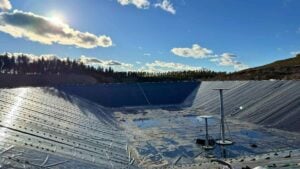 A 66-foot-deep gravel pit in Finland just started taking in about 100 million gallons of tap water, and once a nine-acre lid goes on top, it’s meant to hold enough summer heat at up to 194°F to cover as much as nearly a quarter of the town’s yearly heat demandEnergy · 2 weeks ago
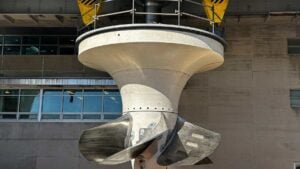 A 375,000-pound turbine now spins inside a Tennessee dam in place of one that ran for more than 80 years, and a federal watchdog just found that 196 of the 240 welds on the ring guiding water out of it failed on a job where some welders weren’t qualifiedEnergy · 2 weeks ago