
If you live anywhere PG&E strings a wire, you already know the drill. The forecast calls for wind, the humidity drops, and the utility announces a Public Safety Power Shutoff, which is the polite name for switching off your neighborhood so a power line can’t start a fire. On Thursday, October 15, that meant 3,601 customers in Lake County, California, sitting in the dark under a red flag warning, part of what the Press Democrat described as the utility’s biggest planned outage since 2021.
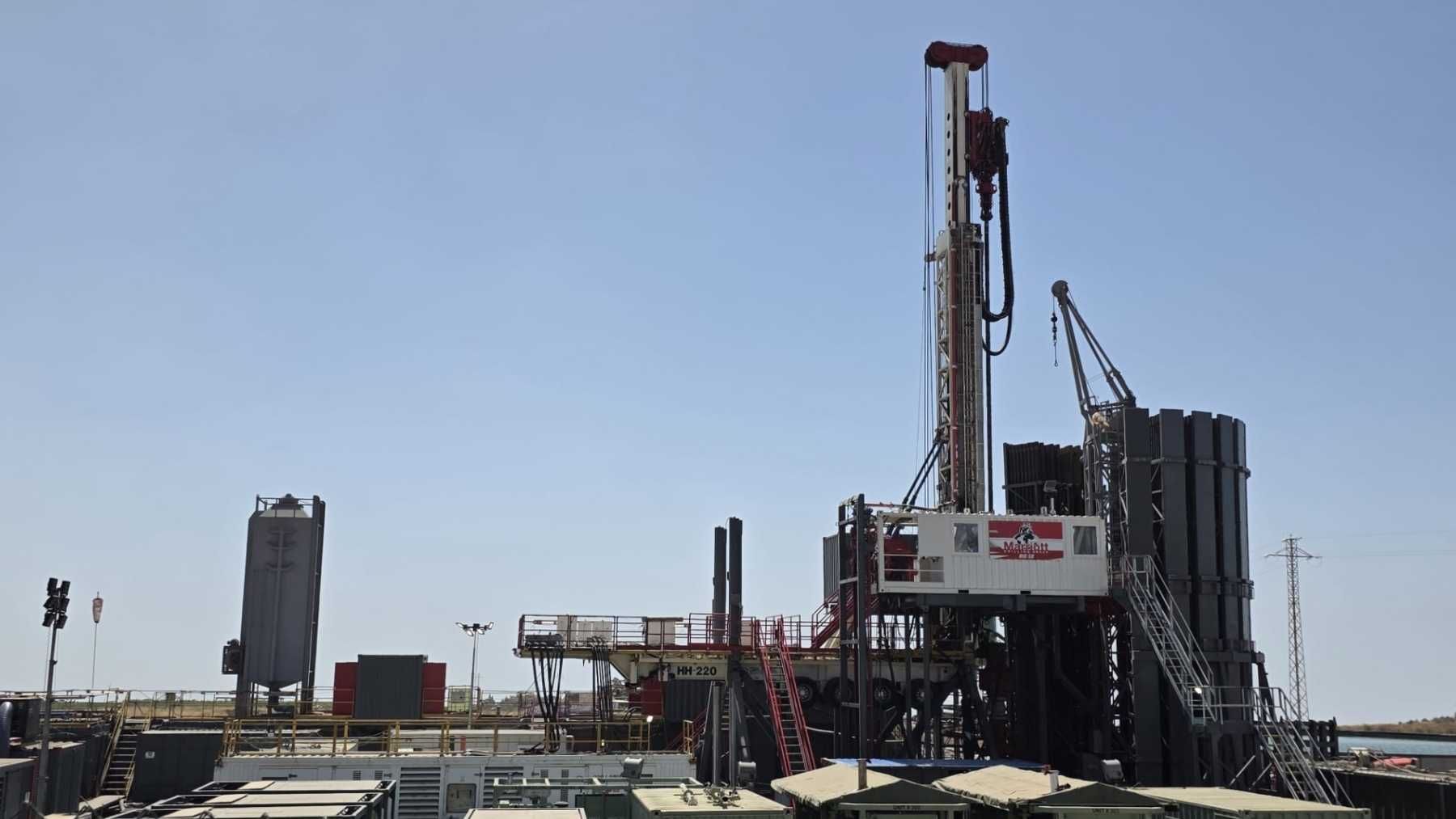
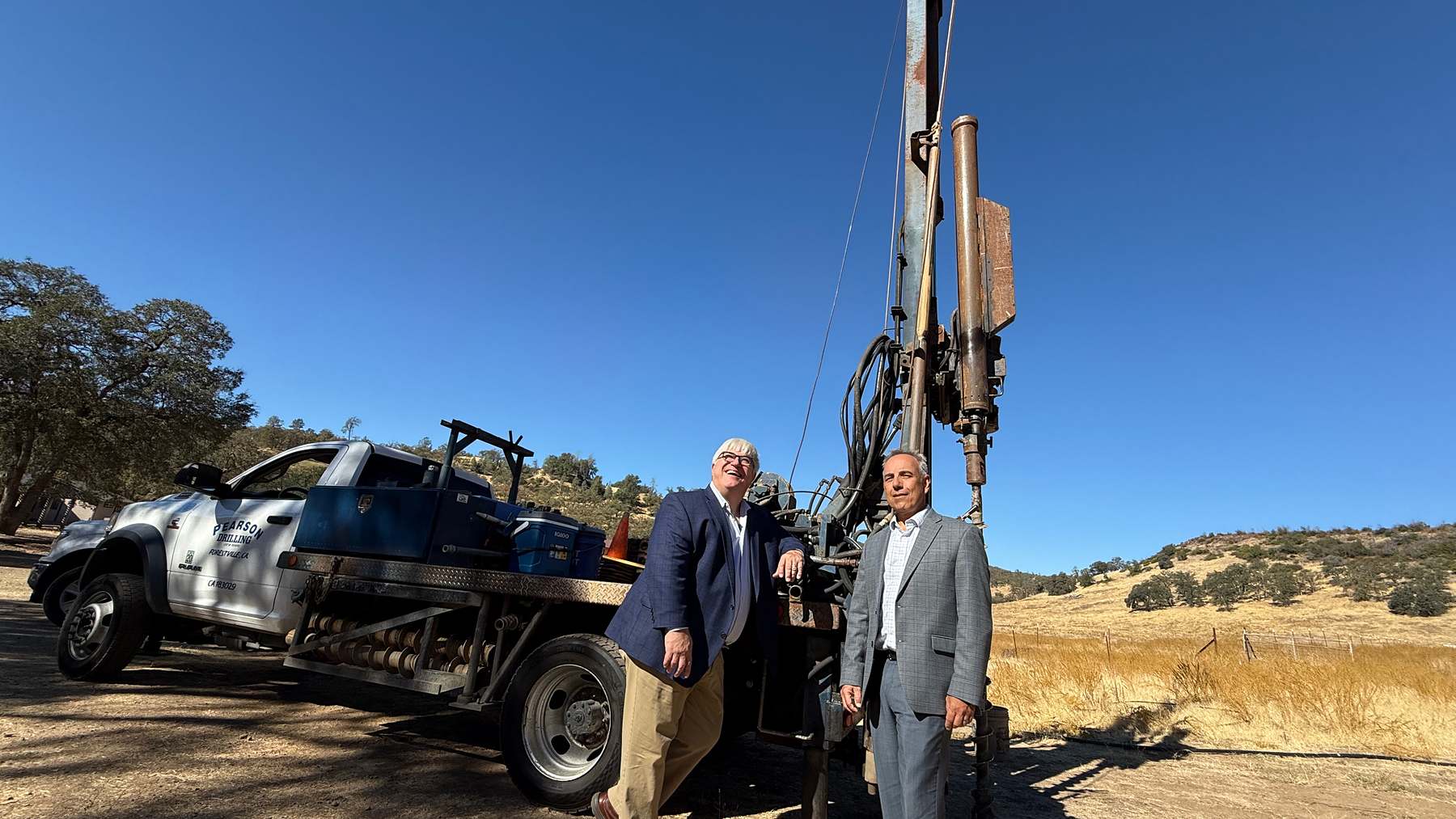
That same Thursday, in the same county, a drilling rig run by an outfit from Forestville was pulling core samples out of a hillside in Hidden Valley Lake for a battery made of water. The kind of battery that, if it ever gets built, is supposed to keep the lights on through exactly that sort of shutoff. And its top tank is designed to double as the fire department’s emergency reserve.
I had to read the acronym three times. The project is called FLASHES, which stands for Firemain Linked Auxiliary Supply/Hydraulic Energy Storage.
The developer is Trane Energy Services, which is the part of Trane Technologies that does energy projects rather than air conditioners, and the money for the study is coming from PG&E’s Microgrid Incentive Program. So the utility that cut the power is paying to find out whether a hill full of water can stop that from mattering next time.
So what is a water battery, exactly?
Pumped hydro is about the oldest trick in the energy storage book. You pump water uphill when electricity is cheap and plentiful, you let it run back down through a turbine when it isn’t, and the hill does the storing. The big ones use dams and whole valleys.
The Lake County version uses no dam at all. As Microgrid Knowledge put it, there’s “just two tanks and a hill.”
Here’s the loop. A solar field covering more than 100 acres makes power during the day. That power runs pumps that push water from a tank at the bottom of the slope up to roofed tanks at the top.
In the evening, or during an outage, the water drops back down through a turbine and comes out as electricity again. The tanks are covered, which keeps the water from evaporating in a county that bakes all summer, and the water itself is supposed to come from a dedicated well that developers told the Press Democrat could reach more than 1,000 feet down.
That well is, frankly, the whole ballgame. Trane’s Michael Day told Lake County supervisors back in June that the project has to prove it’s pulling water from somewhere other than the local supply everyone else is drinking from. If the geology down there doesn’t cooperate, none of the rest matters.
Five million gallons the turbines never get
The fire angle is where this gets interesting, and it’s also where the name comes from. “Firemain Linked” means the upper tank is plumbed into the firefighting water system, and part of it gets walled off from the energy side entirely. Day told the Press Democrat the upper tank would always hold 5 million gallons as a “never-touch-it emergency fire reserve.” Those 5 million gallons sit above the turbines and are meant to go to firefighters without ever being spun into electricity first.
Is 5 million gallons a lot? For a fire crew it’s a pretty big deal.
A typical engine tank holds a few hundred gallons, and a rural water district’s whole storage tank can be well under a million. Having 5 million gallons parked on a hill above your subdivision, pressurized by gravity, is the sort of thing Lake County has wanted for a while now, given that the place has burned repeatedly over the past decade.
You might be asking why anyone would build a giant hydro battery just to get a fire tank, and the answer is you wouldn’t. Day calls these triple-threat facilities, and his pitch to Microgrid Knowledge was that their day job is making solar power, storing it and selling it back to the California grid during peak hours. The fire reserve is a bonus bolted onto a machine that’s supposed to pay for itself. Whether it actually does is what the next year and a half is for.
Three plants, two hills, one feasibility study
PG&E’s project manager Madison Hoffacker laid out the design figures for the study: one facility at 10 megawatts of solar with 40 megawatt-hours of storage, and two at 20 megawatts of solar with 80 megawatt-hours each. Those are paper numbers for a project that is still at the feasibility stage, not a built plant. If you’re not used to those units, megawatts are how fast the thing can deliver power and megawatt-hours are how much it has in the tank.
An 80 megawatt-hour plant running flat out at 20 megawatts would last about four hours, give or take. At half output it’d go roughly twice as long.
The Hidden Valley Lake unit is one of the 80 megawatt-hour plants. The other two, serving the Hartley and Lucerne areas on Clear Lake’s northwest side, are being developed together as one project near North Lakeport.
Day sketched that northern setup for the Press Democrat as design figures, not as something poured in concrete: a pair of upper tanks in the 45 million gallon range apiece, one lower tank roughly twice that size at about 90 million gallons, and three pipelines running down to generators rated at 10 megawatts each. For comparison, Hidden Valley Lake itself, the reservoir the town is named after, holds about 3,500 acre-feet, which is north of a billion gallons. So we’re talking tanks, not lakes, but very large tanks.
I couldn’t find a published height for any of those tanks, and height is what decides how hard the water hits the turbine, so I can’t tell you how the gallons translate into the megawatt-hours. That math stays inside Trane’s spreadsheets until the study comes out.
Why not just buy lithium batteries, like everyone else on the planet? Two reasons, as far as I can tell. A battery pack can’t put out a wildfire, and a battery pack doesn’t refill itself from the sun every morning the way a solar-fed water tank does.
PG&E’s own release talks about “multi-day resilience” during outages, which is a bigger claim than the four hours of storage suggests, and it only works if the panels keep pumping water back up each day while the grid is down. That’s the utility’s framing, so take it as a goal rather than a spec.
What actually started on October 15
Here’s what I’d want you to hold onto. Nothing has been built yet, and the well everything depends on hasn’t been drilled.
The rig at Hidden Valley Lake was doing geotechnical core boring, which is a fancy way of saying it drilled holes to see what the hill is made of. PG&E’s September 17 announcement spells out what the grant pays for: the core boring, some early test wells, and the environmental and financial studies.
Day was pretty blunt about it on camera, telling the Press Democrat that what began on October 15 was a feasibility study and nothing resembling construction. Trane expects to know whether the projects pencil out by May or June 2027, and the Press Democrat put the overall proposal at about $300 million, a developer estimate rather than a signed construction contract. Lake County hasn’t even decided whether it wants to own the plants itself or hand them off to an investor, according to Day, and the study is supposed to settle that too.
The Microgrid Incentive Program behind this is a $200 million statewide pot approved by the California Public Utilities Commission, with $79.2 million allocated to PG&E and a cap of $14 million per project. PG&E told Microgrid Knowledge that developers in the program expect to find about $6 from other sources for every dollar the utility puts in.
So the grant gets you drilling and paperwork. It doesn’t get you a hill full of water.
I’ll admit a soft spot for this one. Lake County is a place where the lights go off on purpose every fall and the hills catch fire anyway, and somebody looked at that and designed a machine that stores sunlight in a tank the fire department can also drink from.
It’s arguably the most Lake County idea anyone’s had. Whether wells 1,000 feet down can keep tanks holding tens of millions of gallons topped up without draining someone’s aquifer is a fairly big if, and that’s what the drill rig was there to answer.
Trane’s Johnny Brown said the company has spent seven years working on this with the county. The drilling at Hidden Valley Lake started on October 15, 2026, with Pearson Drilling of Forestville operating the rig, and the viability call is due in May or June of 2027.
Image Credit: The Press Democrat