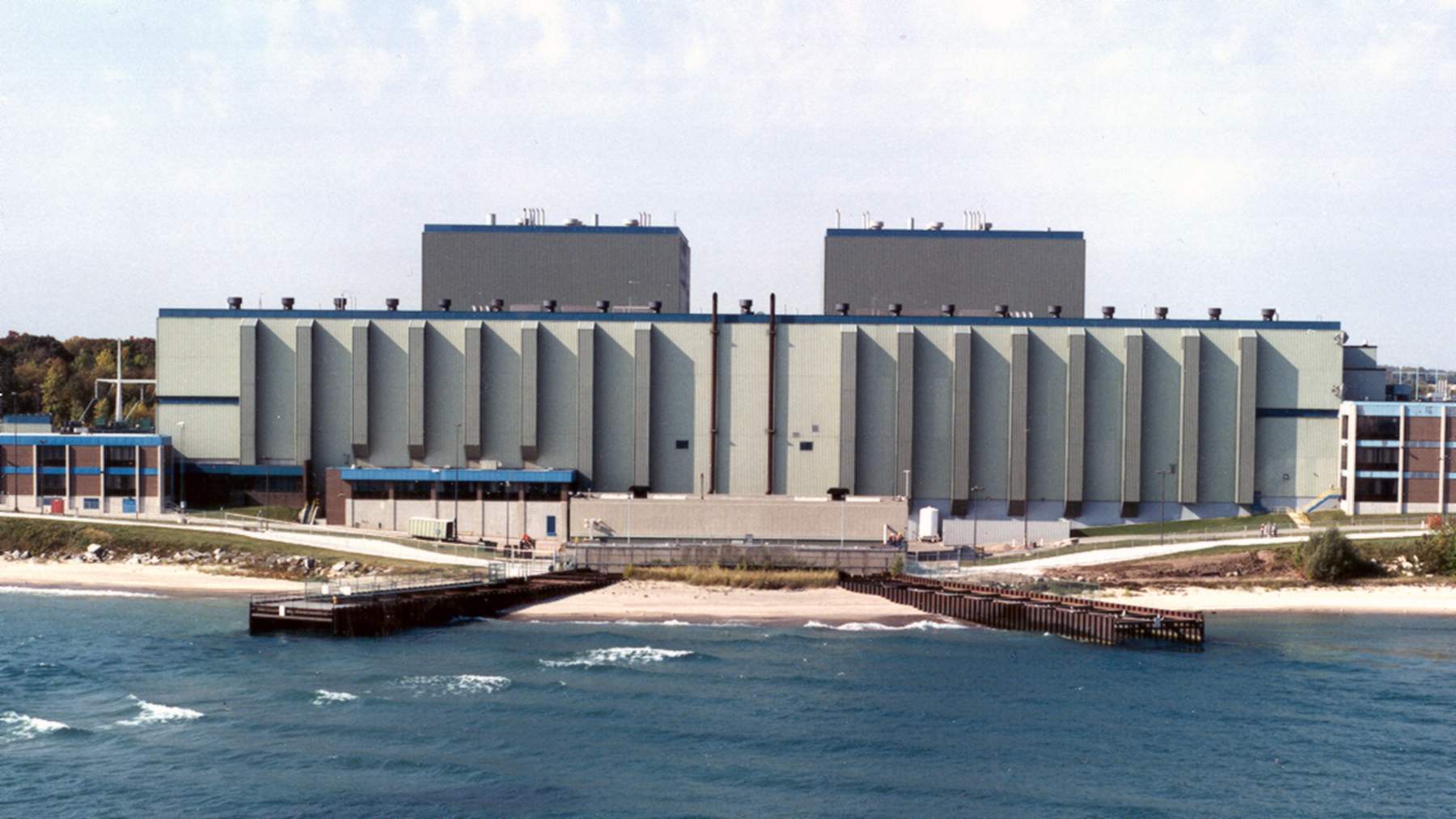

- 2 MONTHS AGO · ENERGYA crane lowered eight 12-foot fuel bundles into a reactor on the Lake Michigan shore on Sunday, 196 short of a full core, four years after the vessel was emptied for scrapping, and some of the bundles going back in are the ones that were in it when it shut down
- 2 MONTHS AGO · ENERGYSeven emergency diesel generators kept six shut-down reactors cool when Europe’s largest nuclear plant lost its last power line, but crews ended up running just two of them to stretch the fuel over 18 days, and they’ve burned through almost all of it
- 1 MONTH AGO · ENERGYA 471-megawatt reactor in Slovakia started climbing toward full power at 3:33 in the afternoon, its operator told the neighbors to expect loud tests on the safety valves that blow off steam, and three weeks in, the unit’s still drawing 17.7 megawatts from the grid
- 4 WEEKS AGO · ENERGYFour 474-ton steam generators sailed around Spain and Portugal to reach a nuclear plant on the French coast, then crawled the last 22 miles by road over three days, an inch from a roadside cross, and will sit in storage for a year before the reactor shuts down to take them
- TODAY · THIS ARTICLEA 590-megawatt reactor on the Lake Michigan shore shut itself down from full power at 5:12 in the morning when its main generator locked out, its leftover heat went out as steam through valves that vent to the open air, and three days later the 56-year-old unit was still at zero
Most of us have tripped a breaker at home. The space heater and the microwave kick on at the same time, the kitchen goes dark, and you walk down to the basement and flip the switch back.
A nuclear plant has its own version of that, and it’s a lot less forgiving than your basement breaker box. Early on Tuesday, Nov. 10, it happened to Unit 1 at the Point Beach Nuclear Plant near Two Rivers, Wisconsin, and the reactor went from full power to fully shut down without anyone touching it.
According to the NRC’s event notification report, Unit 1 was running at 100% at 5:12 a.m. Central time when the reactor was “automatically tripped due to a main generator lockout.” The plant settled into Mode 3, which the report lists as Hot Standby, and it got rid of its leftover heat through the atmospheric dump valves. Unit 2, right next door, wasn’t affected.
The report lists the cause as under investigation. I haven’t found anything from the NRC or from the plant’s operator, NextEra Energy, that goes further than that, so you won’t find any theories here.
So what is a generator lockout, anyway?
The main generator is the big spinning machine at the end of the line. Steam turns a turbine, the turbine spins the generator, and the generator pushes electricity out to the grid.
A lockout is basically the generator’s protection system pulling the plug and refusing to let anyone plug it back in. Relays that watch the generator see something they don’t like, open the breakers that connect it to the grid, and stay latched until someone tracks down the problem and resets them by hand.
So why does a generator problem shut down a reactor?
At a pressurized water reactor like this one, the reactor and the turbine-generator are pretty much a matched pair. If the generator suddenly stops taking the reactor’s energy, the protection system drops the control rods and shuts the reactor down rather than let it keep making heat that has nowhere useful to go. That’s what Mode 3 looks like: the reactor’s shut down, but the water inside it is still hot and still under pressure, sitting close to the conditions it runs at.
So this trip started on the electrical side of the plant. The NRC report doesn’t describe any problem inside the reactor itself.
The heat doesn’t switch off with the reactor
Shutting a reactor down doesn’t make it cold. You’d think it would, and it’s one of the less intuitive things about nuclear power.
Dropping the control rods stops the chain reaction within seconds. But the fuel is full of leftovers from all those split uranium atoms, and those leftovers keep giving off heat as they decay. You can’t turn that off. You can only carry it away, and a plant has to keep doing that long after a trip.
That’s where the atmospheric dump valves come in. Point Beach 1 is a Westinghouse two-loop pressurized water reactor, according to the NRC’s page for the unit. The water that runs through the core stays sealed in its own loops and never gets near the turbine. It heats a second, separate supply of water inside the steam generators, and that second supply is what boils into steam.
Normally that steam goes to the turbine. With the generator locked out, the dump valves sent it into the open air instead, and it carried the heat with it. That steam comes from the secondary side and isn’t radioactive in normal operation, and the NRC report doesn’t mention any release of radioactivity. From the looks of things, this was a pretty by-the-book trip. The generator dropped out, the reactor shut itself down, and the plant parked in Hot Standby while the dump valves handled the heat.
If you’ve been following along, you’ll know we’ve written about a few of these trips lately. Arkansas Nuclear One’s Unit 2 shut down after a lightning-linked power loss on Nov. 3, and it ended up in Hot Standby too.
Point Beach 1 is a pretty old machine
The NRC issued Unit 1’s operating license on Oct. 5, 1970, and the reactor first went critical on Nov. 2 that year, according to the World Nuclear Association. That makes it 56 years old this fall, counting from either date. It started selling power commercially on Dec. 21, 1970, so it’s still a few weeks shy of 56 years in commercial service.
Before anyone jumps to conclusions, nothing in the NRC’s report connects the trip to the unit’s age.
It’s also a fairly modest reactor by today’s standards. The NRC licenses it for 1,800 megawatts of heat, and it turns that into 591 megawatts of electricity net, about half the 1,152 megawatts of Waterford 3, the Mississippi River reactor that tripped the night before its refueling outage in October. Point Beach’s gross figure is 640 megawatts, which is the number before the plant feeds its own pumps and equipment.
NextEra says the plant takes up 1,200 acres on the Lake Michigan shore, and the NRC puts it about 13 miles north-northwest of Manitowoc.
Three days later, Unit 1 was still at zero
The NRC publishes a daily power reactor status report, and it’s arguably the most useful thing the agency puts out. It’s just a list of every power reactor and a percentage, collected between 4 and 8 a.m. Eastern each day.
Tuesday’s report still listed Point Beach 1 at 100%. By Wednesday’s report it was at 0, and it was still at 0 on Thursday and in Friday’s report, dated Nov. 13.
I checked again before writing this. The NRC’s page for Saturday, Nov. 14, just says there’s no data available for that date, so Friday’s zero is the latest number I’ve got.
Unit 2 is a bit of a side story. It was already at 0% in the Nov. 10 and Nov. 11 reports, and by Nov. 13 it was at 49%. The daily reports don’t say why it was offline, and I’m not going to guess.
On the paperwork side, NextEra reported the trip to the NRC at 9:45 a.m. Eastern on Nov. 10, roughly three and a half hours after it happened. NextEra filed it under the rule for reactor protection system actuations while the reactor is critical, and it showed up in the NRC’s event report dated Nov. 12. I haven’t seen a restart date from NextEra or the NRC.
As of the NRC’s Nov. 13 status report, Point Beach Unit 1 was still at 0% power, with Unit 2 next door at 49%.
 A 426-foot ship built to lay internet cable across oceans can now carry about 4,400 tons of power cable on two giant turntables, and it has started unspooling 311 miles of it across the seabed of a British wind farm to plug 197 turbines into two converter stations out at seaEnergy · 15 hours ago
 A Dutch crew took a 402-foot cable-laying ship 33 miles out to sea and lowered six hubs of live oysters onto the seabed inside a 52-turbine wind farm, about 3,600 European flat oysters and thousands of young ones meant to breed in water where fishing boats can’t drag the bottomEnergy · 17 hours ago
 A 79-foot steam generator weighing about 694 tons, nearly 20 feet across, was hoisted into a Guangdong reactor building on Wednesday, the first of two for a 1,250-megawatt unit whose steel vessel went in this summer, a lift its builder said was kept stable and precisely controlledEnergy · 20 hours ago