
Ask most people to draw a nuclear power plant and you’ll probably get a concrete dome, a fat cooling tower with steam rolling out of the top and maybe a radiation symbol for good measure. Nobody draws the plumbing. But a reactor can’t make much electricity without a giant box of tubes that sits under the turbine, nowhere near the core.
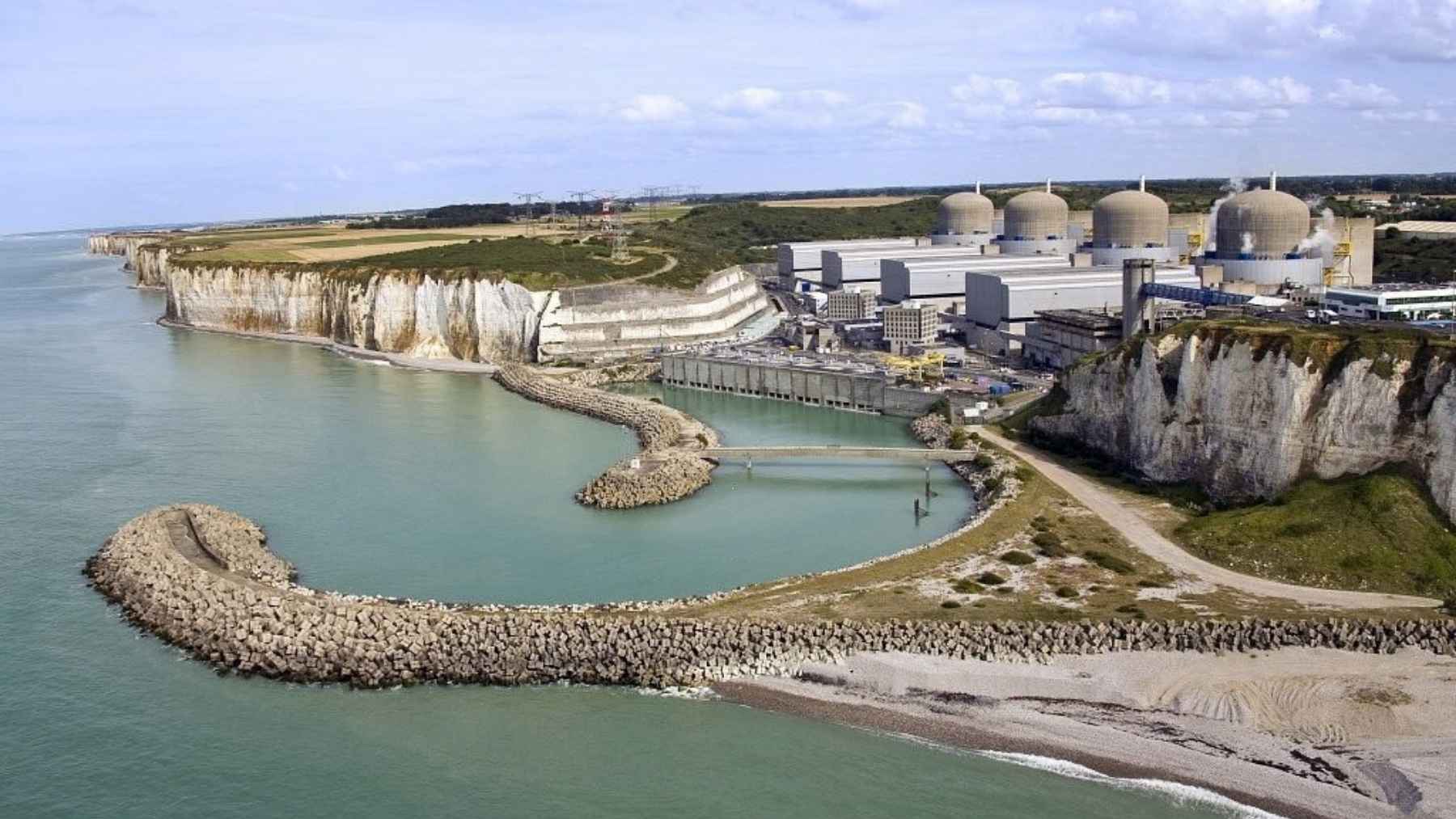
One of those boxes got completely rebuilt in France this year. At EDF’s Paluel plant on the Normandy coast, crews used Unit 1’s 40-year inspection to pull every tube out of its condenser and put new ones in, and there were 80,000 of them.
The reactor went back on the grid on September 12. It’s dropped off twice since, and as of EDF’s latest update, it’s sitting idle again while crews work in the turbine hall. We’ll get to that. The tubes come first, because they’re frankly the more interesting story.
So what is a condenser?
If you’ve ever popped the hood and looked at your car’s radiator, you already know the basic idea. Hot fluid runs through a bundle of thin passages, something cooler carries the heat away, and the fluid comes out the other side ready to go around again.
A reactor like Paluel 1 keeps three separate batches of water. The first runs through the core and never leaves the reactor building. The second picks up that heat in the steam generators, boils, and spins the turbine. The third is seawater pumped in from the English Channel, which flows through the inside of the condenser’s tubes while the steam coming off the turbine washes over the outside. That steam cools, turns back into water and gets pumped back to the steam generators to start over.
Basically, the condenser is where the plant dumps the heat it can’t turn into electricity. The seawater carries that heat off and goes back to the sea warmer than it came in.
So it’s a different machine from the 470-ton steam generators an Ohio plant cut its own walls open to replace. Steam generators live inside the reactor building. The condenser lives in the turbine hall, and the water running through it never passes through the core.
Why titanium, then?
Salt water is brutal on most metals, and a leaking condenser tube lets seawater into water that’s supposed to be extremely clean. Titanium pretty much shrugs off that kind of corrosion, which is why EDF engineers were already writing papers about titanium condenser tubes for seawater-cooled plants like this one before Paluel was even finished. At least these tubes only ever had to deal with the Channel. Out in Arizona, Palo Verde cools its condensers with treated city sewage piped 36 miles across the desert.
There were more than a million holes to clean
Silvère Roger, who runs the Paluel plant, laid out the job in a LinkedIn post. The old tubes had been in place since the reactor first started up, and they’d spent 40 years cooling its steam. Each tube is 46 feet long.
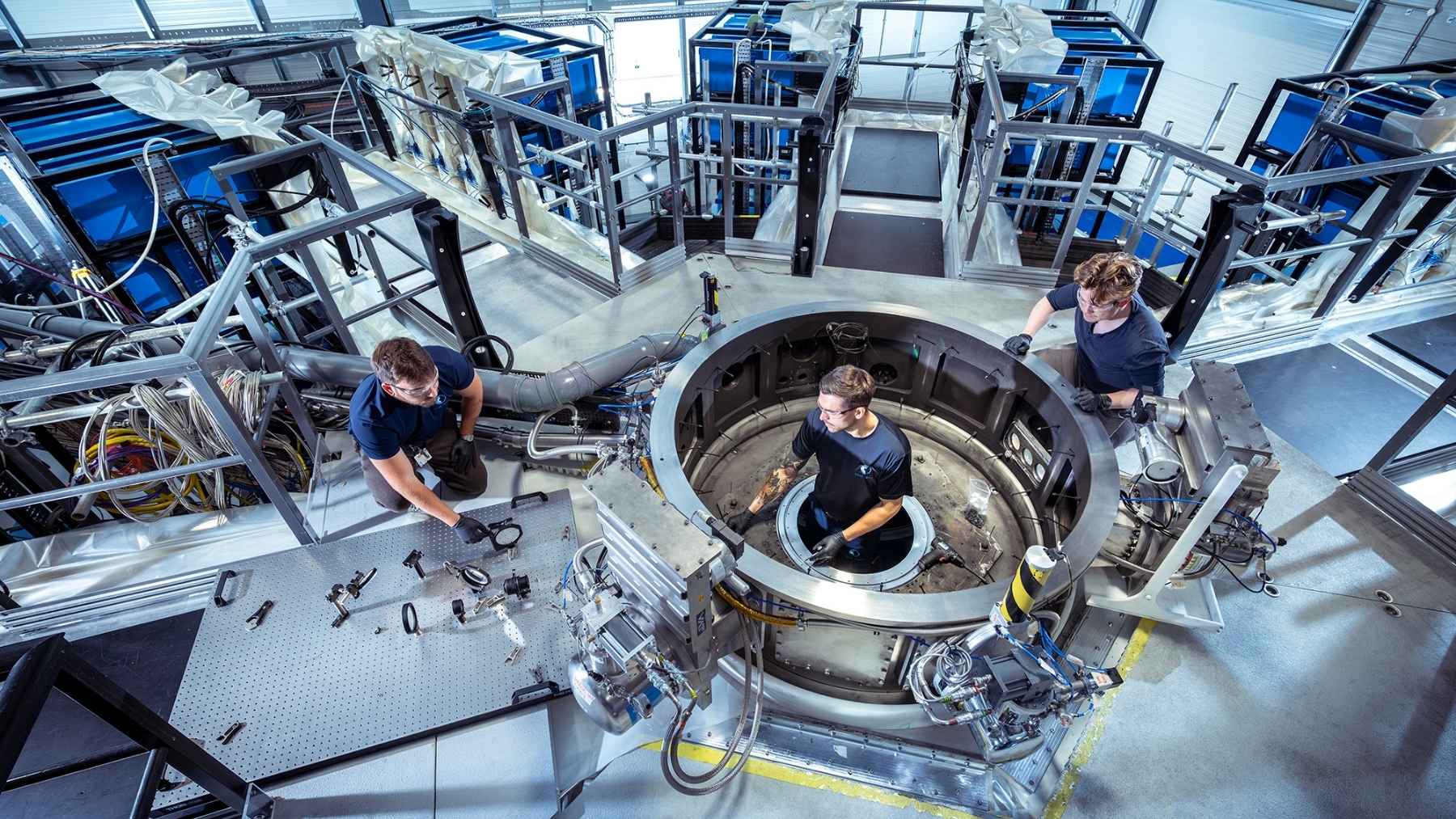
Pulling them was just step one. Before the new tubes could go in, workers had to brush out more than a million holes, then slide the new tubes through, weld them and check every weld at both ends, more than once. Roger says each round of checks runs past 160,000.
If you’re wondering how 80,000 tubes turn into more than a million holes, so was I. Roger didn’t break it down. Big condensers usually run each tube through a plate at either end and a row of support plates in between, which would get you there, but that’s my reading and not EDF’s.
Roger says nearly 300 people worked the job around the clock, in three shifts, for 130 days. Spread a million holes evenly over that stretch and you get roughly 7,700 a day, which isn’t how it actually went, since the old tubes had to come out first. Either way, it’s a pretty brutal amount of scrubbing.
Then there’s the titanium. Roger’s post counts about 276 tons of it and says it’ll be recovered, which seems like the sensible call for that much of a metal that doesn’t come cheap.
How much tubing is that, anyway?
I ran the numbers on this one, and EDF’s figures don’t quite line up. Eighty thousand tubes at 46 feet apiece comes to about 696 miles of tubing. EDF’s announcement of the restart puts the total at close to 750 miles.
That’s a gap of around 50 miles. That release also describes the count as more than 80,000 tubes, so my guess is that somebody’s rounding somewhere, but I couldn’t find a breakdown that says which number is the tighter one.
Paluel 1 is offline again
The condenser was one job out of more than 30,000 during an outage that started on January 2. Paluel 1 is the first of France’s 1,300-megawatt reactors to go through its fourth 10-year inspection, and the country’s nuclear regulator, the ASNR, still has to weigh in on letting it run another decade.
EDF reconnected the reactor at 8:17 a.m. on September 12 and said it would raise the power in stages, with checks along the way. On September 25, a technical problem made the plant’s operators stop the turbine and the reactor came off the grid, then went back on late the next night. At 4:52 a.m. on September 30, it happened again. EDF hasn’t said what’s behind either stop or when Unit 1 will reconnect, and nothing it’s published ties them to the new tubes.
I wouldn’t read too much into it yet. My guess is that a turbine that’s just had one of its giant low-pressure rotors swapped out can be a little fussy for a while, and this isn’t unique to Unit 1 anyway. Paluel’s Unit 2 dropped off the grid over its own turbine problem on October 2, less than four hours after reconnecting, and EDF had it back on the next afternoon.
Roger says the plant’s other three reactors go through the same 10-year inspection by 2030. EDF’s October 3 update has Paluel 1 stopped for maintenance in the turbine hall, outside the nuclear part of the plant, with its 80,000 new titanium tubes sitting in the condenser, waiting for steam.