
- 5 MONTHS AGO · INDUSTRYA 270-foot solar airship longer than a 747 just spent 12 days in the stratosphere on lithium-sulfur batteries that pack more energy than any EV’s, doing the work of a satellite that costs a fortune to launch
- 5 MONTHS AGO · INDUSTRYAn Australian company is about to launch a rocket that climbs to the edge of space at seven times the speed of sound and comes back, selling five minutes of hypersonic flight by the seat to defense labs and universities that have nowhere else to fly their hardware
- 5 MONTHS AGO · INDUSTRYNASA just rolled a 3,100-ton machine 4 miles to the launch pad at less than 1 mph, the heaviest self-powered vehicle on Earth, carrying a Moon rocket that weighs less than the machine hauling it
- 2 DAYS AGO · INDUSTRYA 990-foot ocean liner that still holds the record for the fastest Atlantic crossing took 7 hours and 19 minutes to go under 22 nautical miles off the Florida Panhandle, flooding through holes cut in her decks, and she now sits in 180 feet of water
- TODAY · THIS ARTICLEA 215-foot rocket that will weigh almost 2 million pounds once fueled is due to lift more than 50,000 pounds of satellites on Friday, a new record for its builder, with 40 of them riding under a 70-foot fairing when a 29-minute window opens at 12:54 p.m. from a Florida pad
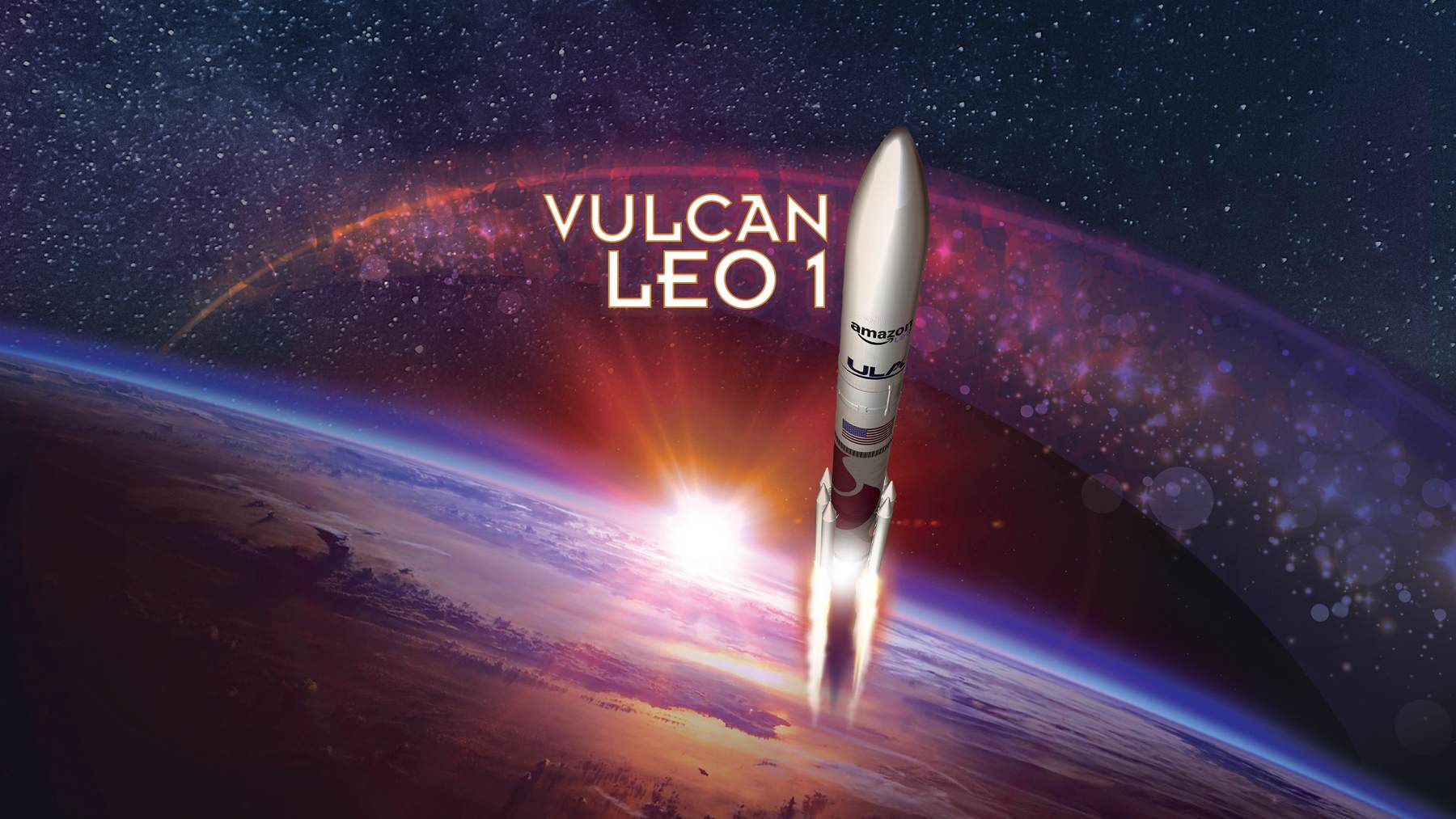
When most people picture a rocket, they picture one tall, skinny tube with a single plume of fire coming out of the bottom. The Vulcan that United Launch Alliance has stacked at Cape Canaveral, Florida, looks a bit different down at the base. It’s got two main engines in the middle and six solid rocket boosters strapped around them, and it’s due to fly today.
ULA’s 29-minute launch window opens at 12:54 p.m. EST on Friday, November 13, from Space Launch Complex-41 at Cape Canaveral Space Force Station. On board are 40 satellites for Amazon Leo, Amazon’s satellite internet network. ULA says the payload weighs more than 50,000 pounds, which would make it a new record for the company.
So what makes this Vulcan different from the ones that have flown before?
Pretty much everything from the bottom of the rocket to the top, as it turns out.
So how big is this thing?
According to ULA’s mission announcement, the rocket stands 215 feet tall and weighs 1.99 million pounds once it’s fully fueled. At liftoff, it’ll put out 3.9 million pounds of thrust.
That thrust comes from two places. The main engines are a pair of Blue Origin BE-4s that burn liquefied natural gas, and each one makes 550,000 pounds of thrust at sea level. The other six sources are Northrop Grumman GEM 63XL boosters, rated at 459,600 pounds apiece.
A solid rocket booster is basically a giant tube packed with fuel and oxidizer that’s already mixed into a solid, so once it’s lit, it burns until there’s nothing left. You can’t throttle it or switch it off, but you do get an enormous shove off the pad, which is exactly why rockets use them.
ULA says each GEM 63XL carries more than 100,000 pounds of propellant. All six burn out about a minute and a half into the flight, and then their empty casings drop away.
Six boosters is new for Vulcan, too. Amazon says no Vulcan has flown with six of them before this one, and ULA calls the setup the VC6L. The 6 is the booster count, and the L refers to the long payload fairing.
That fairing is 70 feet long and 17.7 feet across. It’s the rocket’s nose cone, basically a two-piece clamshell that protects the satellites on the way up and then splits apart and falls away once the rocket’s high enough not to need it.
The upper stage got shorter
The second stage, which is what actually makes it to orbit and drops off the satellites, is a Centaur V. ULA says this is the first one it’s built specifically for low Earth orbit. It’s 35 feet tall, about 6 feet shorter than the high-energy version, and it carries about a third less propellant.
Which makes sense when you think about where it’s going. The high-energy Centaur is, as the name suggests, built for more demanding trips, and these satellites are headed to an orbit about 285 miles up. ULA says the smaller, lighter stage lets it fit more satellites on each mission. Frankly, swapping fuel you don’t need for satellites a customer is paying you to launch seems like a pretty sensible trade.
ULA has laid out the flight in some detail. Vulcan should hit maximum dynamic pressure, which is the moment the air pushes hardest against the rocket, 55 seconds after liftoff. The first stage shuts down about five minutes in, and the Centaur fires twice before the satellites start coming off around the 70-minute mark. Deployment takes 25 minutes and happens in 16 separate events. One satellite comes off in each of the first four, and the remaining 12 release three apiece, which adds up to 40 if you’re checking the math.
We’ve written about satellites the size of a coffee mug and the size of a washing machine. This launch is a very different scale of business. Amazon has booked 38 Vulcan launches with ULA in total, and today’s is the first, after eight Atlas V missions. Amazon says Vulcan will carry more than 1,500 of its first-generation satellites across those flights.
It rolls to the pad on rails
ULA put this rocket together standing up inside a new building called the Amazon Vertical Integration Facility, or VIF-A, on top of a mobile launch platform known as VLP-A. When it’s time to go, VLP-A carries the finished rocket roughly 2.7 miles north along a rail line to the pad, according to the ULA mission page. That’s a pretty long commute for a 215-foot passenger.
ULA says this mission inaugurates that whole processing lane, which gives the company a second spot at the Cape to get rockets ready. Amazon says the new facilities let ULA prepare two Vulcan missions at once, and it expects the next one, LV-02, to launch within weeks if today’s flight goes as planned.
The boosters got a new nozzle
Vulcan’s solid boosters haven’t had the smoothest run. During a launch in February, one of the boosters had a problem with its nozzle, the bell-shaped opening at the back that the exhaust comes out of. ULA, Northrop Grumman (which builds the boosters) and the US Space Force investigated it, along with other government agencies.
ULA says investigators narrowed it down to three credible causes, and the company has addressed all three. That work included lab tests on materials and components, plus a full-scale hot fire of a GEM 63XL in Utah. The boosters on this rocket carry the resulting changes to how the nozzle is designed and made.
The investigation isn’t over, though. ULA says the analysis and testing haven’t stopped, and they could lead to further design tweaks down the line. We don’t know yet what those might look like.
ULA president and CEO Mark Peller pointed out that all of Vulcan’s first four missions were completed successfully despite the booster issues. “Every flight generates data and every flight teaches us something,” he said, and ULA plans to use this flight to collect data on its fixes. That’s arguably the most honest way a rocket company can frame a launch like this one.
So when can you watch?
ULA’s countdown blog goes live at 7:30 a.m. EST, and the launch stream starts on ULA’s website 20 minutes before liftoff. Keep in mind that a launch window isn’t an appointment. It’s the stretch of time when the rocket can leave and still reach the orbit it needs, so liftoff could come at any point in those 29 minutes, and launches do get pushed back.
If everything lines up, ULA’s window opens at 12:54 p.m. EST on Friday, November 13, and the first Amazon Leo satellite should separate from the Centaur about 70 minutes after liftoff.
 A 900,000-pound boring machine started a nearly mile-long tunnel in a Texas city 29 days after it finished digging in another town, and the fight that followed is over how many miles the company has actually dug in nine years, a total it still has not publishedIndustry · 14 hours ago
 A Texas campus that will generate its own electricity without drawing from the public grid sits in a more than $74 billion plan, after an earlier filing described about 35 turbines and roughly 748 megawatts, while a second campus would use dry cooling and no planned industrial groundwaterIndustry · 16 hours ago
 A 44-inch pipe 121 miles long climbs from a desalination plant on the Chilean coast to a copper mine more than 14,400 feet up in the Andes, through five pumping stations across one of the driest deserts on Earth, built to carry 24 million gallons of desalted seawater a dayIndustry · 17 hours ago