
Lockheed Martin’s catalog is a list of the most expensive objects people build. Fighter jets, missile interceptors, spy satellites, Black Hawk helicopters. Hardware that comes with a congressional hearing attached.
So the biggest thing the company has agreed to buy in years reads a little strange. On July 6, Lockheed signed a definitive agreement to acquire Ultra Maritime for $3.45 billion. Ultra’s signature product is a tube about three feet long and five inches across.
You throw it out of an airplane. It listens for a submarine. Then it fills itself with water on purpose and sinks.
It’s called a sonobuoy, and it has been the primary airborne sensor in anti-submarine warfare since the Second World War. Just about every navy chasing quiet submarines is chasing them with these things. The whole machine is designed, from the first sketch, to be garbage by dinnertime.
Everything about it is built to be thrown away
Ultra publishes the data sheets, which is more than most defense manufacturers bother with. The AN/SSQ-53H is the workhorse passive buoy, the one a P-8A Poseidon or an MH-60R Seahawk carries by the dozen.
Weight: 21 pounds. Launch altitude: anywhere from 40 feet up to 30,000. Launch speed: up to 370 knots. A parachute slows it down on the way to the water, and the sensor drops to a depth the crew picks in advance: 90 feet, 200, 400, or 1,000.
Then there’s the line that tells you what this thing actually is. Operating life: 0.5, 1.0, 2.0, 4.0, or 8.0 hours. The crew chooses how long the buoy gets to live before it leaves the plane, and can change its mind by radio afterward. Eight hours is the ceiling.
The active version is even blunter about it. The AN/SSQ-125B is the buoy that makes noise instead of just listening, and Ultra’s spec sheet lists what an operator can order it to do once it’s in the water: change depth, but deeper only, because it can’t come back up. Generate a ping. Or scuttle.
Scuttle is Ultra’s word, not mine. It means sink now.
The 125B weighs 38 pounds, runs for eight hours, and carries exactly 200 ping-seconds. That’s the entire vocabulary. Three and a half minutes of shouting, rationed across a working day, and then the ocean gets it.
The job hasn’t changed since 1942
The Navy keeps its own history of this machine. It’s a paper by Roger A. Holler published in the U.S. Navy Journal of Underwater Acoustics, cleared for public release, and it’s the best thing written about sonobuoys anywhere.
There’s a decent story buried in it. RCA built the first prototypes in 1941 and tested them at Barnegat Bay, New Jersey. They were noisy and they leaked, and the Navy shut the project down to chase higher priorities.
Somebody ignored the stop-work order. The prototypes got cleaned up, repaired, and quietly parked on a shelf.
When the Navy changed its mind in February 1942, two of those shelved buoys went into the water off New London, Connecticut on March 7. A blimp called the K-5 circled overhead and listened. The buoys picked up the propellers of the submarine S-20 from three miles out, and the blimp heard the buoys cleanly from five.
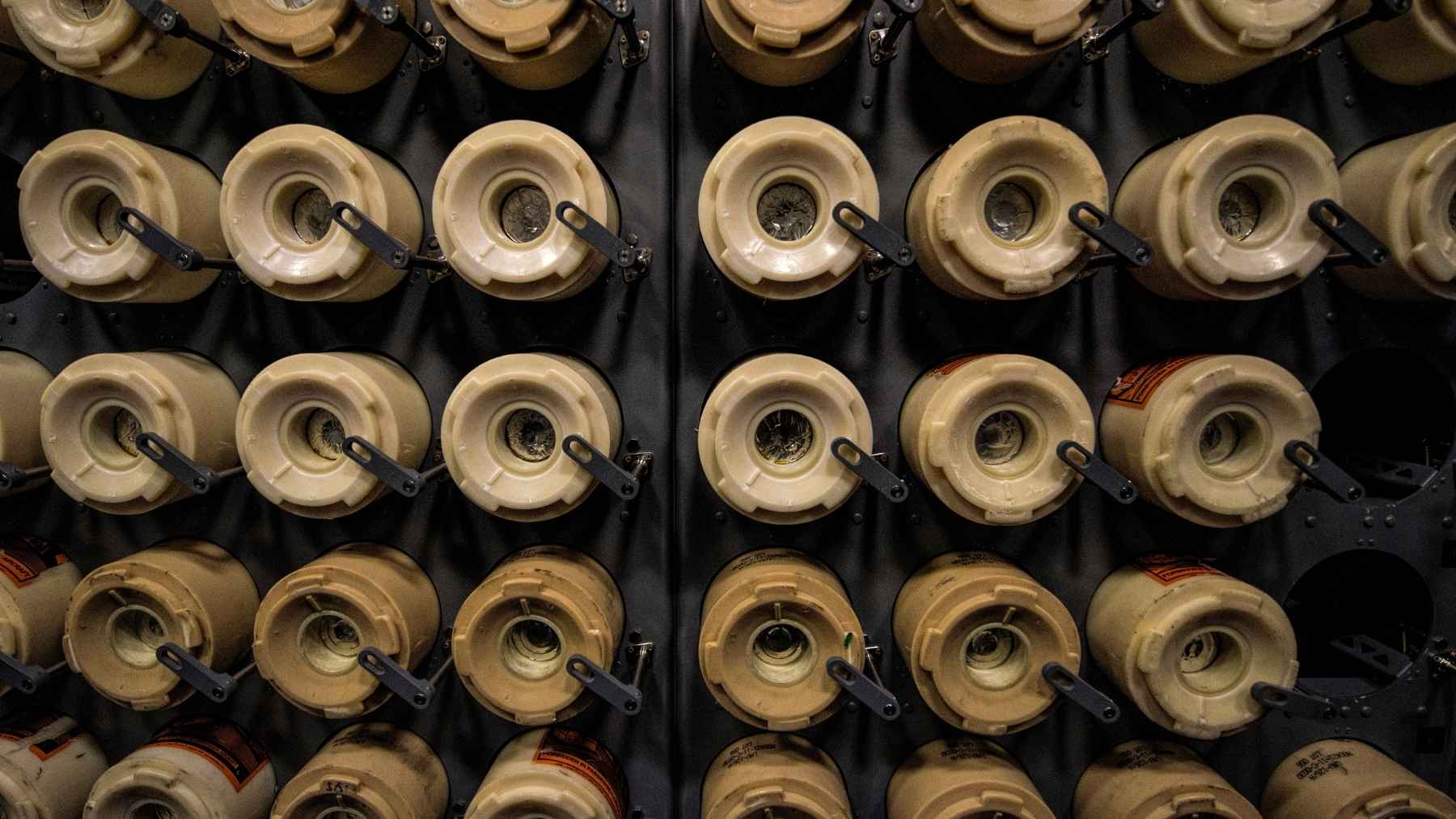
The first air-droppable version arrived that June as the AN/CRT-1. It weighed about 15 pounds and came in a cylinder three feet long and five inches across, and the Navy liked that shape enough to standardize it. They called it A-size and never let go. The 53H that Ultra builds in Columbia City, Indiana today is A-size. So is the 125B.
The 1942 tube was made of paper. A quarter-inch of it, coated in resin, because the good materials were rationed for the war. It stayed watertight for a few hours, which was the entire requirement.
And there was a hole in the disk at the bottom, plugged with something water-soluble. When the job was done, the plug dissolved and the buoy went down.
Eighty-four years later, the sinking is a radio command instead of a dissolving plug. That’s the upgrade.
The number that matters is 250,000, not 3.45 billion
Nobody pays billions for a tube. They pay for the ability to make a quarter of a million of them a year without missing a delivery.
Ultra says on its own site that it produces 250,000 buoys annually, “and that number continues to climb”. That’s a manufacturer’s claim on a manufacturer’s website, and it deserves the asterisk. The public contract trail points the same direction, though.
In September 2024 the Navy handed Ultra a sole-source, firm-fixed-price deal for low-rate initial production of the 53H. The value was $99,999,738. Not $100 million. Somebody in a procurement office fought hard for that last $262.
Then a $49 million award for the Q-62G variant, and in April this year another sole-source contract for initial production of the 125B. Ultra said in 2024 it employed more than 2,300 people worldwide, with the U.S. business headquartered in Braintree, Massachusetts and buoys coming off the line in Indiana.
On the price of the product itself: Seapower magazine, reporting from the 2022 Sea-Air Space show where Ultra’s sonobuoy chief was talking numbers, put unit cost at $800 to under $10,000 depending on type. So the machine that finds a nuclear submarine costs less than the used car in your driveway, and gets used once.
The UK end got a rebuild too. Ultra opened a £20 million design and manufacturing center in Greenford, west London in September 2025, over 5,600 square meters of it, which Naval News reported is now turning out the CAMBS, HIDAR and LOFAR buoys the Royal Navy’s Merlin helicopters drop.
The tube is learning to work without a pilot
The reason any of this got expensive is that submarines got quiet. A buoy that just listens has a harder job every year, so the industry went multistatic: one buoy makes the noise, others scattered across the water listen for the echo bouncing back.
That’s what the 125B is for. Announcing the April contract, Ultra president and CEO Carlo Zaffanella said the Q-125B is built for “detection of even the quietest submarines at greater ranges.” Company framing, but the physics behind it is real enough.
The newer move is size. On June 10, Ultra put its Multistatic Active Receive Sonobuoy in the water for the first time, off Scotland, in a trial sponsored by the UK’s Defence Science and Technology Laboratory. Ultra tied the work to rising Russian submarine activity in the North Atlantic, and to a British program called Atlantic Bastion.
MSARS is a G-size buoy, roughly half the length of an A-size, and Ultra says it’s the only company that builds them. Half the buoy means twice as many per rack, which is the whole argument when your launch platform is a drone rather than a P-8.
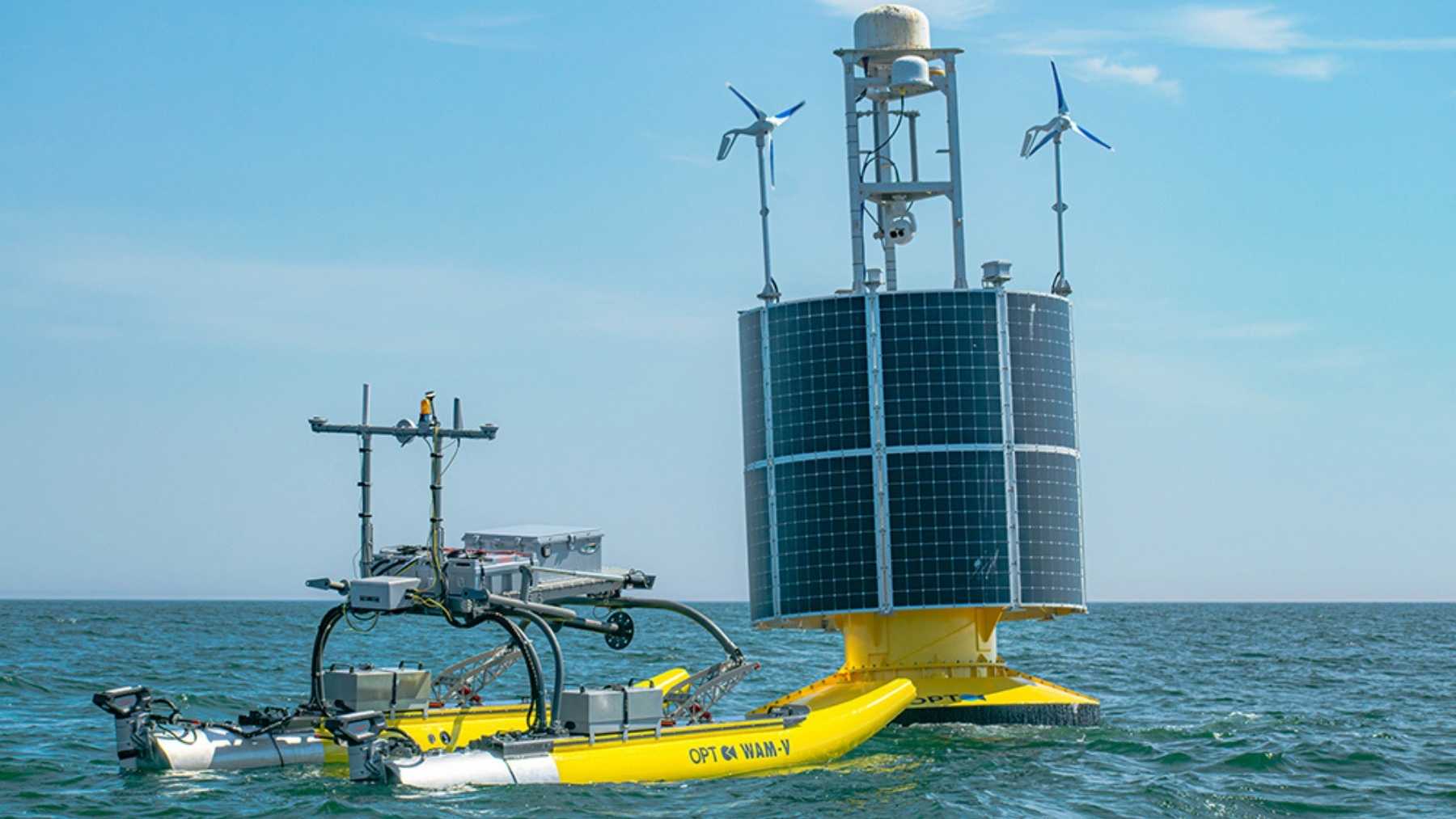
Ultra is working with General Atomics to hang them off the MQ-9B SeaGuardian. It’s the cheap end of the same shift that produced Saildrone’s $40 million robot sailboat built to hunt submarines by staying silent, and it lands in a year where endurance has become the flex, like the American glider the Royal Navy just ordered that stays under for two years on one battery load. The sonobuoy is the opposite bet. Eight hours, and buy 250,000 more.
Why Lockheed wants a business that makes garbage
“Undersea superiority belongs to those who move fastest and work together best,” said Stephanie C. Hill, president of Lockheed Martin Rotary and Mission Systems, in the announcement. Ultra lands inside her business area once the deal closes.
That business area could use it. Reuters reported that Rotary and Mission Systems posted a 19% drop in operating profit in the first quarter of 2026, down to $423 million, with segment revenue off 8%, hurt by helicopter program adjustments. Bolting on a sonar and sonobuoy portfolio with a captive customer list in the U.S., UK, Canada and Australia is a reasonable answer to that.
Lockheed has been circling the seabed for a while anyway. In February it unveiled the Lamprey, an underwater drone that grips a warship’s hull with suction cups and rides along, funded with its own money and no Navy contract behind it.
And it isn’t the only one shopping. Axios noted that on the same day Lockheed announced Ultra, Thales agreed to buy the French submarine-drone maker Exail for €3.9 billion. Days later Fincantieri picked up four underwater drone companies. Everyone with a checkbook decided the ocean floor was the growth market in the same week.
One piece of fine print worth holding onto: this is an agreement, not a done deal. It’s subject to regulatory approvals and customary closing conditions, and until those land, Advent still owns the company.
Meanwhile the tube keeps doing what it has done since a blimp heard a submarine off Connecticut in 1942. A crew picks a number, half an hour or eight, and throws it out of the plane. It listens, phones home, and floods itself. Then somebody in Indiana builds another one.
That’s the transaction Lockheed just agreed to pay $3.45 billion to get into, and it hasn’t changed a line in 84 years.