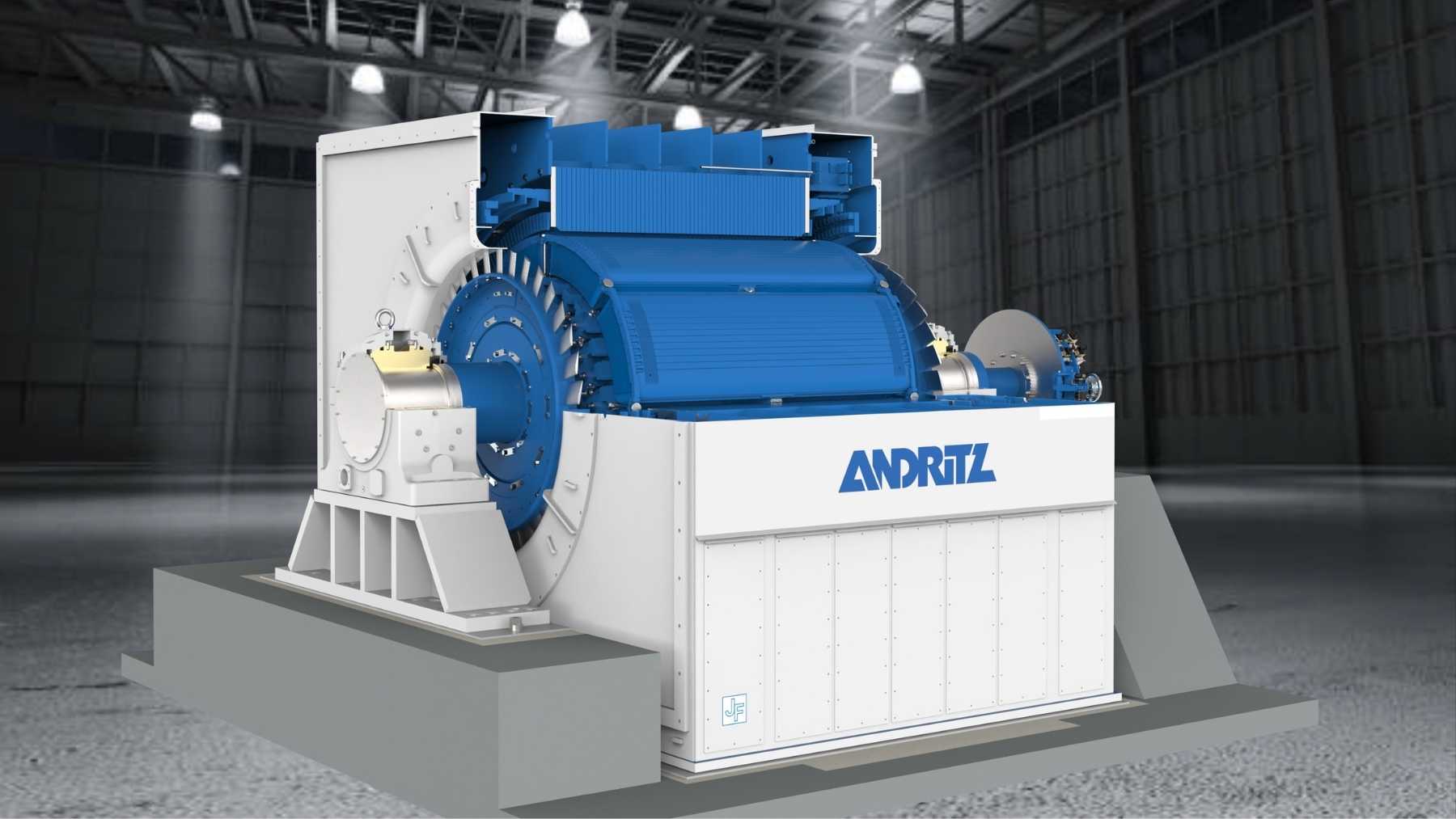

Grids don’t just need electrons. They need something spinning fast enough to keep the whole system’s heartbeat steady, which is why coal and gas plants have quietly done the boring stability work for a century while everyone argued about fuel.
Wind turbines and solar farms don’t spin the same way, and that has become a real bottleneck for connecting more of them. Australia’s answer just went live in western Victoria, and it’s a 300-metric-ton machine whose entire job is to spin in place and hold the frequency steady.
The Ararat Synchronous Condenser, SynCon if you want the industry shorthand, started operating at Elmhurst, about 190 kilometers (118 miles) northwest of Melbourne. Trade outlet ESD News confirms it’s the biggest machine of its kind in Australia, and pv magazine describes the 250 MVA unit as the largest in the Southern Hemisphere.
The headline number everyone’s chasing: up to 600 MW of additional wind and solar can now plug into the grid in western Victoria without wobbling it.
A giant motor with nothing bolted to its shaft
Mechanically, a synchronous condenser is a huge electric motor spinning in sync with the grid. It burns no fuel and generates no real power of its own.
What it provides is inertia, the heavy rotating mass that resists sudden changes in frequency, plus reactive power and fault current when the network takes a hit. Coal and gas turbines handed all of this out for free, because their big steel rotors were already turning at 3,000 rpm anyway. As those plants retire, the inertia walks out the door with them.
Wind and solar don’t replace it on their own. Their inverters can be programmed to mimic some of these behaviors, and grid-forming inverters are the current darling of the industry. For now, though, utilities still want the physical spinning-mass version for the hardest jobs, because it’s proven and it responds instantly.
300 tons of Austrian steel, shipped in halves
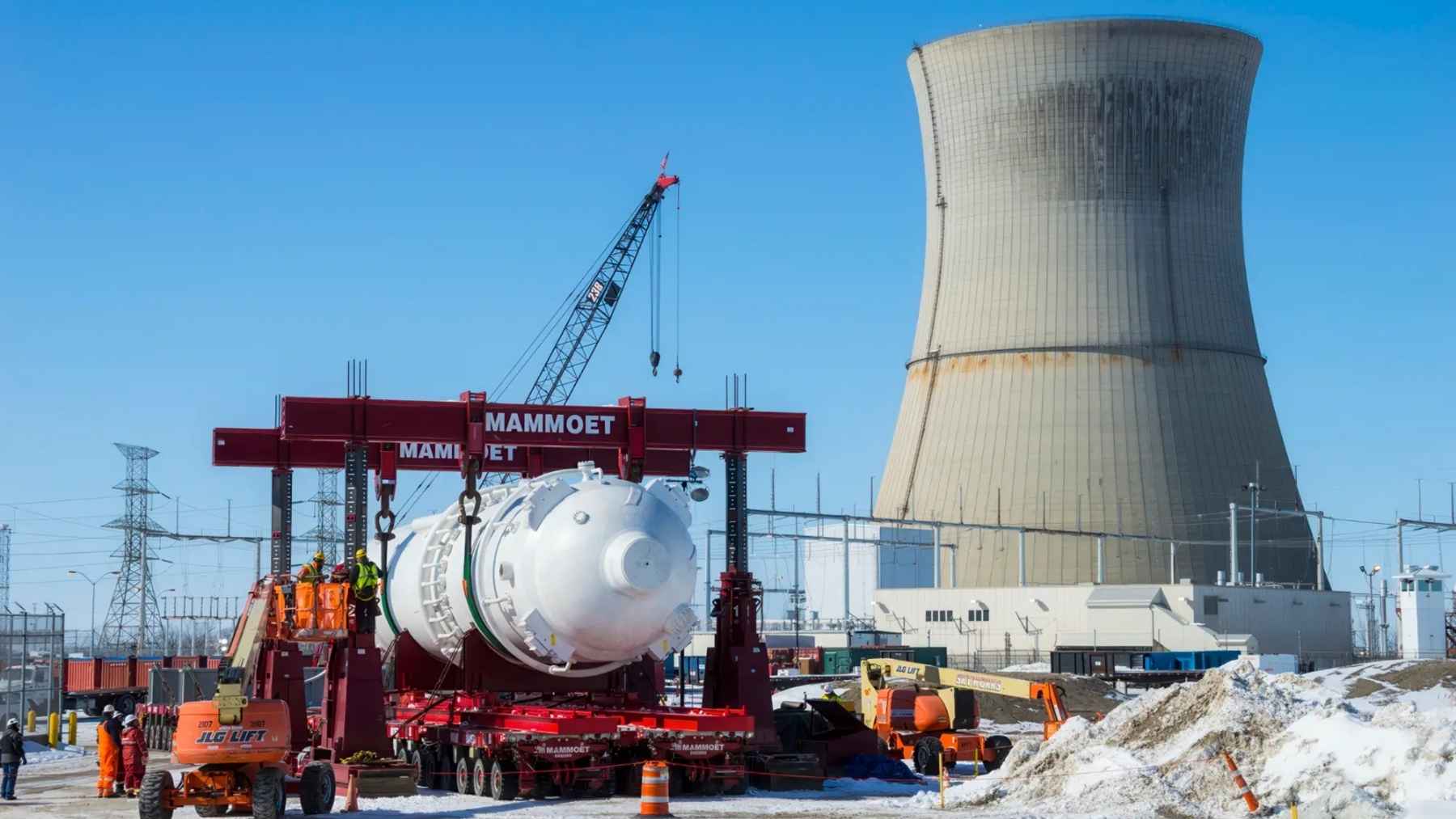
The machine was supplied by Austrian firm Andritz Hydro and arrived at the Ararat Terminal Station in two 150-metric-ton halves in July 2025, per RenewEconomy. Melbourne-based Beon Energy Solutions handled construction, and Australian Energy Operations, which owns the terminal station, delivered the project for the Victorian government and grid operator AEMO.
Two details worth savoring. There’s a battery room on site just to back up the station’s auxiliary systems. And the syncon comes with a “pony motor,” a smaller blue motor whose job is to spin the big machine up to grid speed or slow it down. A motor for the motor.
Commissioning ran from late 2025 through the first half of 2026, and the official word that it’s operating landed this week. VicGrid chief executive Alistair Parker called the project “another example of how we can work with industry partners” to deliver the infrastructure Victoria needs.
Why 600 MW was stuck outside the door
Western Victoria is windy, sunny, and full of good renewable sites. It connects to the national grid through the Ararat Terminal Station, which already hosts the 75 turbines of the 242 MW Ararat wind farm.
Piling more variable generation onto that same node was creating a system-strength problem: the local grid didn’t have enough electrical stiffness to swallow it without frequency and voltage misbehaving. Developers with projects in the queue were stuck waiting.
That’s the door the syncon just kicked open. Per Infrastructure Magazine, the machine provides the system strength and stability the network was missing, responding rapidly to fluctuations. In plain English: connection paperwork in the region can finally get stamped.
One of 12 pieces in a $332 million grid bet
Ararat isn’t a stand-alone play. It sits inside a Victorian government program worth AUD 480 million (about $332 million), covering a dozen transmission and stability projects that VicGrid says will unlock 2.3 gigawatts of renewables, enough for roughly 16% of the state’s annual electricity needs.
Some of the twelve are wire work, like the Mortlake Turn-In, which connects a second 500 kV line to a terminal station and boosts capacity by up to 1.5 GW. Others are storage. The Koorangie Energy Storage System, a 185 MW/370 MWh battery built from 100 Tesla Megapacks, went commercial in June 2025 with a 125 MW system-strength contract from AEMO, using grid-forming inverters running in “virtual machine mode.”
But Ararat is the flagship stability piece. You can build all the wind farms you like, and it won’t matter if the grid can’t hold its shape when a coal plant trips offline.
Victoria has also just formalized six renewable energy zones across the state, so the pipeline of projects waiting on exactly this kind of hardware is only getting longer.
Australia is buying these things by the dozen
Victoria isn’t alone. NSW transmission operator Transgrid has secured 10 smaller syncons for its own shortfalls, and RenewEconomy reports orders for seven more at Ararat’s size have been placed for the Central West Orana renewable energy zone, the same patch of New South Wales where a wall of 448 Tesla Megapacks just became the grid’s third-biggest battery.
South Australia got there first. Its four syncons had their first full quarter of operation in 2022 and helped cut market-intervention costs from around AU$37 million to roughly AU$7 million, per RenewEconomy. That state now forecasts no system-strength shortfalls at all.
The interesting subplot is that grid-forming batteries are closing the gap fast, and California is already leaning on battery fleets for nearly half its evening peak. AEMO’s latest system-security transition plan still leans on syncons for one stubborn reason: protection-grade fault current, the highest bar for stability, is “not yet fully proven by batteries at the necessary scale,” as consultancy eServices4U summarizes the operator’s position.
AEO’s chief executive Glen Thomson has been blunt about where this lands. “There’s no doubt we will need more syncons and more batteries,” he told RenewEconomy, as synchronous generation keeps retiring. So it’s not either-or. It’s both, for a while.
The unsung part of the transition
Syncons don’t photograph well. No blade sweep, no shimmering array, no ribbon-cutting drone shot. They’re a big gray cylinder in a shed, spinning at grid frequency, doing physics.
But without them, or something equivalent, a lot of the shiny stuff simply can’t connect. Victoria has a legislated target of 95% renewables by 2035, and that target lives or dies on whether the grid can host the generation without falling over. Ararat just made 600 MW of that math work.
The next test is whether the other eleven projects in the bundle land on schedule, and whether those seven bigger syncons show up in New South Wales before more of the coal fleet clocks out. Machines like this aren’t glamorous. They’re just the reason the wind farm behind them gets built.















Thank you. ☺️